How to Fix Service Shifter Jeep Cherokee
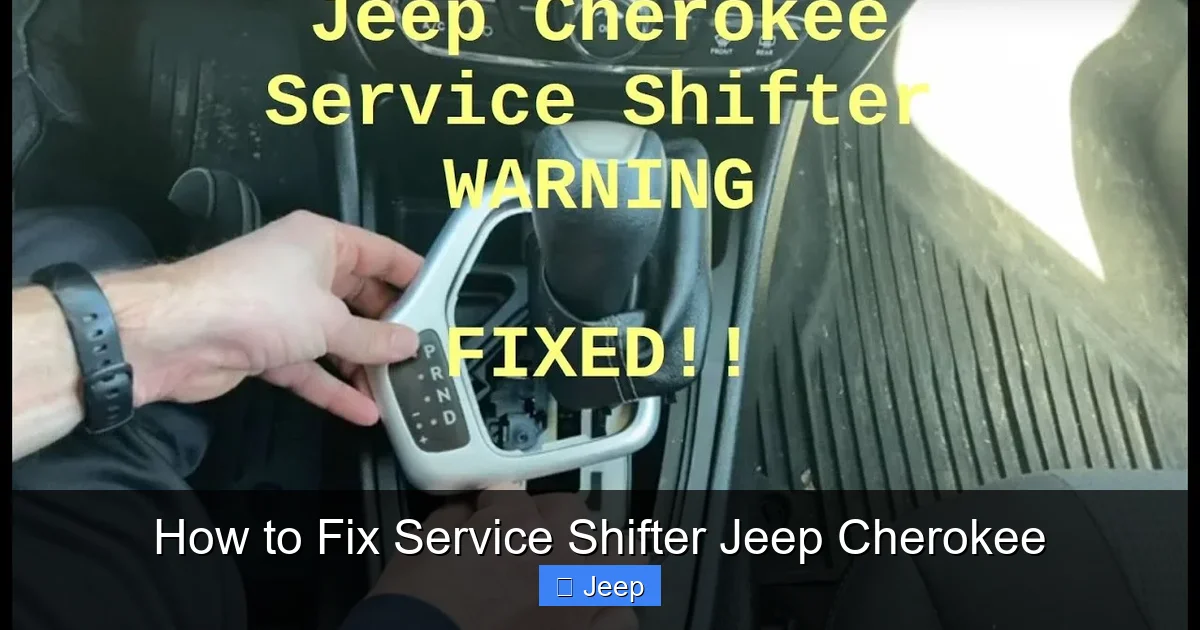
Fixing a Service Shifter Jeep Cherokee can be a straightforward DIY project if you follow the right steps and have the proper tools. This guide walks you through diagnosis, disassembly, part replacement, and reassembly so you can get back on the road confidently.
This is a comprehensive guide about How To Fix Service Shifter Jeep Cherokee.
Key Takeaways
- Identify the problem early: Recognizing symptoms like erratic shifting or warning lights helps avoid costly repairs.
- Gather the right tools: A basic socket set, trim removal tools, and a repair manual are essential for a smooth fix.
- Follow a systematic approach: Disassemble, inspect, replace, and test each step to ensure nothing is missed.
- Check for recalls or technical service bulletins: Some Service Shifter Jeep Cherokee issues are covered under manufacturer fixes.
- Use quality replacement parts: OEM or trusted aftermarket components keep the shifter reliable.
- Maintain proper lubrication: Regular grease application prevents future sticking and wear.
- Know when to call a pro: Complex electrical issues or transmission work may need a certified technician.
[FEATURED_IMAGE_PLACEHOLDER]
Understanding the Service Shifter Jeep Cherokee
When you sit behind the wheel of a Jeep Cherokee, the Service Shifter Jeep Cherokee is the interface that tells the transmission which gear you want. It’s a small but critical component. Over time, the Service Shifter Jeep Cherokee can develop issues that make shifting feel sloppy or cause warning lights on the dash. Common signs include a shifter that moves with a grind, intermittent loss of gear selection, or a “Service Service Shifter Jeep Cherokee” message on the instrument cluster.
Understanding how the Service Shifter Jeep Cherokee works helps you diagnose problems quickly. The shifter connects to the transmission’s electronic control unit (ECU) and often uses a mechanical linkage or a cable. In many models, a small actuator motor moves the shifter lever, and sensors report its position back to the ECU. If any of these parts wear out, you’ll notice the Service Shifter Jeep Cherokee behaving erratically.
Common Symptoms of a Faulty Service Shifter Jeep Cherokee
One of the first signs is a vague “Service Service Shifter Jeep Cherokee” alert. You might also feel a delay when shifting from Park to Drive, or the shifter may feel loose. Some owners report that the Service Shifter Jeep Cherokee randomly jumps to neutral, which can be dangerous. If you hear a clicking noise when you move the shifter, that often points to a worn internal gear inside the Service Shifter Jeep Cherokee assembly.
Another clue is a dashboard warning light that stays on after you start the engine. This light can be related to the transmission control module, and it often flashes when the Service Shifter Jeep Cherokee detects a fault. Ignoring these signs can lead to more extensive transmission damage, so addressing the Service Shifter Jeep Cherokee early is crucial.
Tools and Materials You’ll Need
Before you start working on the Service Shifter Jeep Cherokee, gather the right tools. A basic socket set (including 10mm, 12mm, and 17mm), a screwdriver set, and a trim removal tool are must‑haves. You’ll also need a torque wrench set to the manufacturer’s specifications, which is vital when tightening bolts on the Service Shifter Jeep Cherokee.
Other handy items include dielectric grease for connectors, a pick set for pulling pins, and a clean work surface. A multimeter can help you test the electrical circuits of the Service Shifter Jeep Cherokee, and a scan tool can read fault codes related to the shifter. Having a repair manual for your specific Jeep Cherokee model ensures you know the exact torque values and removal sequences for the Service Shifter Jeep Cherokee components.
Safety Precautions
Always disconnect the battery before working on any electronic component of the Service Shifter Jeep Cherokee. This prevents accidental shorts that could damage the ECU. Use safety glasses and work in a well‑ventilated area, especially if you’re handling brake fluid or transmission fluid. Keep the area clear of tools and parts to avoid losing small screws that hold the Service Shifter Jeep Cherokee together.
If you notice any rust or corrosion on the shifter’s mounting bolts, treat them with penetrating oil before you attempt removal. This simple step can save you from stripping threads when you’re removing the Service Shifter Jeep Cherokee from the console.
Step‑by‑Step Disassembly of the Service Shifter Jeep Cherokee
Start by removing the console trim around the Service Shifter Jeep Cherokee. Use a trim removal tool to pry off the plastic covers without scratching the surface. Once the trim is off, you’ll see the shifter knob and the mounting bolts. Loosen the bolts with a 10mm socket, but do not remove them yet. The shifter may be anchored to the transmission linkage, so you need to disconnect the linkage first.
Locate the linkage rod attached to the shifter arm. It’s usually secured with a spring‑loaded clip. Press the clip and slide the rod free. This step is critical because forcing the Service Shifter Jeep Cherokee out of its mount can damage the transmission’s internal components. After the linkage is disconnected, you can remove the mounting bolts completely and lift the Service Shifter Jeep Cherokee out of the console.
Inspecting the Shifter Housing
With the Service Shifter Jeep Cherokee removed, inspect the housing for cracks or rust. Look at the internal gears and the actuator motor. If you hear grinding when you manually move the shifter, the gears inside the Service Shifter Jeep Cherokee are likely worn. Check the alignment of the shifter lever with the transmission’s shift rails; misalignment can cause premature wear on the Service Shifter Jeep Cherokee.
Examine the wiring harness that connects to the Service Shifter Jeep Cherokee’s electronic sensor. Any frayed wires should be repaired or replaced before you reinstall the unit. Also, check the mounting bolts for thread damage; replace them if they’re stripped, as this could cause the Service Shifter Jeep Cherokee to wobble after reinstallation.
Replacing Worn Parts
If the internal gears are worn, you’ll need to replace the entire shifter assembly. OEM parts are labeled with the Jeep Cherokee part number, and they’re designed to fit the Service Shifter Jeep Cherokee precisely. Aftermarket alternatives are available, but make sure they match the exact specifications of the Service Shifter Jeep Cherokee.
When installing a new Service Shifter Jeep Cherokee, start by aligning the mounting holes with the console. Hand‑tighten the bolts, then use a torque wrench to tighten them to the manufacturer’s specification (usually around 8‑10 ft‑lbs). Over‑torquing can strip the threads and cause the Service Shifter Jeep Cherokee to become loose later.
Reassembly and Testing the Service Shifter Jeep Cherokee
Reinstall the linkage rod by sliding it back onto the shifter arm. Ensure the spring‑loaded clip clicks into place, securing the connection. This step is essential because a loose linkage can cause the Service Shifter Jeep Cherokee to feel sloppy. Replace the console trim and secure it with the screws you removed earlier.
After everything is back in place, reconnect the battery and start the engine. Allow the vehicle to idle for a minute while you observe the shifter’s movement. The Service Shifter Jeep Cherokee should shift smoothly between Park, Reverse, Neutral, and Drive without any grinding. If you notice any abnormal noises, stop the engine and double‑check the installation of the Service Shifter Jeep Cherokee.
Reading Fault Codes
If the “Service Service Shifter Jeep Cherokee” light remains on after reassembly, use an OBD‑II scanner to read any stored codes. Common codes like P0700 or P0705 often point to a fault in the Service Shifter Jeep Cherokee’s control circuit. Clear the codes after you’ve verified the shifter is operating correctly. If the codes return, you may need to inspect the wiring harness or the ECU’s connection to the Service Shifter Jeep Cherokee.
Driving Test
Take the Jeep Cherokee for a short test drive. Pay attention to how the Service Shifter Jeep Cherokee feels during gear changes. It should engage cleanly, and there should be no hesitation or erratic behavior. If you experience any of these issues, gently pull over, turn off the engine, and recheck the shifter’s mounting and linkage. Sometimes a simple readjustment of the Service Shifter Jeep Cherokee’s cable tension resolves the problem.
Maintenance Tips and When to Seek Professional Help
Regular maintenance can extend the life of the Service Shifter Jeep Cherokee. Periodically check the shifter’s lubrication points and apply a thin coat of dielectric grease to the electrical connectors. This simple step prevents corrosion that can cause the Service Shifter Jeep Cherokee to fail unexpectedly.
If you notice the shifter becoming increasingly stiff or you hear persistent clicking, it may be time to replace the Service Shifter Jeep Cherokee entirely. Complex electrical faults, such as a failing actuator motor, often require specialized tools and diagnostic equipment. In those cases, a certified Jeep technician can quickly diagnose the Service Shifter Jeep Cherokee issue and perform the repair safely.
Finally, keep a record of any service performed on the Service Shifter Jeep Cherokee. This documentation helps you track wear patterns and can be valuable if you decide to sell the vehicle later. For more detailed procedures, you can refer to our complementary guide on How To Change Paddle Shifters Jeep Grand Cherokee, which shares similar steps for shifter-related work.
By following these steps, you’ll be able to fix the Service Shifter Jeep Cherokee confidently and keep your Cherokee running smoothly for years to come.
Frequently Asked Questions
What are the common symptoms of a failing Service Shifter Jeep Cherokee?
Common signs include a vague “Service Service Shifter Jeep Cherokee” warning light, grinding noises when shifting, a loose or stiff shifter feel, and intermittent gear selection problems. If you notice any of these, address the Service Shifter Jeep Cherokee promptly to avoid transmission damage.
Can I fix the Service Shifter Jeep Cherokee myself?
Yes, with the right tools and a clear step‑by‑step guide, most Service Shifter Jeep Cherokee issues can be DIY‑friendly. Ensure you have a torque wrench, basic hand tools, and a repair manual. Always disconnect the battery before working on the electronic components of the Service Shifter Jeep Cherokee.
What tools are essential for Service Shifter Jeep Cherokee repair?
A socket set (10mm, 12mm, 17mm), a torque wrench, a trim removal tool, dielectric grease, and a multimeter are essential. A scan tool can also help read fault codes related to the Service Shifter Jeep Cherokee.
How often should I inspect the Service Shifter Jeep Cherokee?
Inspect the Service Shifter Jeep Cherokee during routine maintenance checks—usually every 12,000 miles or when you bring the vehicle in for a service. Look for rust, wear, and proper lubrication of the Service Shifter Jeep Cherokee’s moving parts.
When should I replace the Service Shifter Jeep Cherokee rather than repair it?
If the internal gears are worn, the actuator motor fails, or the shifter housing is cracked, replacement is often more reliable than repair. OEM parts ensure the Service Shifter Jeep Cherokee fits perfectly and lasts longer.
Does the Service Shifter Jeep Cherokee require special software updates?
Some newer models need a software refresh to properly communicate with the transmission control module. Use a compatible scan tool to check for any updates related to the Service Shifter Jeep Cherokee before performing repairs.