How to Prepare Your Jeep Wrangler for Off Roading
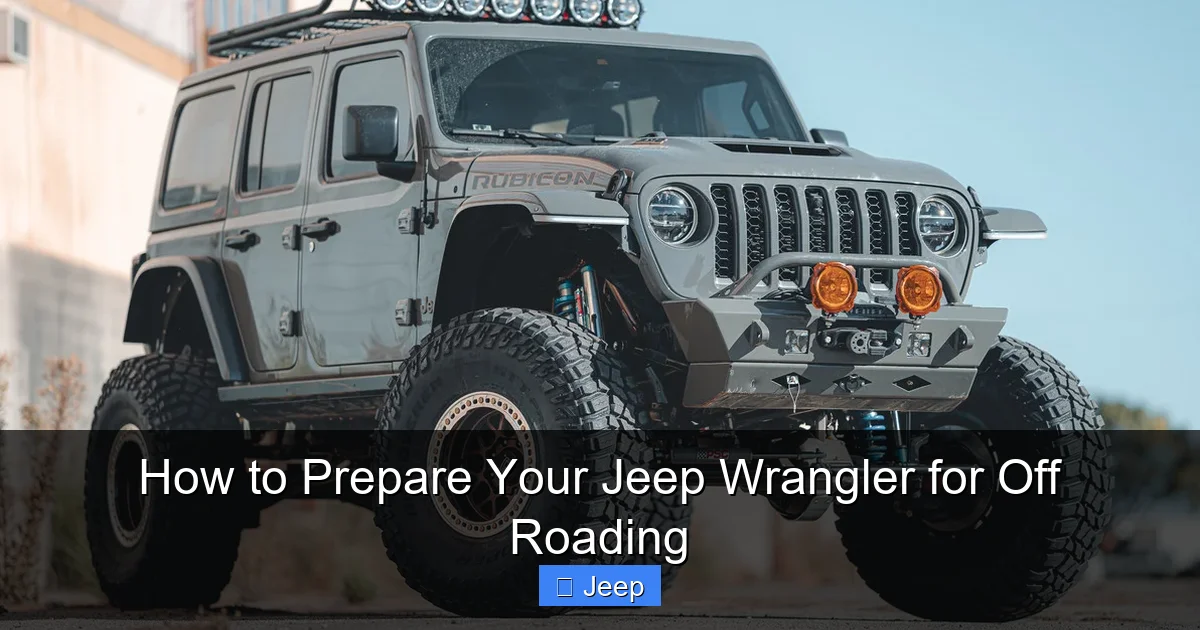
Preparing your Jeep Wrangler for off roading requires the right setup and knowledge. You need to upgrade your tires, adjust your suspension, and pack essential gear. With the proper preparation, you can tackle any trail with confidence and safety.
There is nothing like the feeling of hitting a dusty trail. The wind in your hair makes you feel alive. But before you go, you must get your rig ready. Preparing your Jeep Wrangler for off roading is not just about fun. It is about safety and survival.
Many new Jeep owners jump straight into the woods. They think the vehicle is tough enough. But off roading is different from driving on the highway. You face rocks, mud, and steep hills. If your Jeep is not ready, you might get stuck. This guide will show you how to prepare your Jeep Wrangler for off roading.
We will walk through every step. You will learn about tires, suspension, and gear. By the end, you will be confident and ready to explore.
Key Takeaways
- Upgrade Your Tires: Invest in all-terrain or mud-terrain tires to handle diverse terrains effectively.
- Adjust Suspension: Lift kits and upgraded shocks provide the necessary ground clearance and stability.
- Pack Essential Gear: Always bring recovery boards, a winch, and a first-aid kit.
- Master 4WD Systems: Know how to engage and disengage your four-wheel drive before hitting the trail.
- Check Fluids and Battery: Ensure all vital fluids are topped off and your electrical systems are protected.
📑 Table of Contents
Tires Are Your First Line of Defense
When you think about how to prepare your Jeep Wrangler for off roading, tires come first. Your tires are the only part of your Jeep that touches the ground. If they are wrong, nothing else matters. Stock tires are fine for the pavement. But they are not made for rocks and mud.
Choosing the Right Tread
You need tires with aggressive tread. This means deep grooves and big blocks. These features dig into dirt and mud. They give you the traction you need to keep moving. There are two main types of off-road tires. All-terrain tires are great for mixed surfaces. They work well on pavement and dirt. Mud-terrain tires are for extreme trails. They have huge blocks that grip mud like glue.
Before you buy, do your research. Look at reviews and ask other Jeep owners. You want tires that match your style of off roading. If you only go on mild trails, all-terrain tires are perfect. If you love mudding, go for mud-terrain. Check out the best all-terrain tires for Jeep Wrangler to find the right fit. The right tires will change how your Jeep handles completely.
Air Pressure Matters
Another huge part of tire prep is air pressure. Most people keep their tires inflated to 35 PSI for street driving. But off roading requires lower pressure. When you let air out, your tires get wider. This gives you more surface area. More surface area means better grip on soft surfaces.
For mud, you might drop to 15 PSI. For rocks, 20 PSI is a good starting point. Lower pressure lets your tires flex over rocks. It prevents them from popping. Just remember to air up before hitting the highway. Driving on low pressure on pavement can ruin your tires.
Suspension and Lift Kits for Ground Clearance
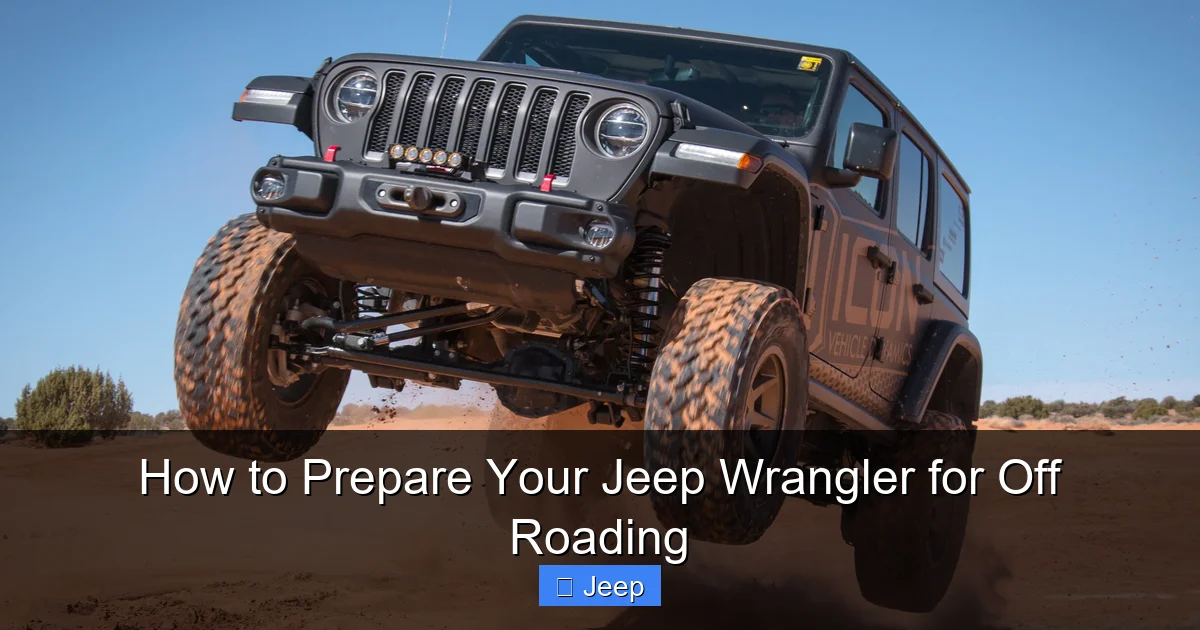
Next up is your suspension. Stock Jeeps sit pretty low. On a trail, that is a problem. You will scrape your undercarriage on every rock. You need more ground clearance to avoid damage. This is why you need a lift kit. It is a key step in how to prepare your Jeep Wrangler for off roading.
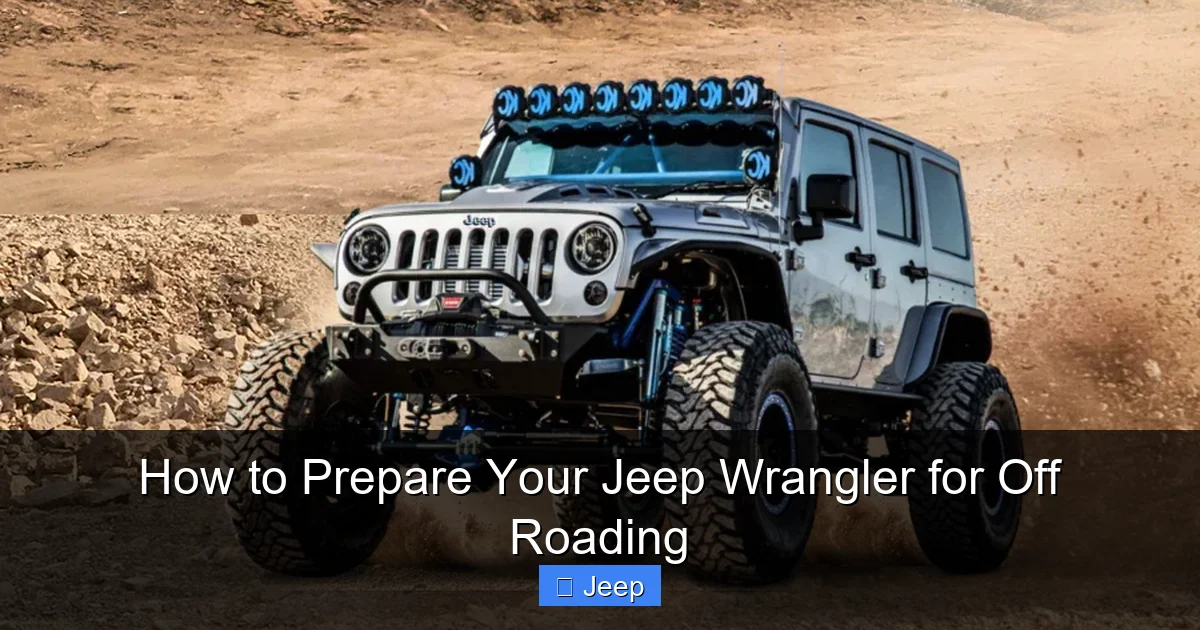
Visual guide about How to Prepare Your Jeep Wrangler for Off Roading
Image source: simivalleychryslerdodgejeepram.com
Why You Need a Lift Kit
A lift kit raises your Jeep body higher off the ground. It gives you the clearance you need to clear big obstacles. There are different lift levels. A 2-inch lift is great for beginners. It adds clearance without changing your driving too much. A 4-inch lift is better for serious trails. It allows for bigger tires and massive obstacles.
When you install a lift, you also need new spacers and longer bolts. This changes your geometry and handling. It is a fun project, but it takes time. Always follow the instructions carefully. A bad install can ruin your alignment and make driving dangerous.
Upgrading Your Shocks
With a lift, your stock shocks will not cut it. They will bottom out too easily. Upgraded shocks absorb the impacts better. They keep your tires on the ground. This is crucial for control. You do not want your Jeep bouncing around on a rocky trail.
Look for shocks with heavy-duty dust boots. They keep dirt out of the internals. You can choose between coilovers and reservoir shocks. Reservoir shocks are better for heavy duty use. They keep the fluid cool during long drives. Your ride will be smoother and safer.
Mastering Your 4WD System
Your Jeep Wrangler has a brilliant 4WD system. But you have to know how to use it. Many people get stuck because they engage 4WD at the wrong time. You must understand your system before you hit the trail. Knowing how to switch modes is vital for how to prepare your Jeep Wrangler for off roading.
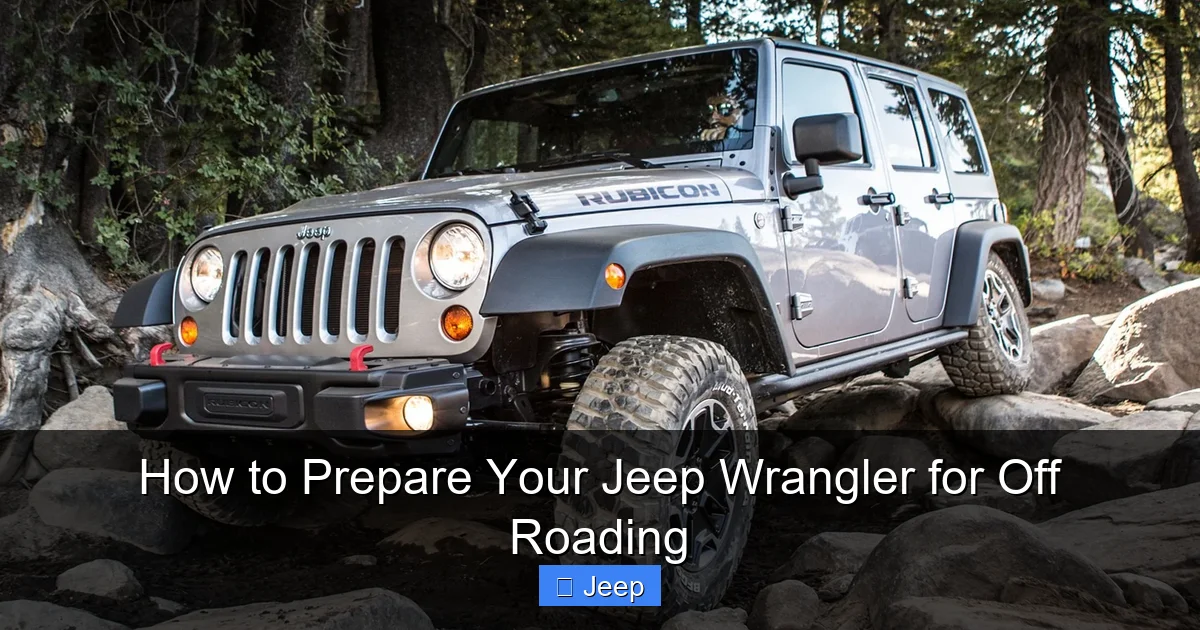
Visual guide about How to Prepare Your Jeep Wrangler for Off Roading
Image source: cimg1.ibsrv.net
Understanding 2H vs 4H vs 4L
Let us break down the modes. 2H is two-wheel drive. This is for highway driving. It gives you the best fuel economy. 4H is four-wheel drive high. You use this for slippery conditions like snow or mud. You can drive up to 55 MPH in 4H. It sends power to all four wheels for better grip.
4L is four-wheel drive low. This is for extreme conditions. Use it for crawling over rocks or climbing steep hills. It gives you maximum torque and control. Never drive faster than 25 MPH in 4L. It is not for pavement. Engaging 4L on dry pavement can break your drivetrain.
When to Engage 4WD
Engage 4H when you feel your Jeep slipping. If the rear wheels start to spin, switch to 4H immediately. It will give you the traction you need to get moving again. Always shift into 4H while moving slowly. Do not try to shift while stopped. It can strain the transfer case.
If you are stuck in deep mud, drop into 4L. Let the low range pull you out slowly. Do not slam the gas. Gentle inputs are the key. If you have an automatic transmission, learning how to switch from 2H to 4H Jeep Wrangler Automatic is very easy. Just follow the dashboard prompts.
Essential Recovery Gear
Even with the best tires and suspension, you can get stuck. That is just part of off roading. When you are stuck, you need the right tools to get out. You should never go off roading without recovery gear. It is better to have it and not need it. This gear is a must for how to prepare your Jeep Wrangler for off roading.
Visual guide about How to Prepare Your Jeep Wrangler for Off Roading
Image source: s3.amazonaws.com
The Winch and Recovery Boards
A winch is the most important tool you can carry. It attaches to the front bumper and pulls you out. If you are stuck in mud or sand, a winch is a lifesaver. Always pair it with a quality strap. Attach the strap to a tree or a recovery point.
Recovery boards are also essential. These are flat boards you place under your tires. They give your tires something to bite into. You can use wooden boards or composite mats. They work great when you are spinning on soft surfaces. Just place them under the drive wheels and drive out slowly.
Air Compressors for Tire Adjustments
We talked about lowering tire pressure earlier. But you need a way to put the air back in. A portable air compressor is a must-have. You can use it to reinflate your tires after the trail. Some compressors run off your cigarette lighter. Others are battery-powered.
You can also use a compressor to adjust pressure on the trail. If you hit a sandy patch, let some air out. Then, use the compressor to adjust when you are done. Check out the best off-road air compressors to find one that fits your budget. Being prepared for tire changes is a huge part of the adventure.
Fluids, Battery, and Mechanical Prep
Off roading puts a lot of stress on your Jeep. The engine works harder. The transmission heats up. You need to check your fluids before every trip. Ignoring your fluids can lead to major mechanical failures. A breakdown in the middle of nowhere is no fun. Check your fluids to prepare your Jeep Wrangler for off roading.
Checking Vital Fluids
Start with your engine oil. It lubricates all the moving parts. Off roading can dirty your oil faster. Check your dipstick before you go. If it is dark, change it. You should also check your transmission fluid. It needs to be at the right level to handle the extra strain.
Do not forget your brake fluid. If you are climbing steep hills, your brakes work overtime. Low brake fluid is dangerous. Check your coolant level too. Overheating is a common problem when towing or climbing. Top off all fluids and keep a spare jug in the trunk.
Protecting Your Electrical System
Your Jeep Wrangler relies on electricity. Your lights, winch, and GPS all need power. Off roading can be hard on your battery. Vibrations and bumps can loosen terminals. Check your battery terminals for corrosion. Clean them off if you see any white or blue powder.
Consider adding a secondary battery or a power bank. This ensures your electronics stay on. It is also a good idea to cover your fuse box. Water and mud can cause shorts. Keeping your electrical system dry and secure keeps your Jeep running.
Packing the Right Supplies
Your Jeep is not the only thing that needs prep. You need to pack the right supplies. You might be far from help if you break down. You need to be self-sufficient. Packing the right gear is the final step in how to prepare your Jeep Wrangler for off roading.
First Aid and Tools
A first aid kit is a must. Cuts and scrapes happen on the trail. You need bandages and antiseptic. You should also pack a basic tool kit. You might need to tighten a loose bolt. A screwdriver and pliers can save the day.
Food and Water
Always bring extra food and water. You might be stuck for hours. You need to stay hydrated and energized. Pack snacks that are easy to eat. Granola bars and trail mix are great choices. Do not forget a water filter just in case.
Conclusion
Off roading is one of the greatest ways to enjoy your Jeep Wrangler. The freedom of the open trail is unbeatable. But you must respect the wilderness. Preparation is the key to a safe and fun trip. Now you know how to prepare your Jeep Wrangler for off roading.
Remember to start with your tires. They are your connection to the ground. Next, upgrade your suspension for better clearance. Learn your 4WD system inside and out. Always pack recovery gear and check your fluids. With these steps, you are ready for anything.
So grab your keys and hit the trail. Your next adventure is waiting. Take care of your Jeep, and it will take care of you. Happy trails, fellow Jeep owners!
Frequently Asked Questions
What tires do I need for off roading?
You need tires with aggressive tread. All-terrain tires work well for mixed trails. Mud-terrain tires are best for extreme mud and rocks. Choose based on your typical off roading style.
How much should I lower my tire pressure?
For mud, drop to around 15 PSI. For rocks, 20 PSI is a good start. Lower pressure increases your tire’s grip. Always air up before driving on the highway.
Can I drive on pavement in 4WD?
You should not drive in 4L on pavement. It can break your drivetrain. 4H is okay for pavement in a pinch. Always shift back to 2H when you are on dry pavement.
What is the most important recovery gear?
A winch is the most important tool. It can pull you out of mud or sand. You should also carry recovery boards and D-rings. These tools can save your trip.
Do I need a lift kit for off roading?
A lift kit is highly recommended. It gives you the ground clearance you need. Stock Jeeps scrape on rocks easily. A lift protects your undercarriage from damage.
How often should I check my fluids?
You should check your fluids before every off roading trip. Off roading stresses your engine and transmission. Check your oil, coolant, and brake fluid. Keep spare fluids in your trunk.