How to Balance Jeep Leaf Spring on Off Road
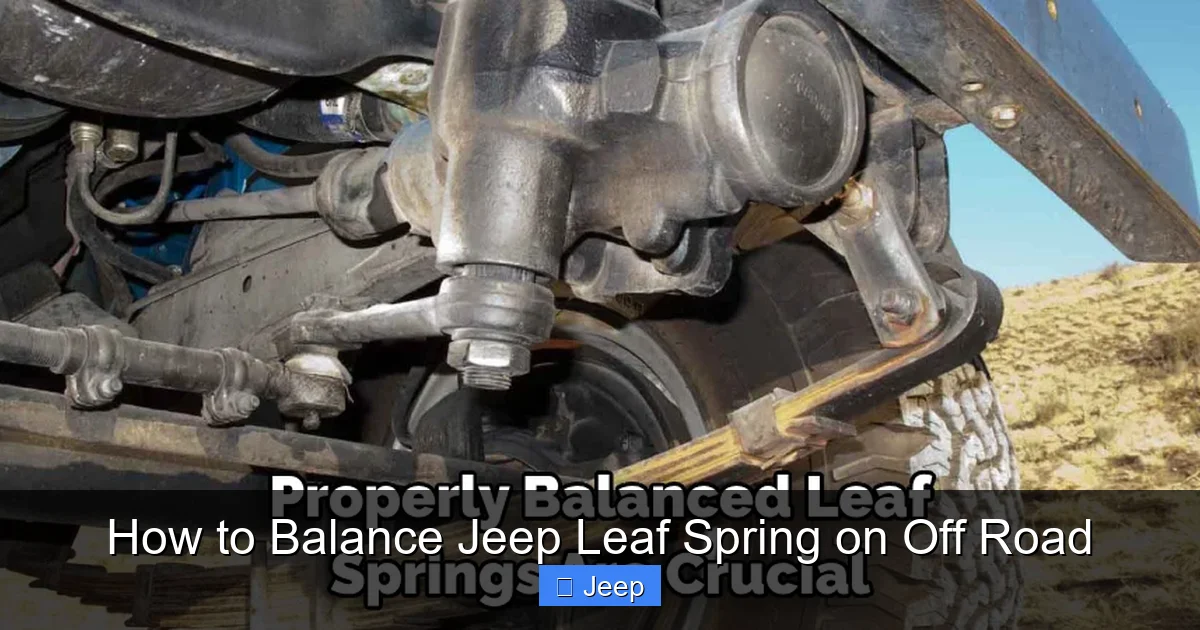
Balancing your Jeep leaf spring is essential for off-road success. Properly balanced springs improve handling, reduce wear, and keep you safe on rough trails. Follow this guide to balance your Jeep leaf spring on off road adventures with confidence.
Key Takeaways
- Inspect regularly: Check leaf springs for cracks, rust, and wear before every off-road trip.
- Measure correctly: Use proper tools to measure spring height and ensure even balance.
- Replace in pairs: Always replace leaf springs in sets to maintain balanced suspension.
- Check shackles and bolts: Loose hardware causes uneven wear and dangerous flex.
- Test drive after work: Verify balance with a test drive on safe terrain before hitting trails.
- Clean after trips: Mud and debris cause rust and imbalance over time.
- Torque to spec: Never guess bolt tightness. Use a torque wrench every time.
📑 Table of Contents
- Understanding Jeep Leaf Springs and Off-Road Demands
- Signs Your Jeep Leaf Spring Needs Balancing
- Tools You Need to Balance Jeep Leaf Spring on Off Road
- Step-by-Step Guide to Balancing Leaf Springs
- Common Mistakes to Avoid
- Maintaining Balance After Off-Road Trips
- Choosing Replacement Leaf Springs
- Conclusion
Understanding Jeep Leaf Springs and Off-Road Demands
Jeep leaf springs carry the weight of your rig. They absorb bumps and keep your tires grounded. When you take a Jeep leaf spring off road, it faces rocks, mud, and deep ruts. Understanding how these springs work helps you balance them correctly.
Leaf springs have been around for over a century. They are simple but strong. Each leaf shares the load. When one leaf fails, the whole spring suffers. Off-road driving pushes springs to their limit. You need to know what to look for.
Most Jeeps use multi-leaf springs. These have several leaves stacked. The top leaf is the longest. The bottom leaf is the shortest. They work together to flex and rebound. Balance means all leaves share the load evenly.
A balanced Jeep leaf spring keeps your ride smooth. It prevents bottoming out. It maintains tire contact. Tire contact is everything off-road. Without it, you lose traction. Without traction, you get stuck.
What Do Leaf Springs Do?
Leaf springs are curved metal strips stacked together. They connect the axle to the frame. When you hit a bump, the spring compresses. Then it releases energy to smooth out the ride. A balanced leaf spring keeps your Jeep level left and right.
Without proper balance, your Jeep dives or squatters. Diving happens under braking. Squatting happens under acceleration. Both feel bad and hurt control. Balancing the springs fixes these issues.
Springs also locate the axle. They keep the wheel in the right position. If a spring is bent, the axle shifts. This changes your steering geometry. Steering geometry affects safety at speed.
Think of leaf springs as your Jeep’s spine. They hold everything together. When the spine is straight, the Jeep runs well. When it bends, problems follow.
Why Off-Road Riding Is Hard on Springs
Off-road trails twist, turn, and jump. Your suspension takes a beating. Rocks can bend leaves. Mud can cause corrosion. Over time, one spring may sag more than the other. This creates an imbalance.
An unbalanced spring affects steering and stability. You might drift on corners. Braking distance increases. Ride comfort drops. These are safety issues. Fix them before your next adventure.
Water is the enemy. It rusts leaves from the inside. Mud holds moisture against metal. After river crossings, dry your springs. Use compressed air if possible. Prevention stops rust before it starts.
Heat is another killer. Desert trails bake metal. Metal fatigues over time. Check for heat cracks near the eyes. These cracks start small. They grow fast under load.
Signs Your Jeep Leaf Spring Needs Balancing
You do not need a mechanic to spot problems. Look for these signs before your next trip.
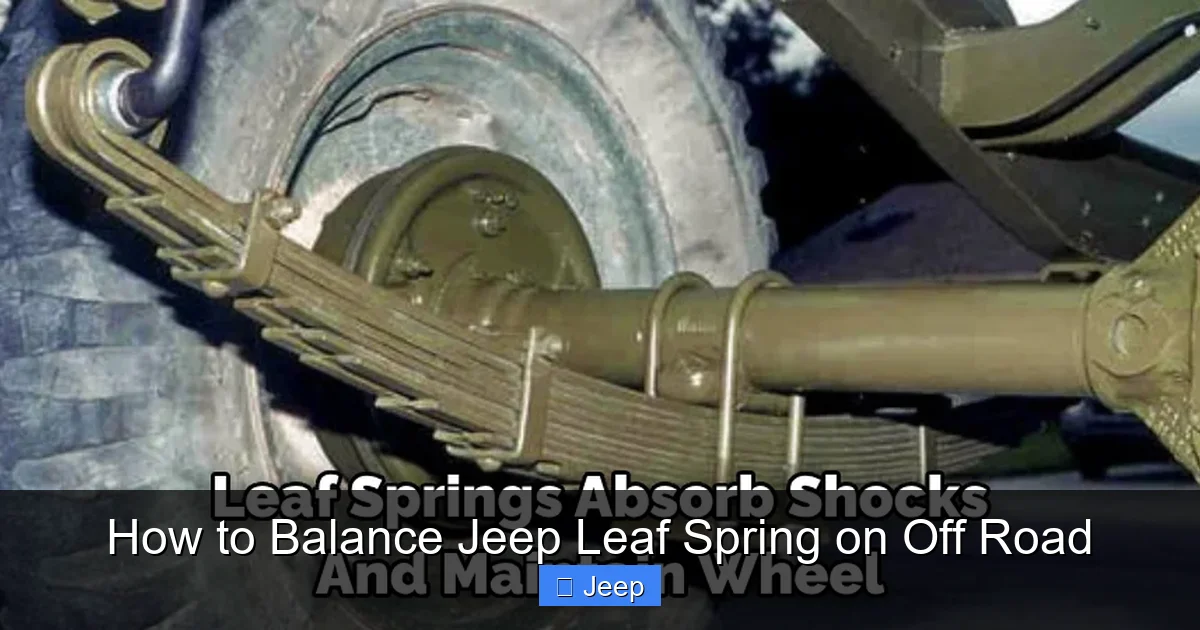
Visual guide about How to Balance Jeep Leaf Spring on Off Road
Image source: jeepfixes.com
Uneven Ride Height
Park your Jeep on flat ground. Look at it from the front. Is one side lower than the other? That means one leaf spring is worn or bent. A height difference of more than one inch needs attention.
Check both front and rear. Front springs handle steering loads. Rear springs carry cargo and traction. Both must be balanced for safe off-roading.
Sit in the Jeep too. Does it lean when you enter? That tells a story. Heavy side means weak spring. Light side means stiff spring. Balance the weight and the spring.
Measure with a tape measure. Record the numbers. Compare side to side. Small differences matter. They grow into big problems fast.
Steering Pull and Vibration
Does your Jeep pull left or right? Do you feel vibration in the steering wheel? These are clues. An unbalanced leaf spring shifts weight unevenly. The steering responds to that shift.
Fix the spring, and the pull often disappears. If vibration persists, check tires too. Balanced springs and balanced tires work together. Replace tires if they are worn unevenly.
Vibration at certain speeds is a red flag. It means the spring is not sharing load evenly. The axle hops slightly. That hop feels like vibration. Balance the spring, kill the vibration.
Excessive Body Roll
Body roll happens when corners feel loose. If your Jeep leans too much in turns, check the springs. One weak spring lets the body sway.
Balancing both sides restores confident cornering. You feel more connected to the trail. Control improves dramatically. You can take corners faster with confidence.
Body roll also shifts cargo. Loose cargo is dangerous cargo. Balance the springs. Secure the cargo. Do both for safe trails.
Noise and Clunks
Listen for clunks over bumps. Loose shackles make noise. Worn bushings squeak. These are signs of imbalance. Tighten or replace the parts causing noise.
Noise means movement where there should be none. Movement causes wear. Wear causes failure. Address noise early. A small fix today saves a big fix tomorrow.
Tools You Need to Balance Jeep Leaf Spring on Off Road
Gather your tools before you start. Working under a Jeep requires care and the right equipment.
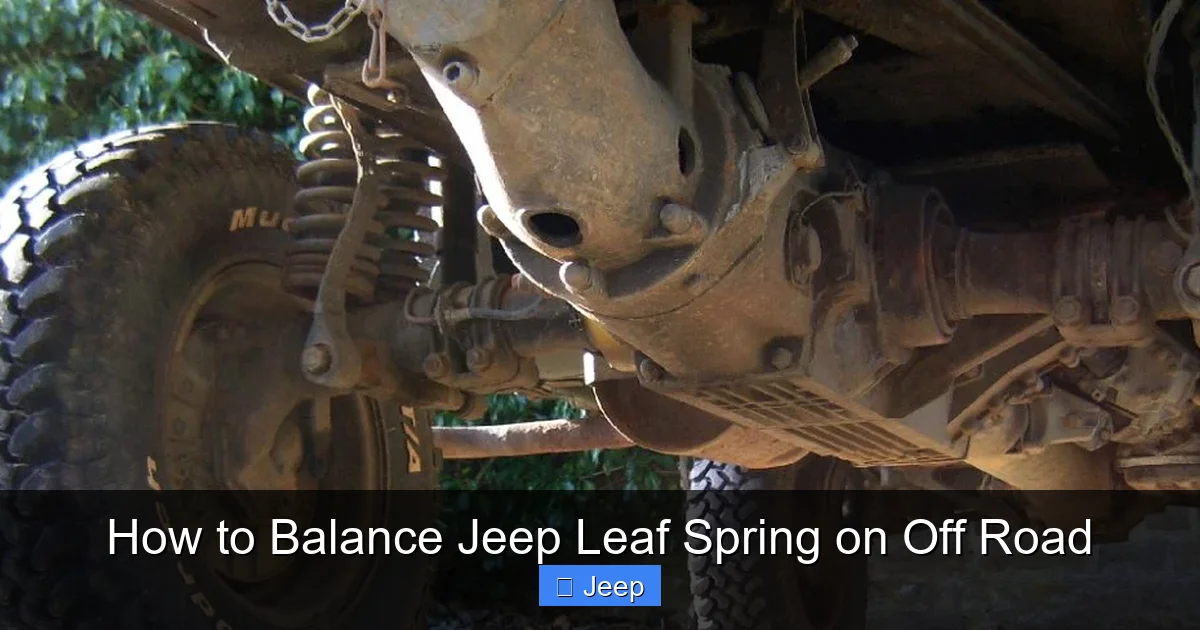
Visual guide about How to Balance Jeep Leaf Spring on Off Road
Image source: jeepfixes.com
Basic Hand Tools
You need a jack, jack stands, wrench set, and socket set. Penetrating oil helps loosen rusted bolts. Have a torque wrench ready for final tightening.
A spring compressor can help but is not always needed. Many Jeep leaf springs bolt on without compression. Check your specific model first.
Bring a wire brush too. Clean bolts last longer. Rust makes removal hard. Penetrating oil plus patience works wonders. Clean the area before you loosen bolts.
Measurement Tools
A tape measure or spring height gauge works well. Measure from the axle center to the frame. Record readings for both front and rear springs. Compare left to right.
Write everything down. Memory fails. Paper does not. Note the date and mileage too. This helps track wear over time.
A level helps too. Place it on the roof. Check if the Jeep is truly level. Uneven ground fools your eyes. A level tells the truth.
Safety Equipment
Wear gloves and safety glasses. Work on a flat surface. Never trust a jack alone. Use jack stands and block the wheels.
Off-road trips demand extra caution. A falling Jeep causes serious injury. Take safety seriously every time. Your life is worth more than a weekend project.
Work with a friend if possible. They can hand tools and spot problems. Two sets of eyes catch more mistakes. Safety is a team sport.
Step-by-Step Guide to Balancing Leaf Springs
Follow these steps in order. Do not skip any part.
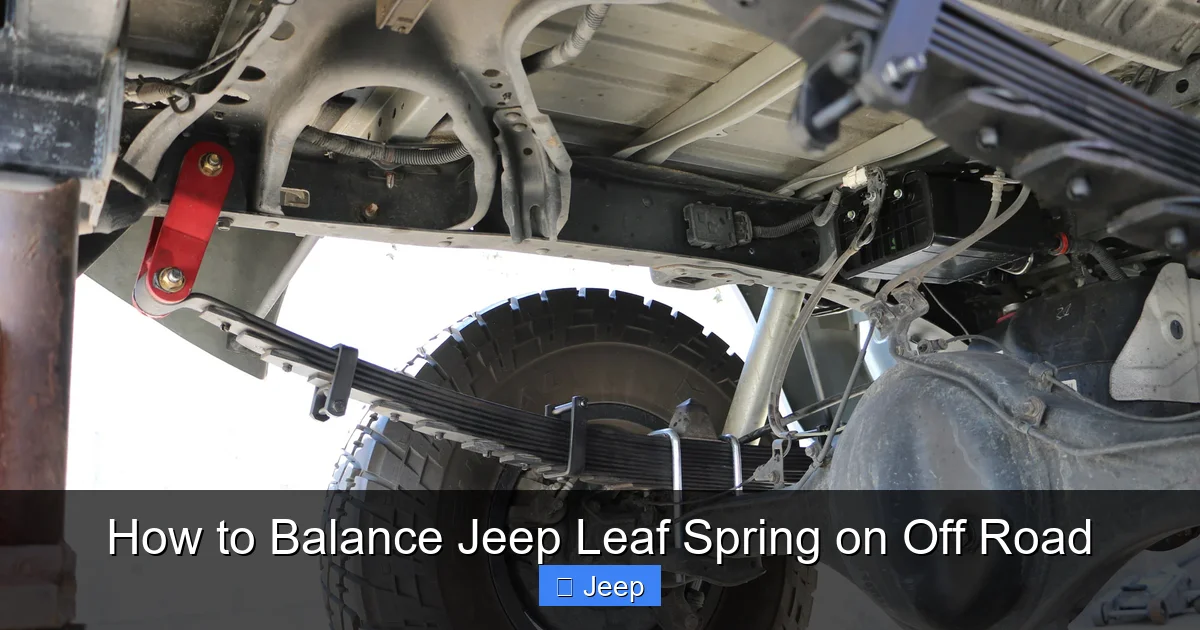
Visual guide about How to Balance Jeep Leaf Spring on Off Road
Image source: motortrend.com
Step 1 – Park on Level Ground
Find a flat garage or driveway. Set the parking brake. Block the rear wheels. This keeps the Jeep still while you work.
Turn off the engine. Remove the key. If your Jeep has air suspension, learn how to disable air suspension on Jeep Grand Cherokee before you begin. This prevents unexpected movement while you work under the vehicle.
Chock the front wheels too. Rollaway is no joke. Blocks cost a few dollars. They save your Jeep and your sanity.
Step 2: Measure Spring Height
Lift the Jeep with a jack. Place jack stands under the frame. Remove the wheel. Measure the spring arch. Write down the numbers.
Front and rear springs should match within a quarter inch. If one side is lower, that spring needs attention. Note any leaning or twisting. Measure at the spring eye too.
Measure at multiple points. The center and the eyes. Compare all readings. One bad number tells a story. Write it all down.
Step 3: Check for Bent or Broken Leaves
Inspect each leaf carefully. Look for cracks, gaps, or bends. A single broken leaf changes the spring rate. Replace damaged springs in pairs.
Never mix old and new on the same axle. The new spring is stiffer. The old spring is tired. This creates imbalance fast. Replace both sides together.
Use a flashlight. Look between leaves. Debris hides there. Clean as you go. Dirt causes premature wear. A clean spring lasts longer.
Step 4: Adjust or Replace Springs
If springs are sagging, replace them. If they are just dirty, clean and lubricate the shackles. Tighten all bolts to factory specs.
Check the shackle angle too. Misaligned shackles cause binding. Binding leads to uneven wear. Balance the hardware as well as the spring.
Shackles should be vertical at rest. If they angle forward or back, adjust them. Correct angle means correct geometry. Geometry means safe flex.
Step 5: Torque All Hardware
Use your torque wrench. Follow the Jeep manual for exact numbers. Over-tightening cracks bolts. Under-tightening lets parts move.
Both cause imbalance. Retorque after 50 miles. Springs settle into place. A second check ensures safety.
Mark bolts with paint after torquing. Paint marks show if bolts move. If the mark shifts, retorque. This simple trick catches loose hardware.
Common Mistakes to Avoid
Skipping the Torque Specs
Many DIYers guess torque values. Do not. Every bolt has a spec. Check your owner manual or service guide.
Guessing risks loose parts. Loose parts fall off. Falling parts cause accidents. Use the numbers. They exist for a reason.
Online forums give advice. But every Jeep is different. Your year and model matter. Trust the manual over forum posts.
Mixing Old and New Springs
Putting a new spring with an old one creates imbalance. The old spring is already tired. Replace both sides at once.
This applies to front and rear. Match axle sides too. Left and right must be identical in age and condition. Mismatched springs cause handling problems.
Even color tells a story. New springs shine. Old springs dull. Match the shine too. Uniform parts mean uniform performance.
Ignoring Shackle Alignment
Shackles pivot the spring. If they angle wrong, the spring binds. Check alignment after every off-road trip.
Tight bolts do not fix bad angles. Align first, then torque. This simple step saves many headaches. Misalignment causes premature wear.
Draw a line before you remove shackles. Line up marks during reinstall. This trick saves alignment time. Time saved is frustration avoided.
Forgetting Bushings
Bushings cushion the spring eyes. Worn bushings let metal rub metal. This causes noise and damage. Replace bushings when you replace springs.
Polyurethane bushings last longer than rubber. They cost more but save time. Choose based on your trail type. Hard trails need tough bushings.
Lubricate bushings regularly. Dry bushings squeak and crack. Grease them every few months. Maintenance is cheap insurance.
Maintaining Balance After Off-Road Trips
Post-Trip Inspection Routine
After every hard run, inspect your springs. Look for cracks or loose bolts. Clean off mud and debris. Mud traps moisture and speeds rust.
Spray with water after trips. Let it dry. Apply rust inhibitor if needed. Prevention costs little. Repair costs much.
Check bolt tightness weekly. Vibration loosens hardware. A five-minute check saves big repairs. Make it part of your routine.
Carry a small tool kit. Include a torque wrench and sockets. Tighten what loosens on the trail. Self-reliance is the Jeep way.
When to Seek Professional Help
If you feel unsafe, see a pro. Some flex issues need a alignment rack. A shop can measure spring rate with special tools.
Do not guess with safety. If the Jeep handles strange, get it checked. Better safe than sorry on the trail. Professionals have the right equipment.
A pro can also align your Jeep after spring work. Alignment ensures tires wear evenly. Even wear means longer tire life. Longer tire life means more trail time.
Choosing Replacement Leaf Springs
Not all springs are equal. OEM springs work for most drivers. Aftermarket springs offer more flex or more load capacity. Choose based on your trail type.
Consider your weight. Add cargo, bumpers, and armor. Heavy rigs need stronger springs. Light springs sag under extra weight. Match leaf spring rate to your setup.
Brand matters too. Read reviews. Ask other Jeep owners. Quality springs last longer. Cheap springs fail faster. Spend wisely on suspension.
Lift kits change spring specs. If you lift your Jeep, buy springs made for that lift. Wrong springs ruin geometry. Wrong geometry ruins control.
Conclusion
Balancing your Jeep leaf spring on off road trips keeps you safe. It improves handling and extends part life. Take time to inspect, measure, and torque correctly.
Your Jeep will reward you with smooth runs and confident trails. Ride smart, balance often, and enjoy the adventure. Before your next trip, practice how to switch from 2H to 4H Jeep Wrangler automatic for better control. Also consider pairing your setup with best on and off road tires for light trucks for maximum grip.
Balance is not a one-time job. Check your springs monthly. Trails change. Conditions change. Your maintenance routine should too. Stay ahead of problems. Your Jeep depends on you.
A balanced Jeep leaf spring means a balanced ride. You feel more confident. You drive more smoothly. You enjoy the journey more. Do the work. Do it right. Do it often.
Frequently Asked Questions
How often should I check my Jeep leaf springs for balance?
Check before every off-road trip and monthly during regular use. Inspect after hard runs or river crossings. Early detection prevents costly repairs.
Can I balance leaf springs myself or do I need a shop?
Basic balancing is doable at home with the right tools. You need a torque wrench and jack stands. If you feel unsure, visit a professional shop.
What happens if I ignore an unbalanced leaf spring?
Ignoring imbalance causes uneven tire wear and poor handling. It can lead to spring failure on the trail. Safety risks increase with every drive.
Do I need to replace both leaf springs at once?
Yes, always replace in pairs. Mixing old and new springs creates imbalance. Both sides must match for safe performance.
How do I know if my leaf spring is bent?
Look for cracks, gaps, or uneven arch. Measure height side to side. A difference over one inch signals a problem.
Is balancing different for front and rear leaf springs?
The process is similar but specs differ. Front springs handle steering loads. Rear springs carry cargo weight. Check your Jeep manual for exact numbers.