How to Add Transmission Fluid Jeep Cherokee
Adding transmission fluid to your Jeep Cherokee is a simple maintenance task that every owner should know how to do. Whether you’re topping off low levels or performing a full fluid change, this guide walks you through every step. Following the right procedure helps extend your transmission’s life and keeps your Cherokee shifting perfectly.
Key Takeaways
- Use the right fluid: Always check your owner’s manual for the correct transmission fluid type before adding anything to your Jeep Cherokee.
- Check fluid when warm: For the most accurate reading, check transmission fluid levels when the engine is running and the fluid is at operating temperature.
- Avoid overfilling: Adding too much fluid can cause just as many problems as low levels, so always measure carefully and recheck after adding.
- Know the signs of low fluid: Slipping gears, rough shifting, and unusual noises are common indicators that your Cherokee needs transmission fluid.
- Regular maintenance matters: Changing your transmission fluid every 30,000 to 60,000 miles helps prevent expensive repairs down the road.
- Safety first: Always work on a level surface and make sure the engine is running during the check to get accurate results.
📑 Table of Contents
- Why Adding Transmission Fluid to Your Jeep Cherokee Matters
- Understanding Your Jeep Cherokee’s Transmission
- Signs Your Jeep Cherokee Needs Transmission Fluid
- Tools and Materials You Will Need
- Step-by-Step Guide: How to Add Transmission Fluid Jeep Cherokee
- Common Mistakes to Avoid When Adding Transmission Fluid
- How Often Should You Change Transmission Fluid in a Jeep Cherokee?
- Tips for Maintaining Your Jeep Cherokee’s Transmission
- Conclusion
Why Adding Transmission Fluid to Your Jeep Cherokee Matters
Your Jeep Cherokee’s transmission is one of the most complex and expensive parts of the vehicle. It handles the power from your engine and delivers it to the wheels. Without proper transmission fluid, all those gears and moving parts would grind against each other and wear out fast. Adding transmission fluid Jeep Cherokee owners need to do regularly is one of the simplest ways to protect this vital system.
Think of transmission fluid like blood in your body. It lubricates, cools, and keeps everything flowing the way it should. When that fluid gets low or dirty, your transmission starts to struggle. You might notice rough shifts, slipping gears, or even complete failure if you ignore the problem. The good news is that topping off your transmission fluid takes just a few minutes and costs very little.
In this guide, we will walk you through everything you need to know. From identifying the right fluid to step-by-step instructions, you will have the confidence to handle this task on your own.
Understanding Your Jeep Cherokee’s Transmission
Types of Transmissions in the Jeep Cherokee
The Jeep Cherokee comes with different transmission types depending on the model year and trim. Most modern Cherokees use a ZF 9-speed automatic transmission, which is well-regarded for its smooth shifting and efficiency. Older models may have a Chrysler-built 948TE or even a manual transmission in some base trims.
Visual guide about How to Add Transmission Fluid Jeep Cherokee
Image source: adventurejeep.com
Knowing which transmission your Cherokee has matters because each type may require a slightly different fluid or procedure. The ZF 9-speed, for example, needs specific ATF+4 fluid. Using the wrong fluid can lead to poor performance and even damage. Always double-check your owner’s manual before purchasing any transmission fluid.
How the Transmission System Works
Your transmission uses fluid pressure to engage different gears. When you shift from park to drive, the fluid hydraulically activates clutches and bands that connect the right gear sets. If the fluid level is low, there is not enough pressure to engage those gears properly. This is why low transmission fluid causes slipping and rough shifting.
The fluid also keeps all the internal components cool. Transmissions generate a lot of heat, especially during towing or stop-and-go driving. Clean, full fluid absorbs that heat and carries it away. Over time, fluid breaks down and loses its effectiveness. That is when you need to add or fully change it.
Signs Your Jeep Cherokee Needs Transmission Fluid
Warning Signs of Low Transmission Fluid
Catching low fluid early can save you from expensive repairs. Here are the most common signs your Jeep Cherokee is running low on transmission fluid:
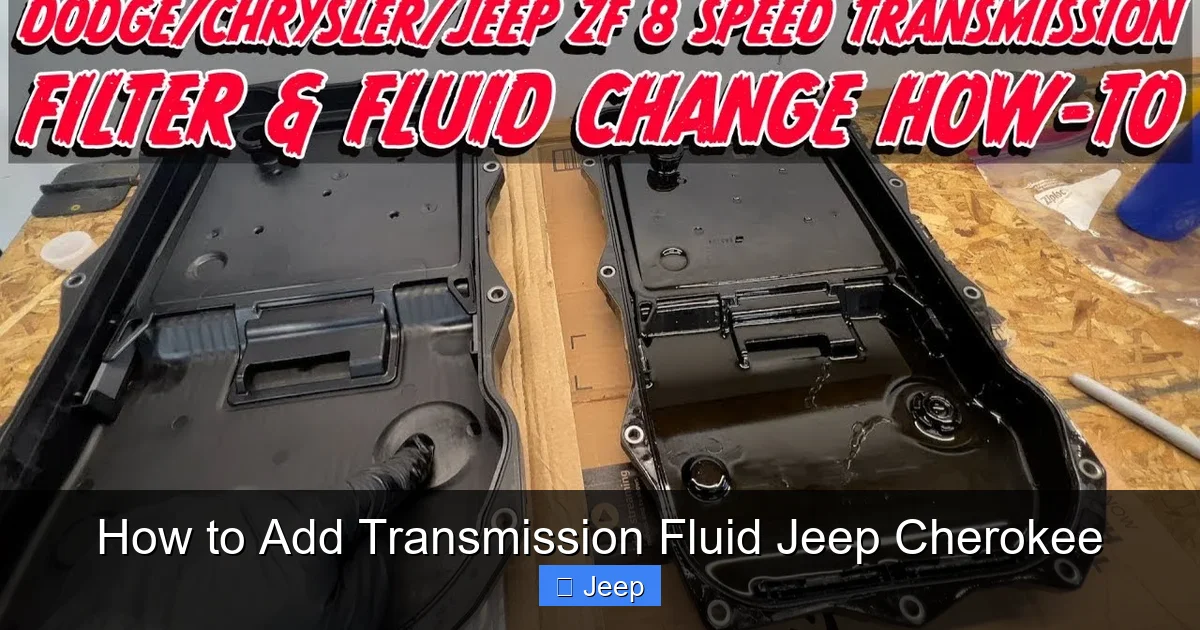
Visual guide about How to Add Transmission Fluid Jeep Cherokee
Image source: adventurejeep.com
- Slipping gears: If your Cherokee unexpectedly shifts out of gear or the RPMs spike without a corresponding speed increase, low fluid is often the culprit.
- Rough or delayed shifting: A pause or jerk when shifting between gears usually means the fluid is not creating enough hydraulic pressure.
- Unusual noises: Grinding, whining, or buzzing sounds coming from the transmission area suggest the parts are not getting proper lubrication.
- Burning smell: Overheated transmission fluid produces a distinct burnt odor. This means the fluid is old and possibly low.
- Check transmission warning light: Some Cherokee models have a dedicated warning light. If it comes on, do not ignore it.
Many of these symptoms start small and get worse over time. If you notice any of them, check your fluid level immediately. For guidance on when to check transmission fluid in general, our article on the best times to check your transmission fluid covers the topic in detail.
When to Check and Add Fluid
You should check your transmission fluid at least once a month. More importantly, check it before long trips or when you are towing. The best time to check is when the engine is warm and running, as this gives the most accurate level reading for automatic transmissions.
Tools and Materials You Will Need
Gathering the Right Equipment
Before you start, make sure you have everything ready. Here is a simple checklist:
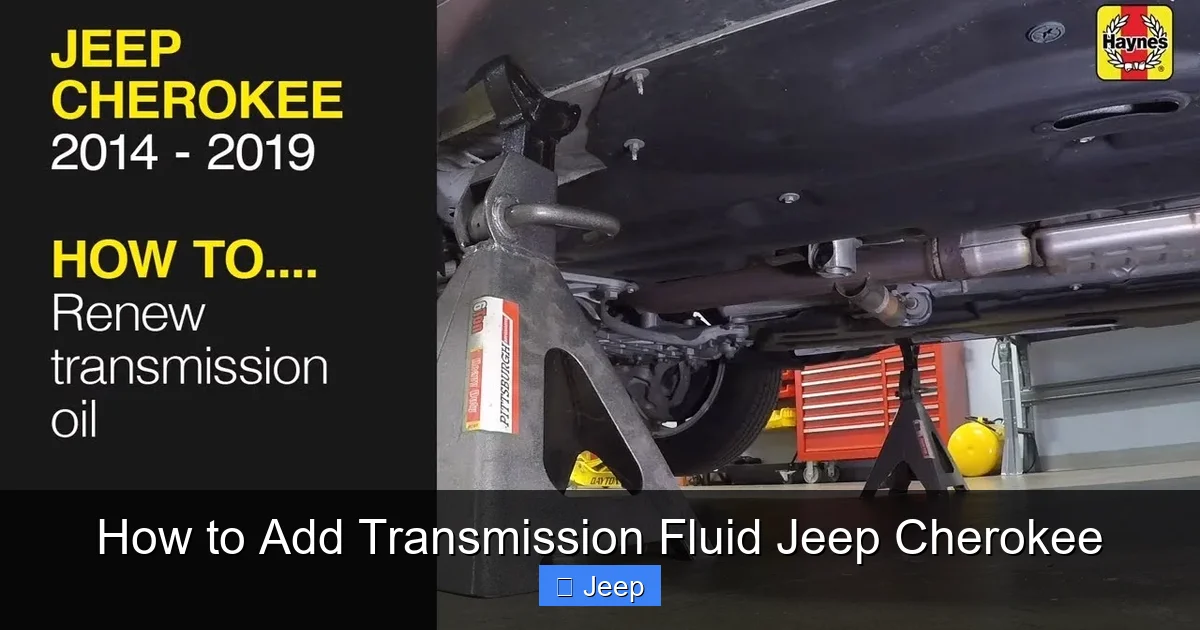
Visual guide about How to Add Transmission Fluid Jeep Cherokee
Image source: i.ytimg.com
- Correct transmission fluid (ATF+4 for most Jeep Cherokee models with automatic transmission)
- A clean funnel that fits the transmission fluid filler tube
- A rag or shop towels for cleaning up spills
- Your owner’s manual for reference
- A jack and jack stands or ramps if you need access underneath the vehicle
- Protective gloves and safety glasses
Choosing the Right Transmission Fluid
This is the most important step. Using the wrong fluid can cause serious damage to your transmission. For the Jeep Cherokee with the ZF 9-speed automatic, the manufacturer recommends Chrysler ATF+4. Some older models may use a different specification, so always verify with your owner’s manual.
Do not use universal or multi-purpose transmission fluids unless the manual specifically allows it. Synthetic blends designed for specific transmission types offer better protection and longer life. Buying a quality fluid from a trusted brand is worth the extra cost. Think of it as insurance for a part that costs thousands to replace.
Step-by-Step Guide: How to Add Transmission Fluid Jeep Cherokee
Step 1: Park on a Level Surface
Start by parking your Jeep Cherokee on a flat, level surface. This ensures an accurate fluid reading. Engage the parking brake and make sure the vehicle is stable. If you are working on a slope, the fluid level in the dipstick tube will be misleading.
Step 2: Warm Up the Engine
Run the engine for about 5 to 10 minutes to bring the transmission fluid to operating temperature. The fluid needs to be warm and circulating to give you a proper level reading. Some mechanics recommend driving the vehicle briefly to warm the fluid evenly through the system.
Step 3: Locate the Transmission Dipstick
Open the hood and locate the transmission dipstick. On most Jeep Cherokees, it is located toward the back of the engine bay on the passenger side. It often has a bright-colored handle, usually red or yellow, making it easy to spot. If you have trouble finding it, consult your owner’s manual or look for a tube near the back of the engine.
Step 4: Check the Current Fluid Level
With the engine still running, pull out the dipstick and wipe it clean with a rag. Reinsert the dipstick fully, then pull it out again. Look at the fluid level on the dipstick. There should be marks for “Full” and “Add” or “Low.” The fluid should be between these two marks.
While you are checking, look at the color of the fluid. Healthy transmission fluid is pink or red and translucent. If it looks brown, dark, or smells burnt, it is time for a full fluid change, not just a top-off.
Step 5: Add Transmission Fluid
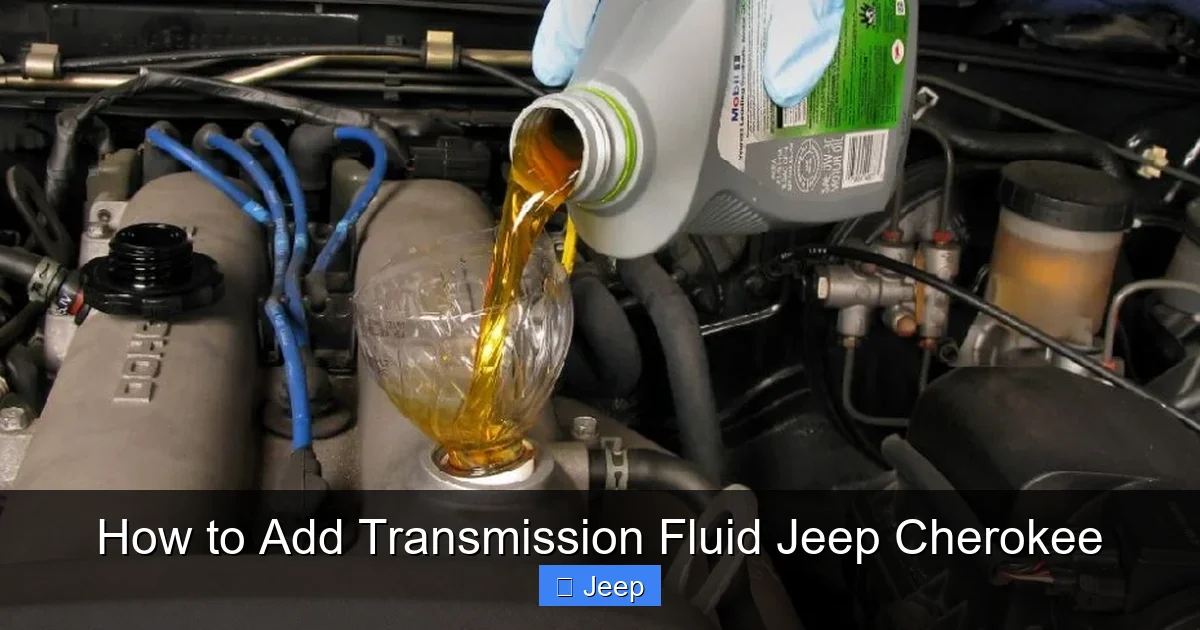
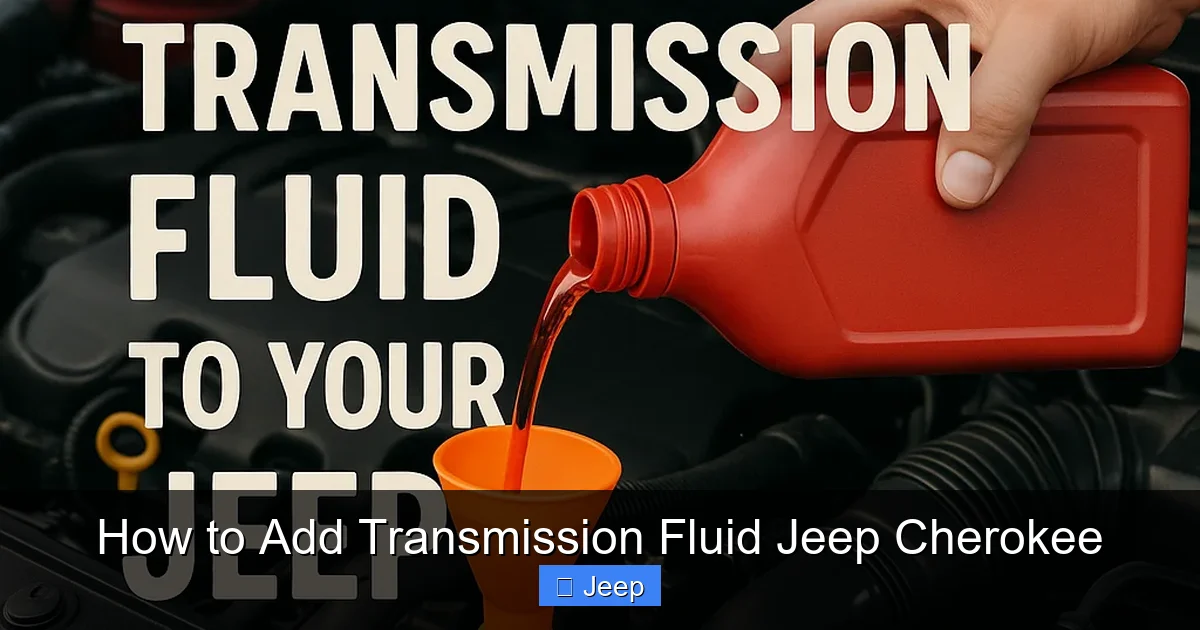
If the level is low, it is time to add fluid. Place a funnel into the transmission fluid filler tube, which is usually right next to the dipstick tube. Slowly pour the ATF+4 into the tube. Add a small amount at a time, about half a quart, then recheck the level with the dipstick.
Keep adding small amounts until the fluid reaches the “Full” mark on the dipstick. Do not overfill. Overfilling can cause foaming, pressure buildup, and damage to internal seals. Patience is key here. Pouring too much at once makes it hard to control the level accurately.
Step 6: Recheck and Clean Up
After adding fluid, check the dipstick one more time to confirm the level. Start the engine and shift through all the gears, including park, reverse, neutral, and drive, to let the fluid circulate. Then recheck the level once more and top off if needed. Clean up any spills and close the hood.
Common Mistakes to Avoid When Adding Transmission Fluid
Overfilling the Transmission
One of the biggest mistakes Cherokee owners make is adding too much fluid. It might seem like more is better, but overfilling causes more harm than good. Excess fluid creates foam and pressure inside the transmission, which can lead to seal damage and erratic shifting. Always add slowly and check frequently.
Using the Wrong Fluid Type
As mentioned earlier, using the wrong fluid is a costly error. Do not guess or assume all automatic transmission fluids are the same. Each transmission is designed to work with specific fluid properties. Stick with ATF+4 unless your manual says otherwise. If you are unsure, visit a dealership or trusted mechanic for advice.
Checking Fluid When Cold
Checking transmission fluid with a cold engine gives an inaccurate low reading for automatic transmissions. You might end up adding fluid you do not need. Always run the engine and let it warm up before checking. This applies to most vehicles, including the Jeep Cherokee.
Ignoring Fluid Quality
Adding fresh fluid on top of old, degraded fluid only provides a temporary fix. If your fluid is dark brown or smells burnt, a full drain and change is the better option. Simply topping off dirty fluid does not address the underlying problem. You might also want to learn how to reset transmission adaptive pressure after a fluid change to ensure your transmission relearns its optimal settings.
How Often Should You Change Transmission Fluid in a Jeep Cherokee?
Recommended Change Intervals
Chrysler recommends changing the transmission fluid in a Jeep Cherokee every 30,000 to 60,000 miles for normal driving conditions. If you drive in severe conditions such as towing, heavy traffic, or off-roading, you should shorten that interval to every 15,000 to 30,000 miles.
For more detailed information about fluid change schedules across different vehicles, you can read our comparison on how often to change transmission fluid Toyota Highlander owners follow, which provides a useful benchmark for transmission maintenance intervals across brands.
Severe Driving Conditions That Require More Frequent Changes
Consider more frequent fluid changes if your Cherokee regularly tows a trailer, drives in extreme heat or cold, or spends a lot of time in stop-and-go city traffic. These conditions stress the transmission and break down fluid faster than normal driving.
Regular fluid changes keep the internal components clean and well-lubricated. It is far cheaper to change fluid on schedule than to rebuild or replace a transmission that has suffered from neglect. A simple fluid change costs around $150 to $250 at a shop, while a transmission replacement can cost $3,000 or more.
Tips for Maintaining Your Jeep Cherokee’s Transmission
Keeping your transmission healthy goes beyond just adding fluid. Here are some practical tips to extend its life:
- Warm up before driving hard: In cold weather, let the engine and transmission warm up for a few minutes before aggressive driving. Cold fluid is thicker and does not lubricate as well.
- Avoid towing beyond capacity: Every Jeep Cherokee has a maximum towing capacity. Exceeding it puts extra strain on the transmission. Always check your vehicle’s towing limits before hooking up a trailer.
- Use the parking brake: On inclines, use the parking brake instead of relying solely on the transmission to hold the vehicle. This reduces stress on the parking mechanism.
- Listen to your vehicle: Unusual sounds or shifting behavior are early warnings. Address them quickly before they become major problems.
- Keep up with scheduled maintenance: Follow the manufacturer’s recommended maintenance schedule. Skipping services might save money short-term but costs more in the long run.
Conclusion
Knowing how to add transmission fluid Jeep Cherokee owners need to perform is a fundamental skill that saves time, money, and stress. The process is straightforward once you understand the steps: warm up the engine, check the level with the dipstick, add the correct fluid slowly, and recheck. Avoid common mistakes like overfilling or using the wrong fluid type, and stay on top of regular maintenance schedules.
Your Jeep Cherokee’s transmission is a precision machine that deserves proper care. By keeping the fluid clean and at the correct level, you ensure smooth shifting, reliable performance, and a longer life for one of your vehicle’s most expensive components. Take the time to do it yourself, and your Cherokee will reward you with years of trouble-free driving.
Frequently Asked Questions
Can I add transmission fluid to my Jeep Cherokee while the engine is running?
Yes, you should add transmission fluid with the engine running for automatic transmissions. The engine needs to be running so the fluid circulates and the level reading on the dipstick is accurate. Always add slowly and in small amounts to avoid overfilling.
What happens if I put too much transmission fluid in my Jeep Cherokee?
Overfilling can cause the fluid to foam, creating air bubbles that reduce hydraulic pressure. This leads to rough shifting, slipping gears, and potential damage to internal seals. If you overfill, drain the excess fluid immediately using the drain plug or have a mechanic assist you.
How do I know if my Jeep Cherokee needs transmission fluid or a full change?
If the fluid on your dipstick is pink or red and smells slightly sweet, a simple top-off is sufficient. If the fluid is dark brown, smells burnt, or has particles in it, a full fluid change is needed. Adding fresh fluid on top of degraded fluid provides only a temporary fix.
Is ATF+4 the only transmission fluid I can use in my Jeep Cherokee?
For most Jeep Cherokee models with the ZF 9-speed automatic, ATF+4 is the manufacturer-recommended fluid. Always check your owner’s manual to confirm. Using a different fluid type can cause poor shifting, premature wear, and potential transmission failure.
How long does it take to add transmission fluid to a Jeep Cherokee?
The entire process takes about 15 to 20 minutes if you have the right tools and fluid on hand. Warming up the engine, checking the dipstick, adding fluid, and rechecking all contribute to the total time. It is one of the quickest maintenance tasks you can do at home.
Can low transmission fluid cause my Jeep Cherokee to stall?
Yes, severely low transmission fluid can cause stalling or difficulty shifting into gear. When the fluid level drops too low, the transmission cannot build enough hydraulic pressure to function properly. If your Cherokee stalls or refuses to shift, check the transmission fluid immediately.