Best Equalizer Settings for Car Audio Bass Mid Treble
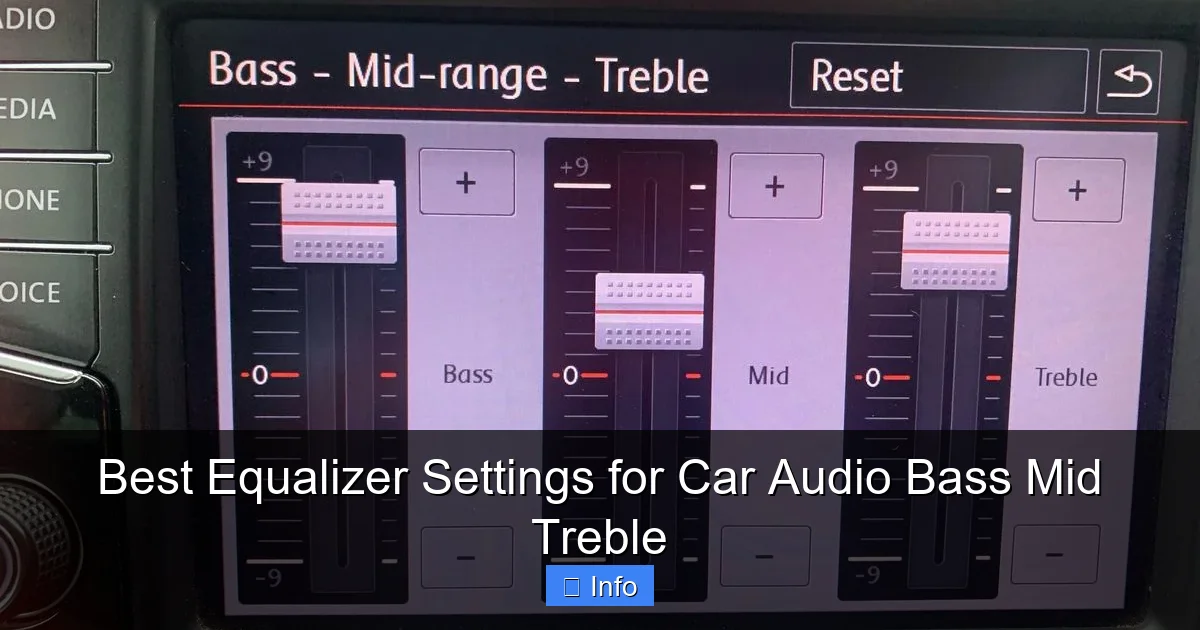
Finding the best equalizer settings for car audio bass, mids, and treble can transform your drive into a concert‑like experience. This guide breaks down simple, step‑by‑step adjustments so you hear clearer lows, richer mids, and sparkling highs without overwhelming your system. Follow our easy tips and enjoy balanced, powerful sound in every journey.
Car audio is more than just turning up the volume. It’s about shaping sound so every note, beat, and voice lands exactly where it should. The equalizer (EQ) is the tool that lets you dial in the perfect balance between bass, mids, and treble. In this article we’ll walk you through the best equalizer settings for car audio bass, mids, and treble. We’ll keep things simple, conversational, and easy to follow, even if you’ve never touched an EQ before.
Key Takeaways
- Start with a clean baseline: Remove any existing EQ adjustments before you begin tuning.
- Adjust bass first: Boost low frequencies gradually, then fine‑tune with test tracks.
- Balance mids for vocals: Use narrow filters to keep vocals clear without muddying instruments.
- Polish treble carefully: Small boosts at high frequencies add sparkle without harshness.
- Use quality cables: Good RCA cables preserve signal integrity for accurate EQ work.
- Listen in multiple seats: A car’s acoustics vary; adjust for the driver and front passenger.
- Keep a tuning log: Record settings that work best for different music genres.
📑 Table of Contents
Understanding Car Audio Equalizers
First, let’s talk about what an EQ actually does. An equalizer changes the volume of specific frequency ranges. Low frequencies are bass, middle frequencies are mids, and high frequencies are treble. Most car EQs are graphic or parametric. A graphic EQ lets you boost or cut fixed bands. A parametric EQ gives you more control over frequency, bandwidth, and gain.
When you search for the best equalizer settings for car audio bass mid treble, you’ll find many complex charts. Those charts are useful, but they can overwhelm beginners. The key is to start simple. Set your EQ to flat (no boost or cut) first. This gives you a neutral baseline. Then adjust one band at a time. Listen for changes and make small tweaks.
If you’re new to EQing, check out Best Audio Settings For Your Car For An Enhanced Listening Experience. That article explains how to set up your head unit and why a flat baseline matters. It also covers basic troubleshooting steps that will save you time later.
Why Start with a Flat EQ?
- Consistency: A flat EQ means you’re not hiding factory defects.
- Accuracy: You can hear the true sound of your speakers and subwoofers.
- Control: Each adjustment you make will be intentional.
Now that you have a baseline, let’s move to the first major area: bass.
Setting Bass for Maximum Impact
Bass is the foundation of any song. It gives music weight and energy. However, too much bass can make a car sound muddy, especially at low speeds. The best equalizer settings for car audio bass focus on controlled power.
Step‑by‑Step Bass Tuning
- Boost the lowest band (30‑80 Hz): Start with a modest +3 dB. Listen for rumble and body.
- Adjust the mid‑bass (100‑200 Hz): Add +2 dB if you need more kick from drums or bass guitar.
- Check for boomy frequencies (250‑400 Hz): Reduce if the sound feels muddy or “boxy.”
Remember, small changes add up. A +1 dB boost is noticeable, but you often don’t need more than +4 dB total across all bass bands.
Test Tracks for Bass
Use songs that highlight bass to fine‑tune. “Lose Yourself” by Eminem, “Another Brick in the Wall” by Pink Floyd, and “Stayin’ Alive” by the Bee Gees are good choices. Play them at a comfortable volume and note where the low end feels tight versus where it starts to overwhelm.
If you have a subwoofer, you’ll likely need less EQ boost on the main speakers. The subwoofer handles deep rumble, leaving the door speakers to handle mids and highs. This separation helps you achieve the best equalizer settings for car audio bass mid treble without conflicts.
Fine‑Tuning Mids for Vocals and Instruments
Mids (roughly 500 Hz to 2 kHz) contain most vocals, guitar, and keyboard sounds. Getting mids right makes music feel alive. The best equalizer settings for car audio mids focus on clarity and presence.
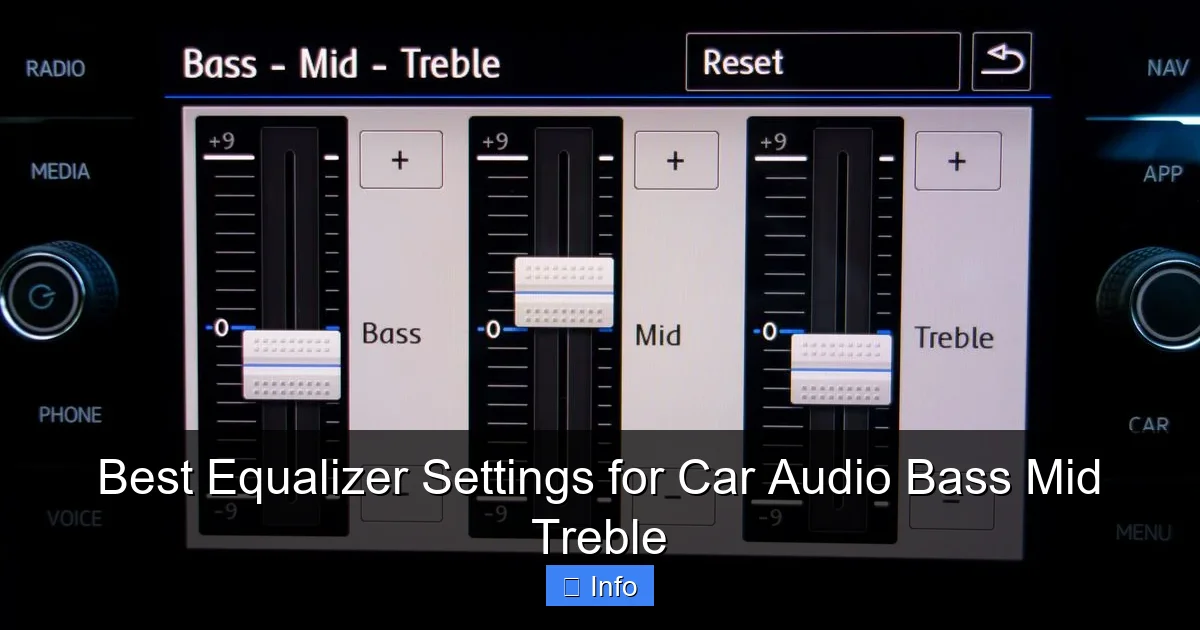
Visual guide about Best Equalizer Settings for Car Audio Bass Mid Treble
Image source: audiolover.com
Key Mid Frequencies
- 500‑800 Hz: This range adds body to vocals. Boost +1 to +2 dB for fullness.
- 1‑2 kHz: This is where vocals sit. A small boost (+1 dB) helps presence without harshness.
- 2‑4 kHz: Adds sparkle to instruments. Use narrow cuts if you hear sibilance.
Listen for “honky” or “nasal” tones. If you hear them, dip the 1‑2 kHz band by -1 dB. This removes excess mouthiness and lets vocals sit cleanly.
When tuning mids, keep your ear focused on a familiar song. “Take Five” by Dave Brubeck, “Smooth” by Santana, and “Hotel California” by Eagles all have distinct mid‑range instruments. Adjust until you can hear each instrument without one dominating.
For more detailed guidance on mids and tweeters, see Best Car Audio Tweeters For Superior Sound Quality. That article explains how tweeters interact with mids and why proper placement matters.
Tweaking Treble for Clarity
Treble (4 kHz and above) adds air, detail, and sparkle. The best equalizer settings for car audio treble are subtle. Too much treble creates a harsh, piercing sound that can fatigue your ears.
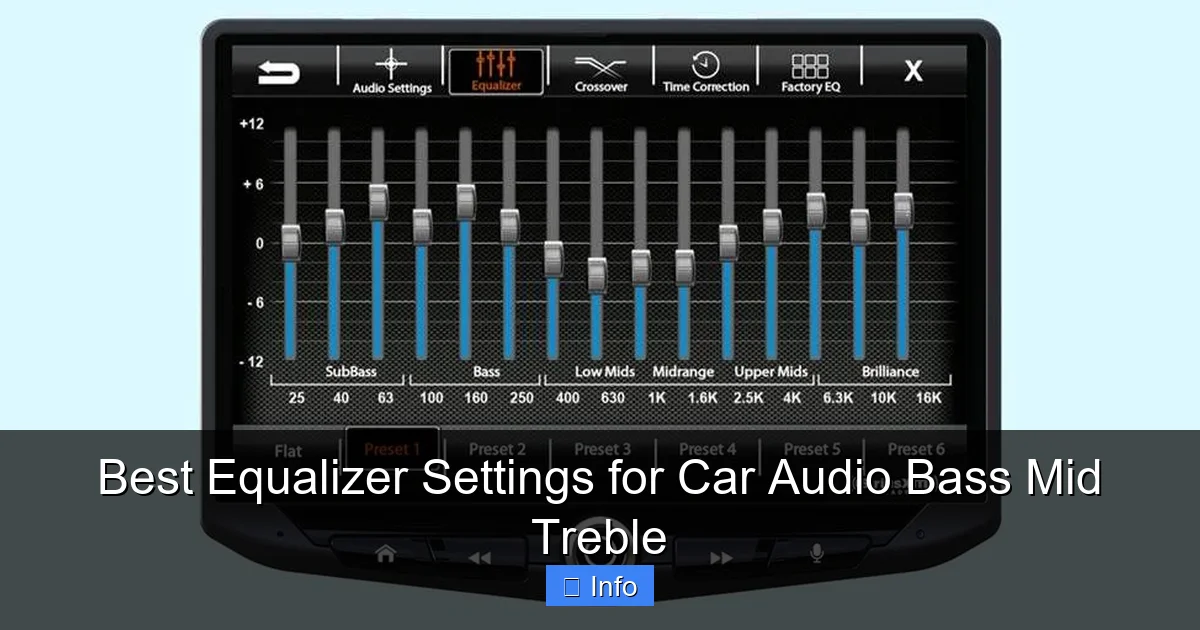
Visual guide about Best Equalizer Settings for Car Audio Bass Mid Treble
Image source: i.pinimg.com
Safe Treble Zones
- 4‑8 kHz: This range adds presence to cymbals and high‑pitched strings. Boost +1 dB max.
- 8‑16 kHz: Ultra‑high frequencies add “air.” Many car speakers can’t reproduce this well, so keep it below +1 dB or even cut it.
- Above 16 kHz: Usually unnecessary for music. Leave flat or dip -1 dB.
Use a narrow Q (bandwidth) when tweaking treble. This isolates the exact frequency you want to enhance, leaving others untouched. If you’re using a parametric EQ, set Q to around 1.5 for wider adjustments, or 0.5 for surgical cuts.
Listen for “tish” or “screech” sounds. Those are signs of excess treble. If you hear them, dip the offending band by -1 dB and re‑listen.
Real‑World Treble Examples
Play “Thunderstruck” by AC/DC, “Sunshine of Your Love” by Cream, and “Clair de Lune” by Debussy. Each song highlights different treble characteristics. Adjust until cymbals sound crisp, vocals stay smooth, and high‑end instruments have detail without being aggressive.
Practical Tips for Real‑World Tuning
EQ work isn’t just about numbers; it’s about how the car environment shapes sound. Here are practical tips to help you lock in the best equalizer settings for car audio bass, mids, and treble.
1. Consider Seat Position
Sound travels differently from the front seats to the back. If you spend most time driving solo, tune primarily for the driver’s position. If you often have passengers, aim for a compromise. A quick test: sit in each seat and note any noticeable changes in bass response.
2. Account for Cabin Materials
Car interiors made of wood, leather, or plastic affect resonance. A car with heavy carpet may need less bass boost to avoid mud. A vehicle with hard plastic panels might need a slight cut in the 200‑300 Hz range to reduce boominess.
3. Use Quality RCA Cables
Signal integrity matters. Cheap RCA cables can introduce noise that makes EQ adjustments unpredictable. Investing in good cables ensures your EQ tweaks translate accurately to the speakers. For recommendations, check Best Rated Car Audio RCA Cables For Superior Sound Quality. They review several high‑performance options that work well with EQ work.
4. Keep a Tuning Log
Write down the frequencies you boost and the songs you used. Over time you’ll see patterns: certain genres need more bass, others need cleaner mids. This log becomes a personal reference for the best equalizer settings for car audio bass mid treble for each type of music.
5. Use Multiple Test Sessions
Don’t tune in one go. Let the music play for a few minutes, then step away and come back. Fresh ears often spot issues you missed. Also, tune at different times of day; cabin temperature can affect speaker stiffness and EQ response.
Fine‑Tuning with Test Tracks
Now that you have a baseline and some adjustments, it’s time to use test tracks to validate your settings. This step helps you avoid relying on a single song that may sound good but hide problems.
Choose a Diverse Playlist
- Electronic/Dance: Heavy bass, clear mids, sparkling treble.
- Rock: Strong low end, powerful vocals, crisp guitars.
- Jazz/Classic: Nuanced dynamics, smooth transitions.
- Vocal‑focused Pop: Needs clear mids without sibilance.
Play each genre for 2‑3 minutes. Pause after each and note any frequency that feels off. Make small adjustments and repeat. This systematic approach leads to the best equalizer settings for car audio bass mid treble across all music types.
Record Your Settings
Many modern head units let you save EQ presets. Store your final preset under a clear name like “Balanced Rock” or “Full‑Bass Pop.” This way you can quickly revert or compare later. If your head unit lacks preset memory, write the frequency chart on paper or in a notes app.
Final Check: Real‑World Driving
After you’ve locked in settings, take the car for a real drive. Listen to your favorite album on the highway, city streets, and parking lots. If something still feels off, go back to the specific frequency band you suspect and make another tiny tweak.
Remember, EQ is a creative process. There is no single “perfect” setting that works for every driver. The best equalizer settings for car audio bass mid treble are those that make you feel happy and engaged with the music. Use the tips above, stay patient, and enjoy the journey of sound improvement.
Conclusion
Equalizing your car audio is both an art and a science. By starting with a flat baseline, adjusting bass, mids, and treble one band at a time, and using real‑world test tracks, you can achieve a balanced, engaging sound that suits your personal taste. The practical tips, internal linking to trusted resources, and careful listening will guide you toward the best equalizer settings for car audio bass, mids, and treble.
Take your time, keep a tuning log, and experiment safely. With each tweak, you’ll hear the difference and soon you’ll know exactly how to dial in the perfect mix. Happy tuning, and may your car’s audio fill every journey with rich, clear, and powerful sound!
Frequently Asked Questions
What is the best starting point for EQ settings in a car?
Begin with a flat EQ (0 dB on all bands). This gives you a neutral baseline so you can hear the true sound of your speakers and make intentional adjustments.
How much bass should I add for a balanced sound?
Start with +3 dB at 30‑80 Hz and +2 dB at 100‑200 Hz. Listen for muddiness and reduce if needed. Most cars sound great with a total bass boost of 4‑5 dB.
Can I over‑boost mids and cause sibilance?
Yes. Too much boost around 1‑2 kHz can make vocals harsh, especially sibilant sounds like “s” and “sh.” Use narrow cuts if you notice this effect.
What is a good treble boost for clarity without harshness?
A modest +1 dB at 4‑8 kHz adds sparkle. Keep higher frequencies below +1 dB or dip them slightly to avoid a piercing sound.
Do I need high‑quality RCA cables for EQ tuning?
Yes. Good RCA cables preserve signal integrity, which makes EQ adjustments more predictable and accurate. Investing in quality cables helps you achieve the best equalizer settings for car audio bass, mids, and treble.
How often should I revisit my EQ settings?
After major changes to your car (new speakers, subwoofers, or interior modifications), retune. Otherwise, check once a month or after long road trips to ensure consistency.