Maximum Permissible Speed of a Motor Car Near Educational Institution
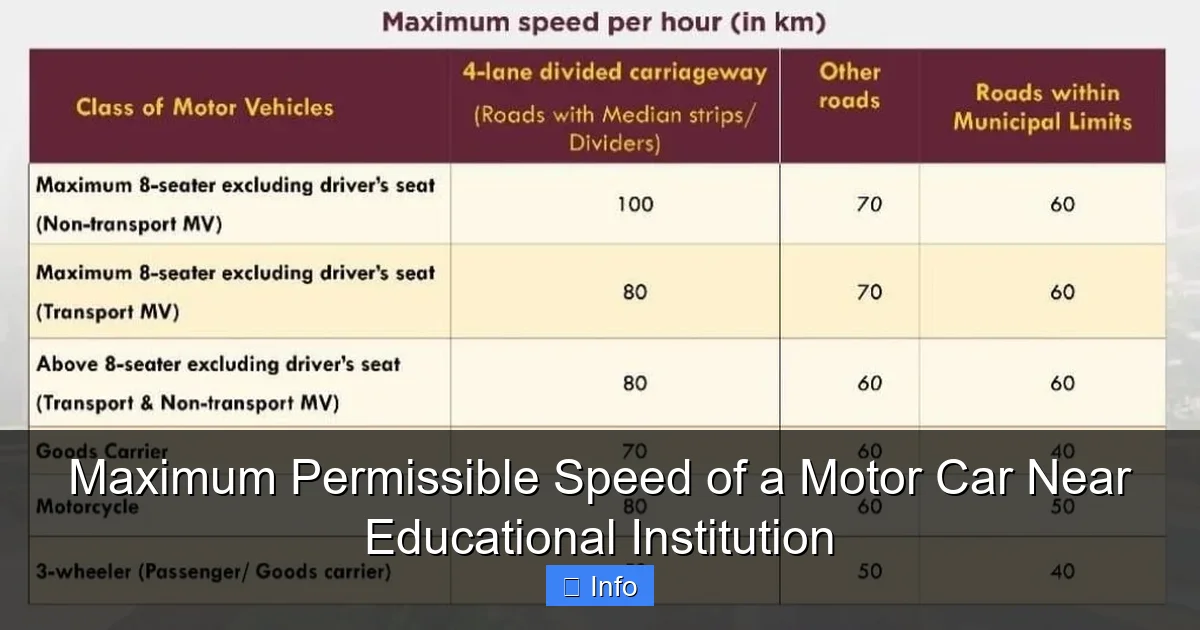
Driving near schools demands heightened awareness, as the maximum permissible speed of a motor car near educational institution is strictly enforced to protect children. This article outlines the legal speed limits, consequences of violations, and practical strategies every driver can use to stay safe and compliant.
Driving through a school zone is one of the most responsibility-laden moments any motorist faces. Children stepping off buses, crossing at marked crosswalks, or simply running between buildings create a dynamic environment where split-second decisions matter. Among the most critical rules governing these areas is the maximum permissible speed of a motor car near educational institution, a limit designed not just to obey the law, but to save lives. In this comprehensive guide, we’ll explore why these speed limits exist, how they’re enforced, and what every driver should know to navigate school areas safely and legally.
The concept of reduced speeds near schools isn’t new, but the specifics can feel confusing when signs vary from state to state or even from one block to the next. Some zones flash beacons during drop-off and pick-up times, while others display permanent limits regardless of the hour. Understanding the logic behind these variations helps drivers respond appropriately, whether they’re commuting daily or visiting a new neighborhood. Moreover, the stakes are high: a pedestrian struck by a vehicle at 25 mph has a significantly higher survival chance than one hit at 35 mph, which is precisely why authorities set the maximum permissible speed of a motor car near educational institution so deliberately low.
Key Takeaways
- Point 1: School zones typically enforce reduced speed limits, often 15–25 mph, during specific hours to prioritize child safety.
- Point 2: The maximum permissible speed of a motor car near educational institution varies by country, state, and local municipality, but always aims to minimize accident severity.
- Point 3: Flashing beacons, crossing guards, and permanent signage mark the start and end of school zones, and ignoring these signals can result in heavy fines.
- Point 4: Speeding near schools often carries doubled penalties, points on your driving record, and potential license suspension for repeat offenses.
- Point 5: Parents and guardians should model safe driving habits, explaining why slowing down near educational institutions matters for everyone’s wellbeing.
- Point 6: Modern vehicles may feature speed limiter alerts or school zone detection systems that help drivers maintain compliant speeds automatically.
- Point 7: Community advocacy for better signage, flashing lights, and traffic calming measures can further improve safety around schools.
📑 Table of Contents
Understanding the Legal Framework
National and Regional Regulations
Speed limits near schools are typically set at the state or provincial level, but local school districts and municipalities often have the authority to post lower limits based on traffic studies, pedestrian volume, and accident history. In the United States, for example, many states mandate a default school zone speed of 15 or 25 mph, but the exact maximum permissible speed of a motor car near educational institution depends on posted signage and state statutes. Some regions adopt “variable speed limits” that change based on time of day, while others enforce a constant limit from dawn until dusk. Familiarizing yourself with both state laws and local ordinances ensures you never unintentionally exceed the allowed speed.
Why Educational Zones Have Special Limits
The rationale behind lowered speed limits around schools is rooted in developmental psychology and traffic engineering. Children often lack the ability to accurately judge vehicle speed and distance, making them more vulnerable in traffic. Additionally, the concentration of young people arriving or leaving school creates unpredictable foot traffic. By setting the maximum permissible speed of a motor car near educational institution at a conservative level, policymakers aim to give drivers extra reaction time, reduce stopping distances, and ultimately lower the likelihood of fatal outcomes. These limits are typically enforceable during specific hours—often 30 minutes before and after school starts or ends—or whenever flashing beacons are active.
Typical Speed Limits Around Schools
Common Posted Speed Limits
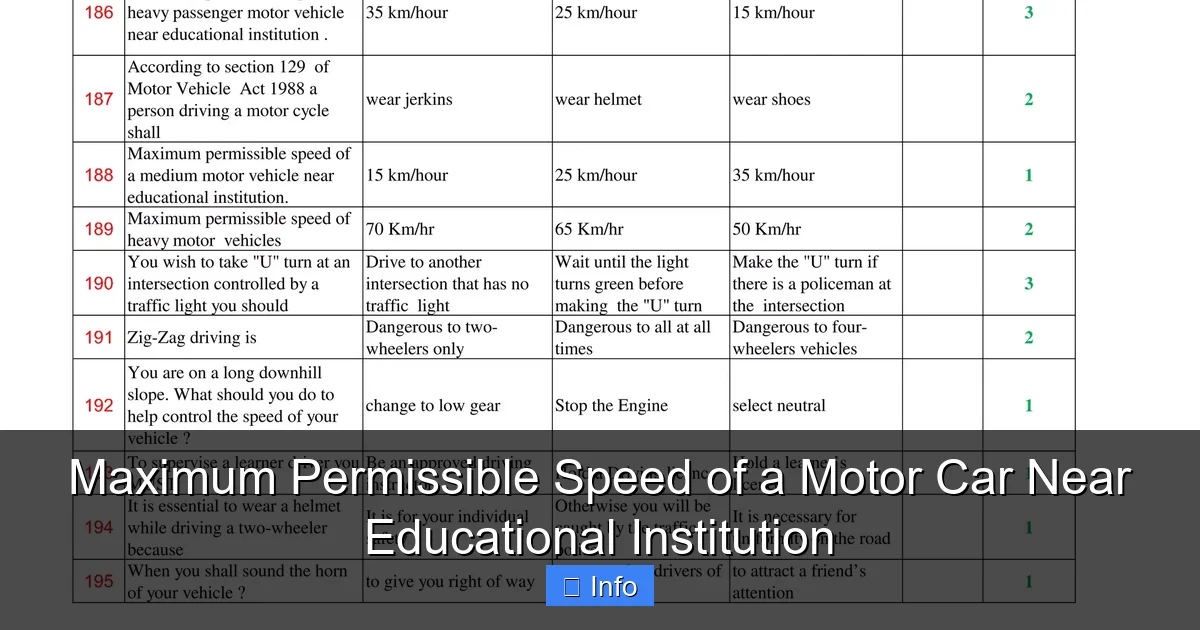
While 15 mph and 25 mph are the most frequently posted speeds, the exact maximum permissible speed of a motor car near educational institution can range from as low as 10 mph in densely populated urban areas with heavy pedestrian crossing, to 35 mph in suburban zones where schools back onto larger arterial roads. Some districts use “speed humps” or raised crosswalks to naturally slow traffic, complementing the posted limit. Understanding the typical range helps drivers anticipate what’s coming, especially when approaching a school from a main road where the speed limit may drop suddenly.
Visual guide about Maximum Permissible Speed of a Motor Car Near Educational Institution
Image source: image.slidesharecdn.com
Factors That Influence the Limit
Several factors determine where the speed limit is set within that range. Traffic engineering studies analyze vehicle counts, accident data, visibility, and the presence of crossing guards. Schools located in high-traffic corridors may have lower limits than those on quieter residential streets. Weather patterns, time of year (such as during winter when visibility is reduced), and even school-specific events like sports games or concerts can temporarily affect the applicable maximum permissible speed of a motor car near educational institution. Staying alert to changing conditions and temporary signage is key to remaining compliant.
Driver Responsibility and Awareness
Recognizing School Zone Signs
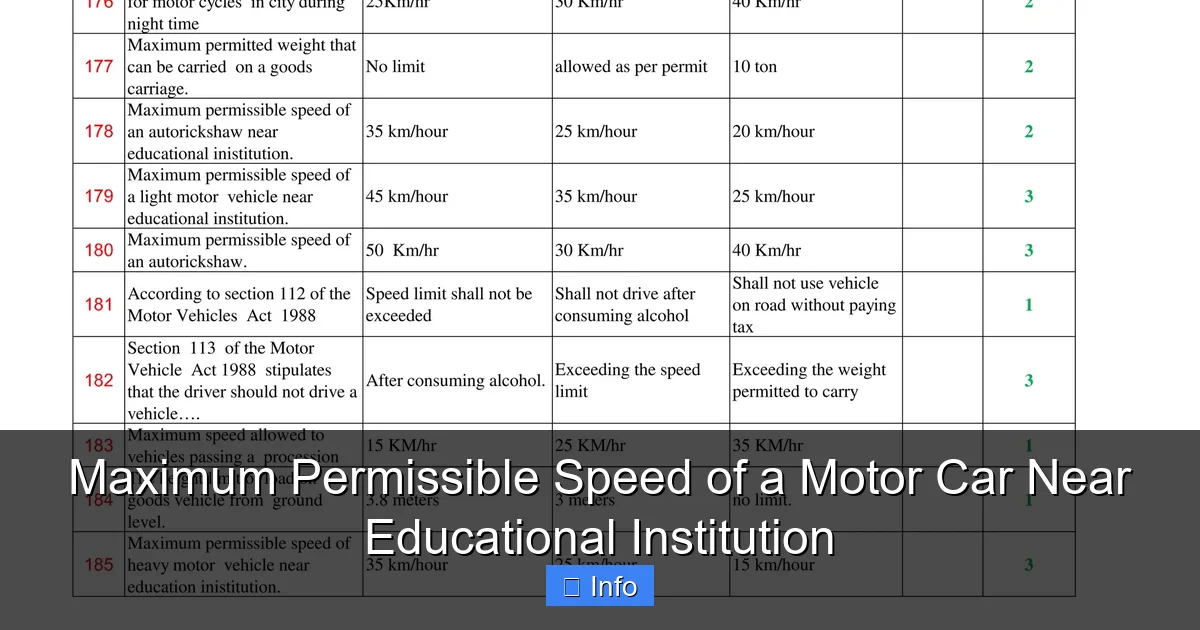
School zone signs are standardized to be highly visible, often featuring pentagonal shapes, fluorescent yellow-green backgrounds, and symbols of children crossing. However, not all signs are identical; some include flashing lights that activate only during specific times, while others are permanent. Drivers should treat any sign indicating a school or children’s presence as a cue to check their speedometer immediately. The maximum permissible speed of a motor car near educational institution is only effective if drivers can identify and respond to the signs promptly.
Visual guide about Maximum Permissible Speed of a Motor Car Near Educational Institution
Image source: image.slidesharecdn.com
The Role of Pedestrians and Children
While speed limits provide a legal framework, the behavior of pedestrians also plays a role. Children may dart across streets without warning, emerge from between parked cars, or fail to notice an approaching vehicle. Drivers must maintain a state of heightened vigilance, scanning between parked cars, watching for school buses with flashing lights, and being prepared to stop instantly. Remember, the goal of the maximum permissible speed of a motor car near educational institution is not just to avoid a ticket, but to create a safety buffer that gives everyone—drivers and pedestrians alike—more time to react.
Consequences of Violating Speed Limits
Fines and Penalties
Exceeding the maximum permissible speed of a motor car near educational institution carries penalties that are often more severe than standard speeding tickets. Many jurisdictions impose doubled fines for school zone violations, and some add additional court costs or mandatory traffic school. In extreme cases, especially if the speeding contributes to an accident, drivers may face misdemeanor charges, higher insurance premiums, or even license suspension. The financial and legal repercussions underscore the importance of adhering to posted limits at all times.
Visual guide about Maximum Permissible Speed of a Motor Car Near Educational Institution
Image source: imgv2-1-f.scribdassets.com
Impact on Insurance and Driving Record
A school zone speeding conviction can stay on your driving record for years, affecting your insurance rates significantly. Insurers view these violations as high-risk behavior, particularly because they involve vulnerable populations. Multiple offenses may lead to policy non-renewal or the need for high-risk coverage at substantially higher premiums. Beyond the monetary impact, points on your license can accumulate, potentially leading to mandatory re-examinations or license revocation if a threshold is reached. Understanding these consequences reinforces why cautious driving near schools is a smart long-term investment.
Practical Tips for Drivers
How to Stay Within Limits
Developing habits that keep you within the maximum permissible speed of a motor car near educational institution starts before you even pull out of your driveway. Before heading toward a known school zone, glance at your route on a navigation app that may warn of school zones. Once inside the zone, keep your foot poised over the brake pedal and regularly check your speedometer, especially if the limit drops from 35 mph to 25 mph. Many modern cars offer digital speed limit displays that update in real time, which can be a helpful aid, but never rely on technology alone—always verify with posted signs.
Technology and Aids
Beyond factory-installed speed limit displays, aftermarket apps and GPS systems can alert you when entering a school zone, often using crowd-sourced data to update limits as regulations change. Some vehicles feature “geofencing” technology that automatically reduces engine power or provides audible warnings when you cross into a designated school area. While these tools are valuable, they should supplement—not replace—active attention to signage and road conditions. Pairing technology with mindful driving creates the safest possible environment for children and other pedestrians.
Community and Policy Perspectives
Advocacy for Safer School Zones
Community involvement often drives improvements in school zone safety. Parents, teachers, and local residents can petition for enhanced signage, additional crossing guards, or the installation of flashing beacon systems that clearly mark when the maximum permissible speed of a motor car near educational institution is in effect. Traffic calming measures, such as speed humps, narrowed lanes, and raised crosswalks, have proven effective in reducing vehicle speeds even without constant police presence. By voicing support for these measures, community members help shape policies that prioritize child safety over convenience.
The Future of School Zone Speed Limits
As urban planning evolves, we’re seeing more integrated approaches to school zone safety. Some cities are experimenting with “shared streets” where vehicle speeds are naturally limited through design, reducing the reliance on posted signs alone. Others are adopting adaptive traffic signals that detect school zone activity and adjust light timing accordingly. Technology continues to advance, with potential for vehicle-to-infrastructure communication that could automatically inform drivers of the exact maximum permissible speed of a motor car near educational institution in real time, adjusting for variables like time of day, weather, and pedestrian density. Staying informed about these trends ensures you’re prepared for whatever changes come to school zone regulations.
Teaching the Next Generation
Beyond personal driving habits, educating young passengers about why speed limits exist near schools fosters a culture of safety that lasts a lifetime. Simple conversations about how faster speeds reduce a driver’s ability to stop for a crossing guard or a child running after a ball can make the concept tangible. Encouraging kids to speak up if they feel unsafe in a vehicle, and modeling the behavior of slowing down well before reaching a school zone, reinforces the message that protecting young lives is a shared responsibility.
Navigating the maximum permissible speed of a motor car near educational institution may seem like a small detail in the grand scheme of driving, but it’s one of the most impactful ways you can contribute to community safety. By understanding the legal framework, recognizing the signs, and adopting practical habits, you not only avoid costly fines but, more importantly, help protect the most vulnerable road users. Remember, a few miles per hour’s difference can be the difference between a close call and a tragedy. Stay vigilant, stay within limits, and drive like you would want someone to drive near your own family.
If you found this guide helpful, consider sharing it with fellow drivers in your community. The more motorists understand and respect school zone speed limits, the safer our streets become for everyone. Together, we can ensure that every child’s journey to and from school is a safe one.
Frequently Asked Questions
What is the typical maximum permissible speed of a motor car near an educational institution?
The typical maximum permissible speed of a motor car near an educational institution ranges from 15 to 25 mph in most jurisdictions, though this can vary based on local regulations, time of day, and specific signage posted at the school zone.
Why are speed limits lower near schools?
Speed limits are lower near schools to protect children who may unexpectedly enter the roadway, lack experience judging vehicle speeds, and require extra reaction time for drivers to avoid accidents.
Lower speed limits near schools are enforced to minimize the severity of potential collisions, as even a small increase in speed can significantly increase the risk of fatal injury to young pedestrians.
What are the penalties for exceeding the maximum permissible speed near a school?
Penalties often include doubled fines, points on your driving record, mandatory traffic school, and in some cases, increased insurance premiums or license suspension for repeat offenses.
Many jurisdictions impose stricter penalties for school zone speeding because these areas involve vulnerable populations, and the legal consequences are designed to deter dangerous driving behaviors.
Do school zone speed limits apply at all times?
Not necessarily; many school zone limits are only active during specific hours, such as during school arrival and dismissal times, or when flashing beacons are activated.
Drivers should always observe posted signs and flashing lights, as the maximum permissible speed of a motor car near educational institution may vary depending on the time of day and local ordinances.
Can technology help me stay within the speed limit near schools?
Yes, many modern vehicles come equipped with speed limit recognition systems, and GPS apps can provide real-time alerts when entering a school zone.
While these technologies are helpful supplements, drivers should never rely solely on them and should always verify the speed limit with posted signage to ensure compliance with the maximum permissible speed of a motor car near educational institution.
How can communities advocate for safer school zones?
Communities can advocate for safer school zones by petitioning for improved signage, additional crossing guards, flashing beacon systems, and traffic calming measures like speed humps or raised crosswalks.
Community involvement often leads to policy changes that prioritize child safety, and resident voices are instrumental in prompting local governments to invest in infrastructure that reduces vehicle speeds near educational institutions.