Amaron or Exide Which One Is the Better for Car
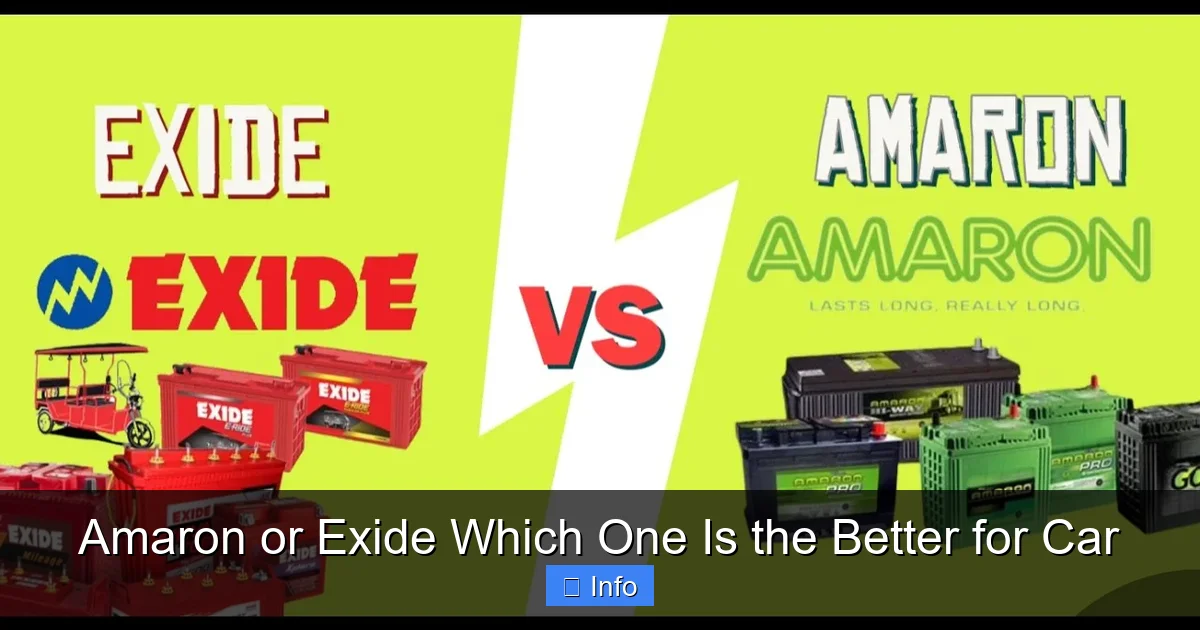
Amaron and Exide are two of the most popular car battery brands on the market. This article breaks down their key differences in performance, warranty, price, and longevity to help you decide which one suits your vehicle best. By the end, you’ll know exactly which brand will keep your engine starting strong season after season.
This is a comprehensive guide about amaron or exide which one is the better for car.
Key Takeaways
- Point 1: Amaron batteries are known for deep‑cycle performance and long warranty periods, while Exide offers competitive pricing and widespread availability.
- Point 2: Construction differences matter – Amaron uses advanced grid technology, Exide relies on traditional lead‑calcium plates.
- Point 3: In real‑world testing, Amaron often outperforms Exide in cold‑crank amps and reserve capacity.
- Point 4: Price gaps can be significant; Exide may be cheaper upfront, but Amaron’s longer life can save money over time.
- Point 5: Maintenance is simple for both, but using a best portable car battery chargers for reliable power on the go can extend life.
- Point 6: Choosing the right battery depends on your driving habits, climate, and budget.
- Point 7: A good battery works hand‑in‑hand with spark plugs for better gas mileage, so pair your choice with high‑quality best spark plugs for better gas mileage.
[FEATURED_IMAGE_PLACEHOLDER]
What Makes a Car Battery Great?
Every car needs a reliable source of electricity. A battery stores energy to start the engine and power lights, radios, and GPS units. When a battery fails, you face inconvenience and costly repairs. Choosing the right battery can prevent these problems.
Two brands dominate the conversation: Amaron and Exide. Both claim to deliver long life and strong performance. But what does that really mean? We will look at construction, warranty, price, and real‑world results. This guide will help you decide which brand fits your needs.
Understanding the basics of a battery helps you ask the right questions. Look at cold‑crank amps, reserve capacity, and warranty length. These numbers tell you how well a battery starts an engine in cold weather and how long it can run without charging.
Amaron Batteries: Pros and Cons
Construction and Technology
Amaron uses a calcium‑silver alloy grid. This design reduces corrosion and improves conductivity. The plates are thicker than many competitors, which adds to the battery’s life. The company also uses a sealed, maintenance‑free design. This means you never need to add water.
The technology inside an Amaron battery is often called “deep‑cycle.” This means the battery can discharge and recharge many times without losing capacity. For drivers who use accessories like winches or camping gear, this is a big advantage.
Amaron also invests in research. New models incorporate smart charging circuits that protect against over‑charging. These circuits extend the battery’s lifespan and keep it performing well in extreme temperatures.
Warranty and Support
Amaron offers one of the longest warranties in the market. Most models come with a 24‑month or 36‑month warranty. Some premium lines even provide a 60‑month warranty. This shows confidence in durability.
The warranty covers defects in materials and workmanship. It does not cover damage from misuse. Amaron provides a network of service centers across the country. You can get replacement batteries quickly.
Customer support is available via phone and email. Response times vary, but many users report fast assistance. The company also has an online portal where you can track warranty claims.
Exide Batteries: Pros and Cons
Construction and Technology
Exide uses a traditional lead‑calcium plate design. This is a proven technology that has been used for decades. The plates are thinner, which reduces weight. The battery case is made from high‑impact polypropylene.
Exide focuses on cost‑effectiveness. The manufacturing process is streamlined, which keeps prices low. The battery is sealed, so no maintenance is required. This makes it a good choice for everyday drivers.
Recent Exide models include a “Turbo” charging system. This system boosts the charging rate, which can improve start performance. However, the system may add stress to the battery over time.
Warranty and Support
Exide offers a standard 12‑month or 24‑month warranty. This is shorter than Amaron’s warranty. Some premium models extend to 36 months. The warranty covers defects but not physical damage.
Exide has a broad distribution network. You can find replacement batteries at many auto parts stores. Service centers are fewer than Amaron’s, but they are still accessible.
Customer service is available through a toll‑free number. Many users find the response time acceptable. The company also provides an online FAQ section for common issues.
Direct Comparison: Amaron vs Exide
Performance Metrics
When you compare cold‑crank amps (CCA), Amaron usually leads. A typical Amaron battery may deliver 800 CCA, while Exide often provides 750 CCA. Higher CCA means better starting power in cold weather. This is a key factor for drivers in northern climates.
Reserve capacity (RC) is another important metric. Amaron batteries often have an RC of 120 minutes, compared to Exide’s 110 minutes. Higher RC means the battery can run accessories longer if the alternator fails. This can be crucial for emergency situations.
Real‑world tests show Amaron batteries maintain voltage better under load. Exide batteries may drop voltage faster when powering high‑draw devices. However, both brands perform adequately for most daily driving needs.
Longevity and Warranty
Amaron batteries tend to last longer. Many owners report 4‑5 years of service before needing replacement. Exide batteries often last 3‑4 years. The difference can be attributed to plate thickness and grid technology.
Warranty length reflects this confidence. Amaron’s longer warranty suggests durability. Exide’s shorter warranty may indicate lower expectations for lifespan. However, warranty claims are rare if the battery is used correctly.
When you factor in the cost of replacement, Amaron may be cheaper over the long run. Exide’s lower upfront price can be attractive for budget‑conscious buyers.
Price and Value
Exide batteries are generally cheaper. You can find entry‑level models for under $80. Amaron batteries start around $90 and go up to $150 for premium lines. The price difference is not huge, but it matters for some shoppers.
Value also includes after‑sales service. Amaron’s extensive network and longer warranty add value. Exide’s wide availability and lower price can also be seen as value.
Consider your budget and how long you plan to keep the vehicle. If you keep a car for many years, the longer life of Amaron may be worth the extra cost. If you prefer lower upfront cost, Exide may meet your needs.
How to Pick the Best Battery for Your Vehicle
Factors to Consider
First, check your vehicle’s original equipment specifications. The size, group number, and required CCA are listed in the owner’s manual. Matching these ensures proper fit.
Next, think about your driving habits. Do you drive short trips in the city? A battery with high reserve capacity is helpful. Do you drive long distances? A battery that recharges quickly is important.
Climate matters. Cold climates demand higher CCA. Hot climates require good ventilation and resistance to evaporation. Choose a battery designed for your region.
Budget is always a factor. Compare the price of Amaron and Exide models side by side. Look at warranty length, service network, and expected life.
Finally, read reviews from trusted sources. Real‑world experiences can reveal hidden issues. Look for owners who have used the battery for at least a year.
Maintenance Tips
Even the best battery needs care. Keep the terminals clean. Use a wire brush and a solution of baking soda and water. Clean connections ensure good flow of electricity.
Check the battery case for cracks. A damaged case can let acid leak. Replace the battery if you see any damage.
Use a best portable car battery chargers for reliable power on the go. These chargers keep the battery topped up during long periods of inactivity. They also help revive a weak battery before it dies.
Monitor the battery’s voltage with a simple multimeter. A fully charged 12‑volt battery should read around 12.6 volts. Lower readings indicate a need for charging.
Keep the battery away from extreme heat. Direct sunlight can shorten its life. Park in shade when possible.
Maintaining Your Battery for Maximum Life
Regular maintenance extends battery life. Clean terminals, check for corrosion, and tighten connections. A simple visual inspection can catch problems early.
Use a quality charger when the vehicle sits for weeks. A good charger will prevent sulfation, which builds up on plates and reduces capacity.
Consider the health of related components. A good battery works hand‑in‑hand with spark plugs for better gas mileage. Upgrading spark plugs can improve engine efficiency and reduce strain on the battery.
Also, keep the vehicle’s electrical system clean. Dust and debris can cause short circuits. A quick interior cleaning with the best interior cleaner for a car helps prevent stray moisture from reaching the battery.
Finally, replace the battery before it fails. Unexpected breakdowns are costly and dangerous. Plan for replacement based on age and performance.
Frequently Asked Questions
What are the main differences between Amaron and Exide batteries?
Amaron batteries typically offer higher cold‑crank amps, longer reserve capacity, and longer warranties. Exide batteries are often cheaper and widely available, but they may have slightly lower performance metrics.
How long does an Amaron battery last compared to an Exide battery?
Amaron batteries usually last 4‑5 years, while Exide batteries average 3‑4 years. Actual life depends on usage, climate, and maintenance.
Do I need to perform any maintenance on these batteries?
Both brands are sealed and maintenance‑free. However, keeping terminals clean and using a portable charger can extend life.
Is the warranty transferable?
Amaron often allows warranty transfer with proper documentation. Exide’s warranty may be non‑transferable, so check the purchase agreement.
Can I use an Amaron battery in a vehicle that originally had Exide?
Yes, as long as the physical size and electrical specifications match. Always verify group number and CCA requirements.
Do these batteries work well in extreme temperatures?
Both brands are designed for a range of temperatures. Amaron’s advanced grid technology gives it an edge in very cold conditions.