How to Check Tire Pressure on a 2021 Toyota Corolla
Keeping your 2021 Toyota Corolla’s tires at the correct pressure is key for safe driving, better fuel economy, and longer tire life. This guide walks you through the tools you need, how to read the recommended PSI, and extra tips to keep your tires in top shape. By following these steps, you’ll enjoy smoother rides and fewer roadside surprises.
This is a comprehensive guide about How to Check Tire Pressure on a 2021 Toyota Corolla.
Key Takeaways
- Check tire pressure on a 2021 Toyota Corolla: Always check when tires are cold for accurate readings.
- Know the recommended PSI: Refer to the sticker inside the driver’s door for the correct values.
- Use a reliable gauge: Digital or analog gauges give quick, accurate results.
- Inflate or deflate gradually: Small adjustments prevent over‑inflation.
- Monitor regularly: Check at least once a month and before long trips.
[FEATURED_IMAGE_PLACEHOLDER]
Introduction
When you’re cruising in your 2021 Toyota Corolla, you probably focus on the road ahead, the music, or the conversation with your passenger. But one small check can make a big difference: your tire pressure. A simple, inexpensive step can improve safety, extend tire life, and even save you money on fuel. In this article, we’ll dive deep into how to check tire pressure on a 2021 Toyota Corolla—from gathering the right tools to interpreting the numbers you see on the tire sidewall.
lushly explained, this process is surprisingly straightforward. Whether you’re a seasoned driver or a new Corolla owner, the steps below will ensure you’re always cruising with the right amount of air in each tire. So, let’s get started and keep your Corolla rolling smoothly.
Why Accurate Tire Pressure Matters
Safety First
Under‑inflated or over‑inflated tires can cause poor handling, increased stopping distance, and a higher risk of blowouts. Check tire pressure on a 2021 Toyota Corolla regularly to keep your vehicle’s handling predictable and safe.
Fuel Efficiency
Research shows that correctly inflated tires can improve fuel economy by up to 3%. By keeping your Corolla’s tires at the manufacturer’s recommended PSI, you’ll see a noticeable bump in miles per gallon.
Tire Longevity
Uneven wear from improper pressure means you’ll replace tires sooner. Maintaining the right PSI spreads wear evenly across the tread, extending the life of each tire.
Tools You’ll Need
Tire Pressure Gauge
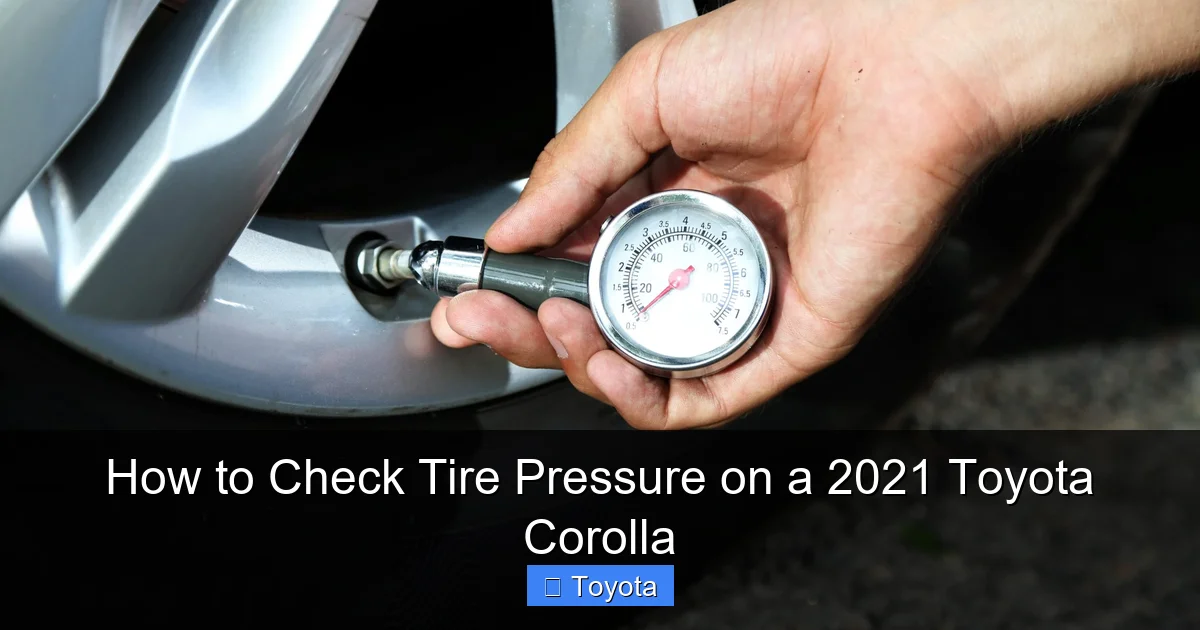
Choose between an analog dial gauge or a digital readout. Digital gauges are quick and often more accurate for casual users.
Portable Air Compressor
Many service stations and home toolkits include a small compressor. If you need a quick top‑up, a portable unit is handy.
Vehicle Manual or Door‑Jamb Sticker
The 2021 Corolla’s recommended PSI is printed on a sticker inside the driver’s side door jamb. Keep this reference handy.
Gloves (Optional)
Protecting your hands from cold metal or hot air just adds an extra layer of comfort.
Step‑by‑Step Guide to Check Tire Pressure on a 2021 Toyota Corolla
1. Let the Tires Cool
closure. Air expands when heated, so you’ll get the most accurate reading when tires are cold—ideally before driving or at least three hours after a trip.
2. Locate the Recommended PSI
Open the driver’s side door and find the sticker inside the jamb. It lists the front and rear tire pressures. For most 2021 Corolla models, the front is 32 PSI and the rear is 32 PSI, but check your specific figure.
3. Remove the Valve Cap
Unscrew the plastic cap on the valve stem. Keep it nearby so you can re‑attach it after checking.
4. Press the Gauge onto the Valve Stem
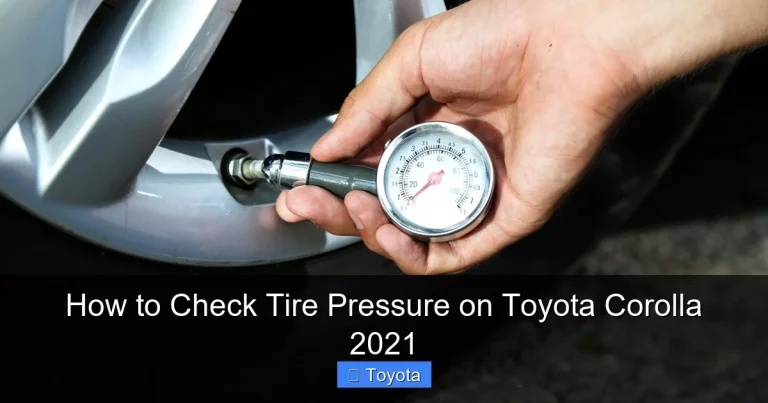
Place the gauge’s tip firmly on the stem. Hold steady until the gauge reads a stable value. If you’re using a digital gauge, it will display the PSI automatically.
5. Read the PSI
Compare the reading to the recommended PSI. If the pressure is lower, you’ll need to add air. If it’s higher, you’ll need to release some.
6. Adjust the Pressure
- To Inflate: Connect the compressor hose to the valve stem and add air in short bursts, checking the gauge after each burst.
- To Deflate: Press the small metal pin inside the valve stem gently to release a small puff of air, then re‑check.
7. Replace the Valve Cap
Once the PSI matches the recommendation, screw the cap back on securely.
8. Repeat for All Tires
Make sure you check the front, rear, and spare (if applicable). The spare may have a different recommended PSI.
Common Mistakes to Avoid
Checking Warm Tires
After a drive, tires are warm and inflated. Checking them then can lead to over‑inflation. Always wait until tires cool.
Using a Poorly Calibrated Gauge
A gauge that’s off by 2-3 PSI can mislead you. Periodically test your gauge against a known standard or replace it if it shows inconsistent readings.
Ignoring Seasonal Changes
Cold weather can lower tire pressure. If you drive in winter, check your tires monthly and adjust accordingly.
Advanced Tips for Prolonging Tire Health
Rotate Tires Regularly
Rotating every 5,000–7,000 miles balances wear. This complements proper pressure checks and ensures each tire wears evenly.
Inspect for Damage
While you’re checking pressure, look for cuts, bulges, or uneven wear. Minor issues can become major problems if ignored.
Use a Tire Inflator with a Built‑in Gauge
These devices combine the gauge and compressor, simplifying the process. They’re especially handy when you’re on the road.
When to Seek Professional Help
Persistent Pressure Loss
If you notice a tire consistently losing pressure, it may indicate a puncture or valve problem. Have a mechanic inspect it.
Unusual Tire Behavior
Vibrations, pulling to one side, or inconsistent handling should prompt a professional inspection.
Complex Tire Issues
For issues like sidewall damage or rim damage, a tire shop’s diagnostic equipment is essential.
Integrating Tire Care into Your Routine
By making how to check tire pressure on a 2021 Toyota Corolla a regular habit, you’ll keep your vehicle running smoothly. Pair this with routine maintenance like oil changes, brake inspections, and breaking in a new car procedures. If you’re refreshing your Corolla’s appearance, consider replacing windshield wipers for clear visibility. And for a holistic view of your vehicle
Conclusion
Keeping your 2021 Toyota Corolla’s tires inflated to the correct pressure is a quick, easy, and essential part of vehicle care. By following the steps above—checking when tires are cold, using a reliable gauge, and adjusting as needed—you’ll enjoy safer handling, better fuel economy, and longer tire life. Make tire pressure checks a regular part of your routine, and your Corolla will reward you with smooth, confident drives for years to come.
Frequently Asked Questions
What is the recommended tire pressure for a 2021 Toyota Corolla?
The recommended PSI is listed on the sticker inside the driver’s side door jamb. Most 2021 Corolla models recommend 32 PSI for both front and rear tires, but check your specific vehicle for exact numbers.
How often should I check my tire pressure?
Check your tires at least once a month, and before long trips or when temperatures drop significantly. Cold weather can lower tire pressure.
Can I use a smartphone app to measure tire pressure?
While there are smartphone adapters, they can be less accurate. A dedicated tire pressure gauge—digital or analog—is the most reliable tool.
What happens if my tires are over‑inflated?
Over‑inflation can lead to a harsher ride, uneven tread wear, and increased risk of blowouts. Always match the gauge reading to the manufacturer’s recommended PSI.
Do I need a spare tire check?
Yes, the spare often has a different recommended PSI. Check it regularly to ensure it’s ready in case of a flat.
Can I adjust tire pressure on the go?
Yes, a portable air compressor allows you to inflate or deflate tires while on the road, but remember to check pressure when tires are cold for best accuracy.