How to Check Tire Pressure on Toyota Corolla 2021
Checking tire pressure on your 2021 Toyota Corolla is quick and essential for safety. Use a reliable gauge, follow the recommended PSI on the door jamb, and adjust for load or weather. Regular checks extend tire life and improve fuel economy.
Key Takeaways
- Check pressure monthly: Tires lose air naturally, so a monthly check keeps you safe.
- Use a quality gauge: Digital or dial gauges give more accurate readings than pencil gauges.
- Follow the door‑jamb label: The manufacturer’s PSI is specific to your Corolla’s load rating.
- Adjust for temperature: Cold weather drops pressure; add a few PSI in winter.
- Inspect tread while you’re at it: Uneven wear can signal alignment or pressure issues.
- Don’t forget the spare: A flat spare defeats the purpose of regular checks.
📑 Table of Contents
- Why Tire Pressure Matters for Your 2021 Corolla
- Tools You Need to Check Tire Pressure
- Step‑by‑Step Guide to Check Tire Pressure on Toyota Corolla 2021
- Understanding the Recommended PSI for Your Corolla
- Adjusting Tire Pressure for Different Conditions
- Maintaining Proper Tire Pressure Over Time
- Conclusion
Why Tire Pressure Matters for Your 2021 Corolla
Proper tire pressure is the single easiest way to protect your investment. When tires are inflated to the correct level, your Toyota Corolla 2021 handles better, brakes shorter, and uses less fuel. Under‑inflated tires build excess heat, which can cause blowouts. Over‑inflated tires reduce the contact patch, making the ride harsh and decreasing traction. Both extremes wear tread unevenly, costing you money on replacements sooner than expected.
Many drivers forget that tire pressure changes with the seasons. A 10 °F drop can reduce pressure by about 1 PSI. That means a tire set at 32 PSI in summer could be at 28 PSI in winter if you never adjust it. Keeping an eye on pressure is a habit that pays off every mile you drive.
Tools You Need to Check Tire Pressure
Choosing the Right Gauge
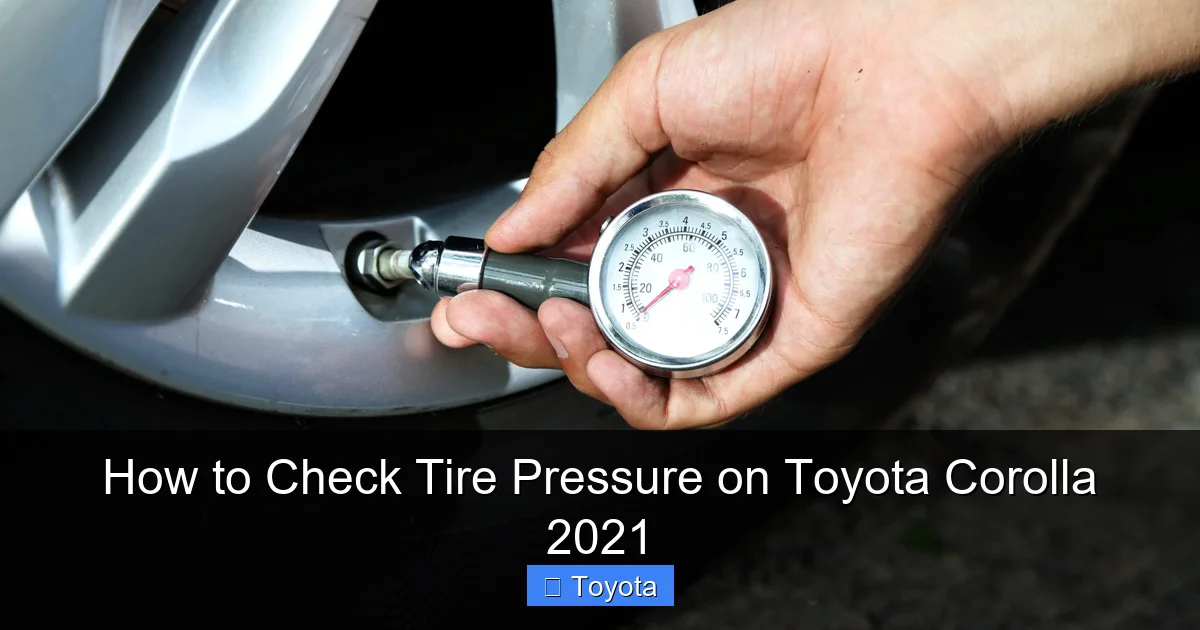
You have three main types of gauges: pencil, dial, and digital. Pencil gauges are cheap but can be hard to read. Dial gauges are more durable and easier to see. Digital gauges give a precise readout and often include a backlight for night use. Whichever you pick, make sure it’s calibrated and reads in PSI.
Visual guide about How to Check Tire Pressure on Toyota Corolla 2021
Image source: i.ytimg.com
Other Handy Items
- Air compressor or portable inflator: Useful for topping off at home.
- Valve‑stem caps: Keep dirt out of the valve.
- Gloves and a flashlight: Helpful for early‑morning or night checks.
Having these tools in your trunk means you can check and adjust pressure anywhere, not just at a gas station.
Step‑by‑Step Guide to Check Tire Pressure on Toyota Corolla 2021
1. Find the Recommended PSI
Open the driver’s door and look at the sticker on the door jamb. It lists the front and rear tire pressures for normal load and for maximum load. Write those numbers down or snap a photo.
2. Check Tires When Cold
“Cold” means the car has been parked for at least three hours or driven less than a mile. Heat from driving inflates the air inside, giving a false high reading.
3. Remove the Valve Cap
Unscrew the cap and set it somewhere safe. Press the gauge firmly onto the valve stem until the hissing stops. Read the pressure.
4. Compare and Adjust
If the reading is below the recommended PSI, add air in short bursts. Re‑check after each burst. If it’s above, press the center pin on the valve to release air, then re‑check.
5. Replace the Valve Cap
Screw the cap back on tightly. It keeps moisture and debris out of the valve.
6. Repeat for All Four Tires (and the Spare)
Don’t skip the spare. A flat spare is useless when you need it most.
Following these steps is the core of How to Check Tire Pressure on Toyota Corolla 2021. Do it once a month and before long trips.
Understanding the Recommended PSI for Your Corolla
Front vs. Rear Pressures
Most Corollas call for slightly higher pressure in the front tires because the engine and transmission sit up front. The door‑jamb label will show something like “Front 32 PSI / Rear 30 PSI”. Stick to those numbers.
Load Adjustments
If you regularly carry heavy cargo or passengers, the label often includes a “Max Load” pressure. Use that higher number only when the car is fully loaded. Otherwise, the standard pressure gives the best ride and fuel economy.
Why the Manufacturer’s Number Is Best
Toyota engineers test each pressure setting for handling, braking, tire wear, and comfort. Deviating from their spec can void warranty coverage on tire‑related issues. If you’re curious about the cost of a new Corolla, you can read how much is a new Toyota Corolla for pricing context.
Adjusting Tire Pressure for Different Conditions
Cold Weather
As mentioned, pressure drops in cold air. Add 2–3 PSI above the door‑jamb spec when temperatures are consistently below freezing. This compensates for the natural loss and keeps the tire at the intended operating pressure once the car warms up.
Hot Weather and Long Highway Drives
Extended high‑speed driving heats tires, raising pressure by 4–6 PSI. Do not bleed air down to the cold spec while the tires are hot. Instead, check pressure after the tires have cooled. If you must drive in extreme heat, consider a slightly lower cold pressure (1–2 PSI below spec) to avoid over‑inflation at speed.
Snow and Ice
Winter tires often have a different recommended pressure. Check the tire sidewall or the winter‑tire manufacturer’s guide. For general advice on winter pressures, see best tire pressure for driving in snow conditions.
Off‑Road or Rough Terrain
Lowering pressure by 5–10 PSI can increase the contact patch on sand, mud, or gravel. Only do this at low speeds and reinflate to spec as soon as you return to pavement.
Maintaining Proper Tire Pressure Over Time
Monthly Routine
Set a reminder on your phone or calendar. A quick check takes less than five minutes. Consistency prevents slow leaks from becoming dangerous.
Watch for Warning Signs
- Pulling to one side: Could indicate a low tire on that side.
- Vibration at speed: Often a sign of uneven pressure or a damaged tire.
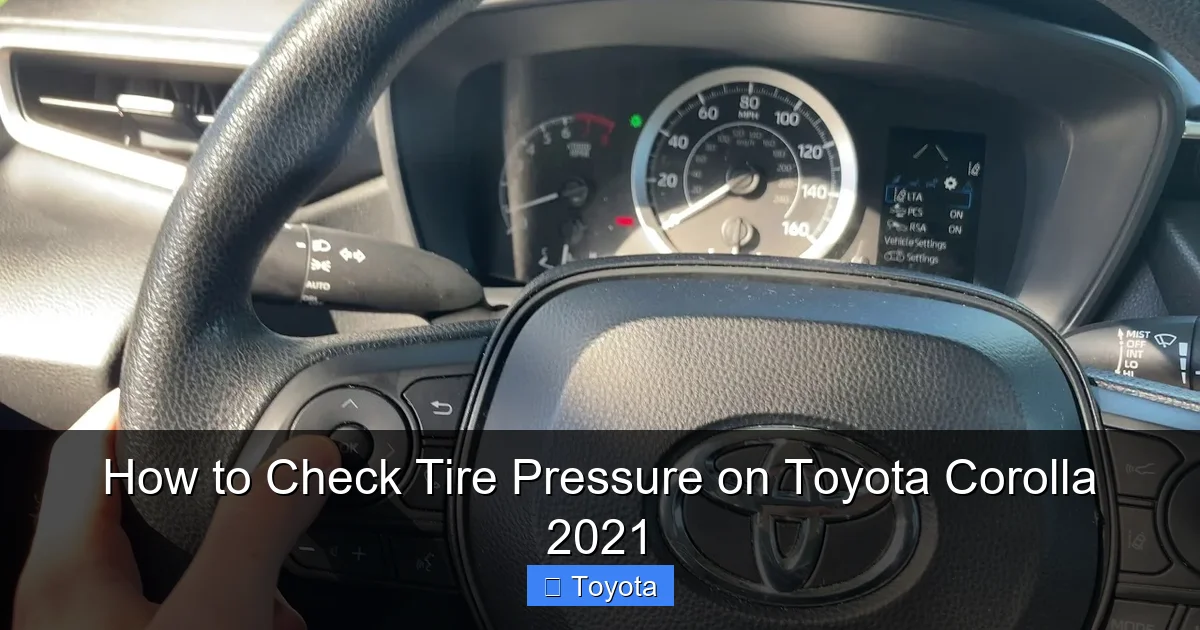
- TPMS light: The Tire Pressure Monitoring System alerts you when pressure drops 25 % below spec. Treat it as a prompt to check manually.
Rotate and Balance
Rotate tires every 5,000–7,500 miles. Balanced tires wear evenly, which helps maintain consistent pressure across all four corners. If you’re breaking in a new Corolla, you might also want to read how to break in a new Toyota for tips on the first few thousand miles.
Inspect Valve Stems and Caps
Cracked valve stems leak air. Replace them during tire service. Missing caps let dirt and moisture in, accelerating corrosion.
Keep a Log
Note the date, pressure readings, and any adjustments. Over time you’ll spot patterns — like a slow leak on the left rear — before they become a roadside emergency.
Conclusion
Checking tire pressure on your 2021 Toyota Corolla is a simple habit that delivers big rewards: better safety, longer tire life, and improved fuel economy. Use a reliable gauge, follow the door‑jamb specs, and adjust for temperature and load. Do it monthly, before trips, and whenever the TPMS light comes on. Your Corolla will thank you with a smoother ride and fewer unexpected stops. Remember, the steps outlined here are the essence of How to Check Tire Pressure on Toyota Corolla 2021. Make them part of your routine and enjoy peace of mind on every drive.
Frequently Asked Questions
How often should I check tire pressure on my 2021 Corolla?
Check at least once a month and before any long trip. Cold weather may require more frequent checks.
What is the correct PSI for a 2021 Toyota Corolla?
The door‑jamb label lists the exact PSI for front and rear tires. Typical values are 32 PSI front and 30 PSI rear for normal load.
Can I use the gas station air pump gauge?
Gas station gauges are often inaccurate. It’s best to use your own calibrated gauge for a reliable reading.
Why does my TPMS light stay on after I inflate the tires?
The system may need a reset. Drive a few miles at moderate speed; if the light remains, consult the owner’s manual or a dealer.
Should I check the spare tire pressure too?
Yes. A flat spare defeats its purpose. Check it at the same interval as your regular tires.
Does tire pressure affect fuel economy?
Under‑inflated tires increase rolling resistance, which can reduce fuel economy by up to 3 %. Proper inflation helps you get the most miles per gallon.