How to Fix Ac Light Blinking on Toyota Camry
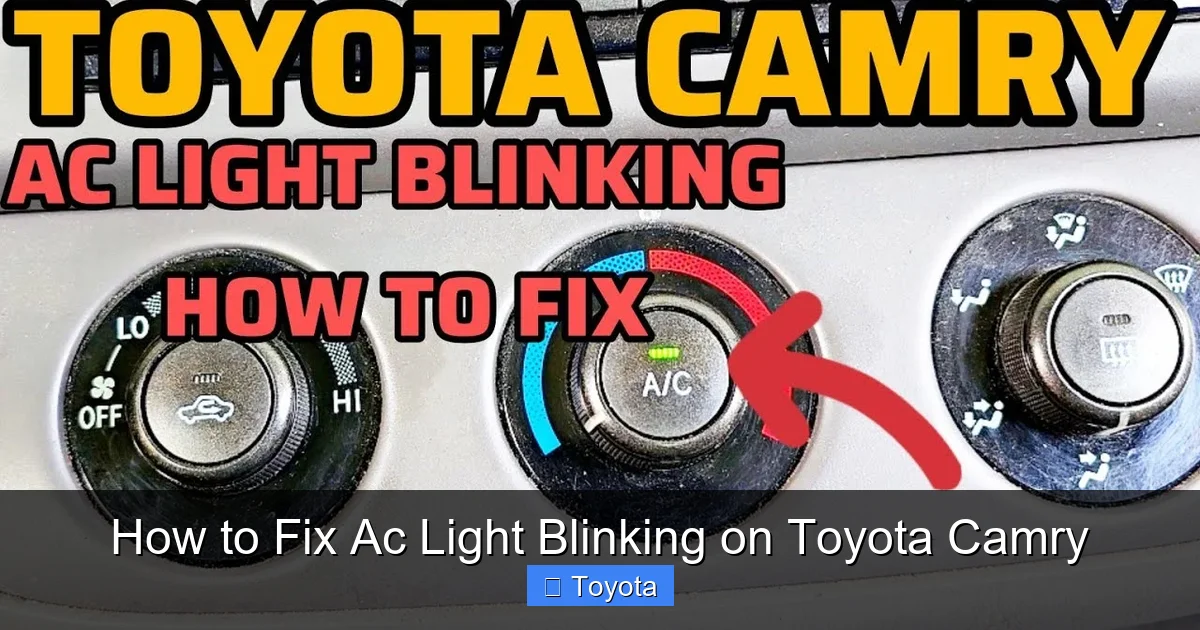
If your Toyota Camry AC light is blinking, it is usually a warning sign that the air conditioning system has detected a malfunction. This often points to issues like low refrigerant levels, faulty sensors, or electrical problems. Identifying the cause early can prevent expensive repairs and keep your cabin cool.
Imagine you are driving down a sunny highway. The temperature is rising, and you reach for the AC button to cool down. You press it, but instead of a steady light, you notice the AC indicator is blinking. It feels like a small detail, but it is actually your Toyota Camry trying to tell you something important. A blinking AC light is not just a quirky light effect; it is a diagnostic signal.
When this happens, you might notice the air coming out of your vents is warm, or perhaps the compressor isn’t kicking in at all. It can be frustrating, especially when you rely on your Camry for a comfortable daily commute. The good news is that knowing how to fix AC light blinking on Toyota Camry can save you a lot of time and money. Most of the time, the fix is simpler than you might think.
In this guide, we will walk through the most common reasons why your AC light is flashing. We will look at everything from simple fuse swaps to more complex sensor issues. Whether you are a DIY enthusiast or someone preparing to talk to a mechanic, this information will help you navigate the situation with confidence.
Key Takeaways
- Blinking Light Meaning: A blinking AC light typically indicates a system fault or a safety shutdown.
- Refrigerant Levels: Low freon or refrigerant is a very common cause for the blinking light.
- Sensor Issues: Faulty pressure or temperature sensors often cause the system to malfunction.
- Professional Help: While some electrical fixes are easy, refrigerant issues require professional tools.
li>Electrical Faults: Blown fuses or loose wiring can trigger the warning light.
📑 Table of Contents
Understanding the Warning: Why is the Light Blinking?
Before we jump into the repairs, we need to understand what the car is actually doing. In most Toyota models, the blinking light acts as a “fail-safe.” The car’s computer (ECU) monitors the health of the cooling system. If it detects something is out of spec, it shuts down the compressor to prevent permanent damage and flashes the light to alert you.
The Role of the Engine Control Module
Your Camry is packed with sensors. These sensors talk to the Engine Control Module constantly. When you press the AC button, the computer checks several things: Is the engine overheating? Is the refrigerant pressure correct? Is the blower motor drawing too much power? If any of these checks fail, the light blinks to say, “I can’t run the AC safely right now.”
Common Symptoms Alongside the Blinking Light
You might notice more than just the light. Common symptoms include:
- The AC compressor does not engage (you won’t hear a “click”).
- The air coming from the vents is room temperature.
- A strange rattling or squealing noise from the engine bay.
- A sudden drop in engine performance when you turn the AC on.
Common Cause 1: Low Refrigerant Levels
The most frequent reason for a blinking AC light in a Toyota Camry is low refrigerant. The system is a closed loop, but over years of use, tiny leaks can develop. When the pressure of the refrigerant drops below a certain threshold, the pressure switch tells the computer to stop the compressor. This prevents the compressor from running “dry,” which would cause it to overheat and fail.
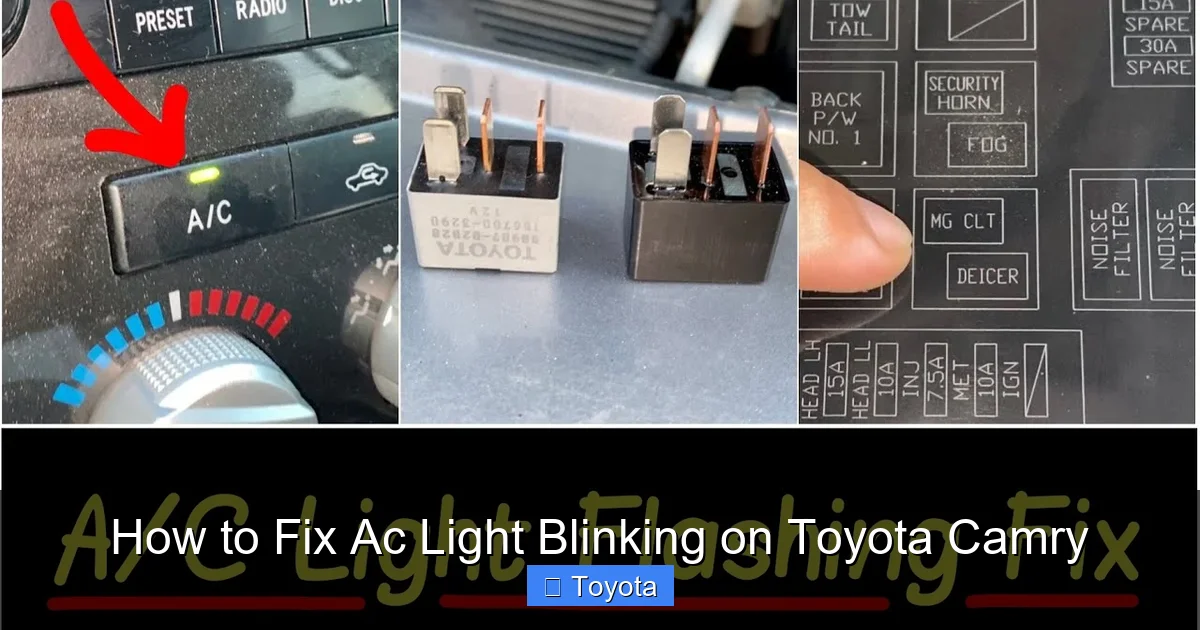
Visual guide about How to Fix Ac Light Blinking on Toyota Camry
Image source: toyotanation.id
How to Identify a Leak
If you notice the light blinking, you might also see oily residue around the AC lines. Refrigerant often carries a small amount of oil to lubricate the compressor. If you see a dark, greasy spot on a hose, that is a prime suspect. If you want to learn more about system maintenance, you can read about how to remove excess oil from car AC system components if you are performing a deep cleaning or repair.
The Fix: Recharging the System
If the issue is low refrigerant, you need a recharge. While there are DIY cans available at auto parts stores, these are often “band-aid” fixes. If there is a leak, the new gas will just leak out again. A professional technician can perform a vacuum test to ensure the system is airtight before refilling it with the exact amount of refrigerant required for your specific Camry model.
Common Cause 2: Electrical and Fuse Issues
Sometimes, the problem isn’t the cooling system itself, but the electricity that powers it. Your Toyota Camry relies on a series of fuses and relays to manage power distribution. If the fuse for the AC compressor or the blower motor blows, the circuit is broken, and the computer will signal a fault via the blinking light.
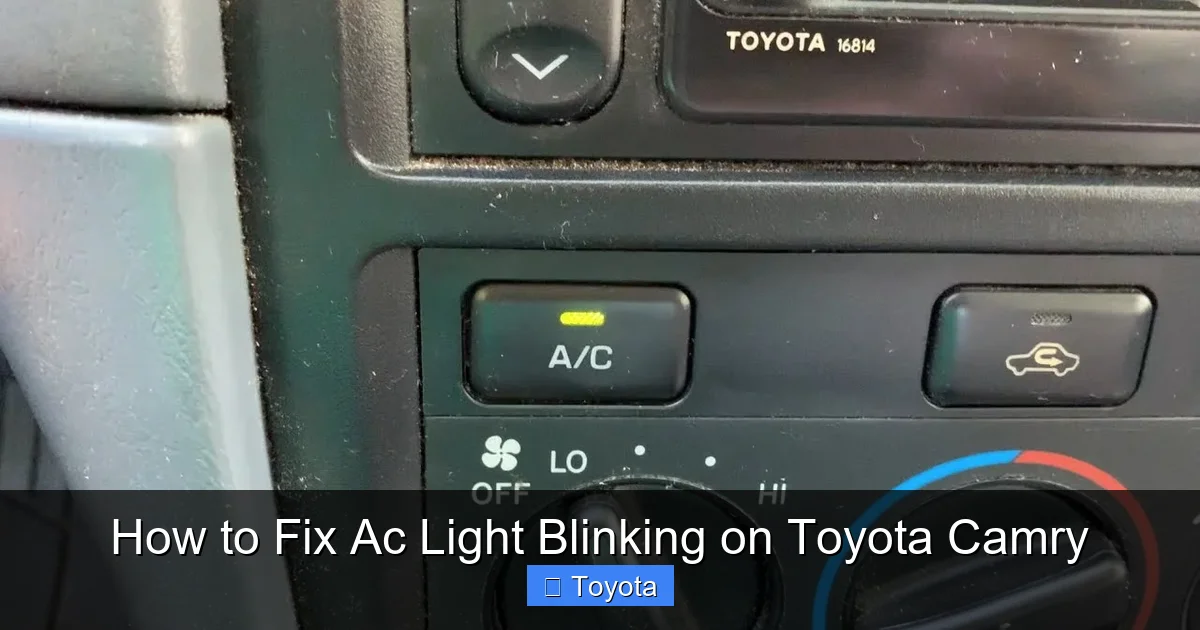
Visual guide about How to Fix Ac Light Blinking on Toyota Camry
Image source: i.ytimg.com
Checking the Fuses
Checking a fuse is one of the easiest DIY tasks. You can usually find your fuse box under the hood or inside the cabin near the dashboard. Look at the diagram on the underside of the fuse box cover. If the metal wire inside a fuse is broken, it’s blown. Replacing a blown fuse is very cheap, but remember: fuses usually blow for a reason. If a new fuse blows immediately, you have a short circuit somewhere.
Relay Malfunctions
The relay is an electromagnetic switch that tells the compressor to turn on. If the relay is stuck or has failed, the AC won’t start. You can sometimes test a relay by swapping it with an identical one from a non-critical system (like the horn) to see if the AC starts working. This is a great way to narrow down if the issue is electrical or mechanical.
Common Cause 3: Faulty Sensors
As mentioned earlier, your Camry is a sensor-driven machine. The AC system relies heavily on several specific sensors to function safely. If one of these sensors sends a “garbage” signal to the computer, the computer will react by blinking the light to protect the system.
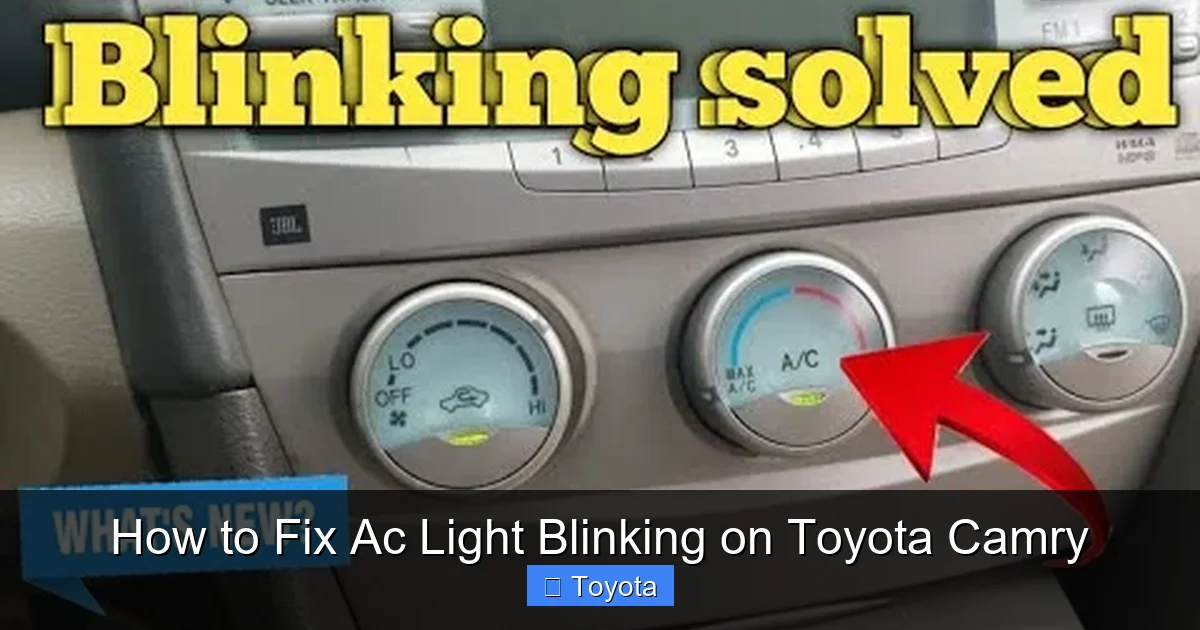
Visual guide about How to Fix Ac Light Blinking on Toyota Camry
Image source: i.ytimg.com
The Pressure Switch
This is the most critical sensor for the AC. It monitors the high and low-side pressures. If it thinks the pressure is too high (which could lead to an explosion) or too low (which could damage the compressor), it triggers the blinking light. Sometimes, the sensor itself is broken, or the wiring leading to it is corroded.
The Ambient Temperature Sensor
The car needs to know how hot it is outside to decide how hard the AC needs to work. If your ambient temperature sensor is faulty, it might tell the car it is 30 degrees outside when it is actually 90. This confusion can cause the AC system to behave erratically. If you are having issues with temperature readings, you might want to learn how to bypass ambient air temperature sensor as a diagnostic step, though replacement is the better long-term fix.
Common Cause 4: The Blower Motor and Evaporator Issues
The blinking light doesn’t always mean the “cooling” part of the system is broken; sometimes, it’s the “airflow” part. The blower motor is what pushes the cold air into your cabin. If the motor is struggling or if the evaporator core is frozen, the system may trigger a warning.
Frozen Evaporator Core
If your AC works great for 10 minutes and then the light starts blinking and the air gets warm, your evaporator might be freezing up. This usually happens because of a faulty expansion valve or an issue with the moisture in the air. When the ice blocks the airflow, the system detects a pressure imbalance and flashes the light.
Blower Motor Failure
If you hear a squealing or grinding noise coming from behind your dashboard, your blower motor might be dying. A failing motor can draw too much current, causing an electrical fault that the computer detects. This is a mechanical issue that requires replacing the motor or the resistor assembly.
Step-by-Step Troubleshooting Guide
If you are staring at that blinking light right now, follow this logical progression to find the culprit.
Step 1: The Visual Inspection
Pop the hood. Look for any obvious signs of trouble. Do you see any broken belts? Are there any loose wires hanging near the compressor? Is there a lot of dust or debris buildup in the condenser (the radiator-like part at the very front of the car)? Cleaning the condenser with low-pressure water can sometimes help if it is blocked by dirt.
Step 2: The Fuse Test
Locate your fuse box and check the AC/Clutch fuse. If it is blown, replace it. If it blows again immediately, stop and call a mechanic; you have an electrical short.
Step 3: Check for Leaks
If you see oily residue on the AC lines, you have a leak. You can buy a small UV dye kit to find the exact spot where the refrigerant is escaping. This is much more effective than just adding more gas.
Step 4: The Professional Diagnostic
If the fuses are good and there are no obvious leaks, the issue is likely a sensor or a failing compressor. At this stage, you will need an OBD-II scanner that can read HVAC-specific codes. A professional mechanic can plug this into your car to see exactly which sensor is complaining.
How to Prevent Future AC Issues
Prevention is always better (and cheaper) than repair. You want your Toyota Camry to stay reliable for hundreds of thousands of miles. Here are a few tips to keep your AC system in top shape.
- Run the AC regularly: Even in winter, turn your AC on for a few minutes once a week. This circulates the refrigerant and keeps the internal seals lubricated.
- Replace the Cabin Air Filter: A clogged cabin filter restricts airflow, making the blower motor work harder and potentially causing the system to freeze up.
- Watch for weird smells: If you notice a musty smell, it’s time to check your evaporator for mold or debris. Knowing how to get air freshener smell out of car vents is helpful, but it won’t fix a mechanical issue.
- Avoid “DIY” cans if possible: Using cheap refrigerant cans can introduce air or non-standard gases into your system, which can damage the compressor over time.
Conclusion
A blinking AC light on your Toyota Camry is a clear signal that your vehicle’s climate control system is struggling. Whether it is a simple blown fuse, a low refrigerant charge, or a faulty sensor, the car is acting to protect itself from more expensive damage. By following a systematic troubleshooting approach—starting with the easiest fixes like fuses and moving toward professional diagnostics—you can resolve the issue efficiently.
Remember, while some things are easy to fix at home, the AC system deals with high pressures and specialized chemicals. When in doubt, let a professional handle the refrigerant. Keep your filters clean, run your AC regularly, and your Camry will keep you cool through many summers to come.
Frequently Asked Questions
Why does my AC light blink only when I turn it on?
This usually indicates an immediate failure in the electrical circuit or a massive pressure imbalance. The computer detects that the component it’s trying to activate is not responding correctly and shuts it down instantly.
Can I still drive my Camry if the AC light is blinking?
Yes, generally the blinking AC light does not affect the engine’s ability to drive the car. However, you should get it checked soon to prevent the compressor from suffering permanent mechanical damage.
Is a blinking AC light a sign of a dying compressor?
It can be, but it’s not a guarantee. It is more often a sign of a sensor or refrigerant issue. A dying compressor usually comes with loud mechanical noises or a complete lack of cooling.
How much does it cost to fix a blinking AC light?
Costs vary wildly. A fuse replacement costs pennies, while a full refrigerant recharge or a new compressor can cost hundreds of dollars. A professional diagnostic is the best way to know the exact cost.
Does low refrigerant cause the light to blink?
Yes, low refrigerant levels trigger the low-pressure switch. This switch sends a signal to the car’s computer to stop the compressor from running to prevent damage.
Can a dirty cabin filter cause the AC light to blink?
Indirectly, yes. A severely clogged filter can cause the blower motor to draw too much amperage or cause the evaporator to freeze, both of which can trigger a warning light.