Difference Between Toyota Highlander Xle and Xse
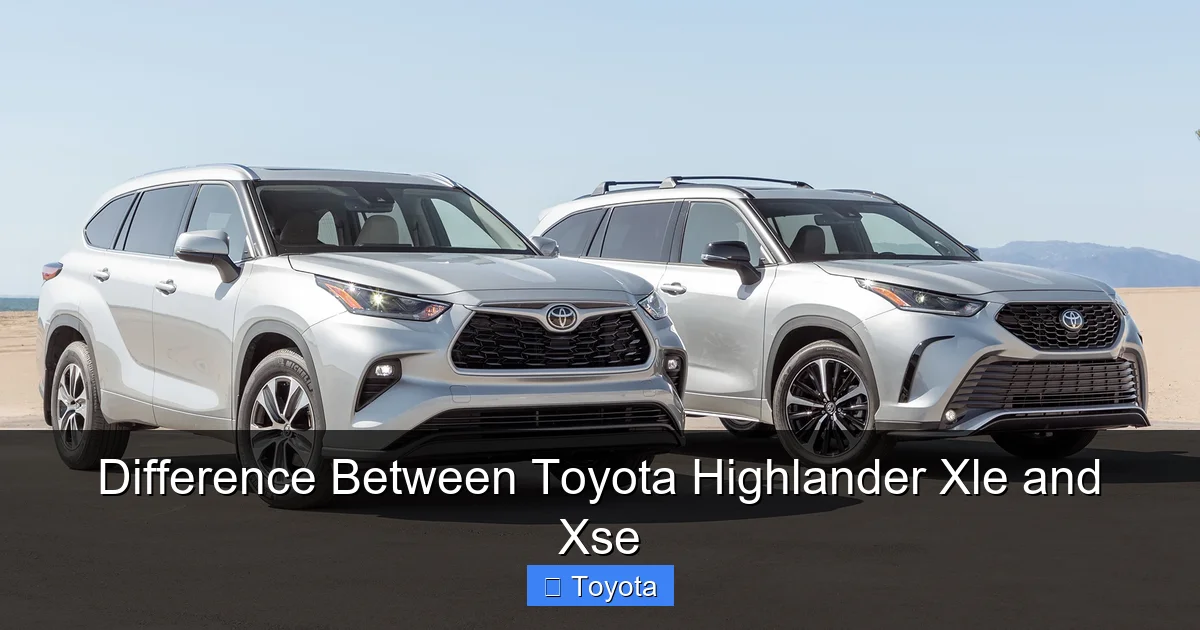
The Toyota Highlander XLE focuses on comfort and value with premium features like leather seats and a power liftgate. The XSE adds sporty styling, unique 20-inch wheels, and a stiffer suspension for a more engaging drive. Both share the same powertrain and safety suite, making the choice largely about style preferences and budget.
Key Takeaways
- Exterior Styling: The XSE features a sportier mesh grille, blacked-out accents, and standard 20-inch wheels versus the XLE’s 18-inch alloys.
- Suspension Tuning: XSE receives a sport-tuned suspension for sharper handling, while XLE prioritizes a softer, more compliant ride.
- Interior Accents: XSE adds red contrast stitching, aluminum sport pedals, and unique seat patterns not found on the XLE.
- Standard Features: Both trims include SofTex leather, tri-zone climate, and Toyota Safety Sense 2.5+, but XLE offers a better value baseline.
- Price Gap: The XSE commands a roughly $3,000 premium over the XLE for its aesthetic and handling upgrades.
- Powertrain Parity: Both use the same 265-hp 2.4L turbo-four and 8-speed automatic with identical towing capacity (5,000 lbs).
- Target Buyer: Choose XLE for maximum comfort per dollar; choose XSE if you want a sportier look and feel without stepping to a performance brand.
📑 Table of Contents
Introduction: Picking Your Perfect Highlander
Shopping for a three-row SUV often feels like navigating a maze of trim levels. The Toyota Highlander sits near the top of the class for reliability and family practicality. But when you narrow it down to the middle-upper trims, the difference between Toyota Highlander XLE and XSE becomes the critical decision point. Both trims sit above the volume-selling XLE and below the luxurious Limited and Platinum. They share the same turbocharged engine and standard all-wheel drive on most lots. Yet they cater to slightly different personalities.
I’ve spent time in both trims on highways, carpool lines, and weekend camping trips. The XLE feels like the smart, sensible choice. The XSE feels like the XLE that went to the gym and bought a leather jacket. This guide breaks down every meaningful difference so you can decide which personality fits your driveway.
Exterior Design: Subtle vs. Sporty
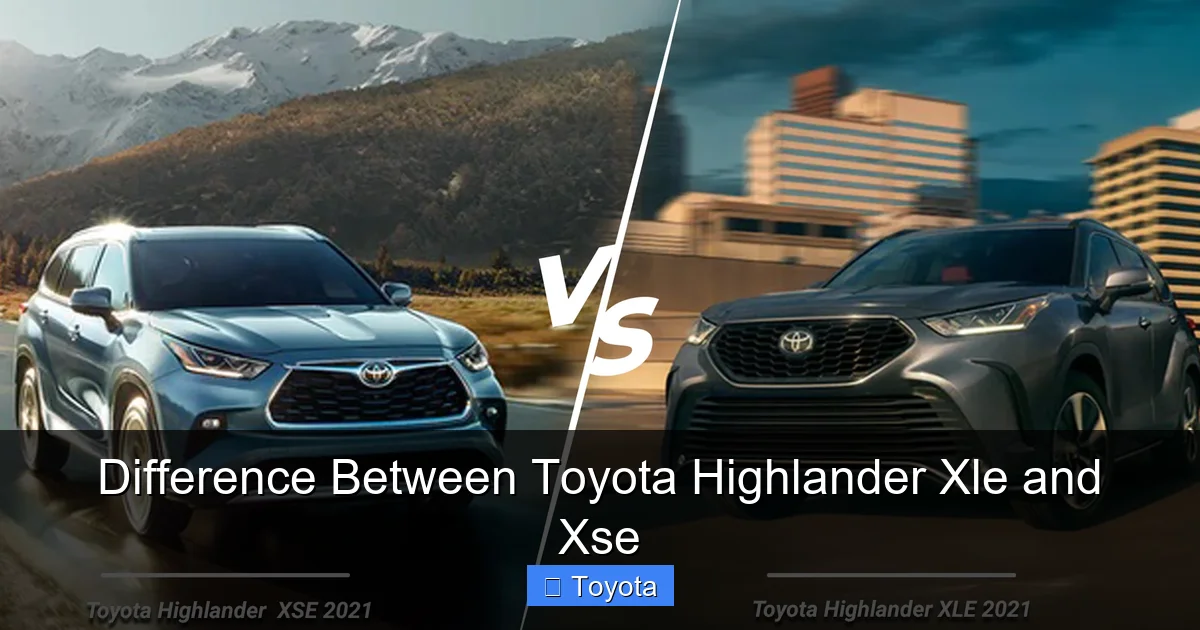
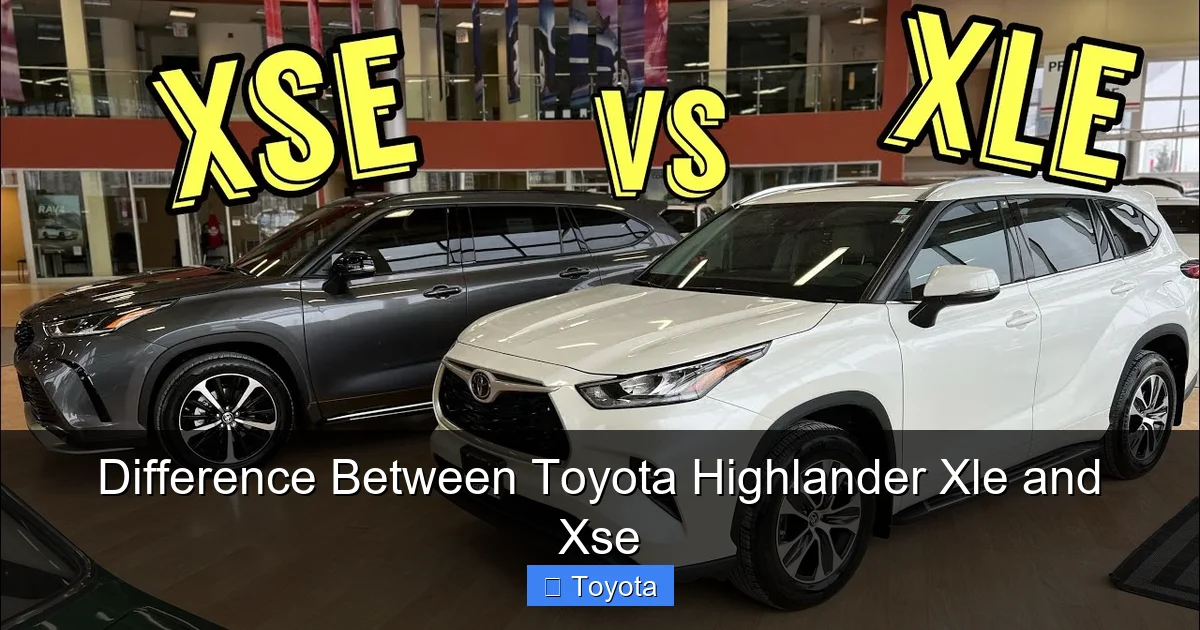
The most immediate difference hits you at the curb. The XLE wears a chrome-heavy front grille with horizontal slats. It looks polished, professional, and distinctly Toyota. The XSE swaps that for a dark metallic mesh grille with a unique “XSE” badge. The fog light surrounds, window trim, roof rails, and mirror caps all shift to black on the XSE. It creates a monochromatic, aggressive stance.
Visual guide about Difference Between Toyota Highlander Xle and Xse
Image source: storage.googleapis.com
Wheels and Tires
Wheels are the easiest tell. The XLE rolls on 18-inch machined-face alloy wheels wrapped in all-season tires tuned for comfort and low noise. The XSE upgrades to 20-inch dark gray multi-spoke alloys. Those larger wheels fill the wheel wells beautifully but come with a trade-off: shorter sidewalls transmit more road imperfections. If you live in pothole country, the XLE’s 18s offer more cushion. For drivers who prioritize cornering grip and visual presence, the XSE’s 20s win. You can explore tire options for either setup in our guide on best all-weather tires for performance and safety.
Lighting and Badging
Both trims feature LED headlights, taillights, and daytime running lights. The XSE adds sequential turn signals in the mirrors — a small but premium touch. Rear badging differs: “XLE” in silver chrome versus “XSE” in black chrome. Roof rails are silver on XLE, black on XSE. If you plan to add a roof box or bike rack, the black rails on the XSE hide scratches better over time.
Interior Comfort and Materials
Step inside and the shared DNA is obvious. Both offer SofTex synthetic leather seating, power-adjustable front seats with lumbar support, and tri-zone automatic climate control. The dashboard layout, screen placement, and switchgear are identical. The magic lives in the details.
Seating Surfaces and Stitching
The XLE uses a two-tone SofTex scheme (Black/Graphite or Harvest Beige palette with simple contrast stitching. It looks upscale and resists wear well. The XSE introduces a unique black interior with red contrast stitching on the seats, doors, and armrests. The front seatbacks feature an embossed “XSE” logo. Aluminum sport pedals replace the standard rubber ones. It’s a cohesive sport theme that feels special without crossing into gaudy territory.
Ambient Lighting and Soft Touches
Both trims include ambient lighting in the front doors and console. The XSE’s red stitching catches that light beautifully at night. Soft-touch materials cover the upper dash, door uppers, and center armrest in both. Harder plastics appear on lower door panels and the rear console — consistent across the lineup. If you plan to keep the interior looking fresh, check out our picks for best auto leather cleaner and conditioner reviews; they work great on SofTex too.
Space and Versatility
No dimensional differences exist. Both seat seven or eight depending on second-row configuration (captain’s chairs vs. bench). Third-row access is decent but not class-leading. Cargo space behind the third row is 16 cubic feet — enough for a grocery run or a couple of carry-ons. Folding the second and third rows flat yields 84.3 cubic feet. The XLE’s bench seat option makes it an eight-passenger hauler; the XSE only offers captain’s chairs, capping capacity at seven. That’s a key differentiator for larger families.
Performance and Driving Dynamics
Under the hood, zero difference. Both use Toyota’s 2.4-liter turbocharged inline-four producing 265 horsepower and 310 lb-ft of torque. An 8-speed automatic sends power to a standard all-wheel-drive system (FWD is optional on XLE only). Towing maxes out at 5,000 pounds properly equipped. 0-60 mph takes about 7.5 seconds. Fuel economy lands at 22 mpg city / 29 highway / 25 combined for AWD models.
Visual guide about Difference Between Toyota Highlander Xle and Xse
Image source: i.ytimg.com
Suspension and Steering Tuning
This is where the XSE earns its badge. Toyota stiffens the springs, dampers, and anti-roll bars. The steering ratio quickens slightly. The result: flatter cornering, better body control during sudden lane changes, and a more connected feel. The XLE’s softer setup absorbs expansion joints and potholes with more grace. On a winding canyon road, the XSE feels composed and eager. On a cross-country interstate haul, the XLE’s compliance reduces fatigue. Neither is a sports car, but the gap is noticeable back-to-back.
Drive Modes
Both offer Eco, Normal, and Sport modes. Sport sharpens throttle response and holds gears longer. The XSE adds a “Sport+” setting (accessed via the drive mode dial) that further tightens steering weight and throttle mapping. It’s a subtle but fun addition for spirited driving. Snow, Mud/Sand, and Rock modes are standard on AWD models for both trims.
Technology and Safety Features
Toyota equips both trims identically for tech and safety. The centerpiece is a 12.3-inch touchscreen with wireless Apple CarPlay and Android Auto. A 12.3-inch digital instrument cluster sits behind the steering wheel. Six USB-C ports (two per row) keep devices charged. A Qi wireless charger lives in the center console.
Toyota Safety Sense 2.5+
Standard on both: Pre-Collision System with Pedestrian Detection, Full-Speed Range Dynamic Radar Cruise Control, Lane Departure Alert with Steering Assist, Automatic High Beams, Lane Tracing Assist, and Road Sign Assist. It’s one of the most comprehensive standard suites in the segment. Blind Spot Monitor with Rear Cross-Traffic Alert is also standard. The XSE does not add any exclusive safety tech.
Audio and Connectivity
An 11-speaker JBL Premium Audio system is optional on both ($565). It adds a subwoofer and amplifier for richer sound. A 10-inch color Head-Up Display is optional on both ($900). A Digital Rearview Mirror with HomeLink is another shared option. No tech feature separates these trims — a refreshing simplicity.
Pricing, Packages, and Value Analysis
For the 2024 model year, the XLE AWD starts around $43,500. The XSE AWD starts near $46,500. That $3,000 gap buys the sport suspension, 20-inch wheels, unique styling, red stitching, aluminum pedals, and the seven-seat-only configuration. Is it worth it?
Popular Packages
Both trims offer the same option packages:
- Premium Package ($2,300): Panoramic moonroof, power-folding second row, hands-free power liftgate, 11-speaker JBL audio, digital rearview mirror.
- Cold Weather Package ($600): Heated steering wheel, heated second-row seats, rain-sensing wipers.
- Head-Up Display ($900): 10-inch color projection.
These packages stack identically. A fully loaded XLE can exceed a base XSE in price. The value sweet spot? An XLE with the Premium Package. You get the moonroof, JBL audio, and power-folding seats — features you’ll use daily — for less than an XSE with the same gear.
Resale and Ownership Costs
Highlanders hold value exceptionally well. The XLE’s broader appeal (eight-seat option, softer ride) typically yields slightly stronger resale percentages. The XSE’s niche sport styling appeals to a smaller buyer pool. Maintenance costs are identical. Insurance may tick up slightly for the XSE due to the 20-inch wheels and sport classification. Over a five-year loop, the XLE likely costs $1,500-$2,000 less to own.
Which Trim Should You Buy?
Choose the XLE if:
- You need eight-passenger seating.
- You prioritize ride comfort over handling sharpness.
- You want the best feature-per-dollar ratio.
- You prefer chrome accents and a classic SUV look.
- You frequently drive on rough roads where 18-inch tires help.
Choose the XSE if:
- You always drive with five or fewer people (captain’s chairs only).
- You enjoy a firmer, more European driving feel.
- You love the blacked-out aesthetic and red interior accents.
- You want the visual impact of 20-inch wheels.
- You don’t mind paying a premium for style and handling tweaks.
Both are excellent. The Highlander’s core strengths — reliability, safety, hybrid-like torque from the turbo-four, and Toyota’s dealer network — shine in either trim. If you’re cross-shopping other three-row options, our roundup of the best 3-row seat SUVs for family comfort and space puts the Highlander in context against the Pilot, Telluride, and Grand Highlander.
Conclusion: Two Personalities, One Strong Platform
The difference between Toyota Highlander XLE and XSE ultimately boils down to character. The XLE is the pragmatic family hauler that doesn’t skimp on premium touches. The XSE is the enthusiast’s family hauler — same practicality, sharper suit. You can’t go wrong. Test drive both on your actual roads. Hit a pothole. Take a freeway on-ramp. Load your gear. The right choice will reveal itself in the first ten minutes. And whichever you pick, you’re getting one of the most well-rounded three-row SUVs on the market today.
Frequently Asked Questions
Does the Highlander XSE have a different engine than the XLE?
No. Both trims use the exact same 2.4-liter turbocharged four-cylinder engine producing 265 horsepower and 310 lb-ft of torque, paired with an 8-speed automatic transmission.
Can you get eight seats in the Highlander XSE?
No. The XSE comes standard with second-row captain’s chairs, limiting capacity to seven passengers. The XLE offers a second-row bench seat option for eight-passenger seating.
Is the Highlander XSE suspension too stiff for daily driving?
It’s firmer than the XLE but not harsh. Most drivers find it compliant enough for daily use, though those on severely broken pavement may prefer the XLE’s softer tuning.
Do both trims come standard with all-wheel drive?
For the 2024 model year, AWD is standard on the XSE. On the XLE, AWD is a $1,600 option over the base FWD configuration.
What is the price difference between XLE and XSE?
The XSE typically carries a $3,000-$3,500 premium over a comparably equipped XLE AWD model, varying slightly by region and packages.
Are there any exclusive safety features on the XSE?
No. Both trims share the identical Toyota Safety Sense 2.5+ suite and all standard driver-assist features.