How to Fix the Ac Light Flashing on a Toyota Tacoma
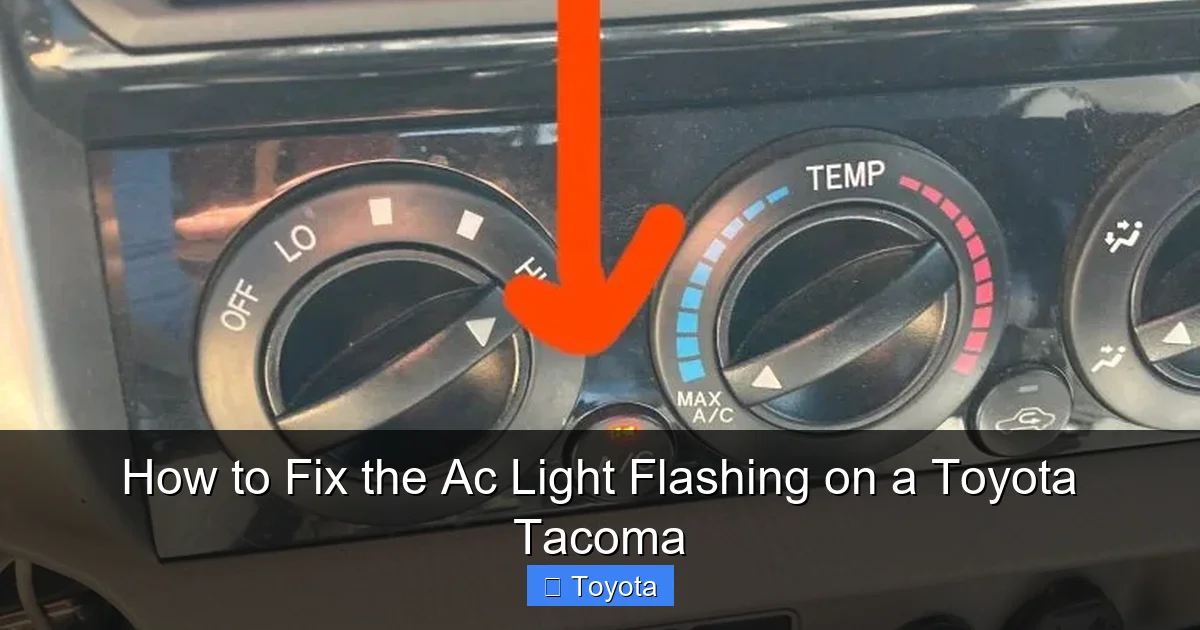
The AC light flashing on your Toyota Tacoma signals a potential problem with your vehicle’s cooling system. This issue can range from a simple blown fuse to critical refrigerant leaks. By identifying common causes like low refrigerant, faulty sensors, or compressor malfunctions, you can perform basic troubleshooting steps to restore airflow. If DIY methods fail, consult a mechanic to avoid further damage.
Key Takeaways
- AC light flashing: Indicates a system malfunction, often related to refrigerant levels or electrical components.
- Common causes: Low refrigerant, blown fuses, faulty pressure sensors, or a failing compressor.
- DIY checks: Inspect the AC compressor, test the refrigerant level, and verify the fuse box for blown fuses.
- Reset procedure: Turn off the engine, disconnect the battery, and wait 10 minutes to reset the AC system.
- Professional help: Seek a mechanic if the light persists after basic troubleshooting or if you suspect refrigerant leaks.
- Preventive maintenance: Regularly clean the AC filter and check refrigerant levels to avoid future issues.
- Safety first: Avoid attempting repairs involving refrigerant without proper tools and knowledge.
📑 Table of Contents
Why Is My Toyota Tacoma’s AC Light Flashing?
If your Toyota Tacoma’s AC light is flashing, it’s like your truck’s way of waving a red flag. This warning usually means something isn’t right with the air conditioning system. Whether you’re cruising down a summer highway or stuck in traffic, a non-functioning AC can turn a pleasant drive into an uncomfortable ordeal. The good news? Many TACOMA owners can troubleshoot the issue themselves before heading to a mechanic. But first, let’s break down why this happens and what you can do about it.
The AC light on your Tacoma isn’t just a convenience feature—it’s a diagnostic tool. When it blinks, it’s telling you that the system’s sensors have detected a problem. This could be a refrigerant leak, a faulty compressor, or even an electrical fault. Ignoring the warning might lead to more significant repairs down the road. So, let’s dive into the common culprits and how to address them.
Common Causes of a Flashing AC Light
Visual guide about How to Fix the Ac Light Flashing on a Toyota Tacoma
Image source: aautomotives.com
Before grabbing your tools, it’s essential to understand what’s triggering the light. Below are the most frequent reasons your TACOMA’s AC system might be malfunctioning:
Low Refrigerant Levels
One of the most common causes of a flashing AC light is low refrigerant. If the system doesn’t have enough coolant, the compressor can’t function properly. This often happens due to slow leaks in the hoses or seals. You might notice ice forming around the AC vents or weak airflow if this is the case.
Blown Fuses or Faulty Relays
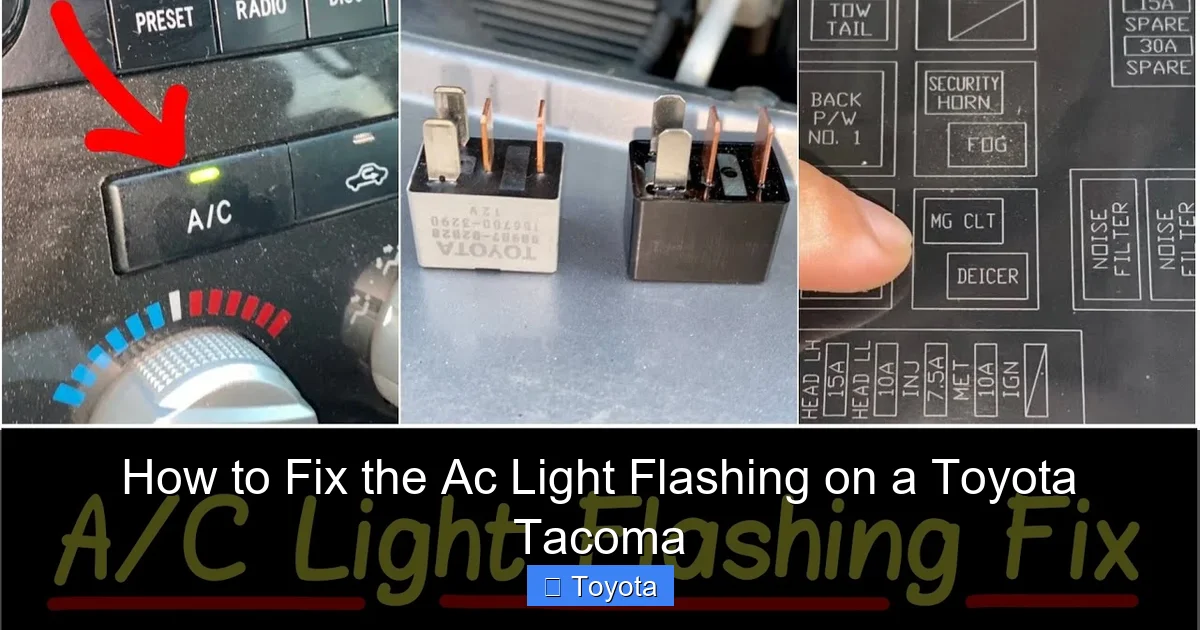
Electrical issues are another frequent offender. A blown fuse or a malfunctioning relay can disrupt the AC’s operation. Check your owner’s manual for the location of the AC-related fuses and inspect them visually. A melted or discolored fuse is a dead giveaway.
Faulty AC Pressure Sensor
The AC pressure sensor monitors refrigerant levels and communicates with the vehicle’s computer. If this sensor is defective, it can send incorrect signals, causing the light to flash. This often results in intermittent AC performance.
Compressor Problems
A failing AC compressor can also trigger the warning light. If the compressor’s clutch isn’t engaging or the unit itself is damaged, the system can’t cool the air effectively. Listen for unusual noises when you turn on the AC—a grinding or squealing sound could indicate compressor issues.
Electrical Faults or Wiring Issues
Loose connections, corroded wires, or damaged wiring harnesses can interfere with the AC system’s electrical circuits. These issues might not be immediately visible, so a thorough inspection is necessary.
DIY Troubleshooting Steps to Fix the AC Light
Visual guide about How to Fix the Ac Light Flashing on a Toyota Tacoma
Image source: aautomotives.com
Now that you know the common causes, let’s tackle the problem step-by-step. While some fixes require professional tools, many TACOMA owners can address the issue themselves with basic car knowledge.
Step 1: Check the AC Compressor
Start by locating the AC compressor under the hood. When you turn on the AC, listen for a clicking sound as the compressor engages. If you don’t hear it, the clutch might not be functioning. Use a multimeter to test the compressor’s electrical connections. A faulty clutch or low voltage could be to blame.
Step 2: Inspect the Refrigerant Level
Low refrigerant is a common culprit. To check this, you’ll need an AC manifold gauge set (available at auto parts stores). Connect the gauges to the low and high-side service ports on the AC lines. If the pressure readings are too low, you’ll need to recharge the system. However, be cautious—adding refrigerant without addressing a leak can worsen the problem.
Step 3: Test the Fuses and Relays
Locate the fuse box in your TACOMA’s owner’s manual. Check the AC-related fuses by pulling them out and inspecting for damage. Replace any blown fuses with the correct amperage. Next, swap the AC relay with another relay of the same type to test if it’s functioning properly.
Step 4: Clean or Replace the Cabin Air Filter
A clogged cabin air filter can reduce airflow, making the AC work harder. To replace it, open the glove compartment, remove the stopper, and take out the old filter. Insert a new one, ensuring it’s properly aligned. A clean filter can improve AC performance and reduce strain on the system.
Step 5: Reset the AC System
Sometimes, a simple reset can resolve the issue. Turn off the engine, disconnect the negative battery terminal, and wait 10–15 minutes. Reconnect the battery and restart the vehicle. This resets the AC control module, which might clear the warning light.
Step 6: Inspect for Refrigerant Leaks
If the light persists after recharging, there’s likely a leak. Use UV dye to detect leaks by adding it to the refrigerant. Shine a UV light on suspected areas (hoses, connections, the compressor). Green or yellow spots indicate leaks. Repair or replace the affected components.
When to Seek Professional Help
Visual guide about How to Fix the Ac Light Flashing on a Toyota Tacoma
Image source: i.ytimg.com
While DIY troubleshooting can resolve many AC issues, there are times when professional assistance is necessary. If you’re uncomfortable working with refrigerant or electrical systems, it’s wise to consult a certified mechanic. Here’s when to call the experts:
Complex Electrical Issues
If the problem involves intricate wiring or sensors, a mechanic has the diagnostic tools to pinpoint the exact issue.
Compressor Replacement
Replacing a compressor requires specialized equipment and expertise. Attempting this yourself without proper training can lead to further damage.
Refrigerant Handling
Handling refrigerant requires EPA-certified technicians. Improperly releasing refrigerant can harm the environment and void warranties.
Persistent Warning Lights
If the AC light keeps flashing after multiple troubleshooting attempts, a deeper diagnosis is needed to prevent recurring issues.
Preventive Maintenance Tips
Prevention is always better than repair. Here are some tips to keep your TACOMA’s AC system in top shape:
Regular Filter Cleaning
Clean or replace your cabin air filter every 12–15 months or as needed. This ensures optimal airflow and reduces strain on the AC system.
Check Refrigerant Levels Annually
Have a mechanic inspect refrigerant levels during routine maintenance. Early detection of leaks prevents sudden failures.
Inspect Belts and Hoses
Examine the AC compressor belt and hoses for cracks, fraying, or corrosion. Replace damaged components promptly.
Avoid Overuse of the AC
While tempting on hot days, running the AC continuously can wear out components faster. Use the recirculation mode to cool the cabin more efficiently.
Test the System Before Summer
Run the AC before the peak summer months to ensure it’s functioning properly. Address minor issues early to avoid breakdowns during critical times.
Frequently Asked Questions
What does a flashing AC light mean on a Toyota Tacoma?
The flashing AC light indicates a malfunction in the vehicle’s cooling system. It typically points to issues like low refrigerant, electrical faults, or compressor problems.
Can I fix the AC light issue myself?
Yes, for basic troubleshooting like checking fuses, replacing the cabin filter, or recharging refrigerant. However, complex repairs like compressor replacement should be handled by a professional.
How do I reset the AC system on my Tacoma?
Turn off the engine, disconnect the negative battery terminal, wait 10 minutes, then reconnect it. This resets the AC control module and may clear the warning light.
What if the AC light keeps flashing after recharging the refrigerant?
This suggests a refrigerant leak or a faulty pressure sensor. Use UV dye to locate leaks or have a mechanic diagnose the sensor.
Is it safe to drive with a flashing AC light?
While not immediately dangerous, driving with a malfunctioning AC can strain other components and worsen the issue. Address it as soon as possible.
How much does it cost to fix a flashing AC light?
Costs vary based on the issue. Simple fixes like replacing a fuse or filter cost under $100. Compressor repairs or refrigerant recharges can range from $300 to $1,000 or more.
=== CONCLUSION ===
A flashing AC light on your Toyota Tacoma doesn’t have to be the end of the world. By understanding the common causes and following basic troubleshooting steps, you can often resolve the issue yourself. However, remember that some problems require professional expertise. Regular maintenance, like cleaning the cabin air filter and checking refrigerant levels, can prevent many AC-related headaches. Stay proactive, and your TACOMA will stay cool all summer long.
Pro Tip: Keep your owner’s manual handy—it’s a goldmine for troubleshooting specific issues with your vehicle’s systems.