Does the Toyota 4runner Qualify for Section 179?
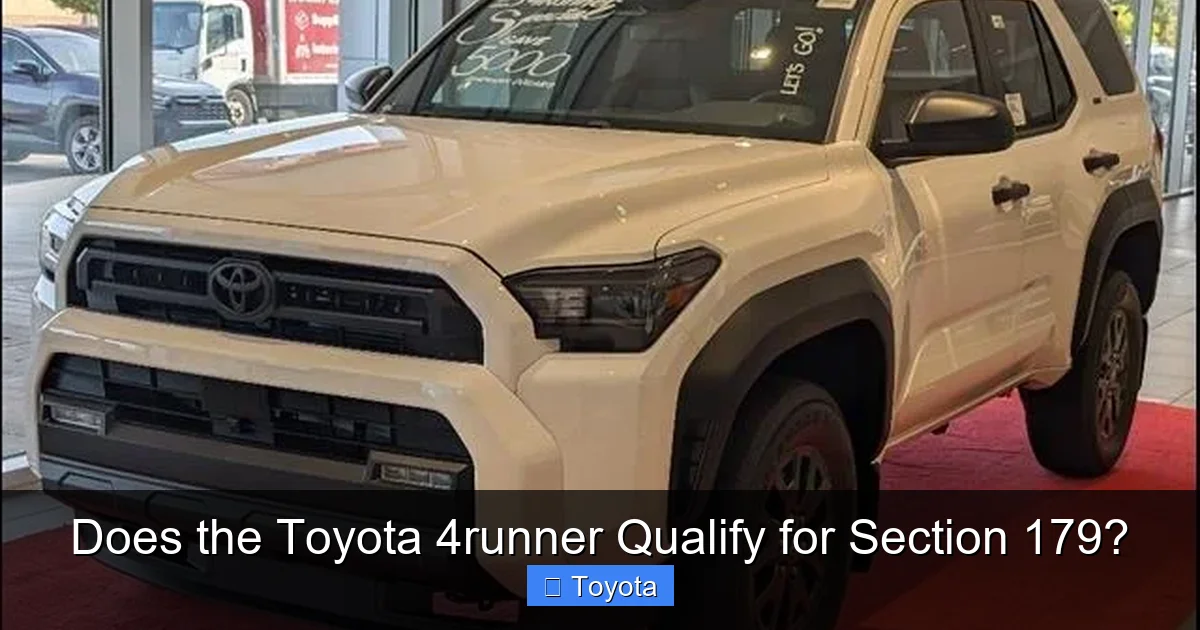
The Toyota 4Runner can qualify for Section 179 tax deductions when used for business purposes, but only certain models meet the strict GVWR requirements. Understanding the difference between passenger vehicles and trucks/vans is crucial for maximizing your tax benefits. This guide breaks down everything you need to know about claiming Section 179 on your Toyota 4Runner purchase.
Key Takeaways
- Section 179 Basics: This tax provision allows businesses to deduct the full purchase price of qualifying vehicles instead of depreciating over time.
- GVWR Requirements: Only Toyota 4Runner models with a gross vehicle weight rating over 6,000 pounds qualify for full Section 179 deductions.
- Business Use Mandate: Your Toyota 4Runner must be used primarily for business activities to qualify for any Section 179 benefits.
- Annual Limits Apply: There are yearly caps on how much you can deduct under Section 179, which may change based on current tax laws.
- Documentation is Key: Keep detailed records of business mileage, purchase price, and vehicle specifications to support your Section 179 claim.
- Model Year Matters: Different model years of Toyota 4Runner have varying GVWR ratings, so check your specific vehicle before claiming deductions.
- Professional Advice Recommended: Consult with a tax professional to ensure proper filing and avoid potential IRS issues with your Section 179 deduction.
📑 Table of Contents
Understanding Section 179 Tax Deductions
Section 179 is one of the most valuable tax breaks available to small business owners. It lets you write off the entire cost of qualifying equipment and vehicles in the year you buy them. No waiting years to recover your investment through depreciation. This immediate deduction can significantly reduce your taxable income.
The Tax Cuts and Jobs Act made Section 179 even more attractive. For 2023, you can deduct up to $1,080,000 of qualifying business property. That’s a substantial amount that could make a real difference in your bottom line.
But here’s the catch: not every vehicle qualifies. The rules get complicated fast, especially when dealing with SUVs like the Toyota 4Runner. Let’s break down what you need to know.
What Makes a Vehicle Section 179 Eligible?
To qualify for Section 179, vehicles must meet specific criteria set by the IRS. The key factor is vehicle classification, not just what you call it. Passenger vehicles face stricter limits than trucks and vans.
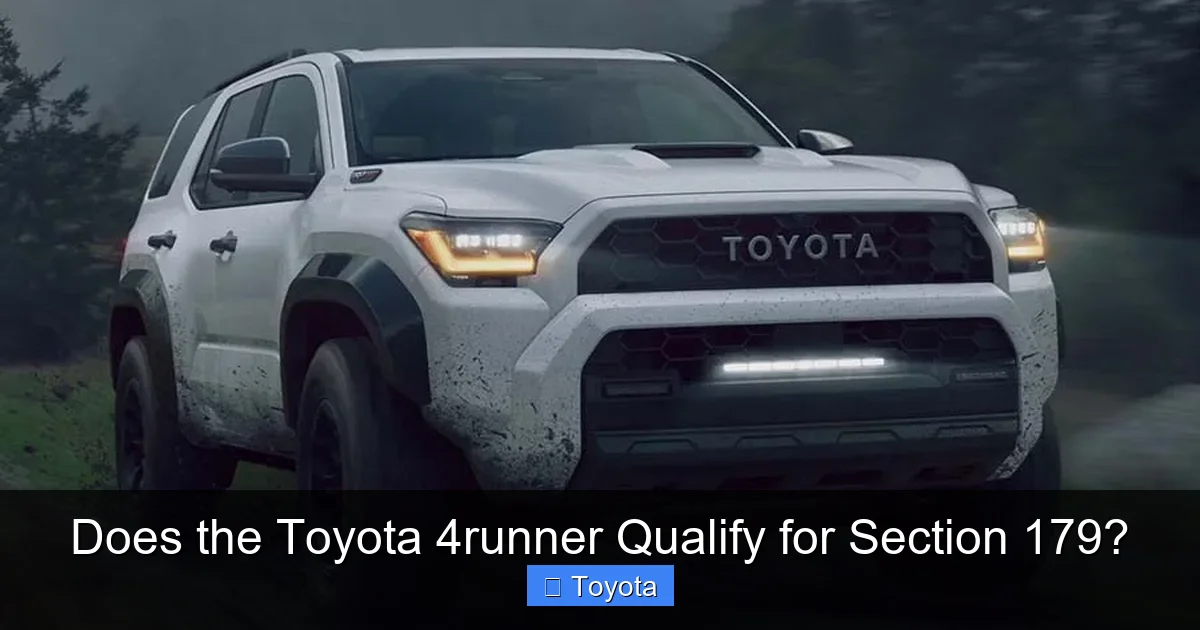
Visual guide about Does the Toyota 4runner Qualify for Section 179?
Image source: lp-auto-assets.s3.amazonaws.com
Passenger Vehicle vs. Truck Classification
The IRS draws a clear line between passenger vehicles and other vehicle types. Passenger vehicles are subject to annual depreciation limits that phase out quickly. Trucks and vans with sufficient weight capacity get better treatment.
For 2023, passenger vehicles placed in service this year face these limits:
- First year: Up to $11,600 deduction
- Second year: Up to $16,800 deduction
- Third year: Up to $9,600 deduction
Compare this to trucks and vans meeting weight requirements: up to $1,080,000 deduction in the first year. That’s a massive difference for business owners.
Gross Vehicle Weight Rating Requirements
The magic number is 6,001 pounds. Vehicles with a GVWR over this threshold typically qualify for better Section 179 treatment. GVWR includes the vehicle’s weight plus cargo and passengers.
You can find your Toyota 4Runner’s GVWR on the driver’s side door jamb. Look for the tire information placard. The GVWR will be listed there in pounds.
If your vehicle weighs less than 6,001 pounds, you’re stuck with passenger vehicle limits. This is why checking your specific model matters so much.
Does Toyota 4Runner Qualify for Section 179?
The answer isn’t simple yes or no. It depends on which Toyota 4Runner model you’re considering. Not all trims and model years meet the weight requirements.
Visual guide about Does the Toyota 4runner Qualify for Section 179?
Image source: aautomotives.com
Checking Your Specific Model’s GVWR
Most Toyota 4Runner models do NOT qualify for full Section 179 benefits. Here’s why: the standard Toyota 4Runner has a GVWR around 5,500-5,800 pounds. That falls short of the 6,001-pound threshold.
However, some heavier-duty configurations might qualify. The key is finding the exact GVWR of your specific vehicle. Check your door jamb sticker or contact Toyota directly for accurate information.
Business Use Percentage Matters
Even if your Toyota 4Runner qualifies based on weight, you must use it primarily for business. The IRS expects you to track business versus personal use carefully.
If you drive 60% business and 40% personal, only 60% of the deduction applies. You’ll need contemporaneous logs of all trips. Apps like MileIQ or manual logbooks work well for this.
Renting your Toyota 4Runner to others complicates things further. Make sure you understand how rental use affects Section 179 eligibility before making any claims.
How to Maximize Your Section 179 Benefits
If your Toyota 4Runner qualifies, you want to get the most benefit possible. Strategic planning helps you optimize this valuable deduction.
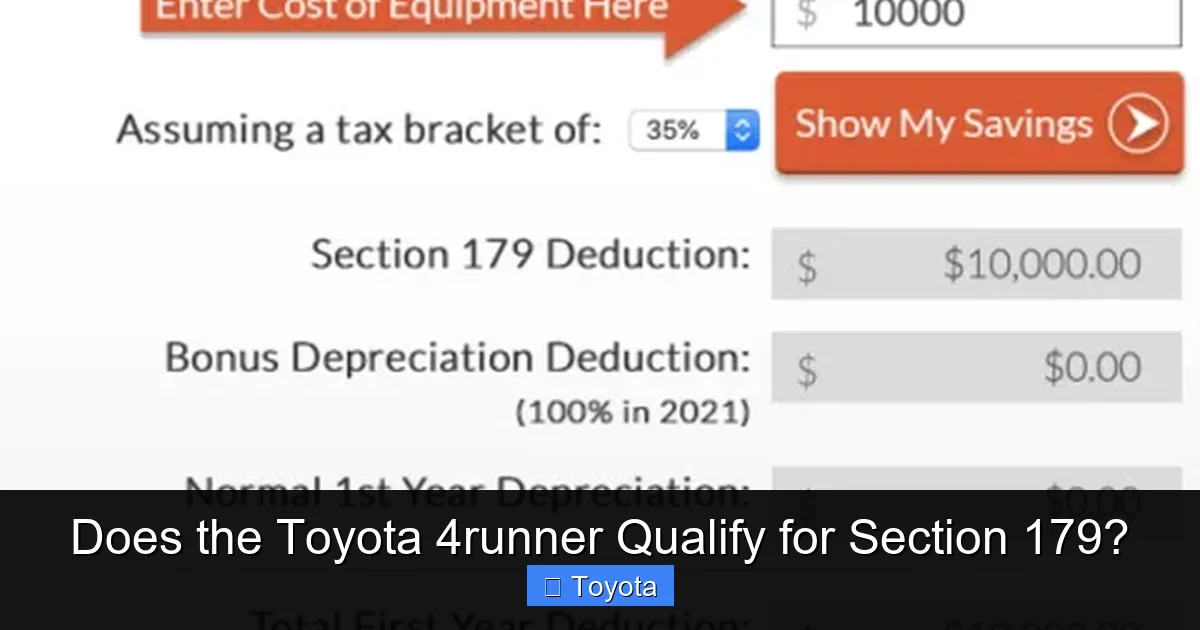
Visual guide about Does the Toyota 4runner Qualify for Section 179?
Image source: aautomotives.com
Timing Your Purchase
Section 179 applies when you place property in service. This means taking possession and being ready to use it for business. You don’t have to actually use it first.
Consider buying late in the tax year if you’re close to annual limits. This gives you maximum flexibility for the following year. But don’t rush into purchases just for tax benefits.
Combining with Bonus Depreciation
Bonus depreciation works alongside Section 179. For 2023, you can take 100% bonus depreciation on qualifying property that doesn’t get Section 179 treatment.
This means even if your Toyota 4Runner doesn’t qualify for full Section 179, you might still get significant tax benefits. Bonus depreciation has different eligibility rules worth exploring.
Maintaining Proper Documentation
The IRS scrutinizes Section 179 claims heavily. Poor documentation leads to disallowed deductions and potential penalties. Start collecting paperwork from day one.
Essential documents include:
- Bill of sale showing purchase price
- Vehicle specifications including GVWR
- Business use logs and mileage tracking
- Proof of business purpose for purchases
Consider upgrading your Toyota 4Runner with accessories that improve its business utility. These modifications might also qualify for Section 179 treatment when properly documented.
Common Mistakes to Avoid
Many business owners mess up their Section 179 claims. Learning from common errors saves you money and headaches.
Overstating Business Use
Claiming 100% business use when reality differs invites trouble. The IRS audits Section 179 deductions regularly. They look for inconsistencies in your claimed usage.
Be honest about personal trips. Vacation driving, commuting to regular job sites, and family errands count as personal use. Understating business use beats overstating it every time.
Ignoring Modified Accelerated Cost Recovery System (MACRS)
Section 179 doesn’t replace normal depreciation rules. It offers an alternative method for the first year. After that, standard depreciation schedules apply.
Understand both systems to make informed decisions. Sometimes taking regular depreciation makes more sense long-term. Run the numbers before deciding.
Failing to Meet “Acquisition” Requirements
You must actually purchase qualifying property to claim Section 179. Leased vehicles generally don’t work. Personal loans used for business purchases complicate matters too.
The vehicle must be new or used property you acquire. Gift acquisitions and inherited vehicles don’t qualify. Make sure your purchase meets true acquisition standards.
Making Smart Business Decisions
Tax benefits shouldn’t drive every business purchase. But understanding Section 179 helps you make informed choices. Your Toyota 4Runner might be perfect for business needs regardless of tax treatment.
Evaluating True Business Needs
Start with what your business actually requires. Do you need off-road capability? Passenger space? Towing capacity? These factors matter more than tax deductions.
The Toyota 4Runner excels in many areas. Its reputation for reliability makes it attractive for businesses needing dependable transportation. Many choose it for legitimate operational reasons.
When shopping for accessories, consider items that enhance business use. Quality all-terrain tires improve capability while serving business purposes. Proper modifications support your Section 179 claim.
Planning for Future Years
Section 179 limits change annually. What works this year might not work next year. Stay informed about legislative updates affecting your strategy.
Consider multi-year planning when making major purchases. Coordinating acquisitions maximizes available deductions within legal limits. Professional tax advice pays dividends here.
Remember that tax law complexity requires expert guidance. While this article provides general information, your specific situation demands personalized advice. Consult qualified professionals before claiming any Section 179 deductions.
Your Toyota 4Runner purchase should serve genuine business needs first. Tax benefits come second. Make smart decisions that support both your operations and financial goals.
Whether your Toyota 4Runner qualifies for Section 179 depends on several factors. Check your specific model’s GVWR carefully. Maintain thorough documentation of business use. And never let tax considerations override sound business judgment.
Frequently Asked Questions
Can I claim Section 179 on a used Toyota 4Runner?
Yes, used vehicles can qualify for Section 179 if they meet all requirements. The vehicle must be used property that you acquire during the tax year. However, the same GVWR and business use rules apply to used vehicles as new ones.
What happens if I sell my Toyota 4Runner after claiming Section 179?
Selling a vehicle you’ve claimed Section 179 deductions on triggers recapture rules. You may owe taxes on the depreciation benefits you previously received. The IRS wants to ensure you don’t get double benefits from the same asset.
Do I need special insurance for a business-use Toyota 4Runner?
Commercial auto insurance typically works better for business vehicles. Personal policies might not cover business-related incidents adequately. Check with your insurance provider about appropriate coverage for your specific business use.
How does Section 179 affect my Toyota 4Runner registration?
Taking Section 179 deductions doesn’t change your vehicle registration requirements. You still register it according to your state’s rules for private vehicles. However, some states might have different tax implications for business vehicles.
Can I claim Section 179 if I finance my Toyota 4Runner?
Yes, financing doesn’t disqualify you from Section 179 benefits. You can claim the deduction based on the vehicle’s cost, regardless of payment method. Just ensure the financing arrangement meets IRS requirements for business purchases.
What records should I keep for my Toyota 4Runner Section 179 claim?
Keep all purchase documents, business use logs, and vehicle specifications. You’ll need receipts, bills of sale, and maintenance records. The IRS can request these documents for up to six years after filing, so organize them well.