How Often Should You Change Antifreeze in a Toyota
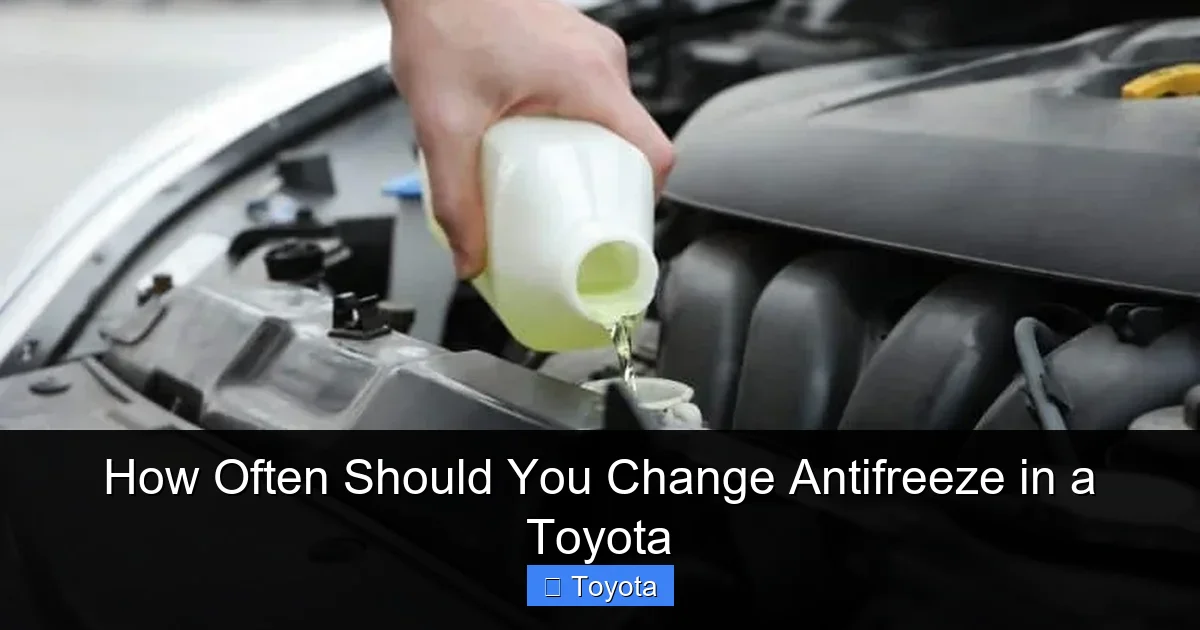
Changing your Toyota’s antifreeze regularly is crucial for preventing engine damage and maintaining performance. Most Toyotas require a coolant flush every 30,000 to 50,000 miles or every 2-5 years, depending on driving conditions and coolant type. Always consult your owner’s manual for specific recommendations to protect your engine’s longevity.
Key Takeaways
- Follow manufacturer guidelines: Toyota recommends antifreeze changes every 30,000–50,000 miles or 2–5 years, depending on driving conditions and coolant type.
- Check coolant condition regularly: Look for discoloration, leaks, or a sweet smell to identify when maintenance is needed.
- Use the correct coolant: Toyota Super Long Life Coolant (OAT) is ideal for most models, but always verify compatibility in your owner’s manual.
- Consider driving conditions: Severe driving (e.g., towing, extreme temperatures) may require more frequent changes.
- Professional service benefits: A coolant flush by a mechanic ensures proper disposal and prevents contamination.
- Cost vs. engine protection: While DIY is possible, professional service ensures accuracy and prevents costly repairs.
- Monitor for overheating: A faulty cooling system can lead to catastrophic engine damage if ignored.
📑 Table of Contents
- Understanding Antifreeze and Its Role in Your Toyota
- Toyota’s Recommended Antifreeze Change Intervals
- How to Check Antifreeze Levels and Condition
- Signs You Need to Change Antifreeze
- Cost Considerations and DIY vs. Professional Service
- Best Practices for Maintaining Your Toyota’s Cooling System
- Conclusion: Protect Your Investment
Understanding Antifreeze and Its Role in Your Toyota
Antifreeze, also known as coolant, is a critical component of your Toyota’s engine cooling system. It prevents the engine from overheating in summer and freezing in winter by regulating temperature. But it does more than just manage temperature—it also lubricates the water pump, prevents corrosion, and improves heat transfer. Without proper antifreeze levels and quality, your engine risks overheating, warping, or even cracking.
Why Antifreeze Matters
Antifreeze isn’t just a mixture of water and chemicals. It contains additives that raise the boiling point of water and lower its freezing point. This ensures your engine operates efficiently in all climates. Additionally, it prevents rust and corrosion in the radiator, hoses, and engine block—components that can fail catastrophically if neglected.
Toyota’s Recommended Antifreeze Change Intervals
Toyota recommends changing antifreeze every 30,000 to 50,000 miles or 2 to 5 years, whichever comes first. These intervals depend on several factors:
Visual guide about How Often Should You Change Antifreeze in a Toyota
Image source: i.ytimg.com
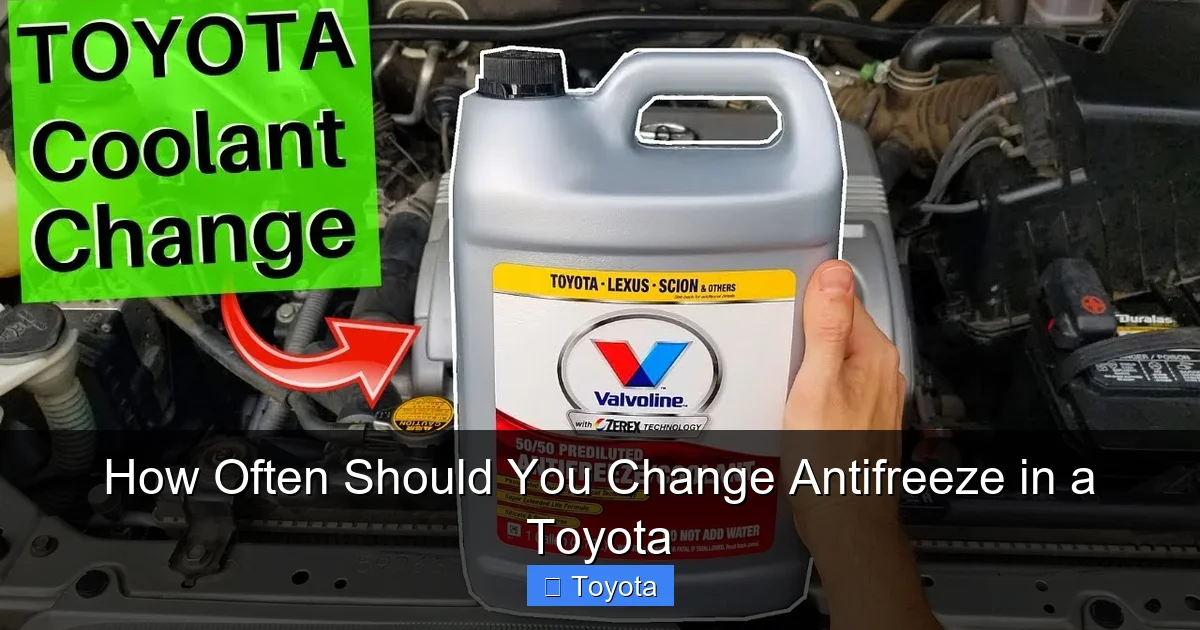
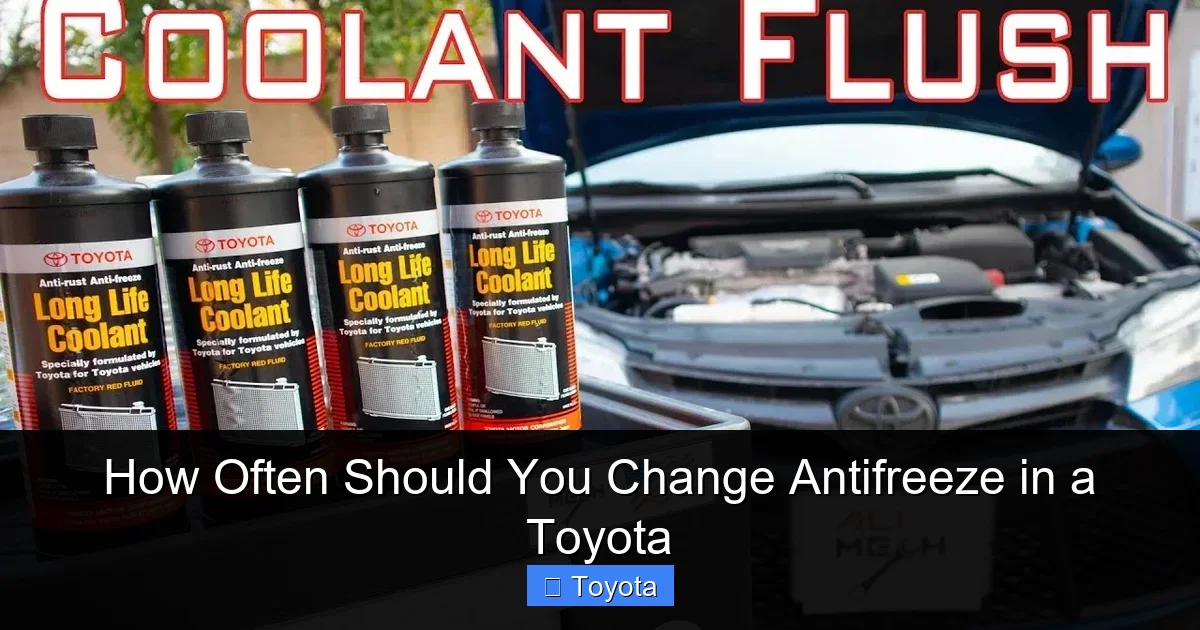
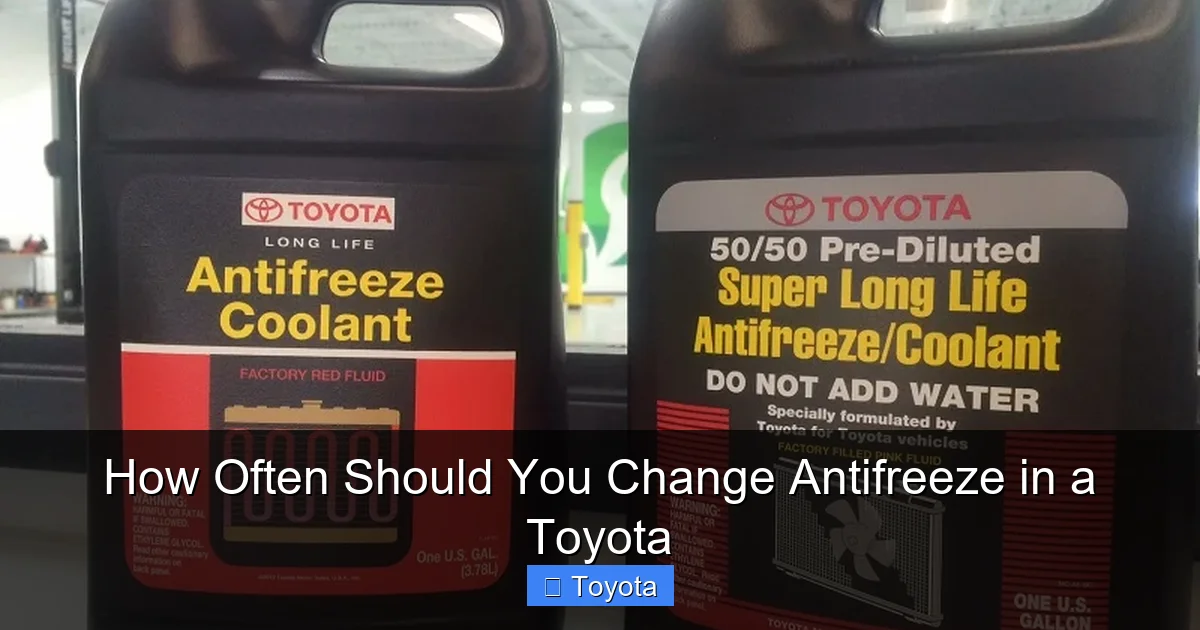
- Coolant type: Toyota Super Long Life Coolant (OAT) is designed for longer intervals (up to 100,000 miles in some cases), while conventional ethylene glycol-based coolants may need changes every 30,000 miles.
- Driving conditions: Severe driving—such as towing heavy loads, frequent short trips, or extreme temperatures—accelerates coolant degradation.
- Vehicle age: Older Toyotas may require more frequent changes as seals and gaskets deteriorate.
Model-Specific Recommendations
For example, Toyota Corolla models typically use OAT coolant with a 100,000-mile interval, while trucks like the Toyota Tacoma may require more frequent changes due to higher engine temperatures and towing demands. Always check your owner’s manual for precise guidelines.
How to Check Antifreeze Levels and Condition
Monitoring your coolant isn’t complicated. Here’s how to do it:
Visual guide about How Often Should You Change Antifreeze in a Toyota
Image source: aautomotives.com
Visual Inspection
Pop the hood and locate the coolant reservoir. It’s usually a translucent plastic tank marked “MIN” and “MAX.” If the coolant level is below “MIN,” add a 50/50 mix of distilled water and Toyota-approved coolant. Avoid using hard water, which can leave mineral deposits.
Testing Coolant Condition
Use a coolant tester (available at auto parts stores) to check the freezing and boiling points. A green or orange color typically indicates healthy coolant, while brown or rusty hues suggest contamination. A sweet, syrupy smell can signal overheating or leaks.
Professional Diagnostics
If you’re unsure, a mechanic can perform a coolant system pressure test to detect leaks or blockages. This is especially important for older Toyotas with aging rubber components.
Signs You Need to Change Antifreeze
Never ignore these warning signs:
Visual guide about How Often Should You Change Antifreeze in a Toyota
Image source: carspecmn.com
- Overheating: Frequent temperature spikes or steam from the radiator indicate poor coolant flow or degraded fluid.
- Visible leaks: Green or orange residue under your car points to a coolant leak, which can drain levels rapidly.
- Engine knocking: Low coolant or overheating can cause pre-ignition, resulting in metallic knocking sounds.
- Discolored coolant: If the fluid looks murky or has particles floating in it, it’s time for a flush.
Case Study: A Toyota Camry’s Coolant Dilemma
One owner of a 2015 Toyota Camry ignored overheating warnings for months. Eventually, the engine seized due to a blown head gasket—a direct result of neglected coolant maintenance. Regular flushes could have prevented this $3,000 repair.
Cost Considerations and DIY vs. Professional Service
Changing antifreeze costs vary widely based on location and service type:
- DIY Flush: Materials (coolant, distilled water, flush chemicals) cost $50–$100. Expect to spend 2–4 hours on the job.
- Professional Service: A full coolant flush typically ranges from $100–$200, depending on labor rates and coolant type.
Choosing Between DIY and Professional Help
While DIY enthusiasts can handle basic coolant changes, professionals have the tools and expertise to:
- Properly drain and refill the system without spills.
- Ensure compatibility with your Toyota’s specifications.
- Dispose of old coolant responsibly, as it contains toxic ethylene glycol.
For peace of mind, many Toyota owners opt for professional service, especially during winter preparations when coolant performance is critical.
Best Practices for Maintaining Your Toyota’s Cooling System
Follow these tips to extend your coolant’s life:
Use the Right Coolant
Stick to Toyota Super Long Life Coolant or a compatible OAT alternative. Avoid mixing different coolant types, as this can create sludge.
Check Regularly
Inspect coolant levels monthly, especially before long trips or extreme weather. A quick top-off can prevent minor issues from escalating.
Prioritize Preventive Maintenance
Couple coolant changes with other maintenance tasks like engine tune-ups or oil changes to keep your Toyota running smoothly.
Address Leaks Promptly
Even a small leak can drain coolant over time. Repair hoses, gaskets, or the radiator as soon as you spot issues.
Conclusion: Protect Your Investment
Regular antifreeze changes are one of the most cost-effective ways to safeguard your Toyota’s engine. By adhering to manufacturer guidelines, monitoring coolant condition, and seeking professional help when needed, you’ll avoid costly repairs and ensure reliable performance for years. Remember, a few hundred dollars in maintenance beats thousands in engine damage. Stay proactive, and your Toyota will thank you!
Frequently Asked Questions
How often should I change antifreeze in my Toyota?
Most Toyotas require a coolant change every 30,000–50,000 miles or 2–5 years. Check your owner’s manual for model-specific recommendations, as newer vehicles with OAT coolant may last longer.
Can I use any type of antifreeze in my Toyota?
Avoid mixing coolant types. Toyota Super Long Life Coolant (OAT) is ideal, but if unavailable, use a compatible ethylene glycol coolant. Always follow your manual’s specifications to prevent corrosion or overheating.
What are the signs of degraded antifreeze?
Look for discolored coolant (brown, green, or rusty), a sweet exhaust smell, or frequent overheating. A drop in coolant level or visible leaks also suggest it’s time for a flush.
Is it safe to mix antifreeze types?
No. Mixing OAT and traditional IAT (inorganic additive technology) coolants can cause clogs or chemical reactions. Stick to one type unless a mechanic advises otherwise.
How much does a coolant flush cost for a Toyota?
Professional flushes range from $100–$200, while DIY materials cost $50–$100. Factor in labor and disposal fees for a full-service option.
Can I drive with low antifreeze?
Never. Low coolant levels can cause overheating, which may warp the engine block or blow a head gasket. Stop driving immediately if the temperature gauge spikes, and top off coolant only when the engine is cool.