What Size Battery Does a 2012 Toyota Camry Need?
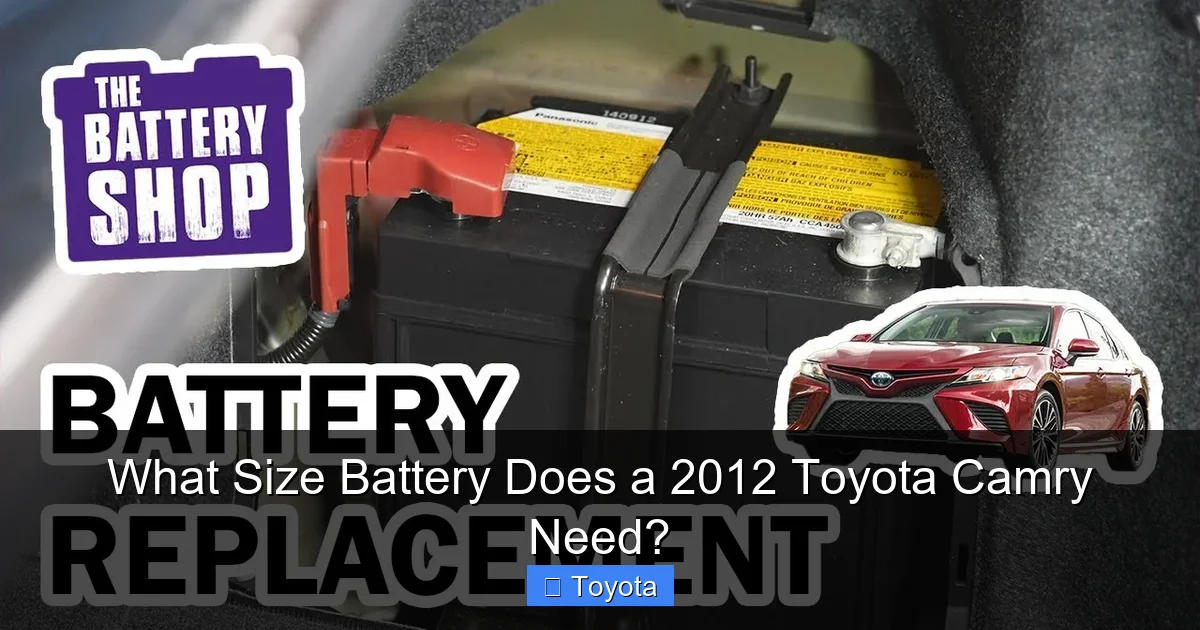
The 2012 Toyota Camry requires a Group Size 24F or 35 battery with 450 cold cranking amps (CCA) and 12 volts. Proper installation and maintenance are crucial for optimal performance and longevity. Always verify compatibility with your vehicle’s specifications before purchasing.
[powered_by_ad_system]
When your 2012 Toyota Camry’s battery starts acting up, it can feel like the world is against you. Dead batteries on cold mornings or during long drives are frustrating, and replacing the battery is one of the most important maintenance tasks to keep your Camry running smoothly. But with so many battery options out there, how do you know which one to choose? Understanding the right battery size, cold cranking amps (CCA), and voltage for your Camry ensures you make the best decision. Let’s dive into the details so you can confidently replace your battery and avoid costly mistakes.
Key Takeaways
- Group Size: The 2012 Camry uses a Group Size 24F or 35 battery, ensuring proper fitment in the engine bay.
- Cold Cranking Amps (CCA): A minimum of 450 CCA is recommended for reliable starting in most climates.
- Voltage: Always opt for a 12-volt battery to match the vehicle’s electrical system.
- Terminal Orientation: Ensure the battery terminals align with your Camry’s cable setup (top-post vs. side-post).
- Maintenance: Regularly check terminals and electrolyte levels (for non-sealed batteries) to prevent corrosion and extend lifespan.
- Professional Installation: Proper mounting and cable connections are critical to avoid electrical issues.
- Climate Considerations: Choose batteries with higher CCA ratings if you live in cold regions.
📑 Table of Contents
Understanding the 2012 Toyota Camry Battery Requirements
Before heading to the auto parts store, it’s essential to know your Camry’s specific battery needs. The 2012 model is part of the seventh generation (XV40), and its battery specifications are tailored to its engine and electrical systems. Whether your Camry has a 2.4L I4 or 3.5L V6 engine, the battery must meet certain criteria to ensure reliable performance.
Group Size and Physical Dimensions
The most common battery size for a 2012 Toyota Camry is Group Size 24F or 35. These sizes are designed to fit snugly in the engine bay while accommodating the terminals and cable connections. Group Size 24F batteries typically measure 10.24 inches in length, 6.81 inches in width, and 9.33 inches in height. Group Size 35 batteries are slightly taller but share similar length and width dimensions. Always double-check your vehicle’s owner’s manual or the existing battery’s label for confirmation, as slight variations can occur depending on the trim level or engine type.
Cold Cranking Amps (CCA)
Cold Cranking Amps measure a battery’s ability to start an engine in cold weather. For the 2012 Camry, a minimum of 450 CCA is recommended. If you live in a region with harsh winters, opting for a battery with 500–600 CCA can provide extra reliability. Batteries with higher CCA ratings deliver more power at lower temperatures, ensuring your engine starts even on the coldest days.
Voltage and Terminal Configuration
All automotive batteries operate at 12 volts, so this is a non-negotiable requirement. However, terminal configuration—whether top-post or side-post—must match your Camry’s setup. Most 2012 Camrys use top-post batteries, where the positive and negative terminals are located on top of the battery. Side-post batteries are less common but may be found in certain trims or aftermarket options.
Types of Batteries for the 2012 Toyota Camry
Not all batteries are created equal. Understanding the differences between types can help you choose the best option for your driving needs.
Lead-Acid Batteries
The most common type, lead-acid batteries, are affordable and widely available. They come in two subtypes: flooded (with removable caps) and sealed (EFB or AGM). Flooded batteries require periodic maintenance, such as checking electrolyte levels and tightening terminals. Sealed batteries, like AGM (Absorbent Glass Mat), are maintenance-free but more expensive. AGM batteries are ideal for vehicles with start-stop systems or high electrical demands, though they’re overkill for most Camrys.
AGM vs. EFB Batteries
If your Camry has a start-stop system (common in higher trims), an EFB (Enhanced Flooded Battery) or AGM battery is necessary. EFB batteries offer better performance than standard flooded batteries but are cheaper than AGM. AGM batteries are the most durable and efficient but come at a premium. For basic models without start-stop, a standard flooded battery suffices.
Choosing the Right Brand
Reputable brands like Optima, Interstate, and AC Delco offer reliable options. While cheaper batteries may seem tempting, investing in a quality brand ensures longer lifespan and consistent performance. Check reviews and warranty terms before purchasing.
Installation Tips for Your Camry Battery

Visual guide about What Size Battery Does a 2012 Toyota Camry Need?
Image source: cf.shopee.com.my
Even with the correct battery, improper installation can lead to issues. Here’s how to install it safely.
Preparation Steps
1. Ensure the ignition is off, and disconnect the negative terminal first to prevent sparks.
2. Remove the old battery carefully, securing any hold-downs or brackets.
3. Clean the battery tray with a wire brush to remove corrosion.
4. Place the new battery in the tray, aligning it with the hold-down mechanism.
Connecting the Terminals
Connect the positive terminal first, followed by the negative. Tighten securely but avoid over-tightening, which can damage threads. Reconnect any sensors or cables associated with the battery, such as those for the alternator or ECU.
Testing the Installation
After installation, turn the ignition on to test the electrical systems. If the dashboard lights flicker or fail to illuminate, recheck the connections. A multimeter can verify voltage and ensure the battery is charging properly via the alternator.
Common Issues and Troubleshooting
Visual guide about What Size Battery Does a 2012 Toyota Camry Need?
Image source: i.ebayimg.com
Even with the right battery, problems can arise. Here’s how to diagnose them.
Battery Not Holding a Charge
If your Camry’s battery repeatedly dies, the alternator might be faulty. Use a multimeter to check the voltage while the engine is running—it should read 13.8–14.4 volts. If it doesn’t, the alternator may need replacement.
Corrosion on Terminals
White or blue powdery buildup on terminals indicates corrosion. Mix baking soda and water to create a paste, then scrub the terminals and cables with a wire brush. Rinse thoroughly and apply dielectric grease to prevent future corrosion.
Choosing Between Replacement and Repair
Batteries typically last 3–5 years. If your battery is old or showing signs of failure (e.g., slow cranking, dimming lights), replacement is the safest option. Jump-starting repeatedly is a temporary fix and can drain your alternator.
Maintenance and Longevity Tips
Proper maintenance extends your battery’s life and prevents unexpected breakdowns.
Regular Inspections
Check your battery every six months for corrosion, loose connections, or swelling. Replace it proactively if you notice any damage.
Storing Your Camry
If storing your Camry for an extended period, disconnect the battery and use a maintainer to keep it charged. This prevents deep discharge, which can permanently damage the battery.
Climate Considerations
Extreme heat or cold can shorten battery life. Park in the shade on hot days and use a battery blanket in freezing temperatures. Higher CCA-rated batteries are better suited for cold climates.
Cost Considerations and Where to Buy
Battery prices vary based on type, brand, and features. A standard flooded battery for a 2012 Camry typically ranges from $75 to $150. AGM or high-performance batteries can cost $200–$350. Many auto parts stores, such as AutoZone or O’Reilly Auto Parts, offer free installation with purchase. Online retailers like Amazon or RockAuto provide competitive pricing but ensure the seller is reputable.
Conclusion
Choosing the right battery for your 2012 Toyota Camry is straightforward once you understand the specifications. A Group Size 24F or 35 battery with 450+ CCA, 12 volts, and proper terminal configuration will keep your Camry running reliably. Regular maintenance and careful installation are key to maximizing your battery’s lifespan. By following these guidelines, you’ll avoid costly mistakes and enjoy worry-free driving for years to come.
Frequently Asked Questions
What battery size does a 2012 Toyota Camry require?
The 2012 Toyota Camry typically uses a Group Size 24F or 35 battery. These sizes ensure proper fitment in the engine bay while meeting the vehicle’s electrical demands. Always verify your specific model’s requirements via the owner’s manual or existing battery label.
Can I use a different battery size in my Camry?
While slight variations may work, using a non-recommended size can lead to poor fitment, terminal misalignment, or electrical issues. Stick to Group Size 24F or 35 for optimal performance and safety.
How do I test if my Camry’s battery needs replacing?
Use a multimeter to check voltage. A healthy battery reads 12.6–12.8 volts when off and 13.8–14.4 volts when running. If your Camry struggles to start or the voltage is low, it’s time for a replacement.
Should I choose a flooded or AGM battery for my Camry?
A standard flooded battery is sufficient for most 2012 Camrys. AGM batteries are better suited for vehicles with start-stop systems or high electrical demands but come at a higher cost.
How often should I replace my Camry’s battery?
Batteries typically last 3–5 years. Replace yours proactively if you notice dimming lights, slow cranking, or visible damage like corrosion or swelling.
Can I install the battery myself?
Yes, with basic tools and caution. Always disconnect the negative terminal first, follow proper connection steps, and use safety gear. If unsure, consult a professional mechanic to avoid electrical hazards.
=== END OF ARTICLE ===