After How Many Kilometers Should I Service My Car

Regular servicing is crucial for safety, fuel efficiency, and long-term reliability. Most manufacturers recommend a full service every 10,000 to 15,000 km, but your driving habits and local conditions can shorten that interval. Always consult your owner’s manual for the exact schedule.
Key Takeaways
- Manufacturer intervals: Typically 10,000–15,000 km for a full service.
- Driving style matters: Frequent short trips or aggressive driving may require earlier service.
- Age of vehicle: Older cars often need more frequent checks.
- Service types: Minor services (oil change, filter replacement) vs. major services (brake fluid, timing belt).
- Warning signs: Unusual noises, decreased fuel economy, or warning lights indicate immediate attention.
- Budget planning: Expect $100–$300 per service, depending on vehicle and location.
📑 Table of Contents
Why Regular Service Matters
Keeping your car in top shape isn’t just about avoiding breakdowns; it’s about protecting your safety, saving money, and preserving resale value. When you service your vehicle on a consistent schedule, you catch small issues before they turn into costly repairs. Think of a service like a routine check‑up for your body—regular visits help your doctor spot problems early.
This simple habit can save you money in the long run.
Another benefit of regular service is that it often preserves your vehicle’s warranty. Many manufacturers require proof of maintenance to honor warranty claims, so keeping a detailed log can save you from unexpected out‑of‑pocket expenses.
Impact on Safety
Brakes, steering, and lighting are critical for safe driving. A service includes inspections that ensure these systems function correctly. If brake pads are worn, for example, stopping distances increase, raising the risk of accidents. Additionally, worn suspension components can cause poor handling, making it harder to stay in your lane during sudden maneuvers.
Impact on Fuel Efficiency
Dirty air filters, old spark plugs, and low tire pressure can reduce fuel economy by up to 10%. Replacing these parts during a service restores efficiency, meaning you spend less on gas over time. Properly inflated tires also reduce rolling resistance, which further improves mileage.
Impact on Resale Value
Potential buyers often ask for service records. A well‑documented service history shows that the car has been cared for, allowing you to command a higher price when you decide to sell. Moreover, a clean service record can make the vehicle more attractive to used‑car dealers, who may offer a better trade‑in value.
Manufacturer Recommendations vs Real‑World Usage
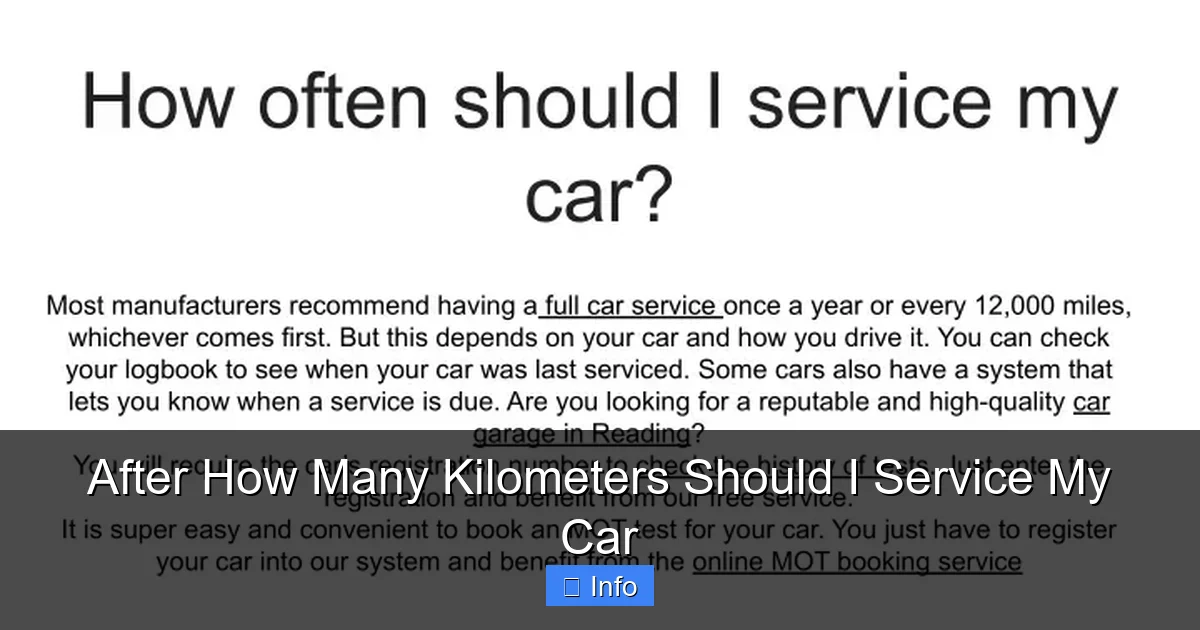
Most automakers publish a service schedule based on ideal conditions. For instance, many recommend a full service every 10,000–15,000 km. However, real‑world driving can differ dramatically from those test conditions. Factors such as climate, road quality, and even the type of fuel you use can influence how often your car needs attention.
Visual guide about After How Many Kilometers Should I Service My Car
Image source: cdn6.slideserve.com
Some manufacturers provide two sets of intervals: one for “normal” driving and another for “severe” driving. Severe driving typically includes frequent short trips, extreme temperatures, stop‑and‑go traffic, and towing heavy loads. If your driving pattern matches these criteria, you should follow the severe‑service schedule, which often shortens the interval by 20‑30%.
Hybrid and electric vehicles have unique requirements. Their batteries need periodic inspection, and the regenerative braking system may reduce brake wear, but the coolant for the battery pack often needs replacement at specific intervals. Always refer to your model’s guide for the exact schedule.
Turbocharged engines require more frequent oil changes because the turbocharger operates at high temperatures, which can break down oil faster. Following the manufacturer’s severe‑service schedule is especially important for these powertrains.
Typical Manufacturer Intervals
- Every 10,000 km: Oil change, filter replacement, tire rotation.
- Every 20,000 km: Brake inspection, fluid checks.
- Every 40,000 km: Timing belt replacement (if applicable), spark plug replacement.
Factors That Shorten the Interval
- Short trips: Frequent cold starts increase oil contamination.
- Heavy traffic: Stop‑and‑go driving stresses the transmission.
- Extreme temperatures: Heat or cold can degrade fluids faster.
- Poor road conditions: Gravel or potholes can damage suspension and tires.
Adjust your service plan accordingly. If you often drive in city traffic, consider moving the next service up by 2,000–3,000 km. For those who frequently tow trailers, an additional check of the cooling system every 10,000 km is advisable.
For older vehicles, manufacturers often recommend more frequent inspections. As components wear, small issues can develop quickly, so a service every 5,000–7,500 km may be advisable to catch problems before they escalate.
Types of Service: Minor vs Major
Understanding the difference helps you budget and prioritize. Minor services are quicker and less expensive, while major services involve more components and typically take longer at the shop.
Visual guide about After How Many Kilometers Should I Service My Car
Image source: murphysautocare.com
When deciding between a dealership and an independent shop, consider that dealerships have specialized tools and training for your specific make, while independent garages may offer lower labor rates. However, any reputable shop that follows the manufacturer’s specifications can perform the required services without voiding your warranty.
A comprehensive service checklist typically includes fluid levels, filter condition, belt tension, and brake pad thickness. Reviewing this list with your technician ensures nothing is overlooked and helps you understand what each item entails.
High‑performance vehicles often have upgraded cooling systems and specialized fluids. Their service intervals may be shorter, and using the correct type of oil and coolant is crucial to maintain peak performance.
Minor Service
A typical minor service includes an oil change, replacement of the engine air filter, cabin air filter, and a tire rotation. It may also involve a visual inspection of belts and hoses. This service can be completed in about an hour and usually costs between $100 and $150. Many dealerships also offer a “basic service package” that bundles these items, providing a small discount compared to paying separately.
Major Service
A major service adds items such as brake fluid replacement, coolant flush, transmission fluid change, and inspection of the suspension. If your vehicle has a timing belt, it will be replaced at this point. Expect to spend $300–$500 and allocate a few hours at the shop. In addition, a major service often includes a diagnostic scan to check for any stored trouble codes, which can reveal hidden issues before they become costly repairs.
For many drivers, alternating between minor and major services each year keeps the car balanced without over‑servicing. Some owners choose to perform a “semi‑major” service every 20,000 km, which includes items from both categories but skips the most extensive replacements.
How to Determine Your Car’s Service Interval
Your owner’s manual is the best source for exact mileage or kilometer recommendations. Follow these steps to create a personalized schedule:

Visual guide about After How Many Kilometers Should I Service My Car
Image source: cdn.shriramgi.com
- Check the manual: Locate the “Maintenance” section for the service interval.
- Track your mileage: Use a trip odometer or a mobile app to record each service.
- Adjust for driving style: If you frequently drive in stop‑and‑go traffic, subtract 2,000 km from the recommended interval.
- Consider age: For cars older than five years, add an extra inspection every 5,000 km.
By customizing the schedule, you avoid both under‑servicing and unnecessary expenses. Many modern vehicles come with a built‑in service reminder that lights up on the dashboard; you can reset it after each service to keep your tracking simple.
Additionally, you can use online calculators or spreadsheets to log each service date, mileage, and cost. This record‑keeping not only helps you stay on schedule but also provides documentation for warranty claims or when selling the vehicle.
Mobile apps such as Carfax, MyCar, or even a simple spreadsheet can help you track service dates and upcoming due dates. Setting reminders on your phone ensures you never miss an essential maintenance task.
Many manufacturers provide online portals where you can view your vehicle’s service history and schedule reminders. These tools often integrate with your smartphone, sending push notifications when a service is due.
Modern cars are equipped with onboard computers that monitor various systems. You can access real‑time data through the dashboard display, which can alert you to abnormal conditions before a full service is needed.
Signs Your Car Needs Service Sooner
Even with a schedule, your vehicle will give clues when it needs attention. Watch for these warning signs:
- Unusual noises: Squealing brakes, knocking engine, or hissing exhaust indicate problems.
- Decreased fuel economy: A sudden drop of more than 10% may point to a failing sensor or dirty filter.
- Warning lights: The check engine light or oil pressure light should never be ignored.
- Strange smells: Burning oil or sweet coolant smell suggests leaks.
- Soft pedals: A spongy brake pedal points to air in the brake lines.
If any of these appear, schedule a service immediately rather than waiting for the next planned interval. Delaying could lead to more extensive damage and higher repair costs.
Some drivers also notice changes in vehicle behavior, such as rough idling, hesitation when accelerating, or pulling to one side. These symptoms often indicate issues with the ignition system, fuel delivery, or alignment, respectively.
Advanced diagnostic tools, like OBD‑II scanners, can read trouble codes that aren’t yet visible on the dashboard. If you notice subtle performance changes, a quick scan can pinpoint issues before they become major problems.
Preventive maintenance focuses on avoiding failures, whereas reactive repair addresses issues after they occur. By adopting a preventive approach, you reduce the likelihood of roadside breakdowns and the associated towing costs.
A common myth is that you can wait until the check engine light comes on before servicing. In reality, many issues develop gradually and may not trigger the light until significant damage has occurred.
Cost Considerations and Planning
Budgeting for regular service helps you avoid surprise bills. Here are some average costs for common services:
- Oil change: $50–$100
- Tire rotation: $20–$40
- Brake pad replacement: $100–$200 per axle
- Coolant flush: $80–$120
Many shops offer service packages that bundle several items, providing a discount. For example, a “basic service package” might include an oil change, filter replacement, and tire rotation for a combined price of $120, saving you compared to paying separately.
When you need a more extensive service, consider How Long Does A Toyota Service Take to estimate the time required and plan your day accordingly. Additionally, knowing How Many Quarts Of Oil Does A Toyota Camry Take helps you verify that the correct amount is used, preventing over‑filling. If you prefer to handle tire replacements yourself, you might find our guide on Should I Buy Tires From A Toyota Dealership useful for deciding where to purchase quality tires.
Finally, remember that regular service can extend the life of your vehicle, potentially saving thousands in repairs down the road. By staying proactive, you keep your car safe, efficient, and valuable. Setting aside a small monthly amount, such as $20, can also make the cost of each service more manageable over the year.
To manage costs, some owners set up a sinking fund, depositing a fixed amount each month into a dedicated savings account. This approach spreads the expense over the year and reduces the financial impact of a large service bill.
Before a long trip, consider a pre‑travel service that includes tire pressure check, fluid top‑up, and battery test. This extra step can prevent unexpected delays and give you peace of mind on the road.
When you sell your car, a complete service record can increase buyer confidence and may allow you to negotiate a higher price. Buyers often view a well‑maintained vehicle as more reliable and less likely to require immediate repairs.
Frequently Asked Questions
How often should I service my car if I drive mostly on highways?
Highway driving is generally easier on the engine, so you can follow the manufacturer’s recommended interval, typically every 10,000–15,000 km, without needing to shorten it.
Can I delay a service if my car shows no warning lights?
Even without warning lights, wear and tear occur over time. It’s best to stick to the schedule to prevent hidden issues like internal corrosion or fluid degradation.
What is the difference between a minor and a major service?
A minor service includes basic items like oil and filter changes, while a major service adds fluid replacements, belt inspections, and component replacements such as spark plugs or timing belts.
How much does a typical service cost for a mid‑size sedan?
Expect to pay between $100 and $300 for a minor service, and $300 to $500 for a major service, depending on the specific tasks and labor rates in your area.
Is it necessary to use the dealership for service?
No, you can use an independent mechanic as long as they follow the manufacturer’s specifications. Using a certified shop can help preserve warranty coverage.
What should I do if my car’s check engine light comes on?
Have the vehicle inspected as soon as possible. The light indicates a problem that could affect performance, fuel efficiency, or emissions, and ignoring it may lead to more serious damage.