Should I Buy Tires from a Toyota Dealership?
Should I Buy Tires from a Toyota Dealership? This guide breaks down the advantages and drawbacks of purchasing tires directly from a Toyota dealer, compares them to independent retailers, and offers practical tips to help you decide. By the end, you’ll know exactly when a dealership purchase makes sense and when to look elsewhere.
When it’s time to replace the tires on your Toyota, the question Should I Buy Tires from a Toyota Dealership? often pops up. Dealerships advertise convenience, factory‑trained staff, and genuine parts, but they also come with a reputation for higher prices. Understanding the trade‑offs can save you money and ensure you get the right rubber for your driving style.
In this article we’ll walk through everything you need to know about buying tires at a Toyota dealer. We’ll look at the types of tires they carry, the advantages of their service department, the potential downsides, and how they stack up against independent tire shops and online retailers. By the end, you’ll have a clear framework to answer Should I Buy Tires from a Toyota Dealership? for your own situation.
Key Takeaways
- OEM Quality Assurance: Toyota dealerships sell tires that meet factory specifications, ensuring proper fit and performance for your specific model.
- Convenient Service Bundles: Buying tires at the dealer often includes mounting, balancing, and alignment, plus the ability to combine with other maintenance visits.
- Higher Upfront Cost: Dealership prices can be 10‑20% above market rates due to brand premiums and service overhead.
- Limited Aftermarket Options: You may find fewer tire brands or specialty models compared to dedicated tire shops or online retailers.
- Warranty and Support Benefits: Factory‑backed warranties and access to Toyota‑trained technicians can add peace of mind, especially for newer vehicles.
- Smart Shopping Strategy: Always get multiple quotes, check for dealer promotions, and know your exact tire size and driving needs before deciding.
📑 Table of Contents
Understanding Toyota Dealership Tire Offerings
Before weighing pros and cons, it helps to know what a Toyota dealership actually sells when it comes to tires. Most dealers stock a selection of original equipment manufacturer (OEM) tires that match the specifications that came with your vehicle when it left the factory. These are often branded by major tire manufacturers (such as Bridgestone, Michelin, or Goodyear) but are tuned to Toyota’s performance, noise, and fuel‑efficiency targets.
OEM vs Aftermarket
OEM tires are designed to meet the exact load index, speed rating, and tread pattern that Toyota engineers specified for each model. When you ask Should I Buy Tires from a Toyota Dealership? you’re essentially asking whether you want that factory‑matched performance. Aftermarket tires, on the other hand, may offer different tread designs, specialized compounds (like ultra‑high‑performance or all‑terrain), or lower price points, but they might deviate slightly from the factory specifications.
Dealerships also carry a limited range of aftermarket options—usually popular all‑season or touring tires—so you aren’t locked into only OEM choices. However, the depth of selection is generally narrower than what you’d find at a dedicated tire retailer.
Warranty and Service Benefits
One reason many owners consider Should I Buy Tires from a Toyota Dealership? is the warranty coverage. Tires bought at a dealer often come with a road hazard warranty that covers punctures, cuts, and impact damage for a set period or mileage. Additionally, if you have an existing Toyota maintenance plan or warranty, the dealer can seamlessly integrate tire service into those records.
Because the service department uses Toyota‑specific tools and follows factory procedures, you can expect proper torque on lug nuts, correct wheel balancing, and alignment checks that adhere to Toyota’s specifications. This level of detail can be especially valuable for newer models equipped with advanced driver‑assist systems that rely on precise wheel geometry.
Pros of Buying Tires from a Toyota Dealership
Now let’s examine the advantages that make answering Should I Buy Tires from a Toyota Dealership? a “yes” for many drivers.

Visual guide about Should I Buy Tires from a Toyota Dealership?
Image source: dww-live-media-perma-cdn.b-cdn.net
Factory‑Trained Technicians
Toyota service technicians receive regular training on the latest Toyota models, including tire installation procedures that protect sensors (like TPMS) and maintain warranty compliance. When you ask Should I Buy Tires from a Toyota Dealership? you’re gaining access to this expertise, which reduces the risk of installation errors that could lead to vibration, uneven wear, or sensor faults.
Genuine Parts and Fitment
Dealerships guarantee that the tires they sell match the original equipment specifications for your vehicle’s trim level, wheel size, and drivetrain. This eliminates guesswork about load capacity or speed rating. If you own a specialty model—such as a Toyota 4Runner with off‑road packages or a Prius with low‑rolling‑resistance tires—the dealer will have the exact tire that Toyota recommends.
For drivers who prioritize maintaining the vehicle’s original feel and fuel economy, the answer to Should I Buy Tires from a Toyota Dealership? often leans toward yes.
Convenience and Bundled Services
Purchasing tires at the dealer lets you combine the tire change with other services—oil changes, brake inspections, or recall updates—all in one visit. Many dealers offer complimentary tire rotation for the life of the tires when you buy them there, and some even provide free roadside assistance for a limited period.
If you value a one‑stop shop and dislike juggling multiple appointments, this convenience can be a strong point in favor of answering Should I Buy Tires from a Toyota Dealership? affirmatively.
Cons of Buying Tires from a Toyota Dealership
Despite the benefits, there are drawbacks that might make you answer Should I Buy Tires from a Toyota Dealership? with a “no” or at least prompt you to shop around.

Visual guide about Should I Buy Tires from a Toyota Dealership?
Image source: thetirereviews.com
Higher Price Point
Dealerships typically add a premium for the convenience of OEM parts and factory‑trained labor. Market research shows that the same tire model can be 10‑20% more expensive at a Toyota dealer compared to an independent tire shop or online retailer. For a set of four all‑season tires on a midsize sedan, that difference can easily exceed $100.
When budget is a primary concern, the question Should I Buy Tires from a Toyota Dealership? may lead you to look elsewhere.
Limited Selection
While dealers carry the OEM tires and a few popular aftermarket lines, they rarely stock niche options such as extreme off‑road mud‑terrain tires, track‑focused slicks, or specialty winter tires with studded designs. If you have a very specific performance or climate need, you might find the dealer’s inventory insufficient.
In those cases, answering Should I Buy Tires from a Toyota Dealership? with a “no” opens the door to specialty retailers that can better match your requirements.
Potential Upselling
Service advisors at dealerships are often incentivized to recommend additional services—such as wheel alignments, tire pressure monitoring system (TPMS) sensor replacements, or premium tire protection plans. While some of these add‑ons are legitimate, others may not be necessary for your driving habits.
Being aware of this tendency helps you answer Should I Buy Tires from a Toyota Dealership? with a clear understanding of what you truly need versus what is being offered as an upsell.
Comparing Dealership Tires to Independent Retailers
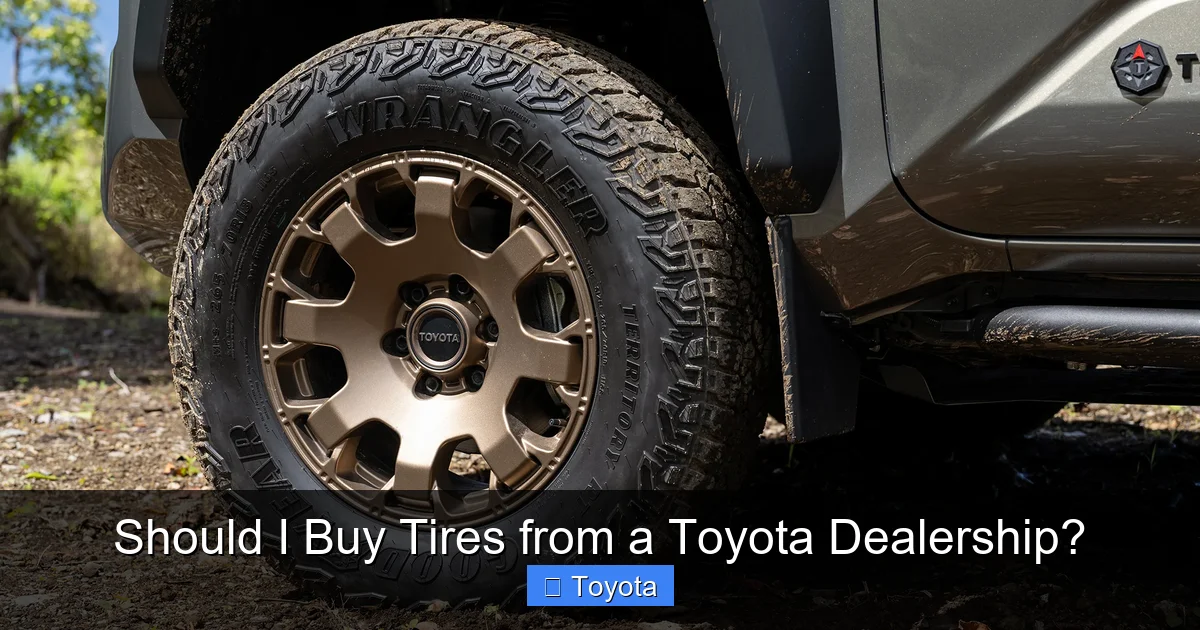
To make an informed decision about Should I Buy Tires from a Toyota Dealership? it’s useful to place the dealer option side‑by‑side with independent tire shops and online retailers.
Visual guide about Should I Buy Tires from a Toyota Dealership?
Image source: motortrend.com
Price Comparison Examples
Let’s look at a concrete example: a 2022 Toyota Camry LE with 215/55R17 tires. A popular OEM‑spec tire (Michelin Primacy MXM4) costs about $140 per tire at a Toyota dealer, including mounting and balancing. The same tire purchased from a well‑known online retailer (e.g., Tire Rack) is around $115 per tire, with mounting and balancing at a local shop adding roughly $15‑$20 per tire. That brings the online total to roughly $130‑$135 per tire—a saving of $5‑$10 per tire, or $20‑$40 for the set.
If you opt for a high‑performance all‑season tire like the Continental ExtremeContact DWS06, the dealer price might be $155 per tire versus $130 online, widening the gap.
These figures illustrate why many drivers answer Should I Buy Tires from a Toyota Dealership? with a cost‑focused “no” unless they value the dealer’s service conveniences enough to offset the price difference.
Service Quality Differences
Independent tire shops often employ technicians who are certified by organizations like the Tire Industry Association (TIA) and have extensive experience with a wide range of makes and models. Many of these shops invest in state‑of‑the‑art balancers and alignment machines that rival dealer equipment.
However, dealers have the advantage of direct access to Toyota service bulletins, which can be important if a tire change interacts with advanced systems like Toyota Safety Sense or hybrid regenerative braking. For most routine tire replacements, the difference in technical quality is minimal, but for vehicles with sophisticated electronics, the dealer’s OEM knowledge can be a tie‑breaker.
Warranty Comparison
Dealership‑sold tires frequently include a road hazard warranty that covers damage from potholes, nails, or debris for a set period (often 12 months or the first 2,000 miles). Independent retailers may offer similar warranties, but the terms can vary widely. Some online tire sellers provide manufacturer warranties only, leaving you to purchase separate road‑hazard coverage.
When evaluating Should I Buy Tires from a Toyota Dealership?, compare the length, deductible, and claim process of the dealer’s warranty against what independent options provide.
Tips for Making the Best Decision
Answering Should I Buy Tires from a Toyota Dealership? ultimately depends on your priorities—price, convenience, performance needs, and peace of mind. Here are practical steps to help you choose wisely.
Know Your Tire Needs
Start by checking your owner’s manual or the placard on the driver’s door jamb for the exact tire size, load index, and speed rating. Consider your typical driving conditions: city commuting, highway cruising, light off‑road, or winter snow. If you need a specialized tire (e.g., all‑terrain for a 4Runner or low‑rolling‑resistance for a Prius), verify whether the dealer stocks it or if you’ll need to look elsewhere.
Having this information ready prevents you from being swayed by sales talk and lets you answer Should I Buy Tires from a Toyota Dealership? based on facts rather than impulse.
Get Multiple Quotes
Call or visit at least three sources: your local Toyota dealer, a reputable independent tire shop, and an online retailer that offers local installation. Ask for a total out‑the‑door price that includes tires, mounting, balancing, valve stems, and any disposal fees. Make sure each quote specifies the same tire model and warranty coverage.
When you see a consistent price difference, you’ll have concrete data to support your answer to Should I Buy Tires from a Toyota Dealership?.
Check for Promotions and Loyalty Programs
Dealerships frequently run seasonal tire promotions—such as “buy three, get the fourth free” or discounted mounting when you purchase a set of four. They may also offer loyalty discounts for customers who regularly service their vehicles at the dealer. Independent shops and online retailers have their own rebates (manufacturer mail‑in offers, seasonal sales, or coupon codes).
Before finalizing your decision, search for current deals on the dealer’s website, sign up for their email newsletter, and compare those offers to what you find elsewhere. Sometimes a promotion can narrow the price gap enough to make the dealer the better overall value.
Conclusion
So, Should I Buy Tires from a Toyota Dealership? The answer isn’t a simple yes or no—it depends on what you value most. If you prioritize OEM‑spec fitment, factory‑trained service, and the convenience of bundling tire purchase with other maintenance, the dealer can be a compelling choice, especially when promotions or loyalty discounts offset the higher base price.
If your primary concerns are minimizing cost, accessing a broader selection of specialty tires, or avoiding potential upsells, independent tire shops or online retailers often provide better value without sacrificing safety or quality—provided you verify the installer’s credentials and warranty terms.
The smartest approach is to gather concrete quotes, know your exact tire specifications, and weigh the intangible benefits of dealer service against the tangible savings elsewhere. By doing so, you’ll be able to answer Should I Buy Tires from a Toyota Dealership? with confidence, ensuring your Toyota rolls safely and efficiently on the road ahead.
Frequently Asked Questions
Do Toyota dealerships sell only OEM tires?
No. While they stock the original equipment tires that came with your vehicle, most Toyota dealers also carry a selection of popular aftermarket brands—especially all‑season and touring models—so you have some variety beyond the factory option.
Can I get a wheel alignment included when I buy tires at a Toyota dealer?
Many dealerships offer complimentary alignment checks with a tire purchase, and some include a full alignment as part of a promotional package. It’s best to ask the service advisor what is covered before you agree to the price.
Are dealer tire warranties better than those from independent shops?
Dealer‑sold tires often come with a road hazard warranty backed by the tire manufacturer and supported by the dealer’s service department. Independent shops may offer similar coverage, but the terms can vary, so compare the length, deductible, and claim process side‑by‑side.
Will buying tires elsewhere void my Toyota warranty?
No. Installing tires from any reputable source does not affect your vehicle’s factory warranty, as long as the tires meet the correct size, load index, and speed rating specified in your owner’s manual.
How often should I rotate tires purchased from a Toyota dealer?
Toyota recommends rotating tires every 5,000 to 7,500 miles, or as indicated in your maintenance schedule. Many dealers will remind you of this service when you visit for oil changes or other routine work.
Is it worth paying extra for dealer‑installed TPMS sensors?
If your Toyota uses direct TPMS, the dealer will ensure the sensors are properly programmed and sealed during installation, reducing the chance of false warnings. Independent shops can also do this correctly, but verifying their experience with Toyota systems is wise.