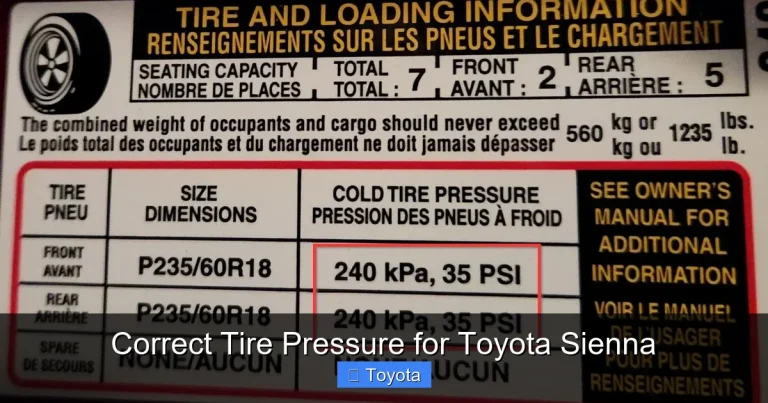
Why Does My 2011 Toyota Sienna Say Check Vsc System
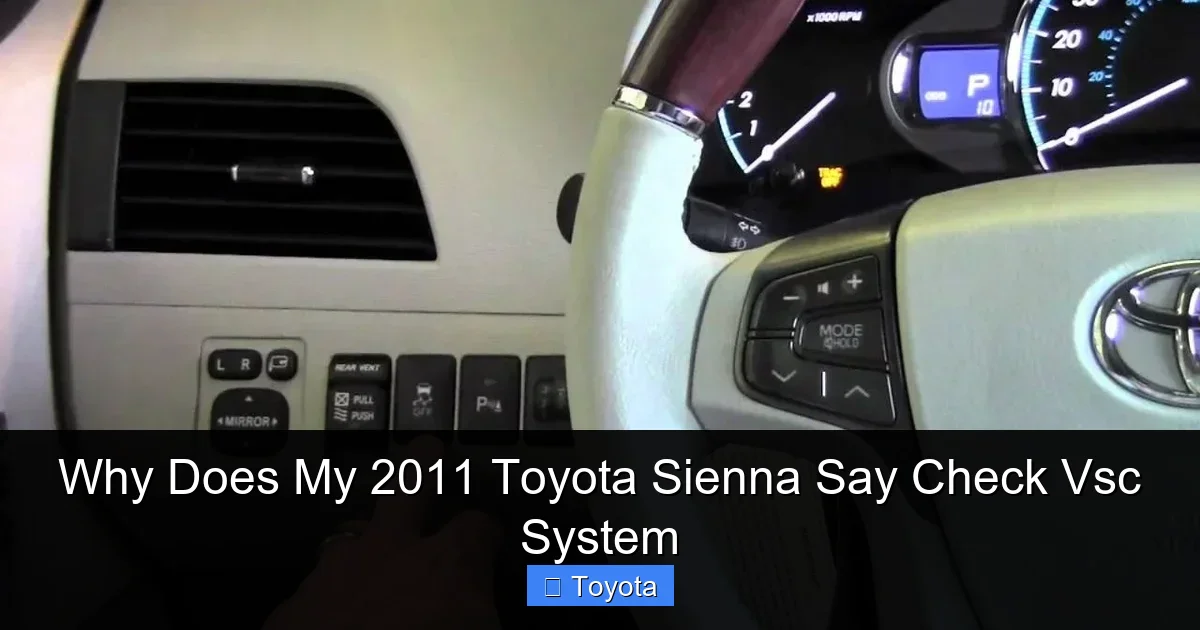
The Check VSC System light on a 2011 Toyota Sienna usually means a sensor or brake issue. Common causes include a bad wheel speed sensor, low brake fluid, or a weak battery. Most problems can be diagnosed with an OBD2 scanner and fixed at home or by a mechanic.
Key Takeaways
- The VSC system helps keep the vehicle stable during turns. It uses wheel speed, steering angle, and yaw sensors.
- A Check VSC System warning often points to a faulty wheel speed sensor. This sensor tells the computer how fast each wheel spins.
- Low brake fluid or worn brake pads can also trigger the light. The system needs proper brake pressure to work.
- A weak battery may cause the VSC computer to lose power. This can set the warning even if sensors are fine.
- An OBD2 scanner is the quickest way to read the exact fault code. It saves time and guesswork.
- Regular brake inspections and sensor cleaning prevent most warnings. Simple maintenance keeps the system happy.
📑 Table of Contents
What Is the VSC System?
The VSC system stands for Vehicle Stability Control. It helps the driver keep control during sudden turns or slippery roads. The system watches wheel speed, steering angle, and vehicle yaw. When it detects a loss of traction, it applies brakes to individual wheels. It can also reduce engine power. This keeps the 2011 Toyota Sienna on its intended path.
How VSC Works
Sensors send data to the VSC computer many times per second. The computer compares the driver’s steering input with the actual vehicle direction. If the two do not match, the computer activates the brakes on specific wheels. This action creates a correcting yaw moment. The result is a more stable ride.
Why VSC Matters
Stability control reduces the risk of skids and rollovers. It is especially useful in a minivan like the Sienna because of its higher center of gravity. The system also works with the anti‑lock brake system (ABS) and traction control. Together they form a safety net for everyday driving.
VSC and ABS Partnership
The VSC computer shares data with the ABS module. Both systems use the same wheel speed sensors. When ABS activates, VSC can adjust braking force on each wheel. This coordination improves stopping distance on wet pavement.
VSC in a Minivan
A minivan carries more weight higher up than a sedan. That raises the center of gravity. VSC helps counteract body roll during lane changes. It also assists when the vehicle is loaded with passengers and cargo.
Key Components
The main parts are the yaw rate sensor, steering angle sensor, wheel speed sensors, and the hydraulic brake modulator. Each component sends a signal to the VSC ECU. A failure in any one part can light the Check VSC System warning.
Common Triggers for the Check VSC System Light
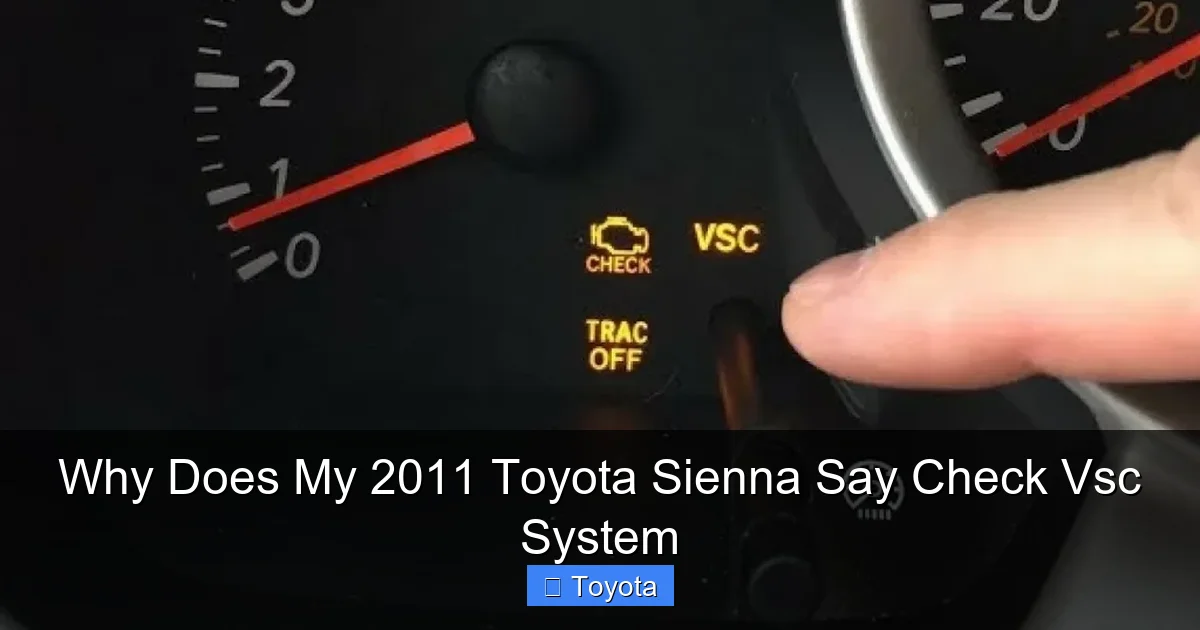
When the dashboard shows a Check VSC System message, the computer has stored a fault code. Several common issues can cause this warning.
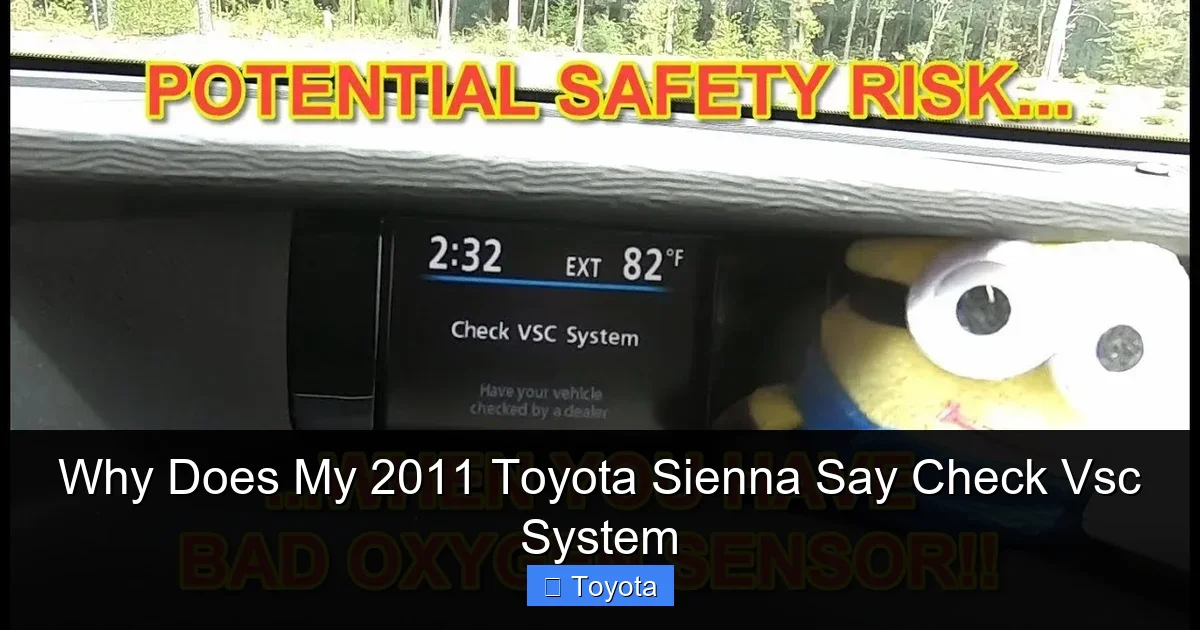
Visual guide about Why Does My 2011 Toyota Sienna Say Check Vsc System
Image source: aautomotives.com
Wheel Speed Sensor Fault
A wheel speed sensor measures how fast each wheel rotates. Dirt, damage, or a broken wire can send wrong data. The VSC computer then thinks a wheel is slipping. The light turns on.
Steering Angle Sensor Issue
The steering angle sensor tells the computer the driver’s intended direction. If the sensor is mis‑calibrated or fails, the VSC system cannot compare intention with reality. This also triggers the warning.
Brake System Problems
Low brake fluid, worn brake pads, or a faulty brake pressure sensor can affect VSC operation. The system needs consistent brake pressure to apply corrective braking. Any brake issue can set the Check VSC System light.
Low Battery Voltage
The VSC computer requires a stable voltage supply. A weak battery or bad alternator can cause voltage drops. When voltage falls below a threshold, the computer logs a fault and lights the warning.
Software Glitch
Occasionally the VSC software may experience a temporary glitch. A simple reset can clear the code. However, if the light returns, a deeper problem exists.
ABS Sensor Fault
The ABS sensor shares the same wiring as the wheel speed sensor. A fault in the ABS circuit can mimic a VSC error. Checking the ABS codes helps isolate the cause.
Yaw Rate Sensor Issue
The yaw rate sensor measures vehicle rotation around the vertical axis. If it sends erratic data, the VSC computer cannot calculate the correct corrective action. This often appears as a Check VSC System warning.
Wiring Harness Damage
Rodents or road debris can chew or cut the harness near the wheel wells. A broken wire creates an open circuit. The ECU then records a communication fault and illuminates the light.
How to Diagnose the Problem
Diagnosing a Check VSC System warning starts with reading the fault code. You can do this at home with an inexpensive tool.
Visual guide about Why Does My 2011 Toyota Sienna Say Check Vsc System
Image source: gossipvehiculo.com
Use an OBD2 Scanner
Plug an OBD2 scanner into the port under the dash. Turn the ignition on. Read the codes. Look for codes starting with C0 or C1 which relate to VSC. Write them down for reference.
Visual Inspection
Check the wiring harnesses near each wheel speed sensor. Look for broken wires, corrosion, or loose connectors. Also inspect the steering angle sensor connector under the steering column.
Check Brake Fluid Level
Open the hood and locate the brake fluid reservoir. The level should be between the MIN and MAX marks. Low fluid can trigger the VSC light. Top up with the correct DOT fluid if needed.
Test Sensors
If you have a multimeter, you can test the resistance of each wheel speed sensor. Compare readings to the service manual specifications. A sensor out of range should be replaced.
Read Live Data
Advanced scanners show live sensor values while the engine runs. Watch the wheel speed numbers as you drive slowly. A sensor that sticks at zero or spikes indicates a fault.
Perform a Road Test
Drive the Sienna on a quiet road. Make gentle turns and light braking. Note if the light flashes or stays solid. A flashing light often means an active fault; a solid light may be a stored code.
Check for Technical Service Bulletins
Manufacturers release bulletins for known issues. Search the NHTSA database or ask a dealer for any TSB related to the VSC system on the 2011 Sienna. A bulletin can point to a software update or a revised part.
DIY Fixes and Professional Repairs
Many Check VSC System issues can be fixed at home. Others require a qualified technician.
Reset the Light
After fixing the underlying cause, you can reset the light. Disconnect the negative battery cable for about ten minutes. Reconnect and start the engine. The light should stay off if the problem is resolved.
Replace a Faulty Sensor
Wheel speed sensors are usually bolted to the hub. Remove the wheel, unbolt the sensor, and install a new one. Clear the codes with the scanner. Test drive to confirm the light stays off.
Clean Sensor Contacts
Corrosion on the sensor connector can cause intermittent signals. Use electronic contact cleaner and a small brush. Re‑seat the connector firmly. This simple step often clears a Check VSC System warning.
Brake Pad Replacement
Worn brake pads reduce braking efficiency and can trigger the VSC warning. You can learn how to check brake pads in your car to see if they need service. Replace pads in pairs for balanced braking.
Update VSC Software
Some faults are fixed by a dealer flash of the VSC ECU. If a TSB recommends a software update, schedule the service. The update can resolve false warnings without any hardware change.
Battery Replacement
If the battery tests weak, replace it with a new one that meets the Sienna’s specifications. A fresh battery restores stable voltage to the VSC computer.
Replace Yaw Rate Sensor
The yaw rate sensor is mounted under the center console. Replacement requires removing the console trim. It is a more involved job but can be done with basic tools and a service manual.
When to See a Mechanic
If the light returns after a reset, or if you lack the tools for sensor testing, visit a professional. A dealer or independent shop can run a full VSC system scan. They can also reprogram the VSC module if a software update is needed. If you consider upgrading your brake components, you might compare options such as Willwood vs Brembo.
Preventive Maintenance and Cost Tips
Regular maintenance keeps the Check VSC System light away. It also saves money over time.
Regular Brake Checks
Inspect brake pads, rotors, and fluid every 10,000 miles. Replace pads before they wear to the metal backing. This prevents brake‑related VSC faults.
Keep Sensors Clean
Road grime can build up on wheel speed sensors. Clean them during tire rotations. Use a soft brush and brake cleaner. Avoid high‑pressure water directly on the sensor.
Monitor Battery Health
Test the battery voltage twice a year. Replace it every four to five years. A healthy battery supports all electronic systems, including VSC.
Software Updates
Check for VSC software updates at each service visit. Dealers can flash the latest calibration. Updated software can fix known glitches.
Estimated Repair Costs
Wheel speed sensor replacement typically costs $150 to $300 per sensor including labor. Brake pad service ranges from $200 to $400 per axle. Battery replacement is about $150 to $250. Dealer labor rates are higher than independent shops. If you plan suspension upgrades, you can read about Rancho vs Bilstein to decide which system suits your Sienna.
Schedule Annual VSC Scan
Ask your mechanic to run a VSC system scan during the yearly inspection. Early detection of a pending code can prevent a sudden warning light on the highway.
Use Quality Brake Fluid
Always refill with the DOT rating specified in the owner’s manual. Cheap fluid can absorb water faster, lowering the boiling point and causing VSC errors under heavy braking.
Inspect Suspension Bushings
Worn bushings change the vehicle’s handling characteristics. The VSC system may interpret the altered dynamics as a fault. Replace cracked bushings to keep the stability control calibrated.
Final Thoughts
The Check VSC System warning on a 2011 Toyota Sienna is a helpful alert. It points to a specific fault in the stability control network. Most causes are simple sensor or brake issues. With an OBD2 scanner and basic tools, many owners can diagnose and fix the problem themselves. Regular maintenance of brakes, sensors, and battery prevents the light from returning. When in doubt, a qualified mechanic can perform a full system scan and apply any needed software updates. Keeping the VSC system healthy ensures your minivan stays safe and stable on every trip.
Long Term Reliability
Owners who follow the maintenance schedule report fewer VSC warnings over the life of the vehicle. Consistent care also preserves resale value. A clean service record shows buyers the stability system was never neglected.
Owner Community Resources
Online forums for the 2011 Sienna share real‑world fixes and code definitions. Joining a community can give you tips that are not in the factory manual. Many members post step‑by‑step sensor replacement guides.
Final Checklist
Before a long trip, verify brake fluid level, battery voltage, and that no warning lights are on. Carry a portable OBD2 scanner for quick checks on the road. A few minutes of preparation can save hours of trouble later.
Frequently Asked Questions
What does the Check VSC System light mean on a 2011 Toyota Sienna?
The light means the Vehicle Stability Control computer has detected a fault. Common causes include a bad wheel speed sensor, low brake fluid, or a weak battery.
Can I drive my Sienna with the Check VSC System light on?
You can drive short distances, but the stability control may not work. It is best to diagnose and fix the issue as soon as possible.
How do I reset the Check VSC System light?
Disconnect the negative battery cable for about ten minutes, then reconnect. The light should clear if the underlying problem is fixed.
Do I need an OBD2 scanner to read VSC codes?
An OBD2 scanner is the easiest way to read the exact fault code. Some auto parts stores offer free scans.
How much does it cost to replace a wheel speed sensor?
Typical cost is $150 to $300 per sensor including labor. Prices vary by shop and region.
Will a software update fix a recurring Check VSC System warning?
If the warning is caused by a known software glitch, a dealer flash can resolve it. Always check for updates during service visits.