How Many Catalytic Converters Are in a Toyota Tacoma
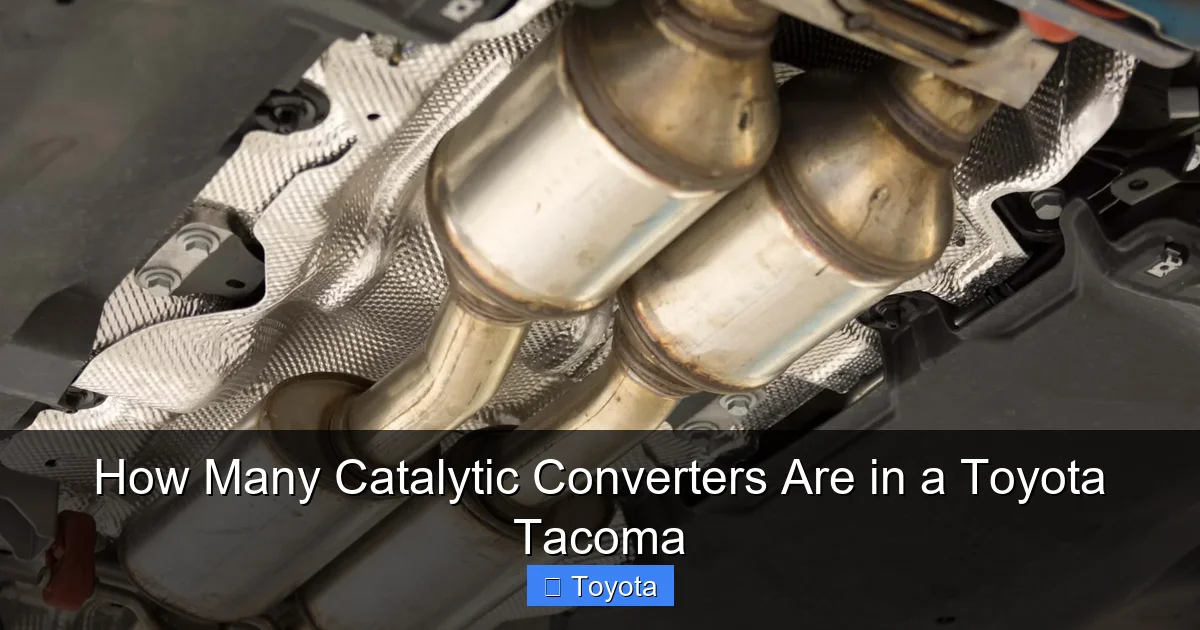
The Toyota Tacoma typically features two catalytic converters – one on each bank of the engine – though the exact configuration varies by model year and engine type. Understanding your Tacoma’s emissions system helps you maintain compliance and avoid costly repairs.
Key Takeaways
- Most Tacomas have two catalytic converters: One for each side of the V6 engine, with four-cylinder models having one converter.
- Location matters for maintenance: Converters are positioned close to the engine manifold for efficient emissions control.
- Replacement costs vary significantly: Expect to pay between $1,500 to $4,000 depending on model year and converter type.
- Federal warranty protection exists: Catalytic converters are covered by an 8-year/80,000-mile federal emissions warranty.
- Common signs of failure include: Reduced fuel efficiency, sulfur smell, and check engine light illumination.
- Regular maintenance prevents issues: Proper engine care extends converter life and maintains optimal performance.
- Legal compliance is crucial: Removing or tampering with converters violates federal emissions laws.
📑 Table of Contents
- Understanding Your Toyota Tacoma’s Emissions System
- Catalytic Converter Basics: What They Do and Why They Matter
- Toyota Tacoma Catalytic Converter Configuration by Generation
- Locating Each Catalytic Converter in Your Tacoma
- Signs Your Catalytic Converter Needs Attention
- Replacement Costs and Maintenance Considerations
- Legal Requirements and Environmental Compliance
- Troubleshooting Common Converter Issues
- Maximizing Your Tacoma’s Converter Longevity
Understanding Your Toyota Tacoma’s Emissions System
If you own a Toyota Tacoma, you have probably wondered about its catalytic converter setup. This question comes up frequently among truck owners, especially those who need replacements or want to understand their vehicle better. The catalytic converter plays a vital role in reducing harmful emissions from your engine.
Your Tacoma’s emissions system is more complex than it might first appear. Modern vehicles must meet strict environmental standards, which means multiple components work together to clean exhaust gases before they exit your tailpipe. Let us break down exactly what you need to know about these important components.
Catalytic Converter Basics: What They Do and Why They Matter
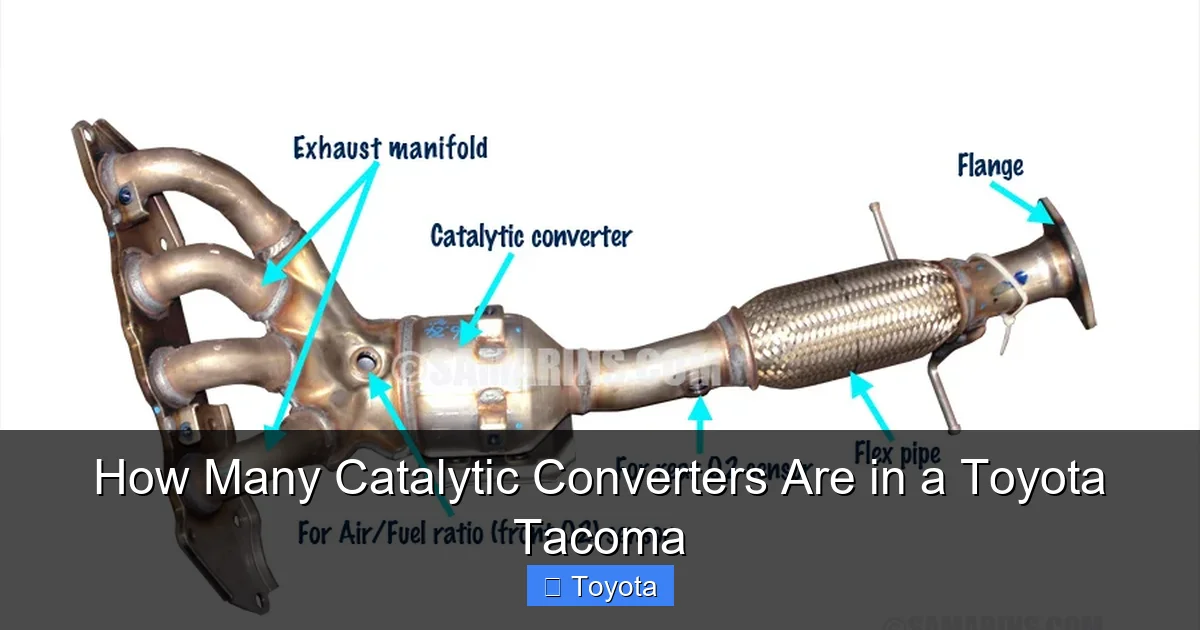
Visual guide about How Many Catalytic Converters Are in a Toyota Tacoma
Image source: samarins.com
Before diving into specific numbers, it helps to understand what catalytic converters actually do. These devices transform harmful pollutants into less dangerous gases through chemical reactions. Inside each converter, precious metals like platinum, palladium, and rhodium act as catalysts.
The Science Behind Catalytic Conversion
When exhaust gases flow through a catalytic converter, three main chemical processes occur. First, carbon monoxide gets converted to carbon dioxide. Second, nitrogen oxides break down into nitrogen and oxygen. Third, unburned hydrocarbons combine with oxygen to create water vapor and additional carbon dioxide.
This transformation happens in two stages. The front stage, called the reduction catalyst, handles nitrogen oxides. The rear stage, known as the oxidation catalyst, deals with carbon monoxide and hydrocarbons. Together, these stages reduce emissions by up to 90% compared to engines without converters.
Why Multiple Converters Matter
Having multiple catalytic converters improves efficiency and reliability. If one converter begins failing, the other can often compensate temporarily. This redundancy also allows for better heat distribution and more thorough emissions cleaning.
Toyota Tacoma Catalytic Converter Configuration by Generation
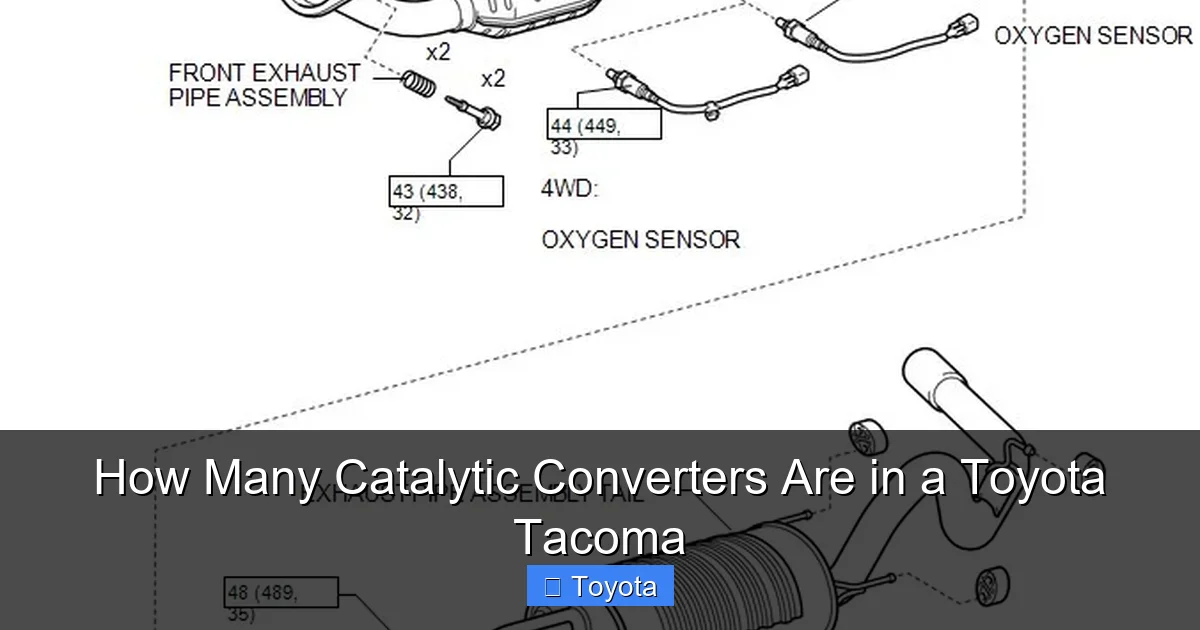
Visual guide about How Many Catalytic Converters Are in a Toyota Tacoma
Image source: diycarexpert.com
The number of catalytic converters in your Tacoma depends heavily on the model year and engine configuration. Toyota has made several changes to the Tacoma lineup since its introduction in 1995.
Second Generation (2005-2015) Models
The 2005-2015 Tacoma models typically feature dual catalytic converters on V6 engines. These converters sit relatively close to the exhaust manifolds. Four-cylinder models from this era generally use a single converter design.
The 4.0-liter V6 engine found in these trucks required two separate exhaust manifolds. Each manifold connects to its own catalytic converter. This setup ensures both sides of the engine receive proper emissions treatment.
Third Generation (2016-Present) Models
Current Tacoma models continue the dual-converter tradition for V6 engines. However, Toyota made improvements to converter placement and efficiency. The newer designs feature enhanced materials and better airflow characteristics.
Four-cylinder models still use single converters, but these units are more efficient than earlier versions. Toyota focused on improving fuel economy while maintaining strict emissions standards.
Engine-Specific Variations
The 2.7-liter four-cylinder engine uses one catalytic converter. This unit handles all exhaust gases from the single exhaust manifold. It is simpler and less expensive to replace than dual setups.
The 4.0-liter V6 engine requires two catalytic converters. Each converter treats one side of the engine independently. This configuration provides more thorough emissions control but increases replacement costs.
Locating Each Catalytic Converter in Your Tacoma
Knowing where your converters sit helps when troubleshooting or planning maintenance. These components are positioned strategically throughout the exhaust system.
Front Converter Placement
The primary catalytic converter sits directly behind the engine’s exhaust manifold. On V6 models, you will find one converter on each side of the engine bay. These front converters receive the hottest exhaust gases first.
Access typically requires raising the vehicle on jack stands. The converters connect to the manifold via bolts or clamps. Regular visual inspections can reveal early signs of damage or deterioration.
Rear Converter Configuration
Some Tacoma models feature secondary converters further downstream. These units provide additional emissions treatment and help meet strict California standards. They are usually found midway along the exhaust system.
Rear converters often last longer than front units. They operate at lower temperatures and experience less stress. However, they still require periodic inspection for optimal performance.
Four-Cylinder vs. V6 Differences
Four-cylinder Tacomas have simpler converter layouts. One converter handles all exhaust flow. This makes replacement straightforward but limits redundancy.
V6 models require more complex systems. Two converters mean twice the potential failure points. However, they also provide better overall emissions control for the larger engine.
Signs Your Catalytic Converter Needs Attention
Recognizing problems early saves money and prevents bigger issues. Catalytic converters fail gradually in most cases, giving you time to address concerns.
Performance Warning Signs
Reduced fuel economy often signals converter trouble. When converters become clogged or inefficient, your engine works harder. You may notice decreased acceleration and rough idling.
The check engine light frequently illuminates with converter problems. Modern Tacoma models use oxygen sensors to monitor converter efficiency. These sensors trigger warning lights when readings fall outside normal ranges.
Audible and Sensory Indicators
Unusual exhaust sounds suggest internal converter damage. Rattling noises often indicate broken internal components. These fragments can block exhaust flow and reduce performance.
A sulfur or rotten egg smell signals incomplete combustion. This odor suggests your converter is not properly treating exhaust gases. Address this issue promptly to avoid further damage.
Visual Inspection Tips
Regular under-vehicle inspections reveal external damage. Look for rust, dents, or discoloration around converter housings. These signs indicate potential internal problems.
Check for exhaust leaks near converter connections. Black soot around joints suggests gases are escaping before full treatment. These leaks affect both performance and emissions compliance.
Replacement Costs and Maintenance Considerations
Understanding costs helps you budget for necessary repairs. Catalytic converter replacement represents a significant investment for most Tacoma owners.
Typical Replacement Price Ranges
Single converter replacement costs $1,500 to $2,500. This includes parts and labor for four-cylinder models. Prices vary by location and shop rates.
Dual converter replacement ranges from $3,000 to $4,000. V6 models require twice the parts and more labor time. Some shops may offer package deals for both units.
Factors Affecting Replacement Costs
OEM versus aftermarket parts significantly impact pricing. Original Toyota converters cost more but offer longer warranties. Aftermarket options provide savings but may sacrifice longevity.
Labor costs vary by geographic location. Urban areas typically charge more per hour than rural shops. Complex converter removal increases labor time and expenses.
Maintenance Strategies to Extend Life
Regular engine tune-ups prevent converter damage. Misfiring cylinders send unburned fuel into converters, causing overheating. Address ignition problems immediately.
Using quality fuel reduces contamination risks. Low-quality gasoline introduces impurities that coat converter surfaces. Stick to reputable gas stations for best results.
Legal Requirements and Environmental Compliance
Federal and state regulations govern catalytic converter use. Understanding these rules protects you from legal issues and maintains vehicle value.
Federal Emissions Standards
The Clean Air Act prohibits converter removal or modification. Tampering with emissions systems carries fines up to $37,500 per violation. These laws apply nationwide regardless of local enforcement practices.
Federal warranty coverage protects converters for 8 years or 80,000 miles. This warranty applies to original equipment converters only. Aftermarket replacements fall under different coverage terms.
State-Specific Considerations
California maintains stricter emissions standards than federal requirements. Vehicles sold in California must meet enhanced converter specifications. Other states may adopt similar standards over time.
Annual emissions testing affects converter maintenance priorities. States requiring regular inspections mandate functional converters. Failing emissions tests results in registration complications.
Aftermarket Modification Risks
Performance exhaust systems may conflict with converter requirements. Some modifications reduce back-pressure but sacrifice emissions control. Check local regulations before making changes.
Removing converters entirely creates legal problems. Even non-operational vehicles must maintain original emissions equipment. Selling modified vehicles requires full disclosure to buyers.
Troubleshooting Common Converter Issues
Effective problem-solving requires understanding typical converter failures. Most issues stem from normal wear or related component problems.
Diagnosing Converter Efficiency
Oxygen sensor readings indicate converter performance. Upstream and downstream sensors should show significant differences in readings. Similar readings suggest converter inefficiency.
Exhaust backpressure testing reveals flow restrictions. High backpressure indicates internal blockages. This test requires specialized equipment but provides definitive results.
Preventing Premature Failure
Engine oil contamination kills converters quickly. Using incorrect oil types or excessive oil consumption introduces contaminants. Regular oil changes with proper viscosity prevent these issues.
Coolant leaks into combustion chambers also damage converters. Sweet-smelling exhaust indicates coolant entering cylinders. Address head gasket or intake manifold problems immediately.
When to Seek Professional Help
Complex diagnostic procedures require professional equipment. Oxygen sensor testing and backpressure measurement need specialized tools. Attempting DIY diagnosis often wastes time and money.
Converter replacement involves significant safety considerations. Exhaust system work requires proper lifting equipment and safety protocols. Professional installation ensures proper fitment and sealing.
Maximizing Your Tacoma’s Converter Longevity
Proactive maintenance extends converter life significantly. Simple habits make a substantial difference in component longevity.
Driving Habits That Help
Avoiding short trips prevents converter contamination. Long drives allow converters to reach optimal operating temperature. City driving alone may not provide adequate heat cycles.
Moderate acceleration reduces thermal stress on converters. Aggressive driving creates temperature spikes that damage internal components. Smooth driving habits benefit entire exhaust systems.
Regular Maintenance Schedule
Follow manufacturer-recommended service intervals precisely. Toyota specifies particular timing for exhaust system inspections. Adhering to these schedules catches problems early.
Monitor engine performance indicators regularly. Unusual sounds, smells, or performance changes warrant immediate attention. Early intervention prevents expensive converter damage.
Your Toyota Tacoma’s catalytic converter system requires attention to maintain optimal performance and legal compliance. Whether you drive a four-cylinder or V6 model, understanding your emissions setup helps prevent costly surprises. Regular maintenance and prompt attention to warning signs keep your Tacoma running cleanly and efficiently for years to come.
Frequently Asked Questions
How many catalytic converters are in a Toyota Tacoma?
Most Toyota Tacoma models have either one or two catalytic converters depending on engine type. Four-cylinder models typically use one converter, while V6 engines require two converters – one for each exhaust manifold.
Where are the catalytic converters located on a Tacoma?
Front catalytic converters sit directly behind each exhaust manifold. On V6 models, you will find one converter on each side of the engine bay. Some models also include secondary converters further along the exhaust system.
What are the signs of a failing catalytic converter?
Common warning signs include reduced fuel economy, check engine light illumination, sulfur odors from exhaust, poor acceleration, and unusual rattling sounds. These symptoms indicate the converter may need inspection or replacement.
How much does it cost to replace a Tacoma catalytic converter?
Replacement costs range from $1,500 to $4,000 depending on model year and engine configuration. Single converter replacement costs less than dual setups. Labor rates and parts quality affect final pricing significantly.
Are catalytic converters covered under warranty?
Federal law requires catalytic converters to be warranted for 8 years or 80,000 miles. This coverage applies to original equipment converters only. Aftermarket replacements may have different warranty terms and conditions.
Can I drive with a bad catalytic converter?
You can technically drive with a failing converter, but it is not recommended. Poor performance, reduced fuel economy, and potential engine damage make prompt repair advisable. Many states also require functional emissions systems for vehicle registration.