Who Makes Toyota Serpentine Belts?
Toyota serpentine belts are produced by a handful of trusted OEM suppliers such as Gates, Continental, and Bando, while many aftermarket brands also meet factory specifications. Knowing the source helps you choose a reliable replacement and avoid premature wear.
If you have ever wondered Who Makes Toyota Serpentine Belts? you are not alone. Many Toyota owners want to know exactly which factory stamps the belt that keeps their alternator, water pump, and power steering running smoothly. The answer is a mix of original equipment manufacturers and a handful of trusted aftermarket companies that produce belts to the same strict standards.
In this guide we break down the supply chain, show you how to spot a genuine Toyota belt, and give you practical tips for choosing the right replacement. Whether you drive a Camry, a Tacoma, or a Prius, the information here will help you make an informed decision the next time the belt needs service.
Key Takeaways
- OEM suppliers: Gates, Continental, and Bando are the primary factories that build belts for Toyota.
- Aftermarket options: Reputable aftermarket brands like Dayco, ACDelco, and Motorcraft meet or exceed OE standards.
- Identification: Look for Toyota part numbers, holographic labels, and packaging that matches dealer specs.
- Replacement interval: Most Toyota models need a new belt every 60,000 to 100,000 miles.
- Warning signs: Squealing, cracking, or glazing indicate the belt is near the end of its life.
- Installation tip: Always check tensioner and pulley condition when swapping the belt.
- Cost savings: Quality aftermarket belts often cost 30‑50 % less than dealer parts without sacrificing durability.
📑 Table of Contents
- Understanding the Role of a Serpentine Belt in Your Toyota
- OEM vs Aftermarket: Who Actually Manufactures Toyota Serpentine Belts?
- Major Suppliers Behind Toyota’s Factory Belts
- How to Identify a Genuine Toyota Serpentine Belt
- When to Replace Your Toyota Serpentine Belt and What to Look For
- Tips for Choosing the Right Replacement Belt
- Conclusion
Understanding the Role of a Serpentine Belt in Your Toyota
What the belt does
The serpentine belt is a single, long ribbon of reinforced rubber that snakes around several pulleys. It drives the alternator, water pump, power‑steering pump, and often the air‑conditioning compressor. When the belt fails, you lose charging, cooling, and steering assist all at once.
Why quality matters
A belt that stretches, cracks, or glazes can slip. Slippage creates heat, which accelerates wear on the belt and the pulleys. Toyota engineers specify exact tension, rib count, and material composition to prevent these problems. That is why knowing Who Makes Toyota Serpentine Belts? is more than trivia—it directly affects reliability.
OEM vs Aftermarket: Who Actually Manufactures Toyota Serpentine Belts?
Original equipment manufacturers
Toyota does not mold rubber in‑house. Instead, it contracts a few global Tier‑1 suppliers. The three most common names you will see on a factory belt are Gates, Continental, and Bando. These companies run dedicated production lines that meet Toyota’s exact specifications for tensile strength, temperature range, and noise suppression.
Visual guide about Who Makes Toyota Serpentine Belts?
Image source: m.media-amazon.com
Aftermarket brands that meet OE specs
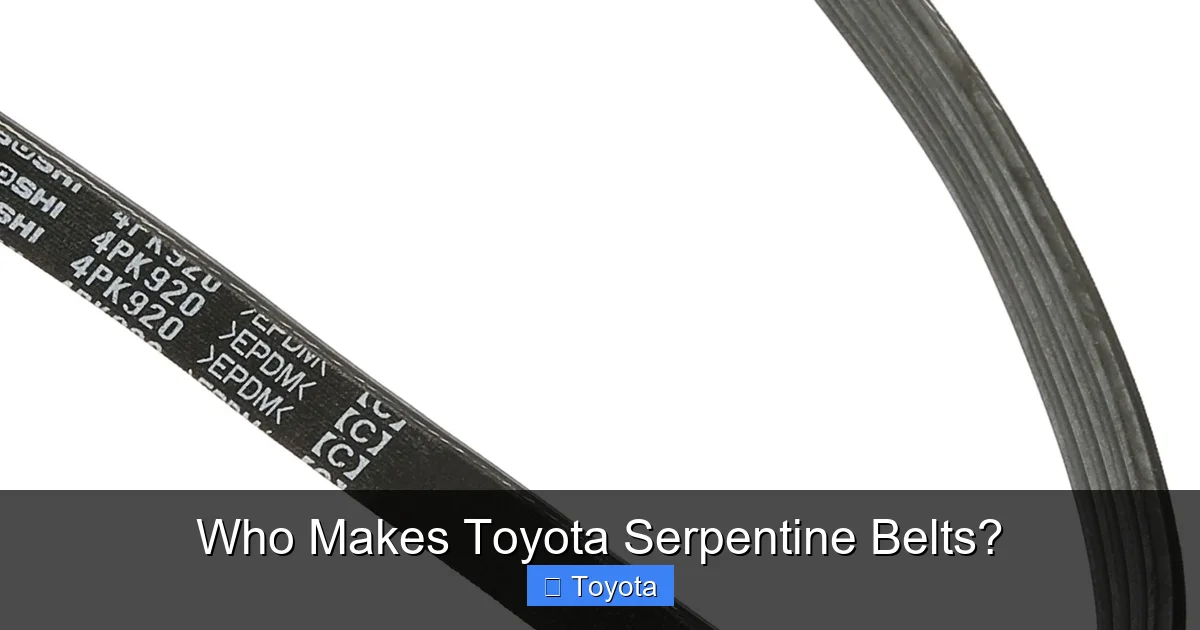
Many aftermarket manufacturers reverse‑engineer the OE design and produce belts that carry the same part numbers. Brands such as Dayco, ACDelco, Motorcraft, and Mitsuboshi are widely recognized for matching or exceeding factory performance. If you want a deeper dive into the top aftermarket options, check out our guide on the best serpentine belt brands for reliable performance.
How to tell the difference
OE belts usually ship in a plain white box with a Toyota part number and a holographic security label. Aftermarket belts often come in branded packaging with the manufacturer’s logo. Both can be perfectly fine, but the OE box guarantees the exact spec Toyota validated.
Major Suppliers Behind Toyota’s Factory Belts
Gates Corporation
Gates is a long‑time partner for many Japanese automakers. Their Micro‑V® belt technology uses a high‑modulus polyester cord that resists stretch. Gates belts are stamped with a “G” logo and a date code that helps you verify production freshness.
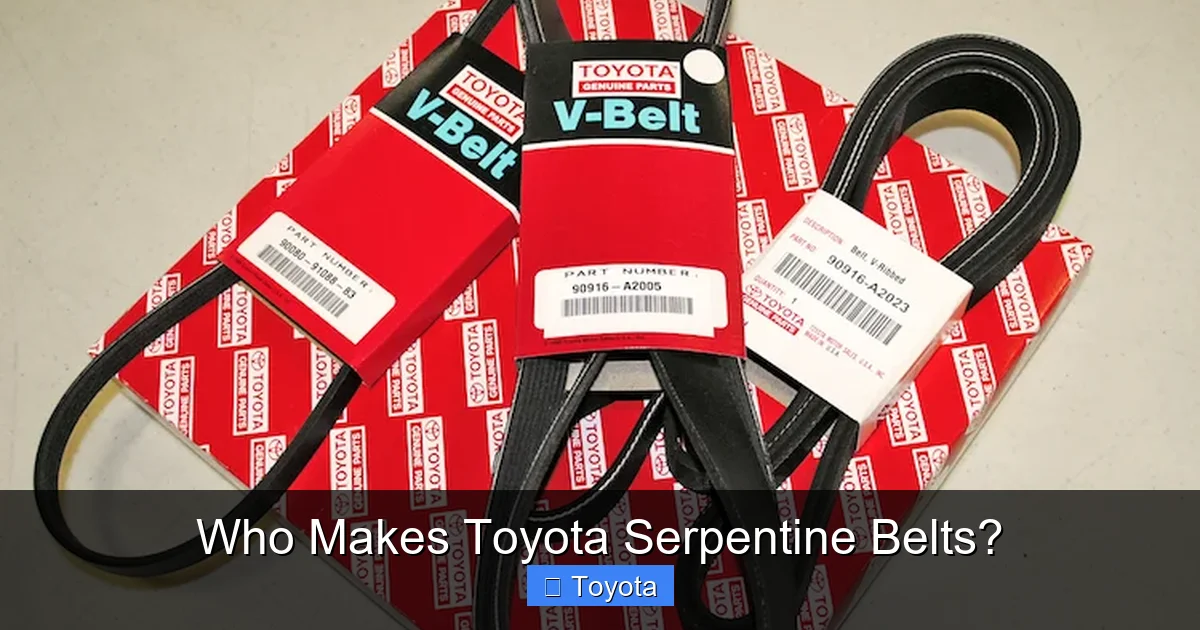
Visual guide about Who Makes Toyota Serpentine Belts?
Image source: s3.amazonaws.com
Continental AG
Continental’s ContiTech division supplies belts for a wide range of Toyota models. Their belts feature a proprietary EPDM rubber compound that stays flexible in extreme cold and resists ozone cracking in hot climates.
Bando Chemical Industries
Bando is a Japanese belt specialist that works closely with Toyota engineering teams. Their belts often carry a “B” stamp and are known for quiet operation thanks to a patented rib profile that reduces vibration.
Other occasional suppliers
In some regions you may find belts from Mitsuboshi or Dayco on the assembly line. These suppliers meet the same Toyota drawing numbers, so the performance is identical.
How to Identify a Genuine Toyota Serpentine Belt
Check the part number
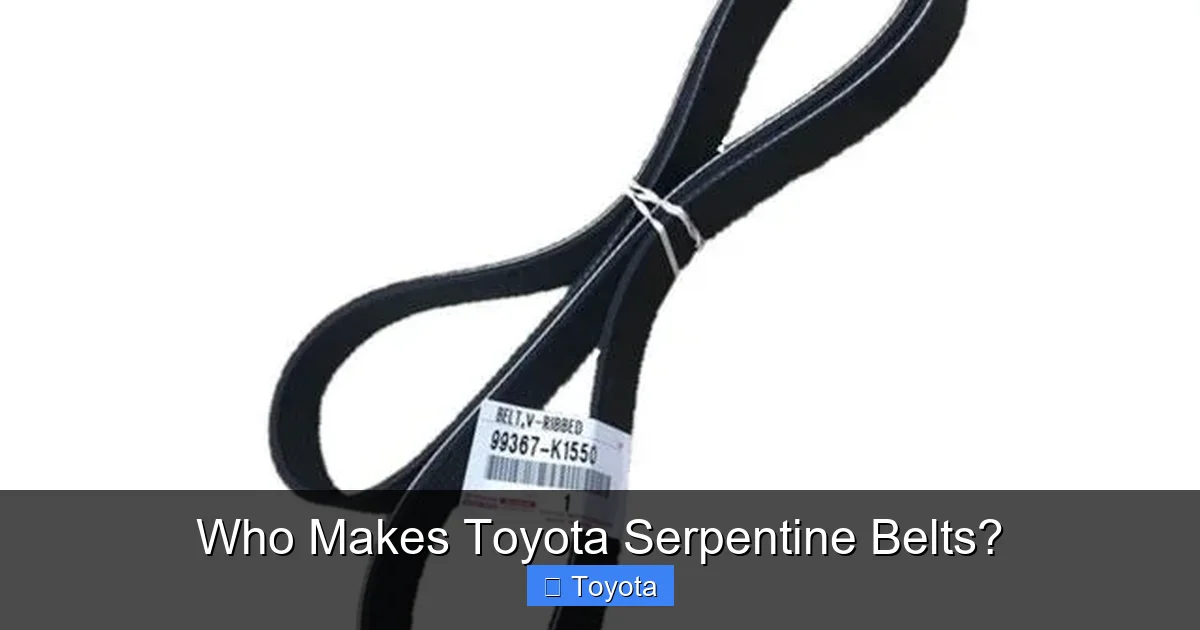
Every Toyota belt has a 10‑digit part number (for example, 90916‑02020). You can cross‑reference this number on the Toyota parts website or with your dealer. If the number matches, you have the exact OE spec.
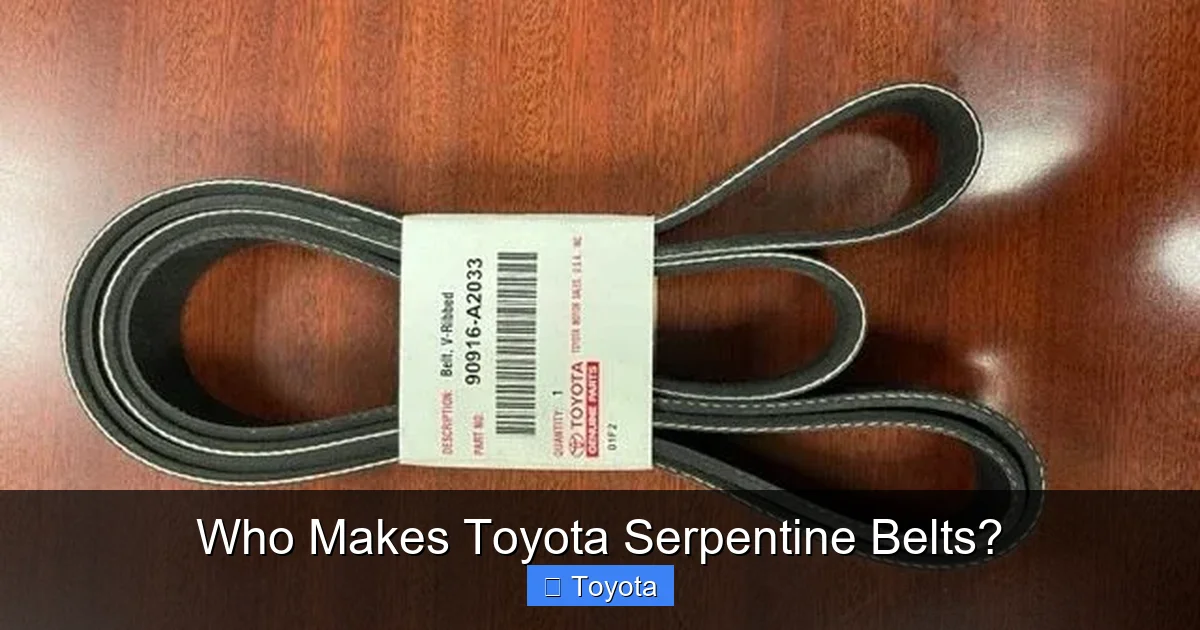
Visual guide about Who Makes Toyota Serpentine Belts?
Image source: picclickimg.com
Look for security features
Genuine belts often include a holographic sticker, a QR code, or a laser‑etched logo on the rib side. Counterfeit belts usually lack these details.
Inspect the packaging
OE boxes are plain, white, and bear the Toyota logo, part number, and a barcode. Aftermarket boxes are colorful and display the brand name prominently.
Feel the material
Run your fingers along the ribs. OE belts feel uniformly smooth with a slight tackiness from the rubber compound. Cheap imitations may feel overly stiff or have visible molding flash.
Listen for noise clues
A low moaning sound when backing up can also point to belt issues, similar to the symptoms described in our post about car makes moaning noise when backing up. If you hear that, inspect the belt for glazing or misalignment.
When to Replace Your Toyota Serpentine Belt and What to Look For
Mileage guidelines
Toyota’s maintenance schedule typically calls for inspection every 30,000 miles and replacement between 60,000 and 100,000 miles, depending on the model. Harsh climates, frequent short trips, and heavy accessory loads can shorten that window.
Visual warning signs
- Cracks: Small transverse cracks across the ribs mean the rubber is drying out.
- Glazing: A shiny, glass‑like surface indicates the belt has been slipping.
- Missing ribs: Chunk loss compromises grip and can cause sudden failure.
- Fraying edges: Edge wear often signals misaligned pulleys.
Audible clues
A high‑pitched whistle when you accelerate often signals a worn belt, as explained in our article on car makes whistle noise when accelerating. A chirping sound at idle may mean the tensioner is weak.
Performance symptoms
If your battery warning light flickers, the engine overheats, or power steering feels heavy, the belt may not be turning the accessories at the correct speed.
Tips for Choosing the Right Replacement Belt
Stick to the part number
Even if a belt looks identical, a different part number can mean a different rib count or length. Always order by the exact Toyota part number.
Consider a kit
Many retailers sell a belt‑tensioner‑idler kit. Replacing the tensioner and idler pulleys at the same time prevents a new belt from wearing prematurely.
Buy from reputable sources
Authorized dealers, well‑known auto parts chains, and established online retailers (RockAuto, FCP Euro, Amazon’s “Ships from and sold by” reputable sellers) reduce the risk of counterfeit parts.
Check the warranty
OE belts usually carry a 12‑month/unlimited‑mile warranty. Quality aftermarket brands often match that. A longer warranty can be a sign of confidence in durability.
Don’t forget the tensioner
A worn tensioner cannot maintain proper belt tension. Even a brand‑new belt will slip if the tensioner spring is fatigued. Replace the tensioner if it shows more than 1/4 inch of play.
Install with the right tools
A serpentine belt tool or a long‑handle ratchet with the correct socket makes the job quick and prevents knuckle injuries. Follow the routing diagram under the hood or in the owner’s manual.
Conclusion
Knowing Who Makes Toyota Serpentine Belts? gives you the power to choose a replacement that keeps your Toyota running smoothly for years. The factory relies on Gates, Continental, and Bando, but high‑quality aftermarket brands like Dayco, ACDelco, and Motorcraft meet the same rigorous standards. By checking part numbers, inspecting for wear, and replacing the tensioner when needed, you can avoid unexpected breakdowns and costly roadside assistance. Next time you hear a squeal or see a crack, you’ll know exactly what to look for and which belt to trust.
Frequently Asked Questions
Who makes the original Toyota serpentine belts?
Toyota’s factory belts are produced by Tier‑1 suppliers Gates, Continental, and Bando. These companies manufacture the belts to Toyota’s exact specifications.
Can I use an aftermarket serpentine belt on my Toyota?
Yes, reputable aftermarket brands such as Dayco, ACDelco, and Motorcraft meet or exceed OE standards. Just verify the part number matches your vehicle.
How often should I replace the serpentine belt on a Toyota?
Most Toyota models require replacement between 60,000 and 100,000 miles, with inspections every 30,000 miles. Harsh driving conditions may shorten this interval.
What are the signs that my serpentine belt is failing?
Look for cracks, glazing, missing ribs, fraying edges, squealing or whistling noises, and accessory performance issues like a weak battery or overheating.
Do I need to replace the tensioner when I change the belt?
It is highly recommended. A worn tensioner cannot keep the new belt at proper tension, leading to premature wear or slippage.
Where can I buy a genuine Toyota serpentine belt?
You can purchase OE belts from Toyota dealerships, authorized parts distributors, or trusted online retailers that list the exact Toyota part number.