What Voids a Toyota Warranty?
Understanding what voids a Toyota warranty is essential for every owner. While Toyota warranties are robust, certain actions like unauthorized modifications, neglecting scheduled maintenance, or using the vehicle for racing can completely cancel your coverage. This guide breaks down the most common pitfalls so you can keep your protection intact.
Key Takeaways
- Modifications can void coverage: Aftermarket parts like lift kits or engine tunes may void the warranty on affected systems.
- Missed maintenance is a major risk: Skipping oil changes or using wrong fluids gives Toyota grounds to deny claims.
- Racing and off-roading void warranties: Competitive driving or extreme abuse is not covered under the factory warranty.
- Environmental damage isn’t covered: Flood, fire, or hail damage falls under insurance, not the vehicle warranty.
- Keep all records: Detailed service receipts are your best defense if a warranty dispute arises.
- Magnuson-Moss Warranty Act protects you: Dealers cannot void your entire warranty just because you used an aftermarket part unless they prove that part caused the failure.
- Read the fine print: Your warranty booklet lists specific exclusions; knowing them saves headaches later.
📑 Table of Contents
- Introduction: Protecting Your Investment
- Understanding Your Toyota Warranty Coverage
- Common Actions That Void Your Toyota Warranty
- Modifications and Aftermarket Parts: The Gray Area
- Maintenance and Service Mistakes
- Environmental Damage and External Factors
- How to Protect Your Warranty and Handle Disputes
- Conclusion: Drive Smart, Stay Covered
Introduction: Protecting Your Investment
Buying a new Toyota is a big decision. You count on that factory warranty to give you peace of mind for years. But many owners don’t realize that certain actions can put that safety net at risk. Knowing exactly what voids a Toyota warranty is the first step to avoiding costly surprises down the road. It is not just about big modifications; sometimes small oversights can cause big problems.
Toyota builds reliable vehicles, and their warranty coverage reflects that confidence. The basic warranty covers 3 years or 36,000 miles, while the powertrain warranty extends to 5 years or 60,000 miles. Hybrid components get even longer protection. However, this coverage is a contract. Like any contract, it has terms and conditions. If you break those terms, Toyota can legally deny a repair claim. Let’s walk through the details so you stay protected.
Understanding Your Toyota Warranty Coverage
Before we dive into what voids the warranty, we need to understand what the warranty actually covers. Toyota offers several layers of protection. The most common is the Basic Warranty, often called “bumper-to-bumper.” This covers defects in materials or workmanship for almost every part of the car. Then there is the Powertrain Warranty. This covers the engine, transmission, and drivetrain. Hybrid models have a separate Hybrid Component Warranty that lasts 8 years or 100,000 miles (10 years/150,000 miles in some states).
Corrosion and Emissions Coverage
Toyota also includes Rust-Through Coverage for 5 years with unlimited miles. This protects against perforation of sheet metal from the inside out. Federal Emissions Warranties cover emissions control parts for 2 years/24,000 miles, with major components like the catalytic converter covered for 8 years/80,000 miles. California and other CARB states have even longer emissions coverage. Knowing these timeframes helps you understand what is at stake if you accidentally void a specific section.
The Difference Between Void and Denial
It is important to distinguish between a “voided warranty” and a “denied claim.” A voided warranty means the entire contract is cancelled. This is rare and usually requires severe misuse, like a salvage title or odometer tampering. A denied claim is much more common. This happens when Toyota refuses to pay for a specific repair because the failure was caused by something you did or didn’t do. The rest of your warranty remains active. We will focus mostly on actions that lead to denied claims, as that is the real risk for most owners.
Common Actions That Void Your Toyota Warranty
There are a few “nuclear” options that will void your entire warranty instantly. These are the big ones you must avoid at all costs.
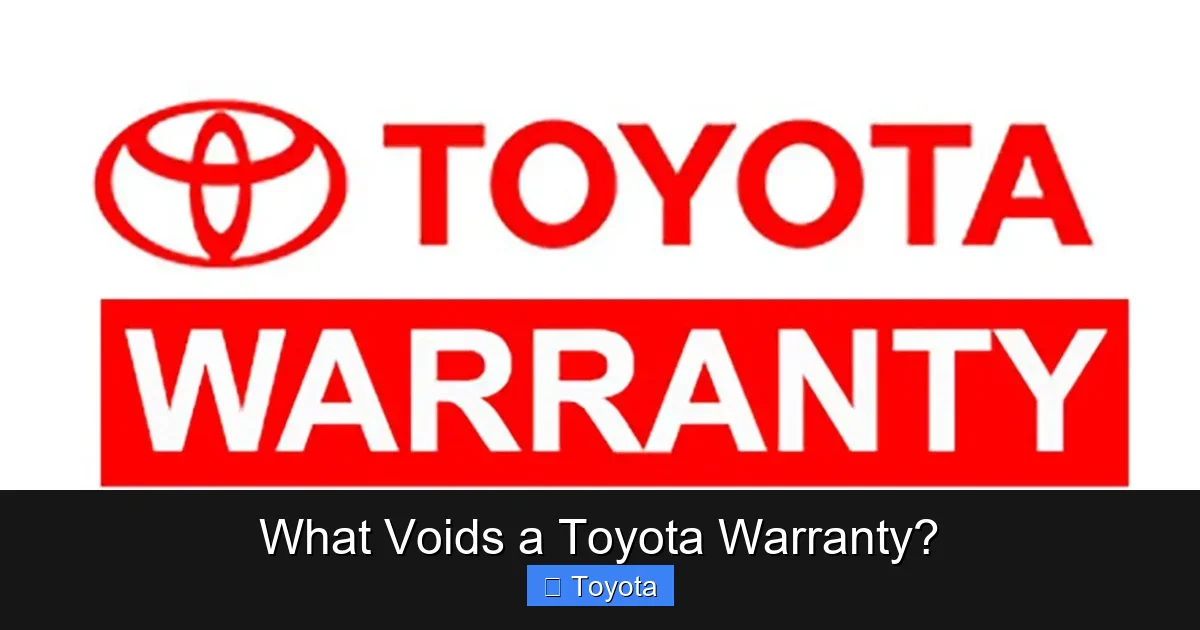
Visual guide about What Voids a Toyota Warranty?
Image source: aautomotives.com
Salvage Title or Total Loss
If your Toyota is declared a total loss by an insurance company and issued a salvage title, the factory warranty ends immediately. This applies even if you rebuild the car and it runs perfectly. Toyota has no way to verify the quality of the repairs or the structural integrity of the vehicle. A branded title (salvage, rebuilt, flood, junk) voids the warranty completely.
Odometer Tampering
Disconnecting, resetting, or altering the odometer is a federal crime. It also voids your warranty instantly. Toyota uses the odometer reading to determine if the vehicle is within the time and mileage limits. If the mileage cannot be verified, they cannot honor the warranty. Modern digital odometers store data in multiple modules, making tampering easily detectable during a diagnostic scan.
Misuse and Abuse
Using the vehicle in a way it was not designed for constitutes misuse. This includes racing, competitive driving, or using a passenger car for commercial hauling beyond its rated capacity. If you take your Camry to a track day and blow the engine, that claim will be denied. If you overload your Tacoma past its GVWR and bend the frame, that is on you. The warranty covers defects, not driver choices.
Modifications and Aftermarket Parts: The Gray Area
This is the most debated topic among Toyota owners. Does a cold air intake void your warranty? What about a lift kit? The answer lies in the Magnuson-Moss Warranty Act. This federal law prevents manufacturers from voiding your warranty simply because you installed an aftermarket part. However, they can deny a claim if they prove the aftermarket part caused the failure.
Visual guide about What Voids a Toyota Warranty?
Image source: aautomotives.com
How the “Causation” Rule Works
Let’s say you install a performance exhaust. Later, your transmission fails. Toyota must prove the exhaust caused the transmission failure. That is nearly impossible, so they should cover the transmission. But if you install a supercharger and the engine pistons melt, Toyota can easily argue the increased boost pressure caused the failure. They would deny the engine claim. The rest of the warranty (electronics, suspension, etc.) stays intact.
High-Risk Modifications
Some mods are almost guaranteed to cause warranty headaches. Engine tuning (ECU remaps) tops the list. It changes fueling, timing, and boost. Any subsequent engine or transmission failure will be scrutinized heavily. Suspension lifts are another hot button. A lift kit changes driveline angles and stresses components like CV axles and wheel bearings. If you want to lift your truck, read our article on does a lift kit void Toyota warranty for a deep dive. Large wheels and tires can also affect wheel bearings and ABS sensors.
Safe Modifications
Cosmetic changes are generally safe. Paint protection film, window tint, seat covers, and floor mats pose zero risk. Cat-back exhaust systems (behind the catalytic converter) are usually safe for the powertrain warranty. Drop-in air filters (not cold air intakes that require tuning) are typically fine. When in doubt, stick to Toyota TRD parts installed by a dealer. These are warrantied by Toyota and won’t affect your factory coverage.
Maintenance and Service Mistakes
This is the most common way owners lose coverage unintentionally. The warranty requires you to maintain the vehicle per the schedule in your owner’s manual. If you don’t, and a related part fails, Toyota will deny the claim.
Skipping Oil Changes
This is the number one killer of warranty claims. If your engine sludges up or a bearing spins because you went 15,000 miles between oil changes, Toyota will not pay for the repair. You must follow the mileage and time intervals. Even if you drive very little, oil degrades over time. Change it at least once a year.
Using Wrong Fluids
Toyota specifies exact fluid types for a reason. Using conventional oil in an engine that requires 0W-20 synthetic can cause damage. Using the wrong transmission fluid (like Dexron in a Toyota WS spec transmission) will destroy the transmission. Using plain water instead of coolant will corrode the cooling system. Always use fluids that meet the specs in your manual. Keep receipts for the fluids you buy.
DIY Maintenance Records
You are allowed to do your own maintenance. The law protects this right. But you must prove you did it. Keep a detailed log with date, mileage, and what you did. Save receipts for every filter, quart of oil, and spark plug. Take photos of the oil drain plug, filter, and receipts together. Without proof, Toyota assumes it wasn’t done. A dealer service history is the gold standard, but a thorough DIY paper trail works too.
Ignoring Recalls and Technical Service Bulletins
If a recall is issued for a safety defect, get it fixed immediately. Driving a recalled vehicle that later has a related failure can complicate warranty claims. Technical Service Bulletins (TSBs) are not recalls, but they address known issues. If a TSB exists for your symptom and you ignore it, a dealer might argue you neglected a known fix. It’s best to address TSBs while under warranty.
Environmental Damage and External Factors
Your warranty covers manufacturing defects. It does not cover acts of nature or external damage. This seems obvious, but the line can blur.
Flood, Fire, and Hail
If your car is flooded, burned, or pummeled by hail, the warranty does not cover the damage. That is what comprehensive insurance is for. However, if a flood-damaged car is dried out and sold with a clean title (title washing), and you buy it unknowingly, the warranty is still void because the car has a hidden salvage history. Always run a VIN check before buying used.
Road Debris and Accidents
Hitting a pothole, curb, or deer is not a warranty issue. Damage from accidents is covered by collision insurance. If an accident bends a frame rail and later the alignment is off, that is not a defect. Be careful with “porch dent” claims. If you say a noise started after you hit something, the dealer will flag it as accident damage.
Improper Towing
Towing beyond the vehicle’s rated capacity voids the warranty on the drivetrain and cooling system. Overheating the transmission while towing a too-heavy trailer is a classic denied claim. Know your tow rating. If you need to tow heavy, buy the right truck. For example, understanding what gas does a Toyota Tacoma take is just one part of proper truck ownership; knowing the tow limits is critical for warranty protection.
How to Protect Your Warranty and Handle Disputes
You have rights. Knowing how to exercise them saves money and stress.
Document Everything
We cannot stress this enough. Create a file (physical or digital) for every service visit. Include date, mileage, invoice, and description of work. If a dealer performs work, ensure they note the mileage correctly. If you do it yourself, write it in the maintenance log in your glove box and keep parts receipts. This documentation is your evidence if a claim is challenged.
Use Quality Parts
If you do your own maintenance, use quality filters and fluids that meet Toyota specs. You don’t have to buy Toyota branded oil filters, but the filter must meet the same performance standards. Cheap, no-name filters can collapse internally and starve the engine of oil. That failure would be on you, not Toyota.
Escalate Smartly
If a dealer denies a claim you believe is valid, stay calm. Ask for the denial in writing with the specific reason. Contact Toyota Customer Experience (1-800-331-4331). They can open a case and review the dealer’s decision. Be polite but firm. Provide your maintenance records. If the issue is a known defect (check TSBs and NHTSA complaints), mention that. Most disputes are resolved at this level.
Know the Lemon Law
If your car has a recurring defect that the dealer cannot fix after a reasonable number of attempts (usually 3-4 for the same issue, or 30 days total in the shop), you may qualify for a buyback or replacement under your state’s Lemon Law. This is separate from the warranty but uses the same repair records. Keep every repair order, even for “could not duplicate” visits.
Conclusion: Drive Smart, Stay Covered
Your Toyota warranty is a valuable asset. It protects you from the few defects that slip through Toyota’s legendary quality control. The rules are straightforward: maintain the car, don’t abuse it, and be smart about modifications. You don’t have to keep the car bone stock, but you do have to accept that certain mods shift the risk to you. If you modify the engine, you own the engine risk. If you lift the suspension, you own the driveline risk.
Most warranty denials come from neglected maintenance, not modifications. Change your oil on time. Use the right fluids. Keep your receipts. If you treat your Toyota well, it will treat you well. And remember, Toyota’s reliability isn’t just marketing; it’s engineering. If you’re curious about the roots of that reputation, check out what makes Toyota so reliable. Drive safe, maintain your records, and enjoy the peace of mind that comes with a protected investment.
Frequently Asked Questions
Does installing a cold air intake void my Toyota warranty?
No, installing a cold air intake does not void your entire warranty. However, if the intake allows debris into the engine and causes damage, or if it requires a tune that causes engine failure, Toyota can deny the claim for that specific repair. The rest of your warranty remains active.
Can I service my own Toyota without voiding the warranty?
Yes, you can perform your own maintenance. The Magnuson-Moss Warranty Act protects this right. You must keep detailed records and receipts for all parts and fluids used, and the work must be done on schedule per the owner’s manual.
Will a lift kit void my Toyota Tacoma warranty?
A lift kit will not void your entire warranty. However, it will likely void coverage on suspension, steering, and driveline components (like CV axles and wheel bearings) because the modification changes the geometry and stress on those parts. Engine and electronics warranties are typically unaffected.
What happens if I miss an oil change by a few hundred miles?
Missing an oil change by a small margin (e.g., 5,500 miles instead of 5,000) usually won’t cause an issue if the engine is healthy. However, if you miss it by thousands of miles or go over the time limit, and the engine fails due to sludge or wear, Toyota will deny the claim based on neglect.
Is a cracked windshield covered under the Toyota warranty?
Generally, a cracked windshield from a rock chip is not covered by the factory warranty; it is an insurance claim. However, if the crack results from a manufacturing defect (like stress fracture with no impact point), it might be covered. For more details, see our article on is a cracked windshield covered under Toyota warranty.
Does using regular gas instead of premium void the warranty?
If your Toyota requires premium fuel (like some older Lexus models or the GR Corolla), consistently using regular gas can cause engine knock and damage. If that damage occurs, Toyota can deny the warranty claim. Most modern Toyotas run on regular 87 octane; check your owner’s manual or our guide on what gas does a Toyota Corolla take for your specific model.