How Long Do Toyota Fj Cruisers Last?

Toyota FJ Cruisers are built to last, with many owners reporting 200,000 to 300,000 miles when properly maintained. With regular care, these rugged SUVs can easily exceed 300,000 miles, making them one of the most reliable vehicles on and off the road.
Key Takeaways
- Toyota FJ Cruisers typically last between 200,000 to 300,000 miles: With proper maintenance, many exceed this range significantly.
- Regular maintenance is crucial: Oil changes, fluid checks, and timely repairs keep your FJ running longer.
- Engine reliability is exceptional: The 4.0L V6 engine is known for its durability and longevity.
- Off-road use can impact lifespan: Harsh conditions require more frequent inspections and maintenance.
- Resale value holds well: FJ Cruisers retain value better than many other SUVs due to their reputation.
- Common issues are minor: Most problems are easily addressed and don’t significantly affect overall lifespan.
📑 Table of Contents
- The Legendary Durability of the Toyota FJ Cruiser
- Understanding the FJ Cruiser’s Engine and Transmission
- Maintenance Tips to Extend Your FJ’s Life
- Factors That Affect FJ Cruiser Longevity
- Real-World Examples and Owner Reports
- Common Issues and How to Avoid Them
- Maximizing Resale Value Through Proper Care
- Conclusion
The Legendary Durability of the Toyota FJ Cruiser
If you’re considering buying a Toyota FJ Cruiser or already own one, you’re likely wondering: how long do these vehicles actually last? The answer might surprise you. The FJ Cruiser isn’t just stylish with its retro-inspired design – it’s also one of the most dependable SUVs ever made.
Toyota built the FJ Cruiser with ruggedness in mind. It was designed for adventure, whether that’s tackling rocky trails or commuting to work every day. Many owners report their FJs hitting 200,000 miles and beyond with minimal issues. Some even reach 300,000 miles or more with proper care.
Let’s break down what makes these vehicles so durable and how you can maximize your FJ’s lifespan.
Understanding the FJ Cruiser’s Engine and Transmission
The heart of any vehicle’s longevity lies in its powertrain. For the FJ Cruiser, that means the 4.0L V6 engine paired with either a 5-speed automatic or 6-speed manual transmission.

Visual guide about How Long Do Toyota Fj Cruisers Last?
Image source: smartvehiclecare.com
The Mighty 4.0L V6 Engine
Toyota’s 4.0L V6 engine (1GR-FE) is legendary for its reliability. This engine has been used across multiple Toyota models since 2005, accumulating millions of miles worldwide. The FJ Cruiser version produces 239 horsepower and 270 lb-ft of torque – plenty for both city driving and trail crawling.
This engine’s durability comes from its robust construction. It features a cast-iron block, aluminum heads, and a timing chain instead of a belt. Timing chains typically last the life of the engine, eliminating a major maintenance concern found in many other vehicles.
With regular oil changes and proper cooling system maintenance, this engine can easily surpass 200,000 miles. Many owners report their engines running strong well past 250,000 miles with no major issues.
Transmission Longevity
The transmissions in FJ Cruisers also deserve recognition for their durability. Both the 5-speed automatic and 6-speed manual units are built tough. The automatic transmission, in particular, handles the engine’s torque well and rarely fails prematurely when properly maintained.
To keep your transmission healthy, always use the recommended fluid type and change it according to schedule. Never ignore warning signs like slipping gears or delayed shifts – these often indicate simple fixes that can prevent expensive replacements.
Maintenance Tips to Extend Your FJ’s Life
While the FJ Cruiser is inherently reliable, your maintenance habits will determine exactly how long it lasts. Here are essential practices to maximize your vehicle’s lifespan:
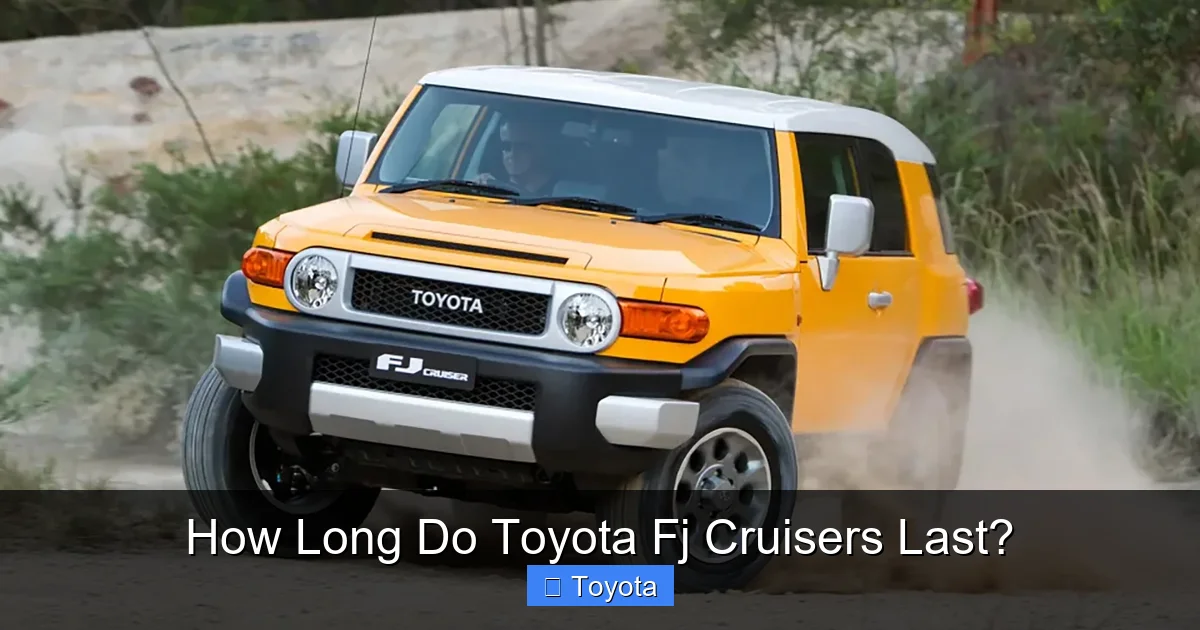
Visual guide about How Long Do Toyota Fj Cruisers Last?
Image source: carscoops.com
Stick to Scheduled Maintenance
Toyota recommends specific service intervals, and following them pays dividends. Regular oil changes every 5,000 miles (or 6 months) keep the engine running smoothly. Don’t forget other fluids like coolant, brake fluid, and differential oil – these need attention too.
Consider creating a maintenance log to track everything. This helps you stay on schedule and provides valuable documentation if you ever sell your FJ.
Pay Special Attention to These Components
Certain parts deserve extra attention in FJ Cruisers:
- Coolant system: Flush every 30,000 miles to prevent corrosion
- Air filter: Replace regularly, especially if you drive dusty trails
- Brake pads: Check monthly and replace when needed
- Tires: Rotate every 5,000 miles and maintain proper pressure
Address Problems Early
When something seems off, don’t wait. A strange noise or warning light might indicate a small issue that’s easy and cheap to fix. Ignoring it could lead to major problems down the road.
Find a trusted mechanic who understands Toyotas. They’ll know common FJ issues and how to address them quickly.
Factors That Affect FJ Cruiser Longevity
Not all FJ Cruisers age equally. Several factors influence how long yours will last:

Visual guide about How Long Do Toyota Fj Cruisers Last?
Image source: static.overfuel.com
Driving Conditions and Usage
City driving with frequent stops and starts puts different stress on your vehicle compared to highway cruising. Off-road use introduces additional challenges like dust, water, and vibration.
If you regularly take your FJ off-road, expect more frequent maintenance needs. Mud, sand, and rock debris can damage seals and components. Always clean your vehicle thoroughly after trail adventures.
Climate Considerations
Extreme temperatures affect vehicle longevity. Hot climates accelerate fluid breakdown and component aging. Cold weather can thicken oils and stress starting systems.
If you live in harsh conditions, consider additional protective measures like engine block heaters or extra coolant protection.
Age vs. Mileage
An older FJ with low mileage might actually be in worse condition than a newer one with high mileage. Rubber seals dry out over time regardless of use. Low-mileage vehicles that sit unused often develop problems from lack of use.
Drive your FJ regularly to keep systems lubricated and functioning properly.
Real-World Examples and Owner Reports
The best way to understand FJ Cruiser longevity is hearing from actual owners. Online forums are filled with stories of high-mileage survivors.
Celebrity High-Mileage FJs
Some owners have documented their FJs reaching incredible mileages:
- A 2007 FJ with 350,000+ miles still going strong
- 2008 models hitting 300,000 miles with original engines
- Multiple reports of 250,000+ mile FJs still performing daily duties
What These Stories Tell Us
These real-world examples confirm that FJ Cruisers can last decades with proper care. The key factors in these success stories include consistent maintenance, early problem detection, and gentle-but-firm usage.
Many high-mileage owners credit their success to sticking with Toyota dealers for service and using only genuine parts.
Common Issues and How to Avoid Them
No vehicle is perfect, and FJ Cruisers have their share of minor issues. Knowing what to watch for helps you stay ahead of problems.
Known Problem Areas
While generally reliable, some components need attention:
- Steering rack: May develop leaks around 100,000 miles
- Wheel bearings: Listen for humming noises that increase with speed
- Rear differential: Regular fluid changes prevent costly failures
- Electrical connections: Corrosion can affect various systems
Prevention Strategies
Most of these issues are preventable through proactive maintenance. For example, keeping electrical connections clean and dry prevents corrosion. Regular differential fluid changes avoid expensive rear-end repairs.
Stay informed about recalls and technical service bulletins. Toyota issued several for early FJ models, and addressing these promptly prevents future problems.
Maximizing Resale Value Through Proper Care
One of the benefits of owning a reliable vehicle like the FJ Cruiser is strong resale value. Well-maintained examples command premium prices in the used car market.
Keep detailed service records, address cosmetic issues promptly, and avoid modifications that might limit buyer appeal. A clean, well-documented FJ will always sell for more than one with questionable history.
Conclusion
Toyota FJ Cruisers are built to last. With proper maintenance and responsible ownership, these vehicles can easily reach 200,000 to 300,000 miles – and some go even further. Their robust construction, reliable engine, and strong build quality make them excellent long-term investments.
Remember that longevity isn’t just about the vehicle – it’s about how you treat it. Regular maintenance, prompt repairs, and sensible driving habits are the keys to keeping your FJ cruising for years to come. Whether you’re buying new or shopping used, the FJ Cruiser’s reputation for durability means you’re getting a vehicle that can truly go the distance.
Your FJ Cruiser isn’t just a vehicle – it’s a companion for adventures. Treat it right, and it’ll reward you with years of reliable service. Many owners consider their high-mileage FJs among their most dependable possessions, and you can too with the right approach to maintenance and care.
Frequently Asked Questions
How many miles can a Toyota FJ Cruiser last?
Most FJ Cruisers can easily reach 200,000 to 300,000 miles with proper maintenance. Some well-cared-for examples have exceeded 350,000 miles while still running reliably.
What is the most reliable year for the FJ Cruiser?
Models from 2007 through 2014 are generally considered the most reliable. Early models (2007-2009) had some initial teething issues resolved in later years.
Do FJ Cruisers hold their value well?
Yes, FJ Cruisers maintain good resale value, especially well-maintained examples. Their cult following and limited production numbers help support pricing in the used market.
What maintenance is most important for FJ Cruiser longevity?
Regular oil changes, coolant system maintenance, and timely fluid replacements are crucial. Paying attention to the 4.0L V6 engine’s specific needs keeps it running strong for hundreds of thousands of miles.
Are FJ Cruisers good for off-roading?
Absolutely. The FJ Cruiser was designed for serious off-road capability with features like crawl control, locking differentials, and robust suspension components.
What are common FJ Cruiser problems to watch for?
Watch for steering rack leaks, wheel bearing wear, and rear differential issues. Most problems are minor and preventable through regular maintenance and early detection.