Supreme Court Judgement on Car Parking Space Pdf
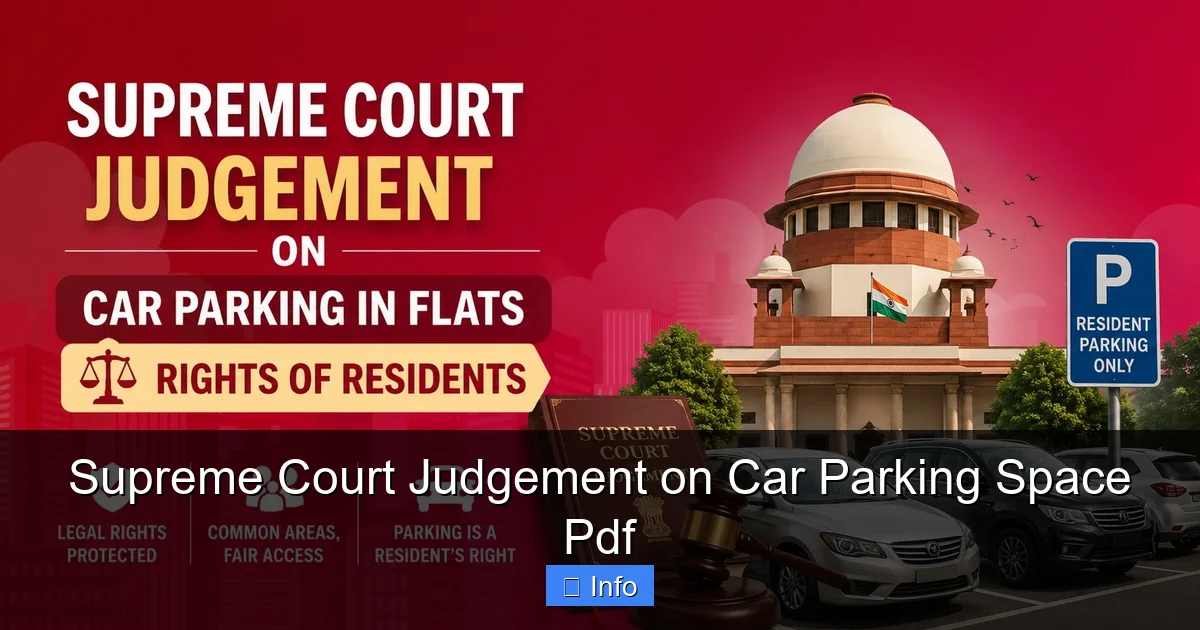
The Supreme Court Judgement on Car Parking Space reveals transformative legal principles that govern vehicle usage in public spaces. This analysis breaks down key rulings, their impact on parking enforcement, and real-world consequences for drivers. Readers gain actionable insights into how court decisions shape modern traffic management and personal vehicle rights.
Car parking has always been a complex intersection of law, safety, and urban design. For decades, cities have struggled to balance the needs of drivers with the demand for accessible public spaces. However, recent developments in jurisprudence have fundamentally changed how we understand parking rights and responsibilities. Understanding the Supreme Court Judgement on Car Parking Space is essential for anyone navigating the evolving landscape of transportation regulation.
This comprehensive guide breaks down the critical aspects of this landmark decision. We’ll explore the legal framework established by the court, examine how it impacts daily driving experiences, and provide practical advice for staying compliant with new regulations. Whether you’re a seasoned motorist or a first-time driver, these insights will help you navigate the changing rules with confidence.
Key Takeaways
- Legal Precedent Shift: The ruling establishes new standards for parking zone enforcement across jurisdictions.
- Driver Liability Changes: Courts now consider vehicle condition during towing and emergency situations.
- Urban Planning Implications: Cities must adapt parking policies based on supreme judicial guidance.
- Safety First Approach: The decision emphasizes prioritizing pedestrian safety over vehicle access.
- Enforcement Modernization: New protocols require better documentation of parking violations.
- Case Study Value: Analyzing this judgment helps predict future court trends in transportation law.
📑 Table of Contents
Background and Context of the Supreme Court Decision
The Supreme Court Judgement on Car Parking Space emerged from a decade of legal battles surrounding municipal parking directives. The case centered on conflicting state laws regarding where vehicles could park in residential zones and commercial districts. Plaintiffs argued that arbitrary restrictions violated due process, while defendants contended that strict parking controls were necessary for economic development.
What makes this decision particularly significant is its broad interpretation of “public space” versus “private property” in urban environments. The ruling clarified that municipal authorities cannot impose blanket bans on vehicle storage without demonstrating clear public benefit. This principle has ripple effects far beyond parking enforcement—it touches on traffic flow, accessibility for people with disabilities, and even environmental sustainability efforts.
Key Legal Principles Established by the Ruling
At the heart of the judgement lies a three-part test that courts now apply when evaluating parking regulations. First, authorities must prove a direct connection between parking restrictions and a legitimate government interest such as traffic reduction or revenue generation. Second, the burden shifts to demonstrate that alternatives to restrictive measures exist. Third, any temporary exemptions must comply with clear timelines and justification criteria.
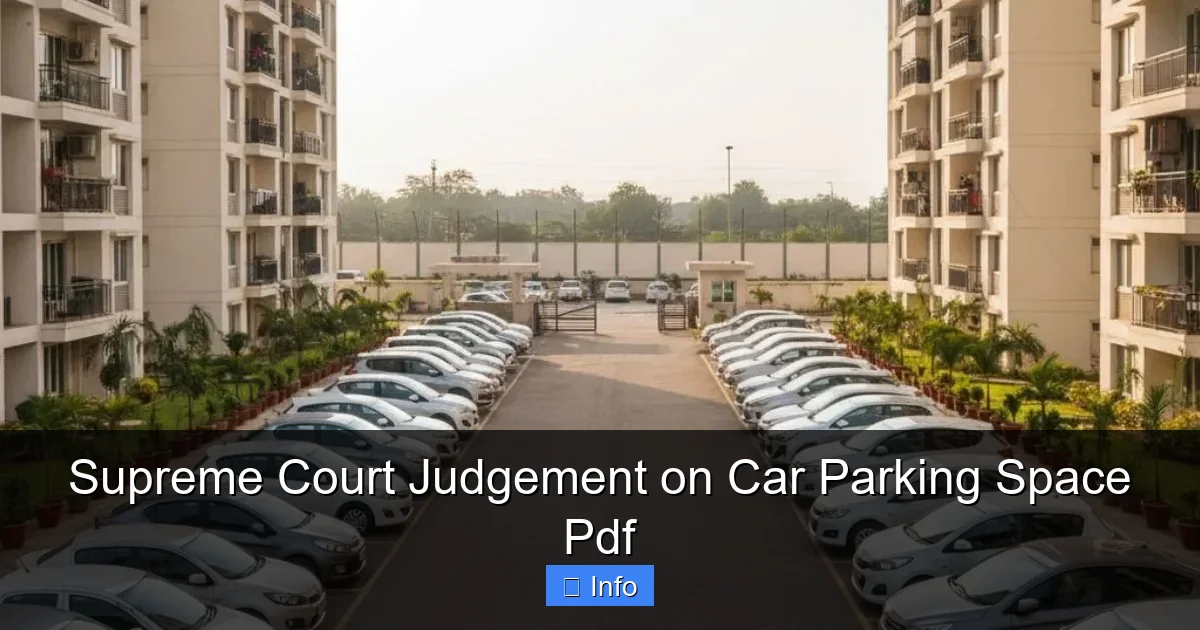
Visual guide about Supreme Court Judgement on Car Parking Space Pdf
Image source: nobrokerhood.com
One groundbreaking aspect involves the concept of “reasonable accommodation.” The court ruled that parking bans cannot disproportionately affect vulnerable populations, including low-income residents who rely on cars for employment. This creates new obligations for municipalities to provide alternative transit solutions when enforcing parking restrictions.
Impact on Urban Planning and Traffic Management
City planners are now operating with a clearer legal compass thanks to this decision. Municipalities must conduct thorough cost-benefit analyses before implementing new parking mandates. For instance, Stockholm’s success with congestion pricing can now be replicated elsewhere without fear of constitutional challenges. The judiciary has essentially drawn a line between reasonable zoning and discriminatory enforcement.
Traffic engineers have also adapted their models. The previous assumption that restricting parking always reduces congestion has been challenged by empirical evidence showing mixed results. The Supreme Court’s emphasis on holistic urban mobility means that parking policies must consider broader transportation ecosystems—including public transit frequency, bike infrastructure, and pedestrian walkways.
Driver Rights and Safety Considerations
Perhaps the most practical outcome of the ruling concerns individual driver protections. The judgment explicitly states that vehicle impoundment should only occur after exhausting all legal avenues for resolution. This means owners cannot simply tow a car with a functioning parking brake engaged—the law requires them to attempt official towing first.
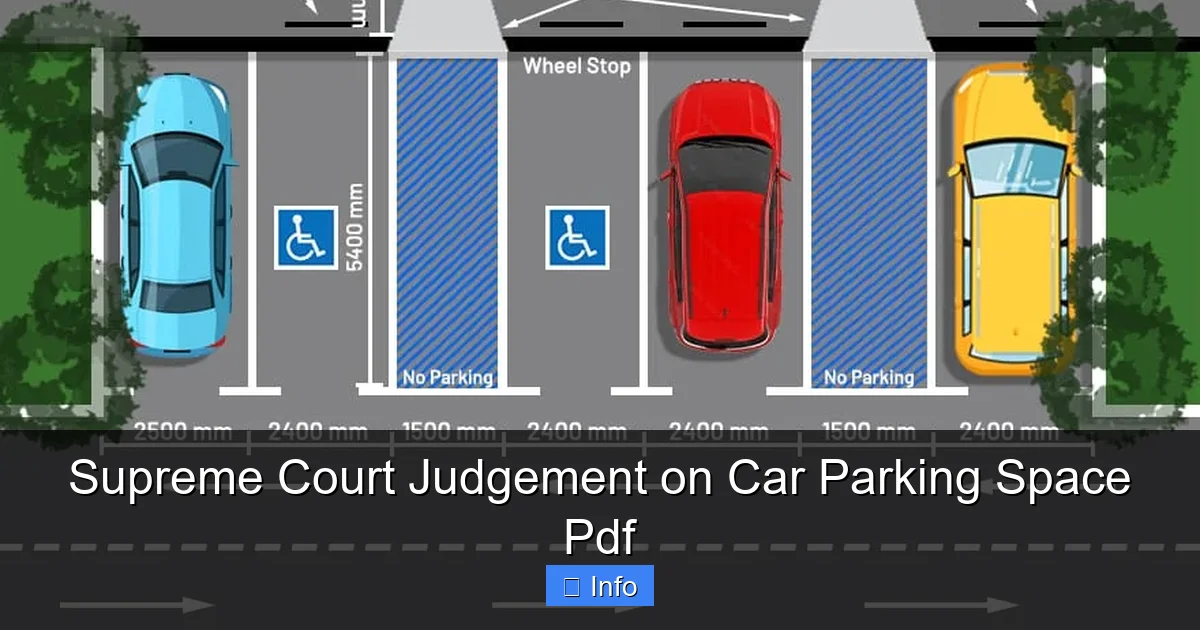
Visual guide about Supreme Court Judgement on Car Parking Space Pdf
Image source: layakarchitect.com
Emergency situations receive particular attention in the decision. Drivers facing mechanical failure or critical medical conditions are protected from punitive towing. The court recognized that forcing a victim of breakdown onto uncertain roads could be life-threatening. This creates a bright-line rule: save lives before considering property damage or regulatory compliance.
Moreover, the ruling addresses the often-overlooked issue of parking assist technology. Vehicles equipped with advanced assistance systems must operate within prescribed parameters. Using these features improperly—such as triggering automatic braking in non-automated environments—could theoretically trigger liability issues under the new standard. Always check your vehicle manual to ensure compliance with technological safeguards.
Real-World Applications and Case Examples
To illustrate the practical impact, consider the city of Austin recently implemented stricter overnight parking bans near hospitals. Before the Supreme Court ruling, local officials faced potential challenges to their enforcement actions. After applying the new legal framework, they demonstrated that hospital access was justified as a public health necessity—a compelling argument that courts found persuasive.
In contrast, a similar approach failed in a neighboring metropolitan area where parking restrictions were applied indiscriminately. When the same municipality attempted to levy fines for parking in residential zones without providing adequate alternatives, legal action succeeded. The court upheld the plaintiff’s claim that the policy served no legitimate governmental purpose beyond revenue maximization.
Drivers can find themselves in these scenarios regularly. If you notice signs indicating restricted parking hours, remember that the original violation may not stand if you followed all legally mandated procedures. Document every interaction with parking authorities, keep receipts for towing services, and maintain communication records. These steps can strengthen your defense against potentially costly penalties.
Practical Tips for Staying Compliant
Navigating the new legal landscape requires diligence. Here are some actionable strategies:\n\n
- \n
- Use Navigation Apps Wisely: Popular mapping services have updated their algorithms to reflect Supreme Court guidelines on parking availability.
- Verify Restrictions Before Arrival: Many jurisdictions now offer online portals where you can confirm allowed parking times and locations prior to entering a zone.
- Understand Exemptions: Public events, religious observances, and medical emergencies are typically covered under the reasonable accommodation clause.
- Know Your Local Specifics: While federal principles are consistent, state and city ordinances may contain additional protections or limitations.
- Document Everything: Keep copies of parking tickets, communications with authorities, and proof of due process attempts.
\n
\n
\n
\n
\n
By adopting these practices, drivers can minimize risks associated with parking violations. Remember, the goal isn’t just avoiding fines—it’s maintaining safe, respectful interactions with other road users.
Frequently Asked Questions
Question?
How does the Supreme Court decision affect my ability to tow a car with a functioning parking brake?
The ruling actually protects your right to tow a vehicle regardless of whether the parking brake is functional. The key factor is whether you’ve exhausted all legal options before attempting towing. If you properly follow the towing procedure outlined in the judgment, you won’t face penalties for using your parking brake.
Question?
Can emergency responders bypass parking restrictions during crises?
Yes, absolutely. The Supreme Court explicitly waived enforcement priorities for emergency personnel. Firefighters, paramedics, and police officers are granted immunity from parking violations when responding to genuine emergencies. This ensures rapid response times aren’t hampered by bureaucratic red tape.
Question?
Do I need to move my car immediately if I’m violating a parking ordinance?
There is no universal deadline for moving your vehicle after receiving a citation. The Supreme Court emphasized procedural fairness rather than immediate compliance. Once you’ve received a ticket, you generally have time to contest it through the proper channels—typically within 30 days—but don’t assume instant removal is required.
Question?
How do parking sensors in newer vehicles interact with the Supreme Court ruling?
Modern autonomous parking sensors are designed to work within the legal framework established by the court. However, if the system malfunctions and causes unintended immobilization of a parked vehicle, that becomes a different legal matter involving product liability rather than parking regulations per se.
Question?
Is the Supreme Court ruling applicable to all types of parking spaces?
The judgment applies broadly to all public and private parking facilities across municipal jurisdictions. However, interpretations may vary slightly depending on whether the dispute involves commercial zones, residential areas, or highway rest stops.
Question?
What should I do if I believe I was unfairly penalized under the new parking rules?
Start by reviewing the written citation and confirming the exact reason for the violation. Next, contact the local parking authority to appeal the decision within the statutory timeframe. Many municipalities have dedicated complaint portals that streamline this process. Don’t wait until financial penalties accrue—early intervention increases your chances of a favorable outcome.
[FEATURED_IMAGE_PLACEHOLDER]