How to Push Brake Piston Back
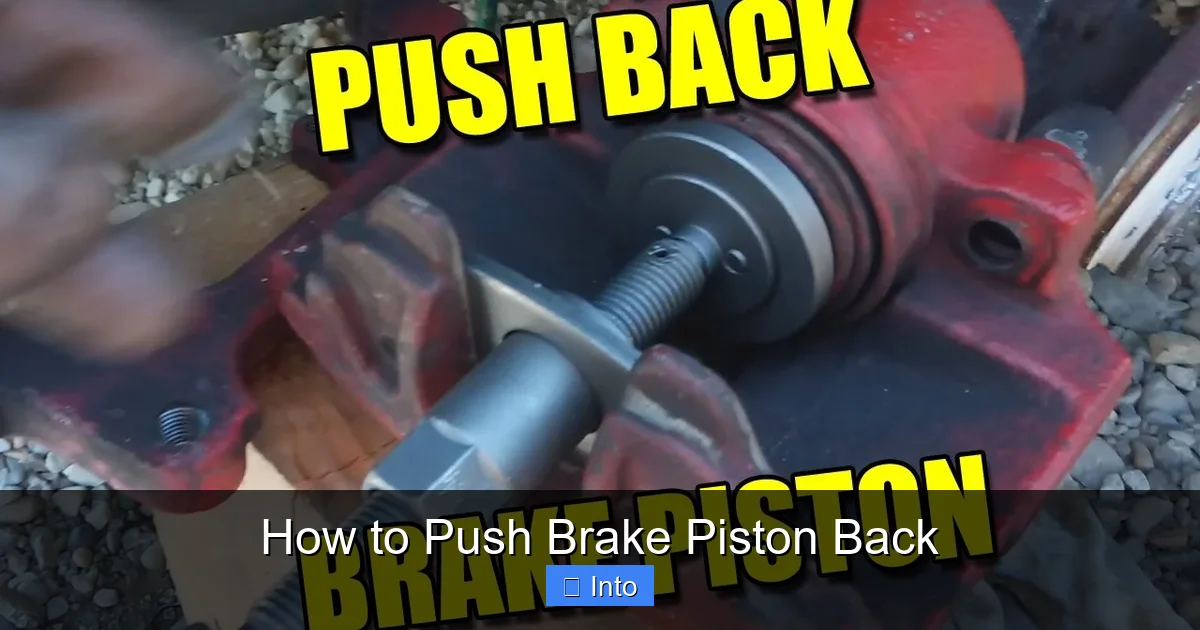
Learn how to push brake piston back safely by using the right caliper tool and checking the piston, boot, and fluid level first. Never force a seized piston; rear calipers with an electronic parking brake often need a service mode before they move.
How to Push Brake Piston Back
New brake pads are thicker than worn pads. That extra space keeps the brake pedal low and stops the caliper from squeezing the rotor. Before new pads can work, the caliper piston must be moved back.
The brake piston is the small hydraulic part inside the caliper. It presses the brake pads against the rotor. Knowing how to push brake piston back helps you fit new pads and restore a proper pedal feel.
This guide covers front and rear calipers, hand tools, safety steps, and common faults. Read it in full before you start. Brakes are a safety-critical system, so a rushed job is never worth the risk.
Key Takeaways
- Use the right tool: A C-clamp works for many single-piston calipers, while rear calipers may need a wind-back tool.
- Protect the piston: Place an old brake pad or flat wood block on it before applying pressure.
- Check for damage: Stop at once if you see fluid leaks, a torn boot, rust, or a bent piston.
- Handle rear calipers with care: Electronic parking brakes often require a built-in service mode.
- Do not force a seized piston: A caliper that will not move usually needs repair or replacement.
- Test the brakes before driving: Pump the pedal until firm, check for leaks, and test at low speed.
📑 Table of Contents
Why the Brake Piston Must Be Reset
A caliper piston stays out when the old pads wear thin. New pads take up more room in the caliper. If you fit them without moving the piston back, the caliper may not clamp the rotor well.
What can happen if you skip this step?
- The pedal may sit too low. You may have to press it far before the brakes work.
- The pads may rub. This can cause heat, noise, and poor fuel use.
- Stopping may take longer. That can make the vehicle unsafe in an emergency.
- The caliper may bind. Extra pressure can wear the new pads too fast.
- The parking brake may not work. This is common on some rear calipers.
For example, a car with thick old pads and thin new pads can pull to one side when you brake. The caliper on the new-pad side cannot apply full force. Pushing the piston back gives the new pad the correct starting position.
Tools, Parts, and Safety Steps
Before you begin, check the condition of the old pads. This helps you see whether the caliper, rotor, and pads all need work. You can also learn how to check brake pads in your car before removing anything.
Visual guide about How to Push Brake Piston Back
Image source: rxmechanic.com
Basic tools you may need
- Jack and jack stands rated for your vehicle
- Lug nut socket and torque wrench
- Correct socket for the caliper bolts
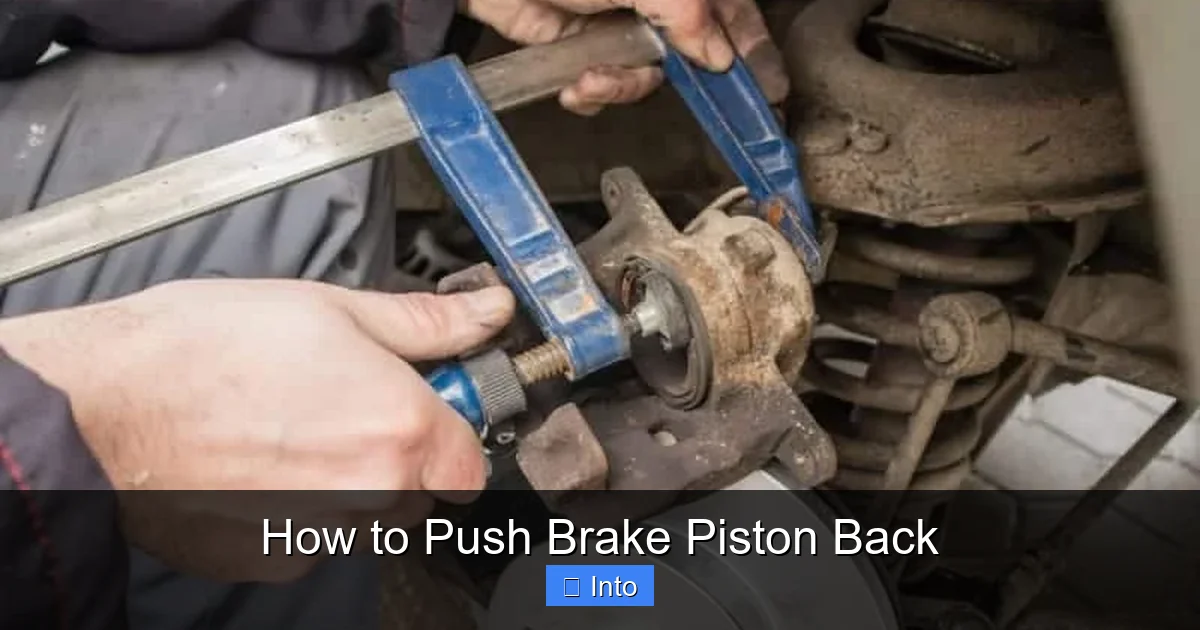
- Large C-clamp or brake piston press
- Old brake pad or flat wood block
- Brake piston wind-back tool for many rear calipers
- Clean rags and brake-safe cleaner
- Master cylinder syringe for excess brake fluid
Work in a safe place
Park on flat ground. Set the parking brake if it can be released later. Chock the wheels that stay on the ground. Loosen the lug nuts only after the wheel is on the floor. Lift the vehicle, secure it with stands, and then remove the wheel.
Never work under a vehicle held only by a jack. Wear eye protection. Brake fluid can burn skin and damage paint. Keep it away from children and pets. Use only the brake fluid type listed in your owner’s manual. Never mix brake fluid types.
Open the master cylinder cap before pushing the piston. Use a clean syringe to remove some fluid. Leave enough room for fluid that returns to the reservoir. Keep the cap nearby, but do not let dust enter the tank.
How to Push Brake Piston Back: Step by Step
Start with the single-piston caliper
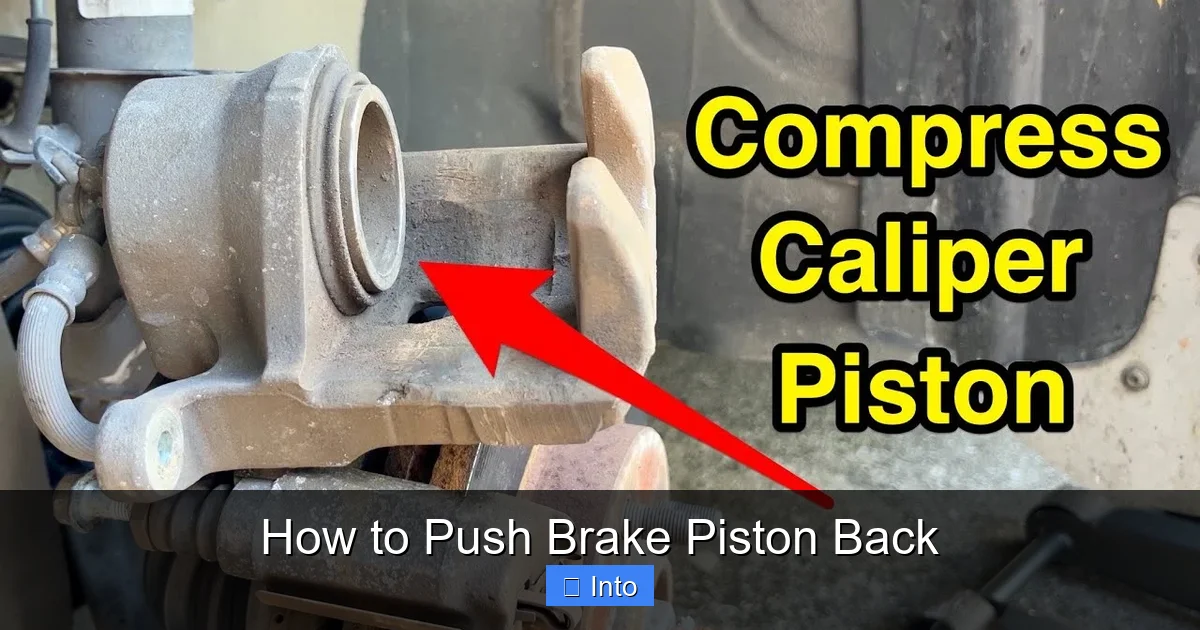
Most front calipers use one piston. This is the common setup for learning how to push brake piston back. Work on one wheel at a time so you can compare the other side.
Visual guide about How to Push Brake Piston Back
Image source: i.ytimg.com
- Remove the wheel. Take off the caliper bolts, then lift the caliper from the rotor and bracket.
- Support the caliper. Hang it with a strap or wire. Do not let it hang by the brake hose.
- Clean the area. Brush dirt from the dust boot. Dirt can enter the bore when the piston moves.
- Check the piston. Look for rust, leaks, a torn boot, or a bent rod. Do not proceed if these faults are present.
- Place the old pad behind the piston. This keeps the piston from dropping when pressure starts.
- Position the C-clamp. Put the clamp jaw on the back of the caliper. Put the other jaw on the old pad.
- Press slowly. Turn the clamp screw in small steps. Stop if the piston jerks or the boot twists badly.
- Turn the piston if needed. Use a small tool to follow its grooves. Do not scratch the metal surface.
- Remove the pad and tool. Check that the piston sits straight and fully inside the caliper body.
A simple example
Suppose the left front piston is only 3 mm out. A large C-clamp and an old pad should move it with steady pressure. Do not hit the clamp. Do not use an open flame to heat the caliper. Slow, even pressure is safer and works better.
When the piston will not move
If the caliper is off the rotor and the piston still will not move, it may be seized. Rust, a damaged boot, or a worn seal can cause this. Do not use a pipe extension on the clamp. Do not hammer the piston. A seized caliper usually needs to be rebuilt or replaced.
Sometimes the hose creates resistance when the caliper stays mounted. Some trained techs crack the bleeder screw to ease pressure. This can let moisture into the system and means you must bleed the brake afterward. If you are not sure, remove the caliper or ask a professional.
How to Handle Rear and Multi-Piston Calipers
Rear calipers need extra care. Some use a screw mechanism. Others are tied to the parking brake. The method depends on the exact design.
Visual guide about How to Push Brake Piston Back
Image source: thecarhow.com
How to push brake piston back on a rear caliper
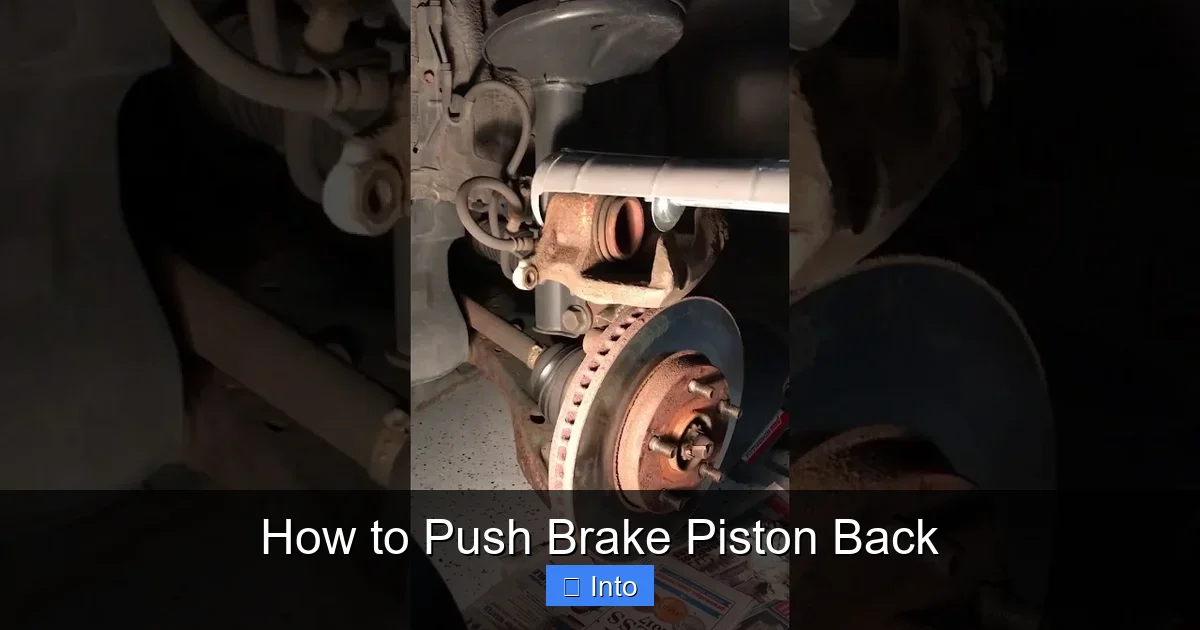
For a plain screw-in rear caliper, fit the right wind-back tool to the rear access points. Place the tool square against the piston. Turn it slowly while pressing inward. Use only light pressure. If the tool slips, stop and fit the correct adapter.
If the vehicle has an electronic parking brake, put the system into service mode first. Use the menu or scan tool listed in the owner’s manual. Keep the ignition and engine off unless the manual says otherwise. Never try to wind back the piston with the parking brake applied. Never drive with it still in service mode.
What about a multi-piston caliper?
Performance cars may have two, four, or more pistons. Do not push one piston at a time with a C-clamp. Use a proper caliper piston tool to move all pistons evenly. Uneven pressure can jam the caliper or damage a piston seal.
What if the rear piston is very stiff?
A stiff piston can be a drum-in-caliper design or a locked parking brake mechanism. These units need a special procedure. Check the service manual before using force. Forcing it can break the caliper or leave the parking brake unsafe.
After You Push the Brake Piston Back
Once the piston is back, inspect it one last time. Wipe the exposed metal with a clean rag. Make sure the dust boot lies flat. A folded boot can let dirt and water reach the seal.
Now you can fit the new pads, place the caliper back over them, and install the bolts. Tighten the bolts to the vehicle’s torque setting. Use a torque wrench rather than guessing.
Finish with these checks
- Spin the wheel. It should turn without heavy drag.
- Check for leaks. Look around the caliper, hose, and bleeder screw.
- Pump the brake pedal. Press it several times until it feels firm.
- Check the fluid level. Bring it to the marked range without overflowing it.
- Reinstall the wheel. Tighten the lug nuts to the proper torque.
- Test at low speed. Brake gently before normal driving.
Do not rely on the brakes until the pedal is firm. If it sinks toward the floor, stop and check for a leak or trapped air. If the pedal feels soft after a proper bleed, a brake booster rod problem may affect pedal feel. Review how to brake booster rod adjustment before replacing more parts.
Common Problems and Final Advice
Why does the piston come forward again?
This can happen when the caliper slides do not move freely. Dirt or rust may stop the caliper from centering. It can also happen if the wrong pad is fitted. Clean the slide pins and use the correct hardware.
Why is the brake pedal still low?
Check the pad fit, piston position, fluid level, and bleeder screws. Air in the line can also cause a low pedal. If the ABS lamp stays on, use our guide to resetting the ABS light without a scan tool only after you have fixed the fault that set the code.
Should you replace a stuck piston?
Yes, when the piston is rusted, leaking, or too stiff to move by hand. A damaged piston can make one wheel brake poorly. Replacing only the pads will not fix the problem. A safe caliper gives even pressure to both pads.
Conclusion: finish the job safely
Learning how to push brake piston back is a useful skill, but care matters more than force. Use the correct tool, protect the piston, follow the rear-caliper procedure, and inspect every part. If anything leaks, binds, or feels wrong, stop and get help.
A well-finished brake job should give you a firm pedal, quiet wheel rotation, and steady stopping. Take the final low-speed test with care. Your brakes should work the first time you press the pedal.
Frequently Asked Questions
How do I push a brake piston back?
Remove the caliper, support it without stressing the hose, and place an old pad behind the piston. Use a large C-clamp or piston press to push it in slowly. Turn the piston if its grooves require rotation.
Can I use a C-clamp to push a brake piston back?
Yes, a C-clamp can work on many single-piston front calipers. Use an old pad or flat block to protect the piston. Press steadily and stop if the piston binds or leaks.
How do I push back a rear brake piston with an electronic parking brake?
Put the parking brake into its service mode using the owner’s manual, a vehicle menu, or a scan tool. Then use the correct rear caliper wind-back tool. Never force the piston while the parking brake is active.
What should I do if the brake piston will not move?
Do not keep turning the clamp or hammer the piston. Check for rust, a torn boot, a seized caliper, or the wrong rear-caliper design. A piston that remains stuck needs professional repair or caliper replacement.
Do I need to bleed the brakes after pushing the piston back?
You do not always need to bleed the brakes. Bleeding is needed if you open the bleeder screw, disturb a brake line, or find air in the system. A leaking seal also needs proper repair and bleeding.
Can I drive after pushing the brake piston back?
Not until the caliper and wheel are reinstalled, the lug nuts are torqued, and the brake pedal is firm. Test the brakes gently at low speed. Stop at once if you smell heat, hear rubbing, or see fluid leaking.