What Can Hold a Car but Can’t Lift a Feather
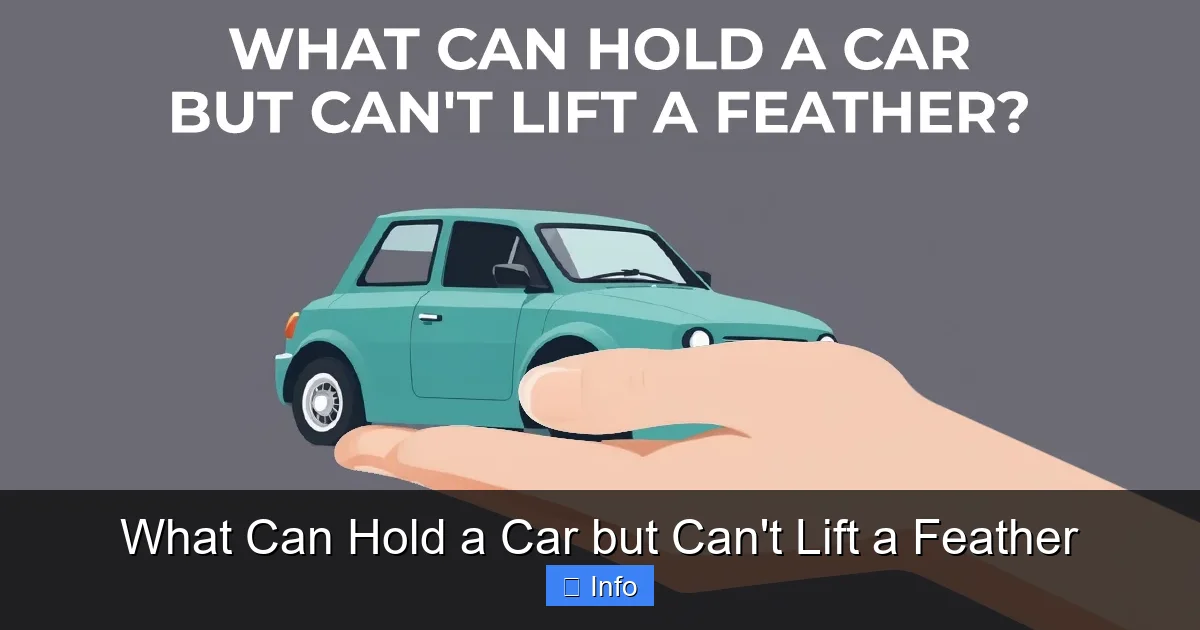
Have you ever wondered what can hold a car but can’t lift a feather? It’s a fun riddle that leads to surprising insights about weight, leverage, and everyday objects. Read on to uncover the answer and explore related car concepts in a lighthearted way.
Have you ever stopped mid-conversation because someone asked, “what can hold a car but can’t lift a feather”? It sounds like a trick question, maybe from a carnival game or a childhood riddle book. The beauty of such questions is how they make us pause and think about the difference between holding and lifting, between weight and gravity. In the world of cars and physics, the answer might surprise you, and it opens the door to understanding how we interact with vehicles every day. Whether you’re a car enthusiast or just someone who loves a good brain teaser, this exploration will give you a fresh perspective on the machines we rely on.
When someone asks, “what can hold a car but can’t lift a feather,” the most common answer is a car key or a keychain. But why does that make sense? A key “holds” a car in the sense that it grants access, starts the engine, and symbolizes ownership. Yet, physically, a key is too light to lift a feather on a windy day. This contrast between functional access and physical weight is what makes the riddle work. In this section, we’ll break down the layers of meaning behind the answer and explore how language plays tricks on our perception of weight and function.
When we say a key “holds” a car, we’re talking about semantic holding—ownership, control, and operation. Physical holding would mean supporting the car’s immense weight, which a tiny piece of metal cannot do. This distinction is crucial in understanding not just riddles, but also how we describe car features like “hold mode” or “parking hold.” These features keep the car stationary without requiring constant driver input, mimicking the idea of holding without the physical burden. Engineers design car systems with leverage in mind. A brake pedal, for instance, uses a mechanical advantage to stop a multi-ton vehicle with minimal effort from your leg. Similarly, a key uses a tumblers’ alignment to “hold” the car’s ignition system in place. Neither the key nor the brake pedal relies on raw strength; both rely on smart design. This principle connects back to our riddle: what can hold a car but can’t lift a feather? The answer relies on function over force.
Our daily lives are filled with objects that balance holding and lifting in unexpected ways. A car jack, for example, can lift a car off the ground with relatively little human effort, thanks to hydraulic leverage. But can it “hold” the car securely while you work underneath? Yes, once raised and secured with jack stands. This interplay between lifting and holding is fundamental to automotive safety and design. Consider a simple bottle opener. It can “hold” the cap in place while you twist, but it can’t lift the bottle itself against gravity without additional support. A wrench can turn a bolt, effectively “holding” it steady, but you’d need another tool to lift the bolt away. These everyday tools mirror the car key riddle: they excel at one task—holding or turning—while falling short at the opposite—lifting against weight. The riddle “what can hold a car but can’t lift a feather” sticks because it challenges our intuition. We often equate the ability to handle a heavy object with overall strength. But in reality, specialized tools and mechanisms excel at specific tasks. A key holds the car’s start sequence; a jack lifts the car’s weight. Neither does both extremes well, and that’s perfectly okay.
Modern cars come equipped with various “hold” features that go beyond the simple key. From electronic parking brakes to hill-start assist, manufacturers design systems that hold the car in place under diverse conditions. Understanding these features can make you a more confident and safer driver, especially in stop-and-go traffic or on steep inclines. Many Toyota models, for instance, feature a dedicated hold button that maintains brake pressure after you release the pedal. This “hold” function allows the car to stay still without you keeping your foot on the brake, which is incredibly handy in traffic jams or at red lights. If you’re curious about how this works on specific models, you might want to check what does hold mean on a Toyota Rav4 for model-specific details.
The parking brake works independently of the main braking system, providing a mechanical hold that persists even if the engine is off. When combined with electronic hold features, it creates a layered safety net. Knowing when to use each—hold button for short stops, parking brake for long-term parking—helps preserve your vehicle’s braking components and improves overall safety. If you own a Camry and wonder about its specific capabilities, you might explore what is the hold button on a Toyota Camry to understand how that particular model implements the feature.
Beyond the hold button, your car likely has several systems designed to hold the vehicle steady. Hill-start assist prevents rolling backward on upgrades, while electronic stability control can hold individual wheels to maintain traction. Each system uses sensors and actuators to mimic the simple concept of “holding” without requiring constant manual input. Hill-start assist temporarily holds the brake pressure for a couple of seconds after you lift your foot off the pedal. This grace period gives you time to move your foot from the brake to the accelerator without the car rolling back. It’s a subtle but powerful example of engineered “holding” that prevents stress and potential accidents.
When you encounter a slippery surface, stability control can apply brake pressure to specific wheels, effectively “holding” the car’s direction until you regain grip. This not only improves safety but also demonstrates how modern electronics reinterpret the age-old concept of holding a vehicle in place. Torque is the force that helps a car get moving from a standstill—it’s essentially the “holding” power that combats inertia. Horsepower, on the other hand, measures how quickly that force can be applied, relating to top speed and acceleration. Neither is about literally lifting a feather, but both describe different facets of how a car interacts with weight and motion. Beyond our featured riddle, car enthusiasts love sharing gems like “what has four wheels and flies?” (a garbage truck) or “what starts with ‘f’ and ends with ‘u’ and smells like carrots?” (rabbit food). These riddles, much like our main question, rely on double meanings and unexpected associations. They remind us to look at familiar objects from new angles.
Understanding the difference between holding and lifting can actually improve how you use your car. Knowing when to engage the hold button, when to rely on the parking brake, and how your car’s systems assist you in daily driving can reduce wear and tear and increase safety. Here are a few quick tips:
– Use the hold button for brief stops in traffic; it saves your leg and reduces brake wear.
– Engage the parking brake when parking on any slope, even if the car is in park.
– Don’t rely solely on hill-start assist; always check your surroundings before moving.
– Regularly inspect brake components; systems that hold the car put stress on brakes over time.
– Read your owner’s manual to learn all the hold-related features specific to your model.
So, what can hold a car but can’t lift a feather? The answer, as we’ve discovered, hinges on the distinction between functional access and physical weight. A car key, a hold button, or even a well-designed braking system can “hold” a car in various contexts, yet none of them could gently lift a feather without additional mechanisms. This riddle serves as a playful reminder that language, engineering, and everyday objects often hide deeper meanings beneath simple questions. Next time you hear a seemingly impossible question, take a moment to explore the layers of logic behind it—you might just learn something new about the world around you, and perhaps even about your own car.
If you enjoyed this exploration, consider sharing it with fellow car lovers or riddle enthusiasts. The more we talk about these clever intersections of language and mechanics, the more we appreciate the thoughtful design that goes into the vehicles we use every day.
Question?
What is the literal answer to the riddle “what can hold a car but can’t lift a feather”? The most widely accepted answer is a car key or keychain, because it grants access and starts the vehicle symbolically, yet it lacks the physical mass to lift even a feather. This contrast between symbolic “holding” and physical lifting is what makes the riddle both fun and thought-provoking.
Question?
Can a car key actually hold a car in place? A car key doesn’t physically hold a car stationary, but it “holds” the car’s ignition system and grants operational control. The phrase “hold a car” in the riddle refers to functional access rather than mechanical support, which is why the answer works on a wordplay level.
Question?
How do modern car hold features differ from a simple key? Modern vehicles use electronic systems like hold buttons, hill-start assist, and stability control to manage weight and position without driver effort. A key relies on mechanical tumblers and human action, while electronic holds use sensors and actuators to maintain position automatically, showcasing how technology has evolved the simple concept of “holding.”
Question?
Is the hold button the same as a parking brake? No, they serve different purposes. The hold button maintains brake pressure briefly after you release the pedal, ideal for short stops in traffic. The parking brake is a mechanical system that holds the car in place when parked, especially on slopes, and should be engaged for long-term parking to prevent rolling.
Question?
Why do riddles like “what can hold a car but can’t lift a feather” resonate with people? These riddles resonate because they challenge our assumptions about strength and capability. They make us pause and consider how language can describe functional relationships—like a key “holding” a car—without implying physical power, prompting deeper thinking about design, semantics, and everyday objects.
Question?
What practical tip can drivers take away from understanding hold vs lift concepts? Drivers should use the hold button for brief traffic stops to reduce leg fatigue and brake wear, and always engage the parking brake when parking on inclines, regardless of gear position. These habits protect vehicle systems and improve safety based on the principles explored in this article.
Key Takeaways
- Point 1: A car key can symbolically “hold” a vehicle through access and ignition, yet is too light to physically lift a feather.
- Point 2: The distinction between functional “holding” (like starting a car) and physical lifting depends on design, leverage, and intended purpose.
- Point 3: Modern vehicles feature electronic hold buttons, parking brakes, and hill-start assist that manage weight differently than manual effort.
- Point 4: Understanding these differences helps drivers use features appropriately, reducing wear and improving safety.
- Point 5: Riddles like this one play on the contrast between semantic language and physical reality, making us think critically about how we describe everyday objects.
- Point 6: Practical takeaways include using the hold button for short stops and the parking brake for long-term parking to preserve brake health.
Frequently Asked Questions
What is what can hold a car but can’t lift a feather?
what can hold a car but can’t lift a feather is an important topic with many practical applications.