Should I Buy a Honda Civic or Toyota Corolla?
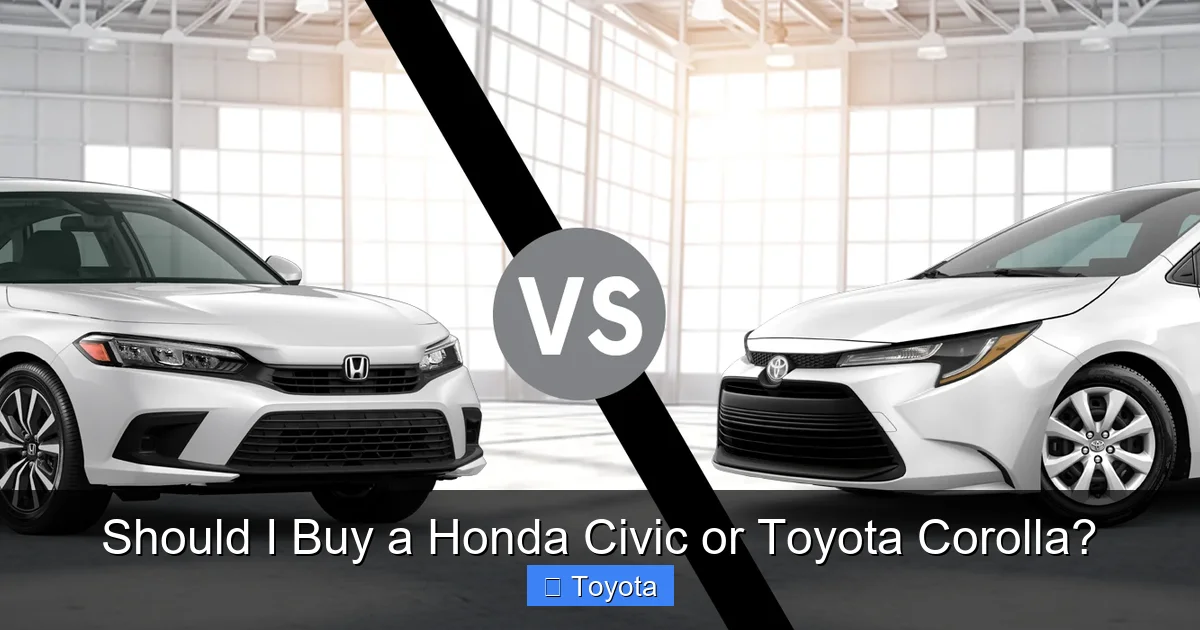
When you ask yourself, Should I Buy a Honda Civic or Toyota Corolla?, you’re comparing two of the most reliable compact sedans on the market. The Honda Civic offers sportier handling and a slightly more upscale interior, while the Toyota Corolla excels in fuel efficiency and long‑term dependability. Your decision will hinge on whether you prioritize driving fun or low‑running costs.
Should I Buy a Honda Civic or Toyota Corolla?
When you start shopping for a new compact sedan, the question Should I Buy a Honda Civic or Toyota Corolla? quickly becomes the center of your research. Both cars have dominated the segment for decades, offering a blend of affordability, reliability, and everyday practicality. Yet each brand brings its own personality to the table, and understanding those nuances can make the difference between a satisfying purchase and lingering regret.
In this guide we’ll break down the most important factors—price, performance, interior comfort, safety, fuel economy, and ownership costs—so you can answer the question Should I Buy a Honda Civic or Toyota Corolla? with confidence. We’ll also include real‑world examples, practical tips, and links to detailed pricing pages to help you see the numbers behind the hype.
Key Takeaways
- Price: Both models start in the low‑$20,000 range, but the Corolla often has lower lease incentives, while the Civic may offer better resale value.
- Performance: The Civic’s turbocharged engines deliver more horsepower and a sportier feel; the Corolla focuses on smooth, efficient power delivery.
- Fuel Economy: The Corolla typically leads with EPA ratings up to 40 mpg highway, whereas the Civic averages 32‑36 mpg depending on trim.
- Interior: The Civic provides a driver‑centric cockpit with higher‑quality materials; the Corolla offers spacious rear seats and a user‑friendly infotainment system.
- Safety: Both earn top safety scores, but the Corolla includes Toyota Safety Sense 2.0 as standard on most trims, while the Civic’s Honda Sensing suite is available across the lineup.
- Reliability: Toyota’s reputation for longevity gives the Corolla a slight edge in long‑term ownership costs, though Honda’s Civic is also highly dependable.
📑 Table of Contents
1. Overview: History and Market Position
The Honda Civic first appeared in 1972 as a fuel‑sipping response to the oil crisis, and it has since evolved into a sporty yet practical sedan. The Toyota Corolla debuted a year earlier, in 1966, and built its reputation on bulletproof reliability and low running costs. When you ask yourself Should I Buy a Honda Civic or Toyota Corolla?, you’re essentially choosing between a driver‑focused heritage and a tradition of dependable simplicity.
History and Reputation
Honda’s Civic has earned a loyal following among enthusiasts who appreciate its responsive steering and available turbocharged powertrains. Toyota’s Corolla, meanwhile, is often the go‑to choice for families and commuters who prioritize low maintenance and strong resale values. Both brands consistently rank high in reliability surveys, but the Civic tends to score higher in driver satisfaction surveys, while the Corolla leads in long‑term ownership cost studies.
Market Positioning
In today’s market, the Civic sits slightly above the Corolla in terms of starting price, especially when you opt for the Sport or Touring trims. The Corolla, however, frequently offers aggressive lease deals and cash‑back incentives that can bring its effective cost below the Civic’s. If you’re weighing Should I Buy a Honda Civic or Toyota Corolla?, consider whether you value a more engaging drive (Civic) or a lower monthly payment (Corolla).
2. Exterior Design and Styling
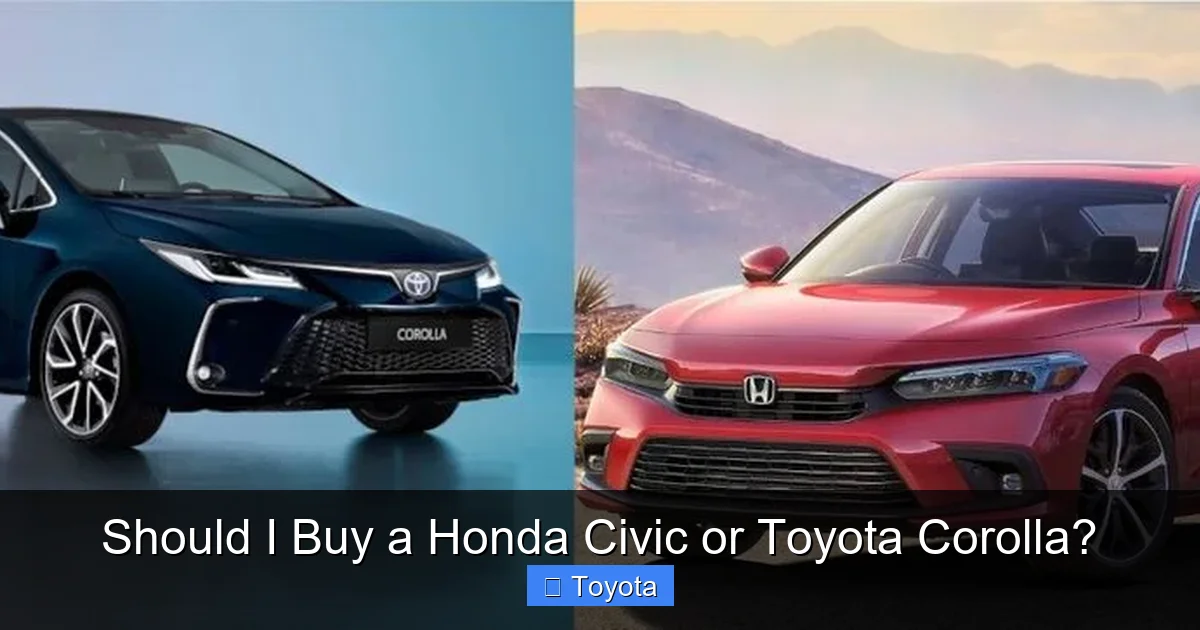
First impressions matter, and the exterior styling of each model reflects its brand philosophy. The Civic’s design language leans toward athleticism, with sharp lines, a low‑slung roofline, and a distinctive front grille that gives it a hatchback‑like stance even in sedan form. The Corolla adopts a more conservative, aerodynamic shape that emphasizes smooth surfaces and a classic three‑box silhouette.
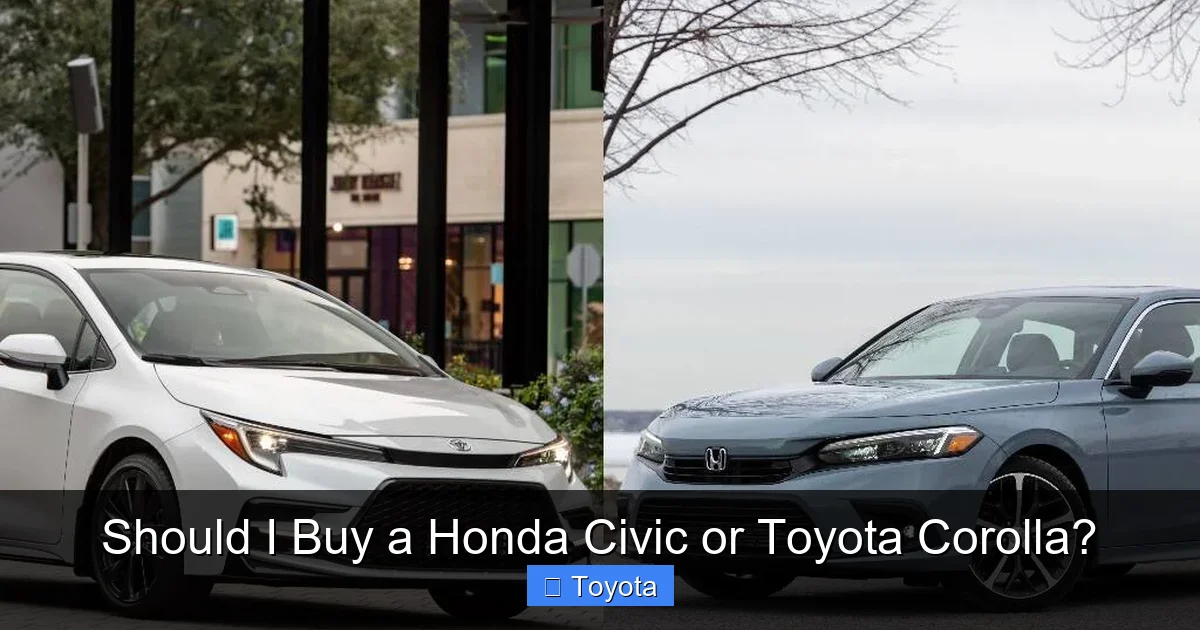
Visual guide about Should I Buy a Honda Civic or Toyota Corolla?
Image source: i.gaw.to
Civic Styling Cues
The latest Civic features a wide stance, LED headlights that taper into the fenders, and an available dual‑exhaust outlet on sport trims. These cues signal a performance‑oriented mindset, which can be a deciding factor when you ask Should I Buy a Honda Civic or Toyota Corolla? and you enjoy a car that looks ready to twist through corners.
Corolla Styling Cues
Toyota’s Corolla showcases a refined front end with a prominent grille, sleek LED headlights, and a subtle rear spoiler on higher trims. The overall look is understated yet modern, appealing to buyers who prefer a timeless aesthetic that won’t feel dated after a few years.
3. Interior Comfort and Technology
Step inside, and the differences become even more pronounced. The Civic’s interior feels driver‑centric, with a low‑set dashboard, sport‑styled seats, and available leather‑trimmed upholstery. The Corolla focuses on spaciousness, offering generous rear‑seat legroom and a straightforward layout that prioritizes ease of use.
Visual guide about Should I Buy a Honda Civic or Toyota Corolla?
Image source: ymimg1.b8cdn.com
Cabin Space and Materials
In the Civic, front passengers enjoy bolstered seats that hold you in place during spirited driving, while rear passengers may find the seatback angle a bit upright. Materials range from durable cloth on base models to soft‑touch leather on the Touring. The Corolla, by contrast, provides a flatter rear seat cushion and more headroom, making it a better choice for families who regularly carry three adults in the back.
Infotainment and Driver Aids
Both models offer touchscreen infotainment systems with Apple CarPlay and Android Auto. The Civic’s system tends to be quicker to respond and includes a configurable digital instrument cluster on higher trims. The Corolla’s Entune™ 3.0 system is intuitive, though some reviewers note slower graphics rendering. When you ponder Should I Buy a Honda Civic or Toyota Corolla?, consider whether you value a sportier cockpit (Civic) or a more relaxed, family‑friendly environment (Corolla).
4. Performance and Fuel Efficiency
Under the hood, the Civic and Corolla diverge noticeably. Honda offers a range of turbocharged four‑cylinder engines that deliver punchy acceleration, while Toyota relies on naturally aspirated units that prioritize smoothness and fuel sip.
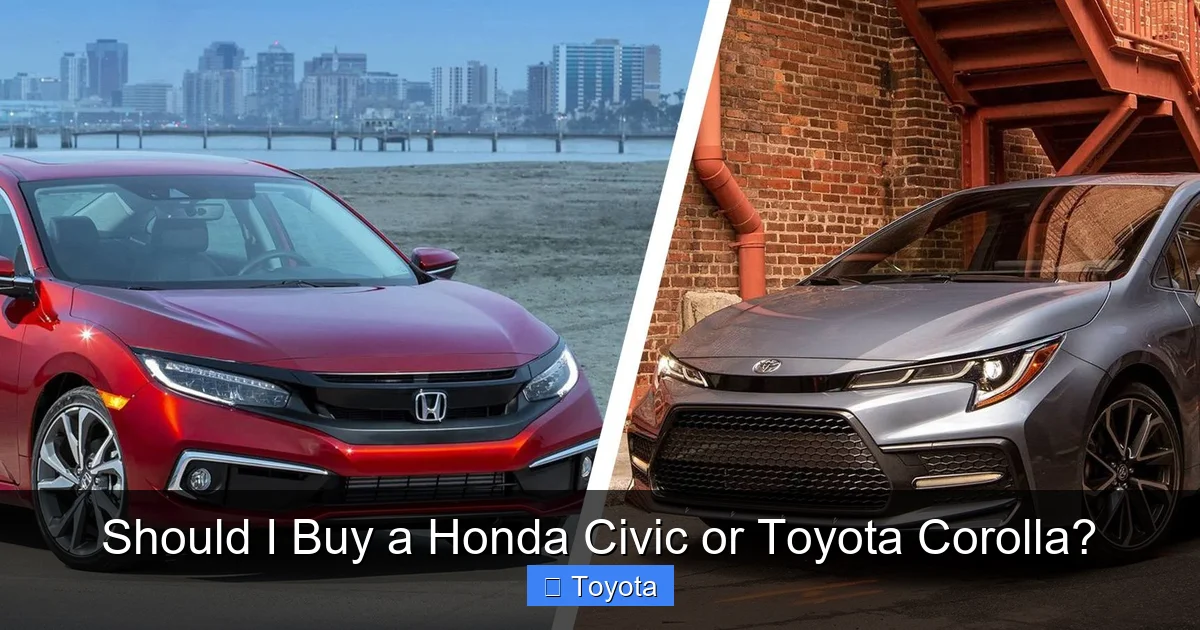
Visual guide about Should I Buy a Honda Civic or Toyota Corolla?
Image source: i.gaw.to
Engine Options and Horsepower
The base Civic LX comes with a 2.0‑liter inline‑four producing 158 hp. Step up to the Sport or EX trims and you’ll find a 1.5‑liter turbocharged engine rated at 180 hp, with the top‑spec Type R (though not a sedan) pushing far beyond. The Corolla’s standard engine is a 2.0‑liter four‑cylinder generating 169 hp, with an available hybrid powertrain that couples a 1.8‑liter engine to an electric motor for a combined 121 hp (though the hybrid version focuses on efficiency rather than outright power).
If you love the feeling of a turbo boost when merging onto the highway, the Civic’s answer to Should I Buy a Honda Civic or Toyota Corolla? leans toward Honda. If you prefer a linear, predictable power curve and the possibility of a hybrid variant, the Corolla may be more appealing.
Fuel Economy Ratings
EPA estimates show the Corolla LE achieving up to 40 mpg highway and 30 mpg city, while the hybrid version can reach 53 mpg city and 52 mpg highway. The Civic’s non‑turbo models manage about 32 mpg city and 42 mpg highway; the turbocharged versions drop slightly to 30 mpg city and 38 mpg highway. For drivers whose primary concern is minimizing fuel stops, the Corolla often wins the Should I Buy a Honda Civic or Toyota Corolla? debate.
5. Safety and Reliability
Both manufacturers equip their vehicles with advanced driver‑assistance systems, and both earn top scores from the IIHS and NHTSA. Yet subtle differences exist in standard equipment and long‑term dependability.
Safety Ratings and Features
The Honda Sensing suite—including collision mitigation braking, road departure mitigation, adaptive cruise control, and lane‑keeping assist—is available on all Civic trims, with some features standard on higher levels. Toyota Safety Sense 2.0 comes standard on most Corolla models, offering pre‑collision system with pedestrian detection, lane departure alert with steering assist, dynamic radar cruise control, and automatic high beams. When you ask Should I Buy a Honda Civic or Toyota Corolla?, note that the Corolla often includes more safety tech as standard equipment, potentially saving you money on optional packages.
Long‑Term Dependability
Toyota’s reputation for building vehicles that surpass 200,000 miles with minimal major repairs gives the Corolla an edge in longevity studies. Honda’s Civic is also highly reliable, but some owners report higher rates of turbo‑related maintenance on the 1.5‑liter units after extensive mileage. If keeping repair costs low over a decade is a priority, the Corolla may answer Should I Buy a Honda Civic or Toyota Corolla? more favorably.
6. Ownership Costs and Resale Value
Beyond the sticker price, factors like insurance, maintenance, depreciation, and fuel expenses shape the true cost of ownership. Understanding these can help you settle the question Should I Buy a Honda Civic or Toyota Corolla? once and for all.
Purchase Price and Incentives
As of 2024, the base Honda Civic LX starts around $23,500, while the base Toyota Corolla LE begins near $21,800. However, Toyota frequently offers cash‑back deals and low‑APR financing that can bring the effective price of a Corolla under $20,000 after incentives. Honda’s incentives are generally less aggressive, though lease specials on the Civic Sport can be competitive. To see the latest numbers, check out how much a new Toyota Corolla costs and how much a Honda Civic costs.
Maintenance, Insurance, and Resale
Average annual maintenance for a Civic is about $450, whereas a Corolla averages roughly $400, largely due to Toyota’s broader service network and slightly lower parts costs. Insurance premiums are comparable, with the Civic sometimes attracting a slightly higher rate because of its sportier image. Resale value after five years tends to favor the Civic, which retains about 55 % of its original price, while the Corolla holds around 50 %. If you plan to keep the car for many years, the Corolla’s lower running costs may tip the scales; if you anticipate selling or trading in sooner, the Civic’s stronger resale could be advantageous.
Finally, if you’re unsure about budgeting for a vehicle purchase, reviewing how much you should pay for a car can provide a solid framework for negotiating the best deal on either model.
Conclusion: Making Your Decision
After examining price, performance, interior comfort, safety, fuel economy, and ownership costs, the answer to Should I Buy a Honda Civic or Toyota Corolla? ultimately depends on your personal priorities. Choose the Honda Civic if you crave a more engaging drive, a premium‑feeling cabin, and stronger resale value. Opt for the Toyota Corolla if you value best‑in‑class fuel efficiency, lower running costs, and a suite of standard safety features that keep you protected without extra expense.
Take a test drive of both models, compare the exact trim levels that fit your budget, and use the pricing links above to ensure you’re getting a fair deal. Whichever you choose, you’ll be investing in a compact sedan that has proven its worth on roads around the world for generations.
Frequently Asked Questions
What are the main differences in engine power between the Honda Civic and Toyota Corolla?
The Honda Civic offers a turbocharged 1.5‑liter engine producing up to 180 hp in Sport and EX trims, while the base Corolla relies on a naturally aspirated 2.0‑liter engine with 169 hp. The Corolla also offers a hybrid variant focused on efficiency rather than outright power.
Which car has better fuel economy, the Civic or the Corolla?
Generally, the Toyota Corolla delivers higher fuel economy, especially the LE model rated up to 40 mpg highway and the hybrid version exceeding 50 mpg combined. The Honda Civic’s non‑turbo versions achieve around 32‑36 mpg highway, with turbo trims slightly lower.
Are safety features standard on both models?
Toyota Safety Sense 2.0 comes standard on most Corolla trims, providing a comprehensive suite of driver‑assist technologies. Honda Sensing is available across the Civic lineup, with some features standard on higher trims and optional on base models.
How do resale values compare between the Honda Civic and Toyota Corolla?
Historically, the Honda Civic tends to retain a slightly higher percentage of its original price after five years—about 55 % versus the Corolla’s roughly 50 %. However, actual resale can vary based on region, mileage, and condition.
Which vehicle is cheaper to maintain over time?
The Toyota Corolla typically incurs lower annual maintenance costs, averaging around $400 compared to the Civic’s approximate $450. This difference stems from Toyota’s extensive parts network and generally lower service labor rates.
Should I consider a hybrid version when deciding between these two cars?
If fuel efficiency and lower running costs are top priorities, the Toyota Corolla Hybrid offers excellent mileage with minimal compromise on space or comfort. The Honda Civic does not currently offer a hybrid powertrain in its sedan lineup, so the Corolla is the clear choice for hybrid seekers.