How to Adjust Quadrajet Idle Mixture Screws
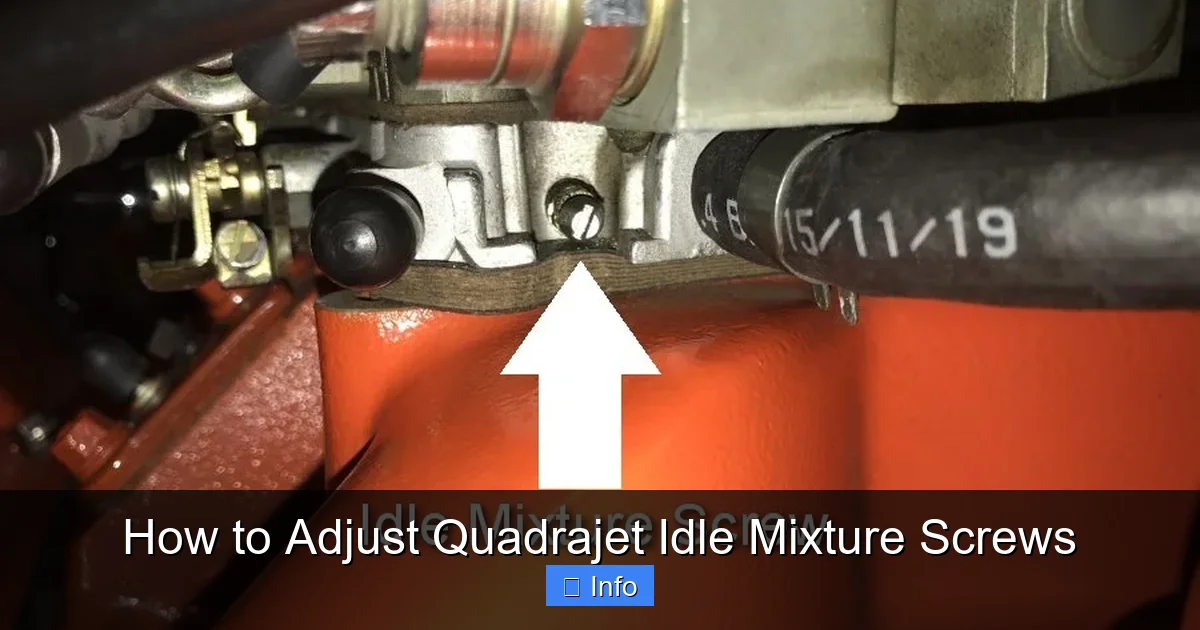
Learn how to adjust Quadrajet idle mixture screws with a clear, easy‑to‑follow guide. From locating the screws and setting the correct idle speed to fine‑tuning for optimal performance, this article covers everything you need for a smooth, efficient idle.
Key Takeaways
- Understanding the Quadrajet: The 4‑cylinder fuel injection system relies on idle mixture screws for optimal air‑fuel balance.
- Tooling Up: A simple socket set, a torque wrench, and a fuel pressure gauge are essential.
- Step‑by‑Step Process: From engine warm‑up to fine‑tuning, each step ensures accurate adjustments.
- Common Issues: Rough idle, hesitation, or stalling can often be traced back to mis‑adjusted screws.
- Maintenance Tips: Regular cleaning and periodic re‑checks keep your engine running smoothly.
[FEATURED_IMAGE_PLACEHOLDER]
Introduction
When you turn the key on a 4‑wheel drive, you expect a smooth, quiet idle. If the engine purrs like a sleeping dragon or revs too high, the culprit might be the idle mixture screws on your Quadrajet. These tiny screws control the amount of air that mixes with fuel at idle, and getting them right means better fuel economy, less engine wear, and a happier ride.
In this guide we’ll walk through the entire process: why the screws matter, how to locate them, the tools you need, and the precise steps to dial in the perfect idle. We’ll also touch on troubleshooting common problems and give you tips for keeping the system clean and reliable.
What Is the Quadrajet and Why Idle Mixture Matters
The Basics of Quadrajet Fuel Injection
The Quadrajet, developed by Chrysler in the 1980s, is a 4‑injection‑port system that delivers fuel directly into each cylinder. Unlike carbureted engines, it doesn’t rely on a throttle body alone; the idle mixture screws fine‑tune the air‑fuel ratio when the engine is not under load.
Idle Mixture Screws 101
Each of the four cylinders has a small screw on the intake manifold. Turning the screw clockwise enriches the mixture (adds fuel), while counter‑clockwise leans it (adds air). Proper balance ensures the engine runs neither too rich (which wastes fuel) nor too lean (which can damage the engine).
Tools and Safety Precautions
Essential Tools
- Socket set (10‑15 mm, 13‑15 mm)
- Torque wrench (set to 7 ft‑lb for most screws)
- Fuel pressure gauge (to check for leaks)
- Car jack and stands (if needed for clearance)
- Clean rags and carburetor cleaner (for cleaning around screws)
Safety First
Always work on a flat, well‑ventilated surface. Let the engine cool completely to avoid burns. Disconnect the battery if you’re working near electrical components.
Step‑by‑Step Adjustment Process
Warm Up the Engine
Start the car and let it idle for 5–10 minutes. A warm engine stabilizes temperature‑related variables, giving you a consistent baseline.
Locate the Idle Mixture Screws
On most Quadrajet engines, the screws sit on the top of the intake manifold, one per cylinder. They’re usually labeled “I/M” or have a small screw head protruding.
Set the Idle Speed
Use a tachometer to bring the idle to the manufacturer’s spec (typically 850–950 rpm). Adjust the throttle cable or idle screw in the throttle body if needed.
Adjust Each Screw in Sequence
- Start with cylinder 1. Turn the screw a quarter turn counter‑clockwise to lean the mixture.
- Re‑check the idle speed. If it drops below spec, turn the screw slightly clockwise to enrich.
- Repeat for cylinders 2, 3, and 4.
Make small adjustments—no more than a half turn—to avoid over‑richening.
Fine‑Tune for Smooth Idle
After all screws are set, listen for a steady idle. If you hear sputtering, re‑check the screws and make minor tweaks.
Troubleshooting Common Issues
Most often caused by a screw set too rich. Try turning it slightly counter‑clockwise and retest.
Check for vacuum leaks and ensure the mixture isn’t too lean. A leak test with carburetor cleaner can help.
Lean mixtures waste fuel. Make sure all screws are slightly enriched and the fuel pressure is within spec.
Maintenance and Cleaning Tips
Use a soft brush and carburetor cleaner to gently remove grime. Dirt can cause uneven airflow.
After major repairs or a long idle period, revisit the screws. Engine wear can shift the ideal mixture.
While you’re working on the engine, consider cleaning your car’s upholstery at home or checking your brake pads. Proper maintenance keeps your vehicle safe and efficient. How To Clean Car Upholstery At Home and How To Check Brake Pads In Your Car are great resources for these tasks.
Conclusion
Adjusting the Quadrajet idle mixture screws may sound intimidating, but with the right tools and a methodical approach, you can achieve a smooth, efficient idle that feels like a well‑tuned engine. Remember to warm up the engine, set the proper idle speed, and make small, incremental adjustments. Keep the screws clean, re‑check after any major repair, and don’t forget the surrounding maintenance—like cleaning upholstery or checking brake pads—to keep your car running at its best.
Now that you’ve mastered the basics, you’re ready to tackle any idle issues that arise. Happy driving!
FAQs
What is the ideal idle RPM for a Quadrajet engine?
Most Quadrajet engines idle between 850 and 950 rpm. Check your owner’s manual for the exact spec for your model.
Can I adjust the idle mixture screws on a gasoline engine?
No, the idle mixture screws are specific to fuel‑injected engines like the Quadrajet. Gasoline engines use carburetors or throttle body adjustments instead.
How often should I check the idle mixture screws?
It’s good practice to check them after any major engine work, once a year, or if you notice idle problems such as hesitation or roughness.
What happens if I turn the idle mixture screws too far?
Over‑enriching can cause excess fuel consumption and fouled spark plugs, while over‑leaning can lead to engine overheating and damage.
Can I use a vacuum gauge to help adjust the screws?
Yes, a vacuum gauge can help indicate lean or rich conditions, but it’s best used in conjunction with a tachometer for accurate tuning.
Is it safe to adjust the screws while the engine is running?
It’s safer to make adjustments on a warm engine that’s already idling, but avoid making large changes while the vehicle is in motion to prevent sudden power loss.
This is a comprehensive guide about How To Adjust Quadrajet Idle Mixture Screws.
Key Takeaways
- Understanding How To Adjust Quadrajet Idle Mixture Screws: Provides essential knowledge
Frequently Asked Questions
What is How To Adjust Quadrajet Idle Mixture Screws?
How To Adjust Quadrajet Idle Mixture Screws is an important topic with many practical applications.