How to Adjust Idle Air Control Valve Honda
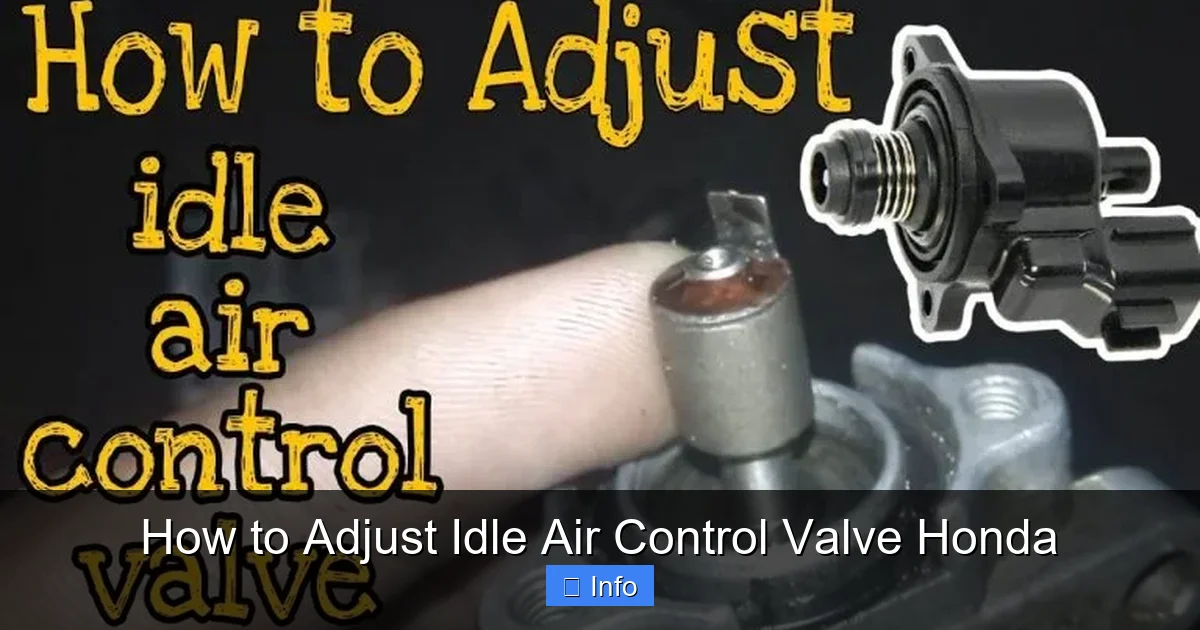
Adjusting the idle air control valve on your Honda can restore a steady idle and improve performance. Follow this easy guide to do it yourself and save money on repairs.
Key Takeaways
- Identify symptoms: Rough idle, stalling, or high RPM often point to an IACV issue.
- Gather tools: Basic hand tools, a tachometer, and a clean workspace are essential.
- Locate the valve: On most Honda models it sits near the throttle body on the intake manifold.
- Adjust carefully: Turn the idle screw a quarter turn at a time and re‑check idle speed.
- Test after each adjustment: Use a tachometer to verify the RPM is within the manufacturer’s range.
- Know when to replace: If the valve is dirty, stuck, or the adjustment won’t hold, replace it instead of tweaking.
📑 Table of Contents
Understanding the Idle Air Control Valve on Honda
When you ask “how to adjust idle air control valve Honda,” you’re really looking for a way to keep the engine’s idle smooth and steady. The IACV is a small motor‑controlled valve that regulates the amount of air bypassing the throttle plate. In Honda vehicles it works hand‑in‑hand with the engine control unit (ECU) to maintain the ideal RPM when the car is stopped.
What the IACV Does
The IACV opens and closes a passage that lets extra air into the engine. By adjusting this airflow, the ECU can keep the idle at the target speed, typically around 750‑850 RPM for most Honda models. If the valve is clogged, worn, or improperly set, you’ll notice a fluttering idle, stalling, or a high‑idle condition.
Why Adjustment Matters
Even though the ECU controls the IACV automatically, certain conditions — like a dirty throttle body, a vacuum leak, or a valve that has drifted over time — can cause the idle to wander. Learning how to adjust idle air control valve Honda gives you a simple way to fine‑tune the valve manually, often solving the problem without a costly repair shop visit.
Tools and Preparation Needed
Before you start, gather the following items:
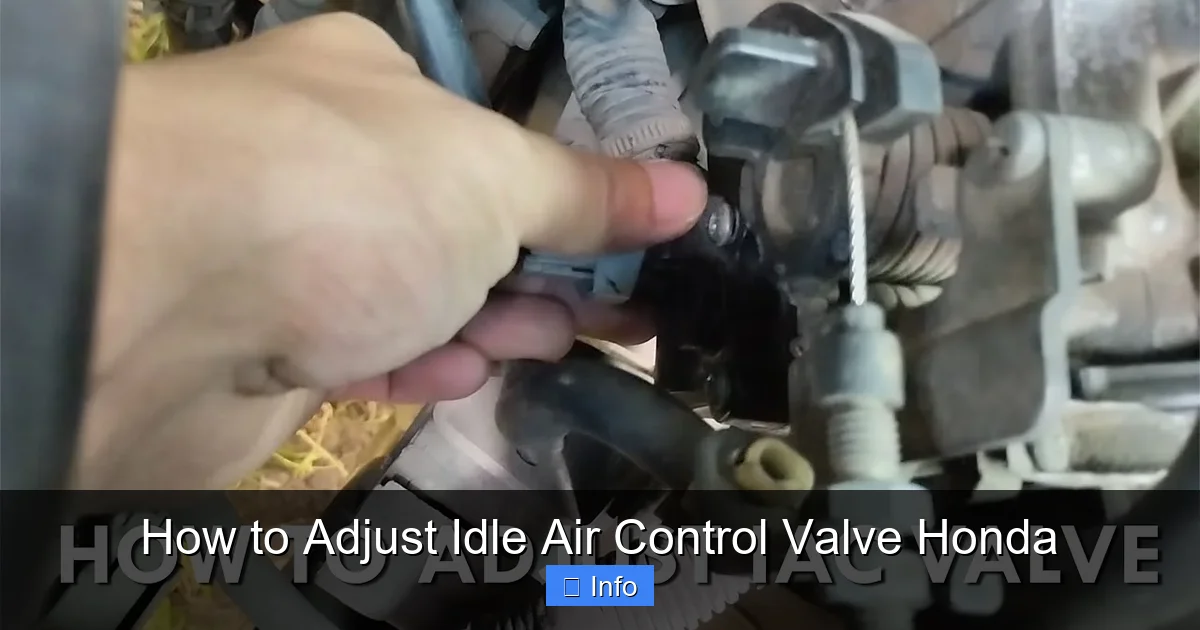
Visual guide about How to Adjust Idle Air Control Valve Honda
Image source: i.ytimg.com
- Basic hand tools: 8 mm and 10 mm sockets, a flat‑head screwdriver, and a torque wrench.
- Tachometer or scan tool: To read the exact idle RPM.
- Clean rags and throttle body cleaner: For a quick clean if needed.
- Safety gear: Gloves and eye protection.
Make sure the engine is warm but not hot — about 10‑15 minutes of running after a cold start. This ensures the IACV is in its normal operating temperature, giving you a reliable baseline for adjustment.
Locating the Idle Air Control Valve
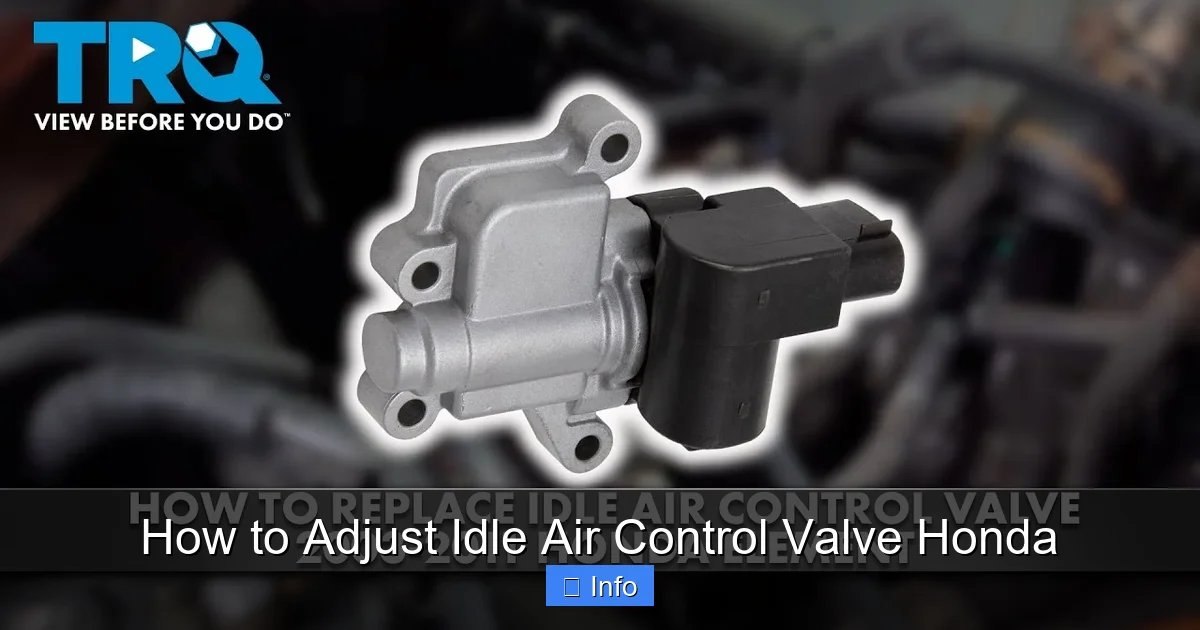
On most Honda sedans, coupes, and SUVs, the IACV is mounted on the intake manifold, just behind the throttle body. Look for a small cylindrical component with an electrical connector and a screw or two on its side. If you’re unsure, consult a service manual for your specific model, or check the engine bay diagram.
Visual guide about How to Adjust Idle Air Control Valve Honda
Image source: i.ytimg.com
Visual Cues
The valve is usually silver or black, about 1‑2 inches long, and has a vacuum hose attached. A quick visual inspection will tell you if it’s dirty or if the screw is visibly loose.
Step‑by‑Step Adjustment Process
Follow these steps carefully. Each step includes a short tip to keep the process smooth.
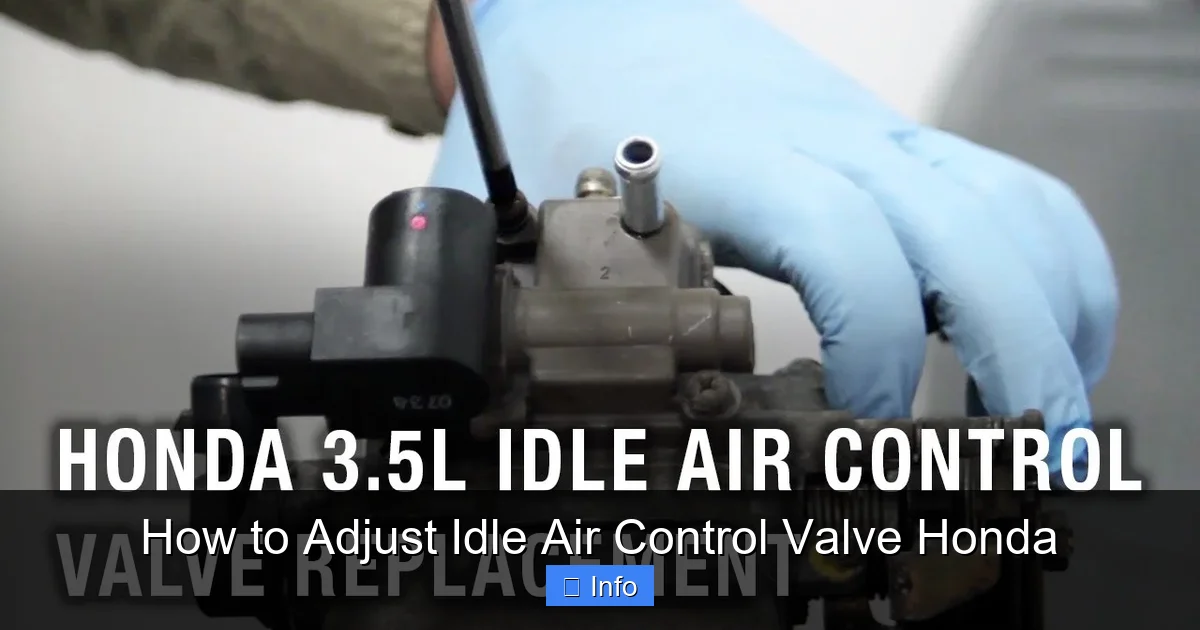
Visual guide about How to Adjust Idle Air Control Valve Honda
Image source: i.ytimg.com
- Disconnect the battery: Remove the negative terminal for at least 5 minutes. This resets the ECU and prevents accidental short‑circuits.
- Locate the IACV: Refer back to the previous section and find the valve.
- Inspect and clean: If the valve or its passages look dirty, spray throttle body cleaner and wipe with a rag. Let it dry completely.
- Loosen the adjustment screw: Using the appropriate socket, turn the screw counter‑clockwise a quarter turn. This opens the valve slightly.
- Reconnect the battery: Re‑attach the negative terminal.
- Start the engine and let it idle: Allow the engine to reach normal operating temperature.
- Check idle RPM: Use a tachometer. The ideal idle for most Honda models is 750‑850 RPM.
- Fine‑tune: If the RPM is too low, turn the screw clockwise a quarter turn. If it’s too high, turn it counter‑clockwise. Repeat small adjustments until the RPM stabilizes.
Remember: small turns make big differences. Adjust in ¼‑turn increments and re‑check the idle each time.
Testing and Fine‑Tuning the Idle
After you finish the initial adjustment, it’s time to verify that the change holds under real‑world conditions.
Using a Tachometer
Connect a digital tachometer to the OBD‑II port or use a scan tool that displays live RPM data. Let the engine idle for a minute, then note the reading. If the RPM fluctuates more than ±10 RPM, repeat the adjustment process.
Checking for Vacuum Leaks
While the engine is running, listen for hissing sounds around the intake manifold and vacuum hoses. A leak can cause the IACV to work harder, making the idle unstable. If you spot a leak, seal it before re‑testing the idle.
When to Refer to Other Adjustments
Sometimes the idle issue isn’t solely the IACV. If you’ve adjusted the valve and the idle is still off, you might need to adjust throttle body or even adjust coilovers if the suspension is affecting engine load. In rare cases, a adjust drag link can influence steering resistance, indirectly impacting idle stability.
Common Mistakes and When to Replace
Even with a careful approach, mistakes happen. Here are the most frequent pitfalls:
- Over‑adjusting: Turning the screw too far can cause the idle to drop below the safe range, leading to stalling.
- Ignoring dirty components: A clogged throttle body or dirty IACV will mask the true problem.
- Skipping the warm‑up: Adjusting a cold engine gives inaccurate readings.
- Neglecting vacuum leaks: Extra air can make the IACV appear ineffective.
If after several attempts the idle still fluctuates, the valve may be mechanically stuck or electrically faulty. In that case, replace the IACV rather than keep tweaking. A new valve typically costs less than a labor‑intensive diagnosis at a shop.
Conclusion
Learning how to adjust idle air control valve Honda is a valuable skill for any DIY car enthusiast. By following the steps outlined — preparing the right tools, locating the valve, making small adjustments, and testing the idle — you can restore a smooth, steady idle and improve fuel efficiency. Remember to check for vacuum leaks, keep the engine warm, and never hesitate to replace a valve that won’t hold its setting. With a little patience and the right technique, you’ll keep your Honda running like new and save money on unnecessary repairs.
Frequently Asked Questions
Question?
What are the typical symptoms of a bad idle air control valve on a Honda?
Common signs include a rough or fluctuating idle, the engine stalling when stopped, or an unusually high RPM when the car is idle. If you notice any of these, it may be time to inspect the IACV.
Question?
Do I need special tools to adjust the idle air control valve?
No special tools are required beyond a basic socket set, a screwdriver, and a tachometer or OBD‑II scan tool to read the idle RPM. Cleaning supplies are also helpful if the valve is dirty.
Question?
Can I adjust the idle air control valve myself, or should I go to a mechanic?
Yes, you can do it yourself as long as you follow the step‑by‑step procedure and use the proper safety precautions. If the problem persists after adjustment, a professional diagnosis may be needed.
Question?
How often should I check or adjust the idle air control valve?
It’s a good idea to inspect the IACV during routine maintenance, such as every 30,000 miles, or whenever you notice idle issues. Regular cleaning can prevent the need for frequent adjustments.
Question?
Will adjusting the idle air control valve void my car’s warranty?
Adjusting the IACV yourself does not void the warranty, but if you cause damage during the process, the manufacturer may deny coverage for that specific repair.
Question?
Is there a difference between adjusting the IACV on a Honda sedan versus an SUV?
Physically the valve is located in a similar spot on both sedan and SUV models, but the exact screw size and idle target RPM may vary. Always refer to the service manual for your specific model to ensure correct settings.