After How Many Km Car Tyre Should Be Changed
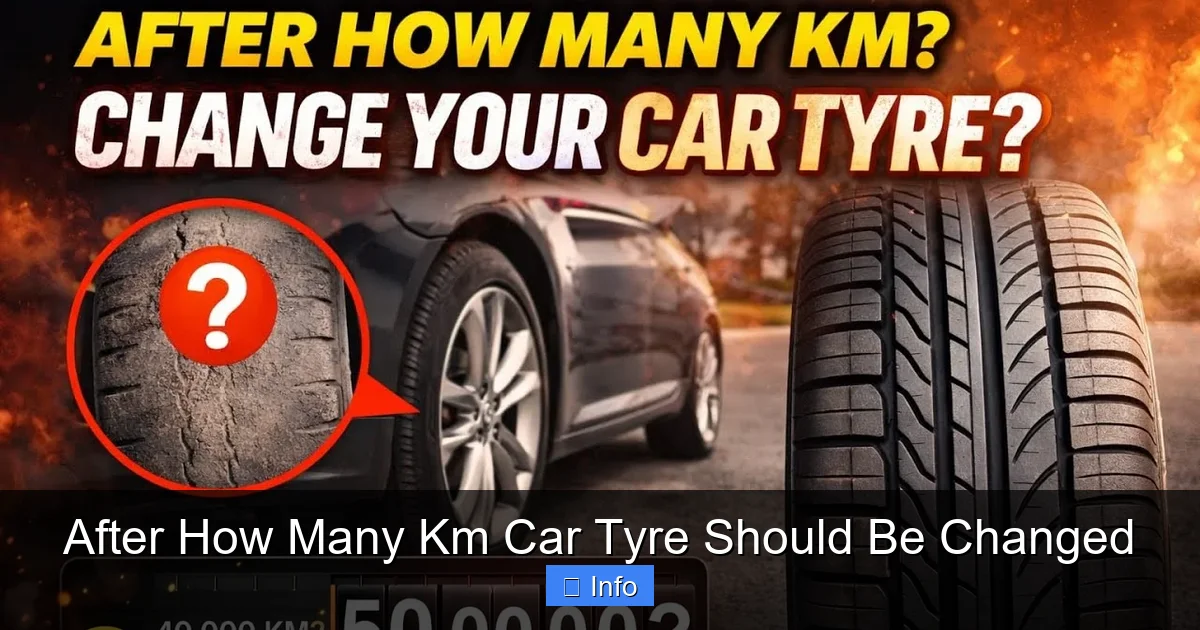
Most car tyres need replacement between 40,000 and 80,000 kilometres. However, your driving habits, road conditions, and maintenance routine can significantly shorten or extend this range. Regular inspections are crucial for safety.
You glance at your odometer and wonder: after how many km car tyre should be changed? It is a common question. Tyres are your only contact with the road. They affect braking, handling, and fuel efficiency. Yet many drivers ignore them until a problem appears. Knowing when to replace them keeps you safe and saves money.
There is no single magic number. Tyre life depends on many variables. The tyre compound, your driving style, road surfaces, climate, and maintenance all play a role. A tyre driven gently on highways lasts far longer than one abused on rough city streets. This guide breaks down the benchmarks, the warning signs, and the simple habits that maximise your investment.
Key Takeaways
- Average lifespan: Expect 40,000 to 80,000 km from a quality set of tyres under normal conditions.
- Age matters too: Replace tyres every 5 to 6 years regardless of tread depth due to rubber degradation.
- Tread depth legal limit: Most regions require a minimum of 1.6 mm tread depth across the central three-quarters of the tyre.
- Driving style impacts wear: Aggressive acceleration, hard braking, and fast cornering reduce tyre life dramatically.
- Rotation extends life: Rotate tyres every 10,000 km to promote even wear across all four corners.
- Check pressure monthly: Incorrect inflation causes uneven wear, poor fuel economy, and safety risks.
- Inspect for damage: Look for cracks, bulges, cuts, or embedded objects during every wash or fuel stop.
📑 Table of Contents
Understanding Tyre Lifespan Basics
Tyres wear down because friction removes rubber every time you drive. The rate of wear varies wildly. Manufacturers design tyres with different priorities. Some focus on long life with harder compounds. Others prioritise grip with softer rubber that wears faster. Your vehicle type also matters. Heavy SUVs and performance cars chew through tyres quicker than light sedans.
The Kilometre Benchmark Range
Most passenger car tyres deliver between 40,000 and 80,000 kilometres. Premium touring tyres often hit the upper end. Budget tyres or high-performance rubber may need replacement closer to 40,000 km. All-season tyres typically fall in the middle. Winter tyres wear faster if used year-round because their soft compound overheats in summer. Always check the manufacturer’s treadwear rating. A higher number suggests longer life, but real-world results vary.
The Age Factor Is Critical
Rubber degrades over time even if the car sits in a garage. UV rays, temperature cycles, and oxidation cause the compound to harden and crack. This is called dry rot. Most manufacturers recommend replacement at six years. Some say ten years is the absolute maximum. Check the DOT code on the sidewall. The last four digits indicate the week and year of manufacture. For example, “2319” means the 23rd week of 2019. If your tyres are over five years old, inspect them closely for sidewall cracking.
The General Kilometre Guidelines
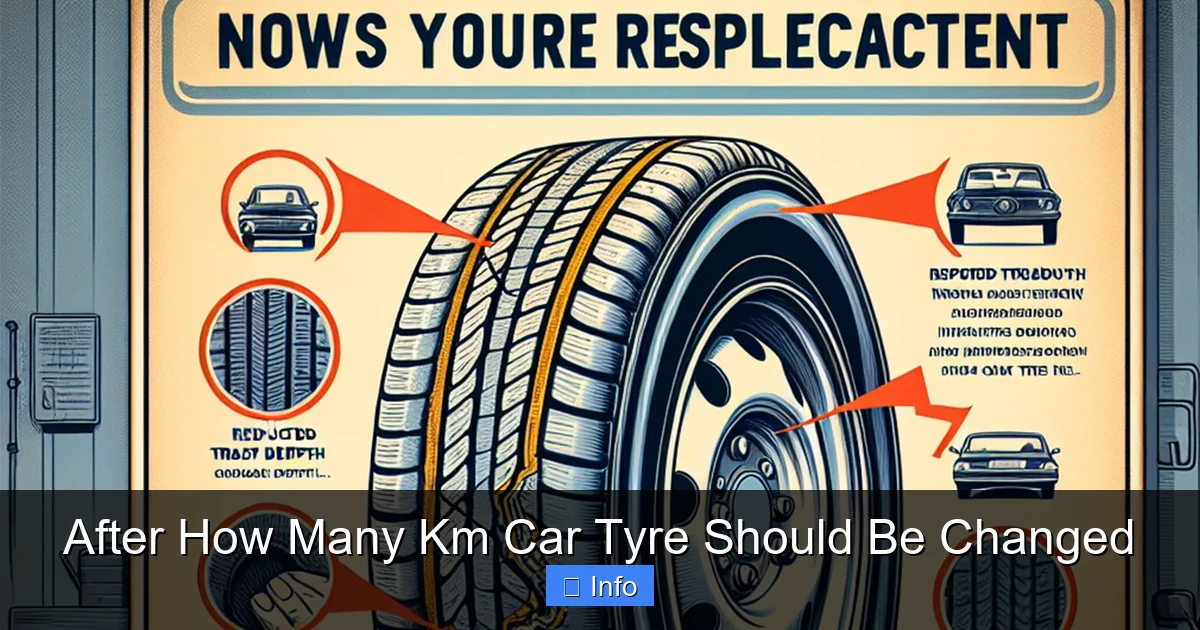
While individual results vary, general guidelines help you plan. These figures assume proper inflation, regular rotation, and alignment. They also assume you drive a typical passenger vehicle on paved roads.
Visual guide about After How Many Km Car Tyre Should Be Changed
Image source: replacetiresinfo.com
Standard All-Season Tyres
Expect 50,000 to 75,000 km from quality all-season tyres. Brands like Michelin, Continental, and Bridgestone often exceed this with their premium lines. Mid-range brands usually hit 50,000 to 60,000 km. Budget brands might only manage 40,000 km. If you rotate every 10,000 km and maintain correct pressure, you lean toward the higher side.
Performance and Summer Tyres
These use softer compounds for maximum grip. They typically last 30,000 to 50,000 km. Track-focused tyres can wear out in 15,000 km or less. If you drive a sports car and enjoy spirited driving, budget for frequent replacements. The trade-off is superior cornering and braking in dry and wet conditions.
Winter Tyres
Winter tyres should only be used in cold temperatures. Used seasonally (about four to five months per year), a set can last four to six seasons. That translates to roughly 40,000 to 60,000 km of winter-only use. If you leave them on all year, the soft compound wears rapidly in heat. You might destroy them in 20,000 km of summer driving.
Off-Road and All-Terrain Tyres
Truck and SUV all-terrain tyres range from 50,000 to 80,000 km on pavement. Aggressive mud-terrain tyres wear faster on asphalt due to their chunky tread blocks. They may only last 40,000 to 50,000 km. If you actually drive off-road, sidewall damage from rocks often ends their life before the tread wears out.
Factors That Affect Tyre Wear
Understanding these factors helps you predict when your specific tyres need changing. You have control over many of them.
Visual guide about After How Many Km Car Tyre Should Be Changed
Image source: yourautovision.com
Driving Habits
This is the biggest variable. Hard acceleration spins the tyres, scrubbing rubber. Hard braking locks or near-locks the wheels, creating flat spots. Fast cornering scrubs the outer edges. Smooth, anticipatory driving can add 20,000 km to tyre life. Imagine two identical cars. One driven by a cautious commuter, the other by an aggressive driver. The difference in tyre life can be double.
Road Conditions
Rough asphalt, potholes, gravel, and debris accelerate wear. City driving with frequent stops wears tyres faster than highway cruising. Speed bumps and curbs cause impact damage that leads to premature failure. If your daily route includes construction zones or poorly maintained roads, inspect more often.
Climate and Temperature
Heat is the enemy of rubber. Hot climates soften the compound, increasing wear. Cold temperatures harden rubber, reducing grip but not necessarily wear rate. However, rapid temperature swings cause expansion and contraction that stress the tyre structure. Coastal areas with salt air accelerate corrosion of the steel belts if the tyre is damaged.
Vehicle Maintenance
This is where you save money. Incorrect inflation is the number one cause of premature wear. Over-inflation wears the centre tread. Under-inflation wears the shoulders and overheats the tyre. Misalignment causes feathering or camber wear on one side. Worn suspension components (shocks, struts, bushings) let the tyre bounce, creating cupping patterns. Regular alignment checks and suspension inspections pay for themselves in tyre life.
Load and Towing
Carrying heavy loads or towing increases the contact patch pressure and heat buildup. This accelerates wear significantly. If you regularly load your vehicle to its maximum capacity, expect 15 to 25 percent less mileage from your tyres. Use the correct load-rated tyres and increase pressure per the door placard for heavy loads.
How to Check Your Tyres Yourself
You do not need to be a mechanic to monitor tyre health. A few simple checks once a month and before long trips keep you informed.
Visual guide about After How Many Km Car Tyre Should Be Changed
Image source: blogs.gomechanic.com
The Tread Depth Test
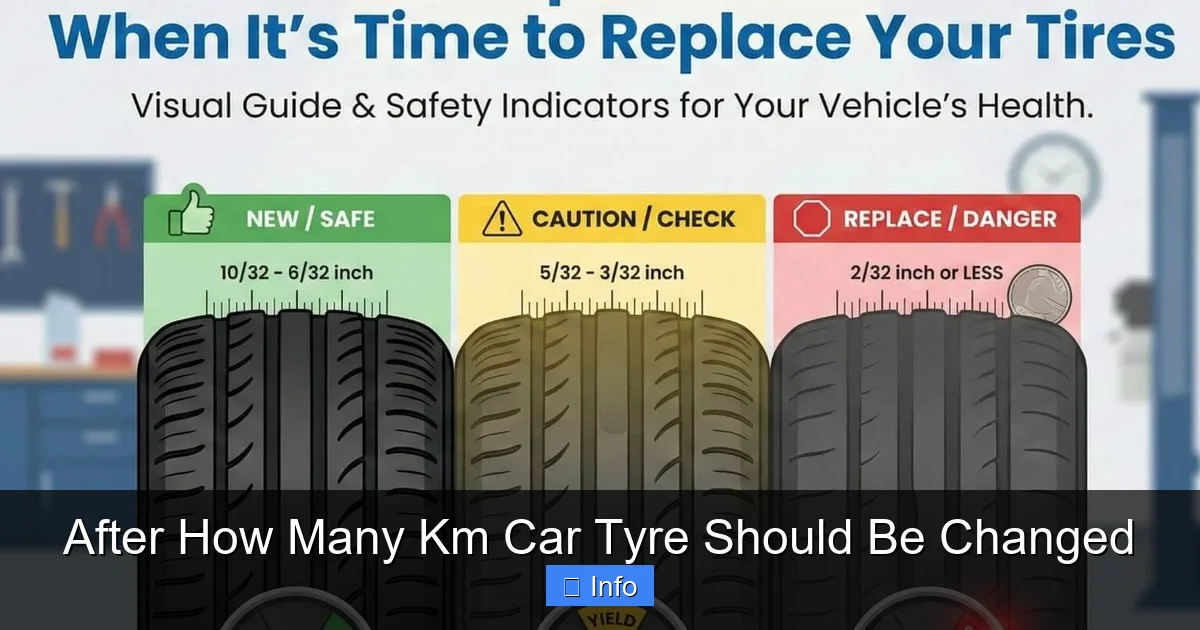
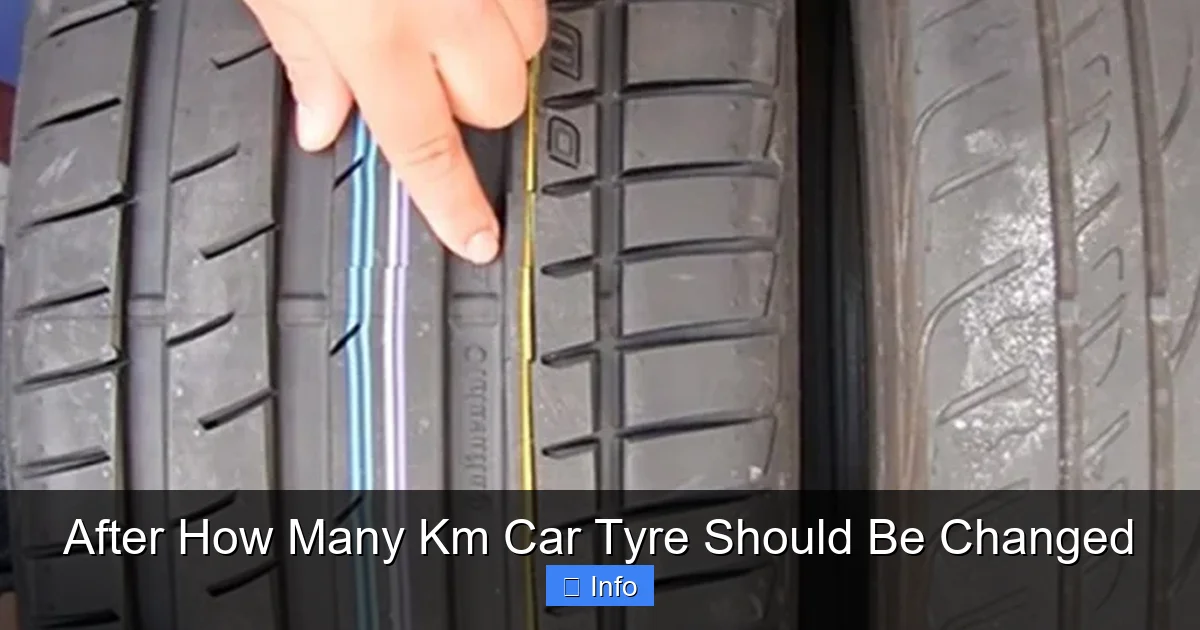
Tread depth determines wet grip. As tread wears, water evacuation decreases, raising hydroplaning risk. The legal minimum in most countries is 1.6 mm. Safety experts recommend replacing at 3 mm for wet performance. You can buy a tread depth gauge for a few dollars. Insert it into the main grooves at three points across the tyre: outer, centre, inner. Record the lowest reading. If any groove is near 3 mm, start shopping.
The Coin Test (Quick Check)
No gauge? Use a coin. In Canada, a toonie works. Insert it into the tread with the bear’s paws down. If the tread reaches the bear’s paws, you have lots of life. If it covers the silver ring, you are near the limit. In the US, use a penny with Lincoln’s head down. If you see the top of his head, tread is below 2/32 inch (1.6 mm). This is a rough guide only. A gauge is far more accurate.
Check for Even Wear
Compare the three measurements (outer, centre, inner). They should be within 1-2 mm of each other. A large difference indicates a problem. Centre wear means over-inflation. Shoulder wear means under-inflation. One-sided wear means alignment or suspension issues. Feathering (tread blocks rounded on one side, sharp on the other) means toe misalignment. Cupping (scalloped dips) means worn shocks or balance issues.
Inspect Sidewalls
Run your hand along the sidewall. Feel for bulges, bubbles, or cuts. A bulge indicates internal structural damage (separated belts). This is a blowout waiting to happen. Replace immediately. Look for cracking (crazing) in the rubber. Fine surface cracks are normal with age. Deep cracks reaching the cords mean the tyre is unsafe. Check for embedded nails, screws, or stones. Remove stones. If you find a nail, do not pull it out. Get a professional repair.
Check Tyre Pressure
Do this when tyres are cold (driven less than 2 km). Use a quality digital gauge. Compare to the placard on the driver’s door jamb, not the tyre sidewall. The sidewall shows maximum pressure, not recommended pressure. Check the spare too. Low pressure wastes fuel, wears shoulders, and builds heat. High pressure reduces contact patch, wears centre, and gives a harsh ride.
Signs It’s Time for New Tyres
Sometimes the kilometre count is irrelevant. These signs demand immediate attention regardless of mileage.
Tread Wear Indicators (Wear Bars)
Modern tyres have built-in wear bars. These are raised ridges in the bottom of the tread grooves. They sit at 1.6 mm height. When the tread surface becomes flush with these bars, the tyre is legally worn out. You will see solid rubber bars connecting the tread blocks across the groove. This is an unmistakable visual signal. Replace immediately.
Vibration or Shaking
A vibration felt through the steering wheel or seat often indicates tyre trouble. It could be a separated belt, a flat spot from hard braking, or a balance issue. If balancing does not fix it, the tyre has internal damage. Do not ignore vibration. It fatigues suspension components and reduces control.
Pulling to One Side
If the car drifts left or right on a straight, flat road with hands lightly on the wheel, it could be uneven tyre wear or a pressure difference. Swap front tyres side-to-side. If the pull reverses direction, the tyre is the cause. If it stays the same, it is alignment. Uneven wear from alignment issues often ruins the tyre before the tread is gone.
Reduced Wet Grip
You notice the car slides easier in rain. Braking distances increase. The rear end feels loose in corners. This happens long before the legal limit. As tread depth drops below 3 mm, water evacuation suffers. If you feel unsafe in wet conditions, replace the tyres. Your safety is worth more than the remaining rubber.
Frequent Pressure Loss
If one tyre loses pressure weekly while others hold, it has a slow leak. Could be a nail, valve stem, or bead seal. If the tyre is otherwise good, a repair is fine. If the tyre is old or worn, replace it. Do not keep inflating a leaking tyre. The heat buildup from running low causes catastrophic failure.
Making Your Tyres Last Longer
Tyres are a significant expense. A few habits extend their life substantially.
Rotate Regularly
Front tyres wear faster on front-wheel-drive cars (steering, braking, driving). Rear tyres wear faster on rear-wheel-drive performance cars. All-wheel-drive vehicles need rotation to prevent drivetrain damage from diameter differences. Rotate every 8,000 to 10,000 km. Follow the pattern in your owner’s manual. Common patterns: front-to-rear same side, or cross pattern. Directional tyres only rotate front-to-rear.
Maintain Correct Pressure
Check monthly. Check before trips. Temperature changes affect pressure (about 1 psi per 10°F / 7 kPa per 10°C). Cold weather drops pressure. Top up in the morning. Correct pressure optimises the contact patch for even wear, best fuel economy, and safe handling. It is the single highest-return maintenance task.
Align and Balance
Get an alignment check annually or after hitting a severe pothole or curb. Symptoms: pulling, off-centre steering wheel, uneven wear. Balance tyres when you feel vibration at highway speeds (usually 80-100 km/h). Unbalanced tyres cause cupping wear and stress wheel bearings. Balance is cheap. Alignment is moderate. Both are cheaper than tyres.
Drive Smoothly
Anticipate stops. Coast to red lights. Accelerate gently. Take corners at moderate speeds. Avoid potholes and debris. Do not “curb” your tyres when parking. Sidewall impact damage is irreversible. Smooth driving also saves fuel and brakes. It is a triple win.
Store Seasonal Tyres Properly
If you swap winter and summer tyres, store the off-season set correctly. Clean them. Dry them. Store in a cool, dark, dry place. Avoid ozone sources (electric motors, furnaces). Stack horizontally or hang on racks. Do not stack more than four high. Use tyre bags to reduce oxidation. Proper storage preserves the rubber compound for next season.
Choose the Right Tyre for Your Use
Do not buy ultra-high-performance tyres for a commuter car. Do not buy highway tyres for off-roading. Match the tyre to your actual driving. A tyre designed for your conditions lasts longer and performs better. Consult independent tyre tests (like those from consumer organizations) rather than relying solely on brand marketing.
Conclusion
So, after how many km car tyre should be changed? The answer sits between 40,000 and 80,000 km for most drivers. But the odometer is only a rough guide. Your tyres tell the real story through their tread depth, wear patterns, sidewall condition, and age. A five-year-old tyre with 30,000 km may need replacement due to dry rot. A three-year-old tyre with 60,000 km may still have life if rotated and inflated properly.
Make tyre checks a monthly habit. It takes five minutes. Use a tread depth gauge. Check pressures cold. Look for damage. Rotate on schedule. Align when needed. Drive smoothly. These habits cost almost nothing but deliver maximum safety and maximum mileage. When in doubt, have a professional inspect them. The cost of a new set is trivial compared to the cost of a crash caused by worn tyres. Your tyres are the foundation of every safety system in your car. Treat them that way.
Frequently Asked Questions
How often should I check my tyre tread depth?
Check your tyre tread depth at least once a month and before any long road trip. Use a dedicated tread depth gauge for accuracy. This helps you spot uneven wear early and plan for replacement before tyres become unsafe.
Can I replace just one tyre if it is damaged?
Ideally, replace tyres in pairs (both front or both rear) or as a full set. Replacing only one tyre creates a diameter mismatch that stresses the drivetrain, especially on all-wheel-drive vehicles. If the other tyres are new, a single replacement may be acceptable if shaved to match tread depth.
Does the tyre brand affect how many kilometres they last?
Yes, premium brands typically use advanced compounds and construction that last longer and wear more evenly. Budget brands may wear 20 to 30 percent faster. However, maintenance habits usually have a larger impact on actual lifespan than brand choice alone.
What is the minimum legal tread depth in most countries?
The standard legal minimum tread depth is 1.6 mm (2/32 of an inch) across the central three-quarters of the tread width and around the entire circumference. Many safety experts recommend replacing tyres at 3 mm for significantly better wet-weather performance.
How do I know the age of my tyres?
Look for the DOT code on the tyre sidewall. The last four digits indicate the week and year of manufacture. For example, a code ending in “1522” means the tyre was made in the 15th week of 2022. Tyres older than six years should be inspected closely; ten years is the maximum recommended age.
Will rotating my tyres really make them last longer?
Yes, regular rotation every 8,000 to 10,000 km promotes even wear across all four tyres. Front tyres on front-wheel-drive cars wear much faster due to steering and power delivery. Rotation equalizes this, often adding 10,000 to 20,000 km to the set’s total life.