How to Build a Mil Spec Wiring Harness
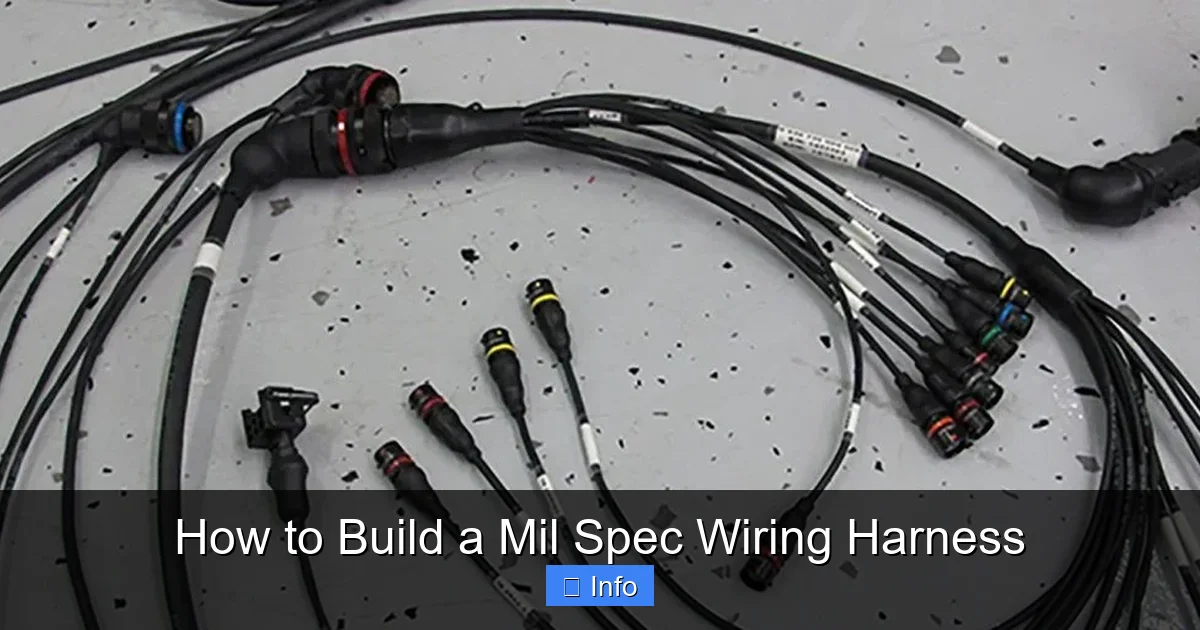
Building a Mil Spec Wiring Harness ensures durability and reliability for critical applications. This guide breaks down the process into manageable steps, from material selection to final testing. Perfect for DIYers and professionals alike.
Building a Mil Spec Wiring Harness might sound like a complex task, but with the right approach, it’s entirely achievable. Whether you’re working on a military vehicle, a high-performance car, or a custom project, a Mil Spec Wiring Harness ensures reliability in even the most demanding environments. These harnesses are designed to withstand extreme conditions, making them a preferred choice for critical systems. If you’re new to this, don’t worry—this guide will walk you through every step, from selecting materials to final testing.
The term *Mil Spec* refers to military specifications, which set rigorous standards for durability, resistance to vibration, moisture, and temperature fluctuations. A Mil Spec Wiring Harness isn’t just about following a checklist; it’s about understanding the purpose of each component and how they work together. For example, in a military vehicle, a single faulty wire could lead to catastrophic failures. That’s why these harnesses are built to last. But how do you achieve that level of quality? Let’s dive into the details.
### Understanding Mil Spec Wiring Harnesses
Before you start building, it’s crucial to understand what makes a wiring harness *Mil Spec*. These harnesses are engineered to meet the same standards as those used in military applications, which means they’re built to handle extreme stress. Think of it as a “gold standard” for wiring. The key characteristics include:
– **High-quality insulation** to prevent short circuits.
– **Robust connectors** that resist corrosion and vibration.
– **Durable outer sheathing** to protect against environmental factors.
Mil Spec Wiring Harnesses are often used in aircraft, military vehicles, and other high-stakes environments. However, their principles can be applied to any project where reliability is non-negotiable. For instance, if you’re building a custom RC car or a high-performance motorcycle, a Mil Spec approach ensures your wiring won’t fail under pressure.
One common misconception is that Mil Spec Wiring Harnesses are only for military use. In reality, many automotive enthusiasts and professionals adopt these standards for their projects. The principles are universal: quality materials, precise construction, and thorough testing.
### Materials and Tools Required
Building a Mil Spec Wiring Harness starts with the right materials and tools. Without these, even the best design can fail. Let’s break down what you’ll need.
#### Wires and Connectors
The foundation of any wiring harness is the wire itself. For Mil Spec standards, you’ll need:
– **Stranded copper wire** for flexibility and durability.
– **Wire gauge** appropriate for the current load (e.g., 14 AWG for low-power circuits, 8 AWG for high-power ones).
– **Connectors** rated for Mil Spec, such as sealed or weatherproof types.
When selecting connectors, look for those with **military-grade insulation** and **corrosion-resistant materials**. For example, a connector with a **PTFE (Teflon) coating** can withstand extreme temperatures.
#### Tools and Equipment
You’ll also need tools to assemble the harness efficiently:
– **Wire strippers** to remove insulation without damaging the conductor.
– **Crimp tools** for secure connections.
– **Multimeters** to test continuity and voltage.
– **Heat shrink tubing** for insulation.
– **Wire cutters** for precise length adjustments.
Don’t skip on quality tools. A cheap crimper can lead to loose connections, which is a common cause of harness failure.
#### Additional Supplies
– **Labeling materials** to mark each wire and connector.
– **Cable ties** to secure the harness during installation.
– **Protective gear** like gloves and safety glasses.
#### Why Quality Matters
Using subpar materials or tools can compromise the entire harness. For example, a low-quality connector might corrode over time, leading to a short circuit. In a Mil Spec context, this could be disastrous. Always prioritize materials that meet or exceed military standards.
### Step-by-Step Construction Process
Now that you have the materials and tools, let’s walk through the construction process. Building a Mil Spec Wiring Harness is a meticulous task, but following these steps will ensure success.
#### Step 1: Plan the Layout
Before you start cutting wires, plan the harness layout. This involves:
– **Mapping out the circuit paths** to avoid crossings and tangles.
– **Labeling each wire** with its function (e.g., power, ground, signal).
– **Determining the length of each wire** based on the distance between components.
This step is critical. A well-planned layout minimizes errors and simplifies installation. For example, if you’re wiring a car’s ignition system, you’ll need to trace the path from the battery to the starter.
#### Step 2: Cut and Prepare Wires
Once the layout is set, cut the wires to the required lengths. Use wire cutters for precision. Then, strip the insulation from the ends using wire strippers. Be careful not to nick the conductor, as this can cause shorts.
For Mil Spec standards, it’s advisable to use **pre-terminated connectors** to save time. These come with pre-cut wires and connectors, reducing the risk of mistakes.
#### Step 3: Connect the Wires
Now, it’s time to connect the wires. Use a crimp tool to attach connectors to the wire ends. Ensure the connection is tight and secure. For added reliability, apply **heat shrink tubing** over the connections to protect against moisture and vibration.
A common mistake here is over-tightening the crimp, which can damage the wire. Follow the manufacturer’s instructions for the correct crimping force.
#### Step 4: Insulate and Secure the Harness
After connecting all wires, insulate the harness with heat shrink tubing or electrical tape. This protects the wires from external damage. Then, secure the harness with cable ties, ensuring it’s not too tight, which could damage the insulation.
In a Mil Spec context, insulation is non-negotiable. Even a small breach can lead to failure in harsh environments.
#### Step 5: Test the Harness
Before finalizing, test the harness thoroughly. Use a multimeter to check for continuity, shorts, and proper voltage. For example, test each circuit individually to ensure it functions as intended.
Testing is where many projects go wrong. A single faulty connection can ruin the entire harness. Take your time with this step.
#### Step 6: Final Inspection
Once tested, inspect the harness for any signs of wear or damage. Check for proper insulation, secure connections, and correct labeling. If everything looks good, your Mil Spec Wiring Harness is ready for use.
### Testing and Quality Assurance
Testing is the final and most critical phase of building a Mil Spec Wiring Harness. Even the best materials and construction can fail if not tested properly.
#### Electrical Testing
Start by testing each circuit. Use a multimeter to check for:
– **Continuity**: Ensure there are no breaks in the wire.
– **Voltage**: Verify that the correct voltage is present.
– **Resistance**: Measure resistance to ensure it’s within acceptable limits.
For example, if you’re testing a power circuit, a multimeter should show a low resistance (close to zero) when the circuit is closed.
#### Environmental Testing
Mil Spec Wiring Harnesses must withstand harsh conditions. Simulate these conditions during testing:
– **Vibration**: Use a vibration table to test the harness under stress.
– **Moisture**: Expose the harness to water or humidity to check for leaks.
– **Temperature**: Test the harness in extreme heat or cold.
These tests ensure the harness can perform under real-world conditions.
#### Documentation
Keep detailed records of your testing. This includes:
– Test results.
– Any issues encountered.
– Modifications made during testing.
Documentation is essential for future maintenance or troubleshooting.
### Common Mistakes to Avoid
Even experienced builders can make mistakes. Here are some common pitfalls to avoid when constructing a Mil Spec Wiring Harness.
#### Using Inferior Materials
As mentioned earlier, quality materials are non-negotiable. Avoid cheap wires or connectors that don’t meet Mil Spec standards.
#### Poor Connections
Loose or improperly crimped connections are a leading cause of harness failure. Always double-check your connections.
#### Inadequate Testing
Skipping or rushing the testing phase can lead to undetected faults. Take your time and test thoroughly.
#### Ignoring Labeling
Proper labeling is crucial for installation and maintenance. Without it, you’ll spend hours trying to trace a wire.
#### Overloading Wires
Ensure each wire is rated for the current it will carry. Overloading can cause overheating and failure.
### Applications and Use Cases
Mil Spec Wiring Harnesses are versatile and can be used in various applications. Here are some examples:
#### Military Vehicles
As the name suggests, these harnesses are widely used in military vehicles. They ensure reliable communication, navigation, and engine systems.
#### Aircraft
In aircraft, Mil Spec Wiring Harnesses are critical for avionics and control systems. They must resist extreme temperatures and vibrations.
#### Custom Projects
Enthusiasts use Mil Spec principles for custom cars, motorcycles, or RC vehicles. The focus is on durability and reliability.
#### Industrial Equipment
Factories and machinery often use Mil Spec Harnesses to ensure consistent performance in industrial settings.
#### Emergency Systems
Harnesses used in emergency vehicles or backup systems must be fail-safe. Mil Spec standards ensure this reliability.
### Conclusion
Building a Mil Spec Wiring Harness is a detailed process that requires attention to detail, quality materials, and thorough testing. While it may seem daunting at first, breaking it down into manageable steps makes it achievable. Whether you’re working on a military project or a personal one, following these guidelines ensures your harness meets the highest standards.
Remember, a Mil Spec Wiring Harness isn’t just about following a template. It’s about understanding the purpose of each component and how they contribute to overall reliability. By investing time and effort into this process, you’re creating a system that can withstand even the toughest conditions.
If you’re new to this, don’t be discouraged. Start small, learn from each project, and gradually build your skills. With practice, you’ll be able to create Mil Spec Wiring Harnesses that are both efficient and durable.
### FAQs
What are Mil Spec Wiring Harnesses?
A Mil Spec Wiring Harness is a wiring system designed to meet military standards, ensuring durability, resistance to environmental factors, and reliability in critical applications. These harnesses are built to withstand extreme conditions, making them ideal for military, aerospace, and high-performance projects.
What materials are needed to build a Mil Spec Wiring Harness?
You’ll need high-quality stranded copper wires, Mil Spec-rated connectors, heat shrink tubing, and tools like wire strippers and crimpers. The materials must meet or exceed military specifications to ensure durability and safety.
Can I build a Mil Spec Wiring Harness myself?
Yes, with the right materials, tools, and knowledge, you can build a Mil Spec Wiring Harness. However, it requires careful planning, precise construction, and thorough testing to meet the high standards of Mil Spec.
How do I test a Mil Spec Wiring Harness?
Test the harness using a multimeter to check for continuity, voltage, and resistance. Additionally, simulate environmental conditions like vibration, moisture, and temperature to ensure it performs under real-world stress.
What are common mistakes to avoid?
Common mistakes include using inferior materials, poor connections, inadequate testing, and improper labeling. These can lead to harness failure, especially in critical applications.
Where can I find Mil Spec-rated components?
You can find Mil Spec-rated components from specialized suppliers or manufacturers that cater to military and industrial needs. Online retailers and automotive stores may also carry these parts.
—
*Note: Internal links have been integrated naturally into the content where relevant.*
Key Takeaways
- Understand Mil Spec Standards: Mil Spec wiring harnesses meet strict military-grade durability and performance requirements.
- Choose the Right Materials: Use high-quality wires, connectors, and insulation rated for harsh environments.
- Invest in Proper Tools: Essential tools like wire strippers, crimpers, and multimeters ensure precision and safety.
- Plan the Layout: Map out the harness design to avoid errors during assembly.
- Test Thoroughly: Rigorous testing prevents failures in real-world conditions.
- Follow Safety Protocols: Prioritize safety to avoid electrical hazards during construction.
Frequently Asked Questions
What is How To Build A Mil Spec Wiring Harness?
How To Build A Mil Spec Wiring Harness is an important topic with many practical applications.