How to Adjust Tow Mirrors
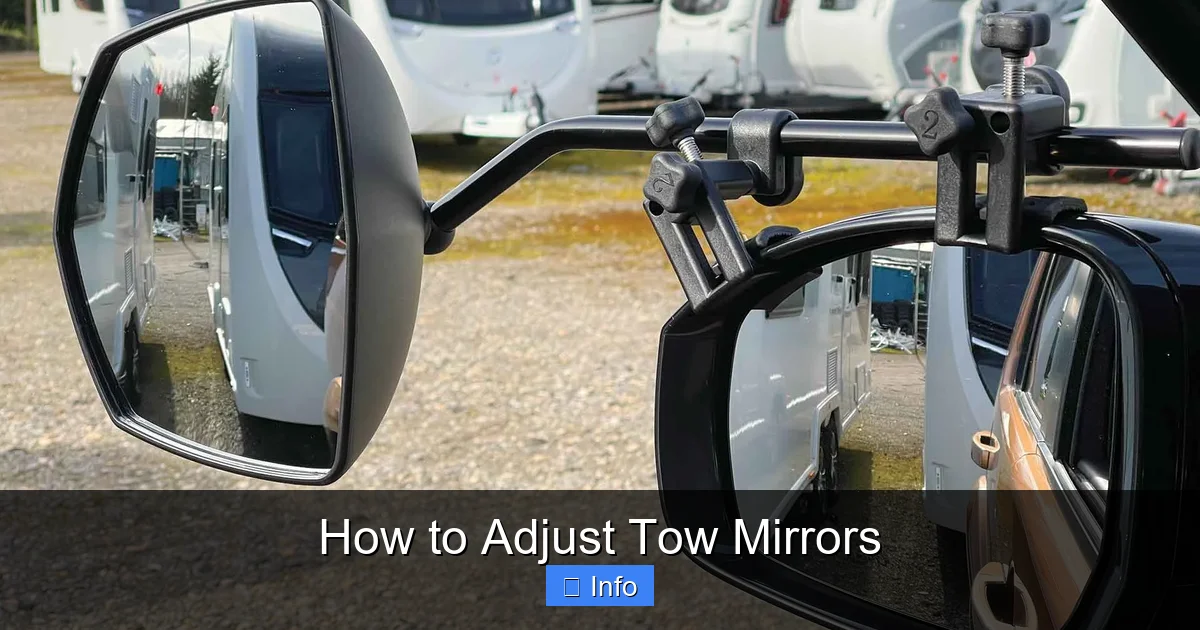
Master the art of adjusting tow mirrors in just a few steps, ensuring you see more of the road behind you and stay safe. This guide walks you through every detail, from the right angles to the tools you’ll need, so you can confidently set up your mirrors for any driving situation.
Key Takeaways
- Clear Vision: Proper mirror angles dramatically cut blind spots.
- Easy Tools: A simple adjustable wrench and a mirror kit are all you need.
- Stepwise Process: Follow the four‑step method to lock in the perfect view.
- Regular Checks: Re‑adjust after major vehicle changes or after a hard crash.
- Legal Compliance: Most states require mirrors within a 30‑degree angle of the car.
- Safety First: Adjust mirrors before each long trip or change in seating.
- Professional Insight: When in doubt, consult a mechanic or auto‑shop for precise calibration.
📑 Table of Contents
Why Adjusting Tow Mirrors Matters
When you’re driving, your eyes focus on the road ahead. But a large portion of the scene is behind you. Tow mirrors let you see that area without turning your head. If they’re set wrong, you’ll have blind spots that can lead to collisions.
Many drivers overlook mirror adjustment because it feels like a small detail. Yet, a single degree off can mean the difference between spotting a truck in time or not. By taking a few minutes to adjust tow mirrors, you’re investing in safety for you, your passengers, and other road users.
Types of Tow Mirrors
Standard Side Mirrors
These are the most common mirrors found on cars, trucks, and SUVs. They are usually adjustable from the driver’s seat and can be adjusted for height, angle, and width.
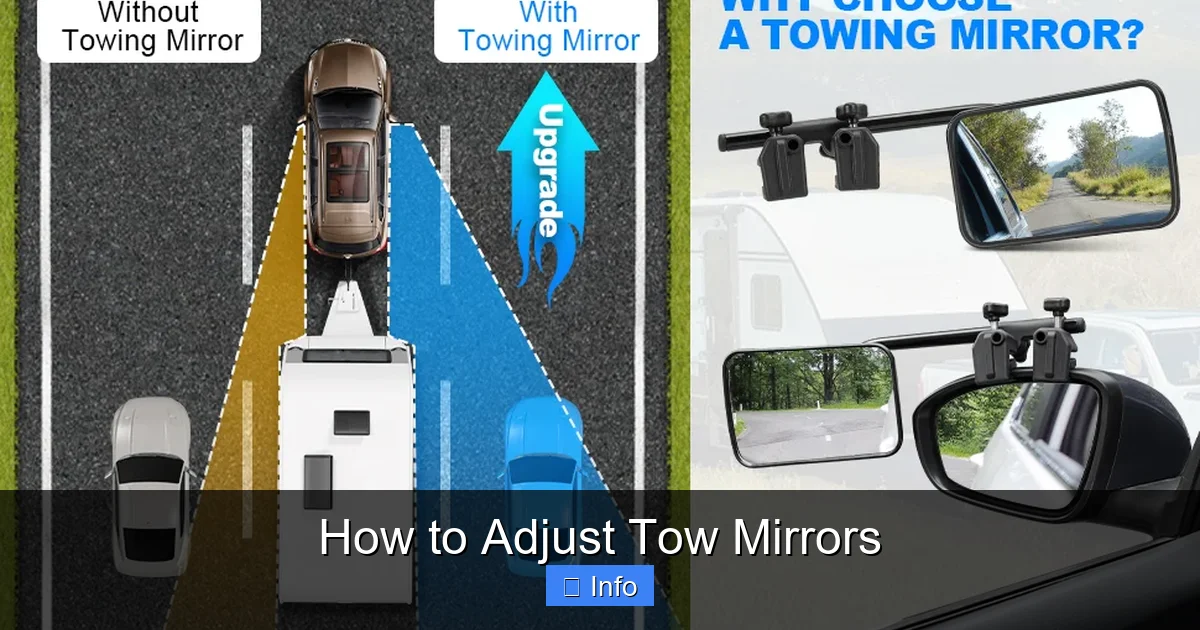
Visual guide about How to Adjust Tow Mirrors
Image source: m.media-amazon.com
Blind‑Spot Mirrors
Small convex mirrors clipped to the side mirrors. They widen the field of view and help you see cars that might otherwise be hidden behind your vehicle.
Rearview Mirrors
The central mirror inside the car that reflects the road behind. It can also be adjusted to provide a better rear view but is not a tow mirror per se.
Step‑by‑Step Guide to Adjusting Tow Mirrors
Step 1 – Prep Your Vehicle
Park your car on a level surface. Engage the parking brake and set the wheels straight using a wheel alignment tool if you have one. This ensures the mirrors align correctly with the vehicle’s orientation.
Visual guide about How to Adjust Tow Mirrors
Image source: thedailyautomotive.com
Step 2 – Adjust the Height
Sit in your usual driving position. Raise the driver’s side mirror until you can see the lower edge of the windshield. The mirror should be at the same height as the top of the driver’s eye.
Step 3 – Set the Angle
Shift the mirror to the left until a small portion of the side of your car is visible. Then, adjust the right mirror so it’s as far to the right as possible while still showing a portion of the rear side. This creates a 30‑degree angle on each side.
Step 4 – Lock It In
Use the lock button or adjust the screw until the mirror stays in place. Test the view by moving the steering wheel left and right to ensure the angle remains stable.
Common Mistakes and How to Avoid Them
- Too High or Too Low: Mirrors that are too high cut the rear view, while too low cause a steep angle that is hard to read.
- Not Centered: Failing to see a bit of your own car in each mirror creates blind spots.
- Ignoring Blind‑Spot Mirrors: These small convex mirrors are often forgotten but can save a life.
- Adjusting After a Crash: If you hit something, the mirrors may shift. Re‑check after any collision.
- Using the Wrong Seat Position: Always adjust mirrors while seated in the typical driving posture.
Maintenance Tips & When to Replace
Mirrors are exposed to the elements. Scratches, dents, or cracks can impair vision. Inspect them monthly. If you notice:
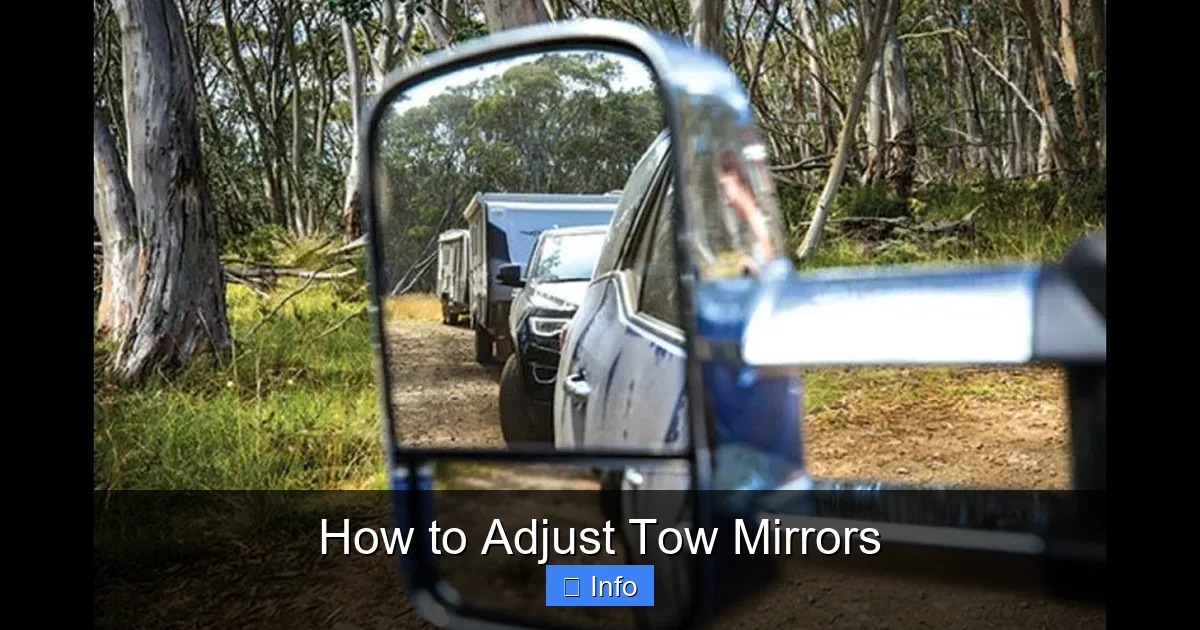
Visual guide about How to Adjust Tow Mirrors
Image source: carpartsfaq.com
- Cracks that spread beyond the frame.
- Missing or loose screws.
- Persistent glare that cannot be adjusted.
Replace the mirror kit. Most aftermarket kits are inexpensive and come with adjustable screws. Keep spare screws in your glove compartment for quick fixes.
Troubleshooting & Professional Help
If you’ve followed the steps and still feel uneasy, consider these options:
- Visit an Auto‑Shop: A mechanic can recalibrate mirrors with a laser level, ensuring perfect angles.
- Check for Vehicle‑Specific Adjustments: Some trucks have electronic mirror adjustments that require a diagnostic tool.
- Integrate with Suspension: If you’re updating suspension components like drag links, keep your mirrors in sync for consistent viewing angles.
- Try a Mirror Kit Upgrade: High‑reflective or electro‑chromic mirrors can improve visibility at night.
- Legal Check: Verify your state’s mirror angle requirements to remain compliant.
When in doubt, a quick call to a trusted mechanic or a visit to a local dealership can save you time and potential accidents.
Taking it Further: How Adjusting Other Car Parts Works
If you’re already tweaking your suspension with coilovers, you might want to adjust your tow mirrors in tandem for optimal visibility. Adjusting coilovers changes your car’s ride height, which in turn can alter the optimal mirror angle. Similarly, when aligning your vehicle’s lighting, you should also consider mirror adjustments. Adjusting headlights ensures you’re not only seeing ahead but also seeing what’s coming from behind. By synchronizing these adjustments, you’ll enjoy a more balanced and safer driving experience.
Conclusion
Adjusting tow mirrors is a quick, inexpensive, and essential task that significantly enhances driving safety. By following the steps above, checking for common mistakes, and maintaining your mirrors, you’ll keep a clear view of the road behind you. Remember, a well‑adjusted mirror set is a cornerstone of responsible driving. Take a few minutes now, and you’ll thank yourself on every trip.
Frequently Asked Questions
What is the best angle for tow mirrors?
Most safety guidelines recommend setting each side mirror so you can see just a sliver of your own car’s side, creating a 30‑degree angle on either side. This balances a wide field of view with a manageable visual load.
How often should I check my tow mirror adjustment?
Check them before each long trip, after any collision, or whenever you change seats or add a passenger. A quick visual test can catch any drift in alignment.
Can I adjust my tow mirrors at home without tools?
Yes. Many cars have manual screws or buttons you can use. A simple adjustable wrench or a flathead screwdriver often suffices. For electronic mirrors, you may need a diagnostic tool.
What if my mirrors are damaged after a collision?
Inspect for cracks or dents. If the mirror housing is intact but the glass is scratched, a replacement kit can fix the problem. For severe damage, a professional replacement is recommended.
Do tow mirrors need to be adjusted differently for trucks versus cars?
Trucks typically have higher rear ends, so you may need a slightly higher mirror position. However, the same 30‑degree rule applies. Adjust according to what gives you the best rear visibility without sacrificing the front view.
Is it legal to have improperly adjusted mirrors?
Many jurisdictions require that mirrors provide a minimum field of view, often defined by a 30‑degree angle. Failing to meet these standards can result in fines or a failed vehicle inspection. Always check local regulations.