Diesel Car Ban in Delhi Latest News Today in Hindi
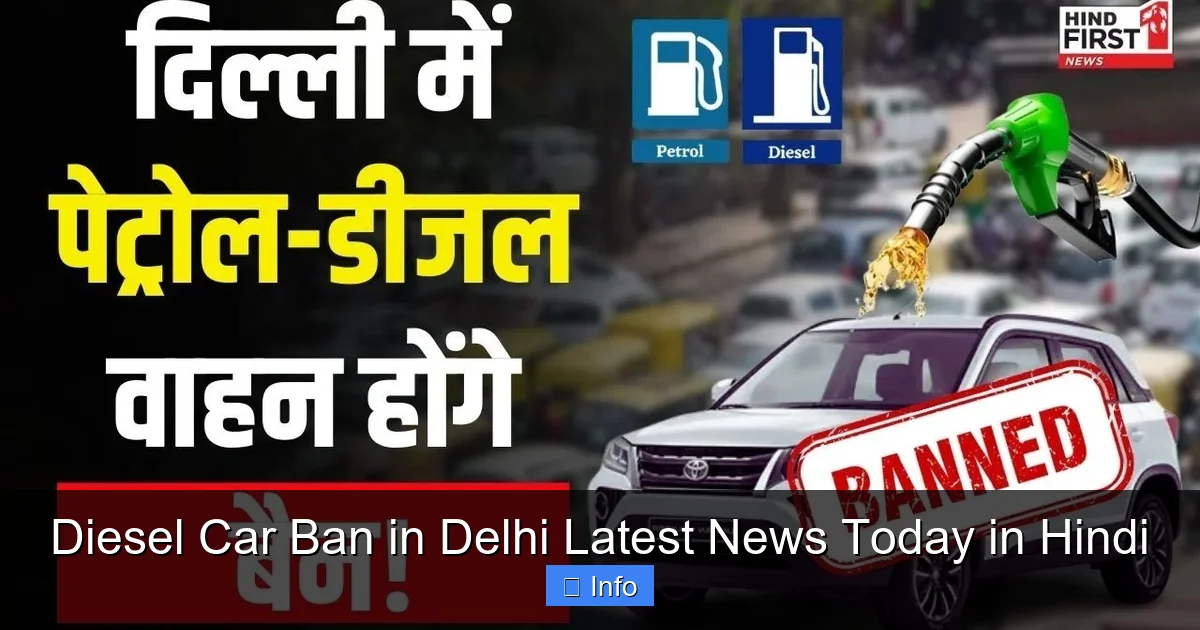
Delhi’s diesel car ban continues to dominate headlines with fresh regulatory updates released today. The new rules introduce stricter emission standards and expanded zone coverage affecting thousands of vehicles. Drivers must understand the key changes, compliance deadlines, and potential penalties to avoid fines while adapting their fleet choices.
#### Introduction
Delhi, the bustling capital, has been grappling with air pollution for years. The recent diesel car ban represents another major step in the fight against smog and poor breathing quality. Officials say the new rules aim to reduce harmful emissions from old trucks and commercial vehicles. Now every driver needs to pay close attention to how these changes affect daily life and travel plans.
The ban isn’t just about cutting down exhaust fumes. It also focuses on improving traffic flow and reducing congestion on already crowded roads. Authorities believe cleaner vehicles will lead to better health outcomes for residents. As the situation develops, many people are asking whether they can legally drive their current cars anymore. The answer depends on several factors, including the type of vehicle and where it operates.
This article breaks down what you absolutely need to know about the diesel car ban in Delhi. We’ll cover the latest regulations, real-world impacts on commuters, and practical ways to stay compliant. Whether you own a truck, a private car, or a commercial van, this guide will help you navigate the changing landscape.
#### Understanding the Diesel Car Ban in Delhi
The diesel car ban in Delhi is a comprehensive initiative launched by the state government to tackle severe air pollution. Officially introduced last year, the policy targets older diesel vehicles that have high carbon emissions. These vehicles, especially older trucks and commercial transport, release pollutants that contribute to smog and respiratory issues.
Under the new rules, certain zones in Delhi—particularly the central business district and heavily trafficked areas—will remain completely off-limits to diesel-powered vehicles. The ban applies to public transport, delivery vans, and two-wheelers running on diesel fuel. Even private car owners with diesel engines may find themselves restricted depending on their location and daily commute patterns.
What makes this regulation unique is its phased approach. Instead of a sudden shutdown, the government allows a transition period where vehicles gradually switch to cleaner technologies. During this transition, drivers who replace their diesel engines with electric or hybrid alternatives receive financial support. The phase-in schedule runs over several months, giving vehicle owners time to adapt without facing immediate penalties.
Several factors influence how strictly each vehicle type is monitored. Commercial trucks carrying goods face tighter restrictions compared to passenger cars. Public transport operators must prove their fleets meet emission standards. The government also considers the environmental impact of different vehicle categories when applying fines and enforcement measures.
#### Impact on Different Types of Vehicles
Not all diesel vehicles are treated equally under the new decree. Older model trucks exceeding five years in age encounter the toughest restrictions. These vehicles will be banned from operating in the inner city entirely starting next month. Newer models with improved emission technology may enjoy temporary exemptions until full compliance is achieved.
Private car owners with diesel engines face a mixed reality. If your car operates primarily outside the restricted zones, you may continue driving without interruption. However, daily commuting into and out of downtown areas becomes challenging. Many drivers report having to switch between their regular car and a cleaner alternative during peak hours.
Commercial and delivery businesses suffer the most significant disruptions. Freight companies rely on diesel-powered trucks for logistics. The ban forces them to invest in alternative fuels or retrofit their fleets quickly. Some suppliers have turned to CNG (compressed natural gas) as a transitional solution. Others are exploring electric vans that offer comparable cargo capacity.
Public transportation systems are also undergoing transformation. Municipal buses and auto-rickshaws must either convert to clean energy or purchase permits. The metro system remains unaffected since trains run on electricity. However, local bus routes in dense neighborhoods are seeing reduced service frequency due to fewer diesel buses on the roads.
Residents who depend on personal vehicles for work or family needs may experience inconvenience. Rental car agencies are adjusting their inventory to prioritize electric and hybrid models. Some drivers are considering membership programs that grant access to zero-emission vehicles as a long-term strategy.
#### Compliance and Alternative Solutions
Navigating the diesel car ban requires careful planning. The first step is assessing your vehicle’s eligibility based on age, engine type, and usage pattern. Vehicles meeting newer emission standards can apply for exemption certificates before the cutoff date. The application process involves documentation verification and payment of processing fees.
For those unable to upgrade immediately, several alternatives exist. Electric cars and plug-in hybrids represent the most direct substitutes. These vehicles produce no tailpipe emissions and often qualify for higher priority in public transit applications. Subsidies from the government and private sectors can significantly lower the initial cost barrier.
CNG conversion becomes popular among heavy-duty operators. By installing a compressed natural gas system, vehicles can operate safely within restricted zones. Many cities have established refueling stations specifically for CNG vehicles, making the switch more convenient than ever. Hybrid models offer another middle ground, combining gasoline efficiency with electric assistance.
Car sharing and ride-hailing platforms are adapting quickly too. Companies like Ola and Uber have introduced eco-friendly fleets stocked with electric taxis. These services cater to urban commuters seeking sustainable travel options. For families needing multiple vehicles, car pooling apps encourage shared rides to reduce overall vehicle numbers on the road.
If your vehicle won’t easily transition, consider relocating your operations. Some businesses opt to park their diesel trucks in designated outer-zone lots instead of the city center. This strategic repositioning keeps the company legal while minimizing operational disruption. The goal is always to balance economic needs with environmental responsibility.
#### Enforcement and Monitoring
The government has deployed advanced technology to ensure the ban is enforced efficiently. Mobile surveillance units equipped with satellite data track vehicle movements in real-time. Police officers use these tools to identify and intercept diesel-powered vehicles entering restricted areas. Penalties range from hefty fines to license suspension for repeated violations.
Traffic cameras mounted along key thoroughfares capture images of non-compliant cars. Automated systems cross-reference these records with vehicle registration data. Citizens have reported receiving notifications via SMS if their vehicles break the rules. Transparency builds trust and encourages voluntary compliance among drivers.
Community awareness campaigns supplement technological enforcement efforts. Social media posts highlight success stories of early adopters who switched to electric vehicles. Schools in Delhi districts host workshops explaining the science behind air quality improvements. Local NGOs partner with municipal authorities to distribute educational materials about green mobility.
Despite the rigorous measures, experts note that enforcement remains inconsistent in some neighborhoods. Residents in less-monitored areas occasionally witness older vehicles lingering where they shouldn’t. Continuous improvement of monitoring systems will be crucial as the policy evolves. Regular audits and feedback loops between authorities and citizens help refine the approach over time.
#### Looking Ahead and Expert Perspectives
Experts predict that the diesel car ban will reshape Delhi’s transportation ecosystem permanently. The shift toward cleaner vehicles aligns with global trends toward sustainability and climate action. Urban planners see opportunities for integrated mobility solutions that combine electric public transit with private ownership.
Early adopters of electric and hybrid vehicles are gaining advantages such as preferential parking, reduced toll charges, and access to low-emission zones. These incentives accelerate the adoption curve faster than traditional marketing campaigns. Moreover, the decline in diesel usage correlates with measurable improvements in air quality metrics.
However, challenges persist. The transition costs remain substantial for small business owners and rural-commuting workers. Policy makers are discussing subsidies for battery replacement and charging infrastructure expansion. The ultimate goal is a zero-emission fleet capable of supporting Delhi’s growing population.
In the coming months, expect further refinements to the rulebook. The government may adjust fine structures based on compliance rates. New vehicle categories like electric motorcycles could enter the regulated framework. Dialogue between stakeholders ensures the policy balances environmental goals with socioeconomic realities.
#### Practical Tips for Drivers
If you’re a Delhi resident trying to comply with the diesel car ban, here are some actionable steps. First, examine your vehicle’s registration documents to determine its eligibility for exemption. Vehicles certified as compliant can submit paperwork well ahead of the deadline.
Second, explore used electric cars online. Several platforms specialize in second-hand electric models suitable for city driving. The lower purchase price combined with government rebates makes entry more accessible than ever. Test drives should happen both inside and outside the restricted zones to assess suitability.
Third, consider joining a car club that owns zero-emission vehicles. Shared ownership models allow unlimited access to clean transportation without the burden of maintenance. Membership tiers often include discounts on fuel and parking fees.
Fourth, familiarize yourself with public transportation options. Metro rides, electric buses, and bike-sharing schemes offer reliable alternatives for daily commutes. Many employers now provide subsidies for employees using green mobility solutions.
Finally, stay informed through official channels. The Delhi Pollution Control Board releases weekly updates on enforcement activities and policy adjustments. Following these announcements helps drivers adapt swiftly to any changes.
Key Takeaways
- Expanded Bans: The Delhi government has extended diesel bans to additional zones with more frequent enforcement checks.
- Stricter Penalties: Fines for non-compliant vehicles have been increased significantly to deter violations.
- Electric Transition Support: Subsidies and incentives are available for switching to electric or hybrid vehicles.
- Compliance Deadlines: Many vehicle owners have limited time to upgrade or face severe consequences.
- Alternative Options: CNG, electric scooters, and shared mobility services are becoming popular alternatives.
- Monitoring Systems: Satellite tracking and mobile checkpoints are now active across restricted areas.
- Public Awareness: Campaigns are underway to educate citizens about the ban’s purpose and benefits.
Frequently Asked Questions
Question?
The diesel car ban in Delhi was announced yesterday. Will my diesel car be taken away immediately?
The ban does not involve confiscating vehicles outright. Instead, all diesel-powered vehicles entering restricted zones will be stopped and either forced to stop or face fines. Those who actively violate the rules may lose their licenses after multiple infractions.
Question?
Will I be able to drive my diesel car if I live outside the restricted area?
Yes, if your primary residence and home office are located outside the restricted zones, you can legally operate your diesel vehicle during non-restricted hours. However, traveling into the city center during peak periods will require stopping at a checkpoint or converting to a permissible fuel type.
Question?
Are there any exemptions for commercial vehicles or delivery trucks?
Certain commercial vehicles registered under specific permits may receive limited exemptions depending on their role in the economy. Food delivery services and essential freight carriers can apply for modified permits during transitional phases. These exceptions remain subject to review by the transport department.
Question?
Can I convert my diesel car to electric or hybrid after the ban takes effect?
Absolutely. The government provides subsidies and technical support for vehicle conversions. After successful completion, owners must register their upgraded vehicles under the new category. There is typically a grace period allowing installation even after the ban goes fully into force.
Question?
How will I pay for fines if I get caught driving a diesel vehicle in a restricted area?
Penalty amounts vary based on the violation severity and vehicle type. Minor infractions carry smaller fines, while repeated offenses result in escalating penalties. Most drivers receive notification of the fine amount prior to collection. Payment methods include cash, bank transfers, or installment plans for serious cases.
Question?
What happens to my insurance if I am convicted of violating the diesel ban?
Insurance providers may suspend coverage for vehicles involved in violations. However, the Delhi Motor Insurance Corporation offers special policies for environmentally conscious drivers who have switched to clean energy. Switching to an approved alternative can restore your previous coverage terms.