Can You Put Jack Stands on the Axle
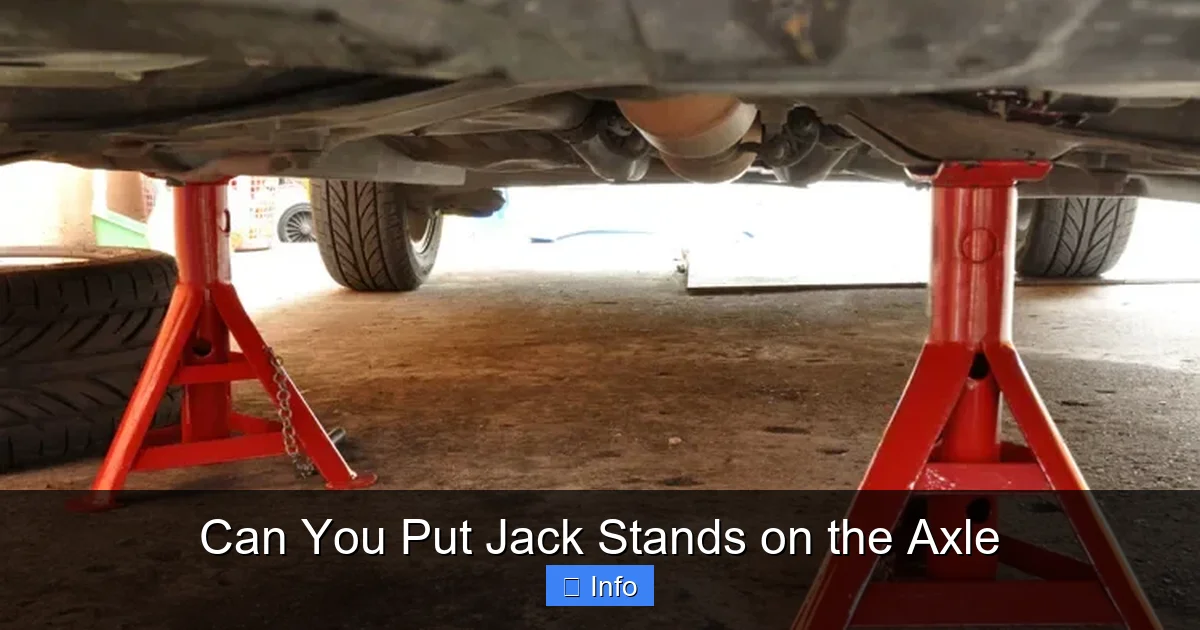
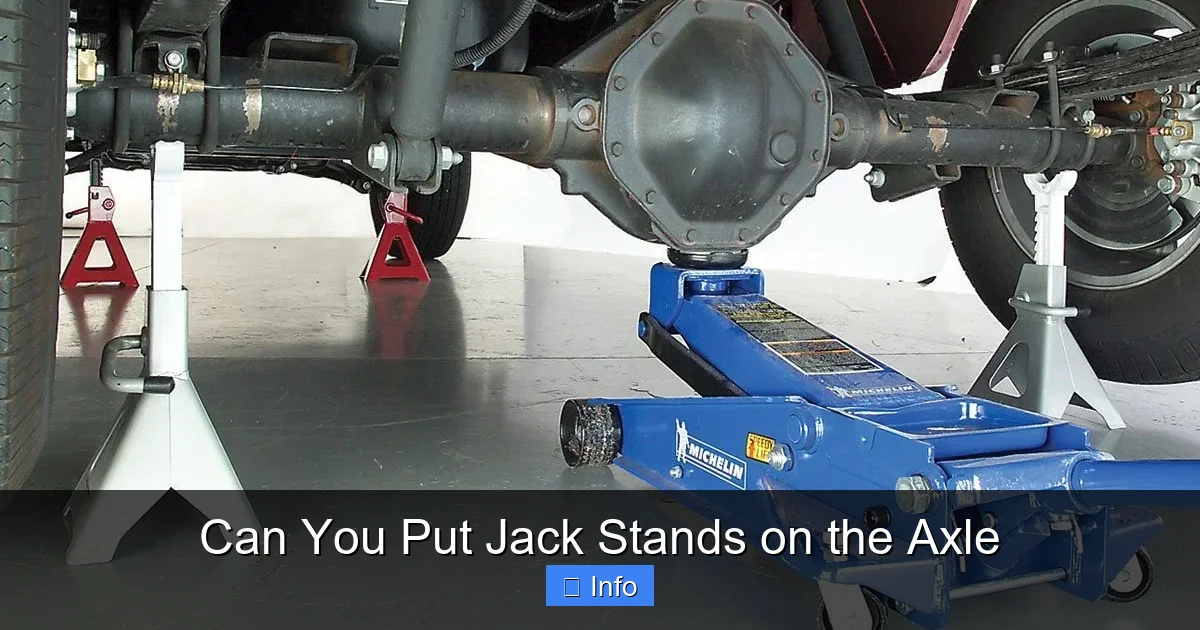
Yes, you can put jack stands on the axle, but it depends on the vehicle type and the specific part of the axle. Using the axle as a resting point for jack stands can be dangerous if the axle is not designed to support the full weight of the vehicle. Always prioritize safety by checking your owner’s manual and using proper lifting equipment to avoid serious injury.
Key Takeaways
- Axle Type Matters: Whether you can use the axle depends on if it is a full-float or semi-float axle.
- Safety Risks: Putting jack stands on the axle can cause it to bend or break, leading to a dangerous vehicle collapse.
- Proper Placement: Always place jack stands on the designated frame points or axle housing, not the spinning axle shaft.
- Vehicle Manuals: Consult your owner’s manual to find the exact recommended jack and jack stand locations.
- Weight Capacity: Ensure the jack stands have a weight capacity that exceeds your vehicle’s curb weight.
📑 Table of Contents
- Can You Put Jack Stands on the Axle
- The Short Answer to Your Question
- Understanding the Different Types of Axles
- The Real Dangers of Putting Jack Stands on the Axle
- Where You Should Place Jack Stands Instead
- A Step-by-Step Guide to Safe Lifting
- Common Mistakes People Make
- Why You Should Never Rely on a Jack Alone
- Conclusion
Can You Put Jack Stands on the Axle
Working on your car can be a great feeling. You fix something yourself. You save money. But safety must always come first. Many DIYers wonder about a specific question. They ask, can you put jack stands on the axle?
The short answer is maybe. But it is often not a good idea. Putting jack stands on the axle depends on your car. It also depends on the type of axle you have. Some axles can hold weight. Others cannot. If you get it wrong, your car could fall. That is very dangerous.
You might be in a hurry. You want to get the job done fast. But taking a few extra minutes to learn about your car can save your life. Always check your owner’s manual first. It tells you where to put the jack stands. If you are unsure, look for a guide on where to place jack on a Toyota Corolla. That guide shows you the safe spots. It is better to be safe than sorry when working under a car.
The Short Answer to Your Question
So, can you put jack stands on the axle? Yes, you can. But you must be very careful. You should only do this if the axle is designed to hold the weight. Some cars have a strong axle housing. This housing can support the vehicle. The spinning part inside usually cannot.
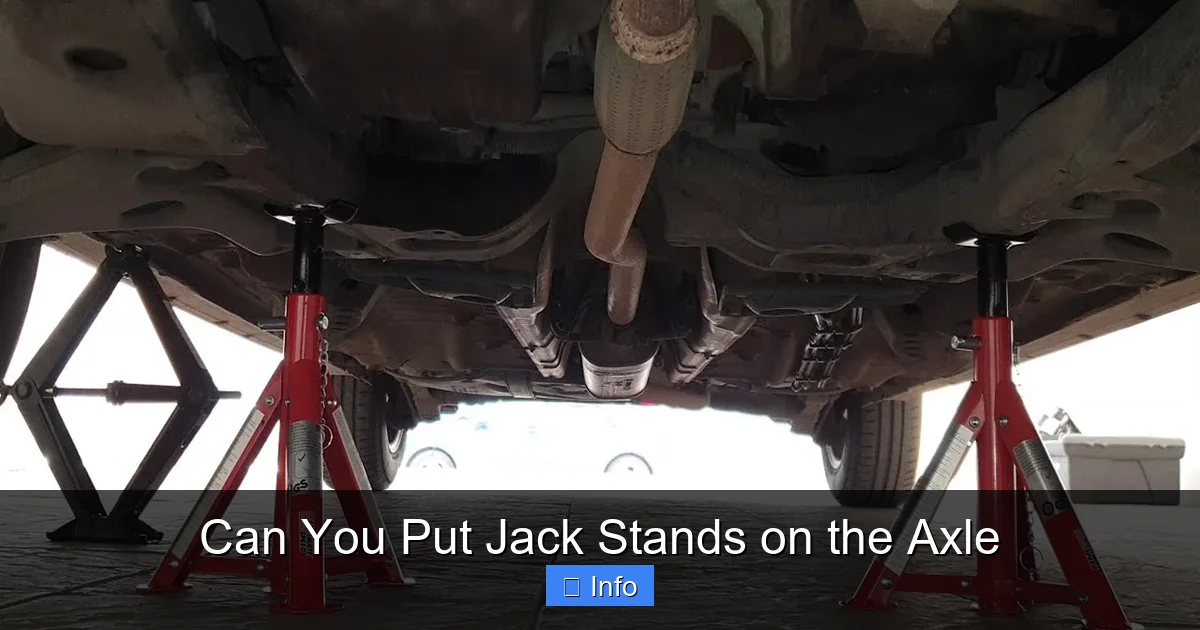
Visual guide about Can You Put Jack Stands on the Axle
Image source: i.ytimg.com
Always check your owner’s manual first. It tells you where to put the jack stands. If you are unsure, look for a guide on where to place jack on a Toyota Corolla. That guide shows you the safe spots. It is better to be safe than sorry when working under a car.
Understanding the Different Types of Axles
To answer this question fully, you need to know about axles. Not all axles are the same. They have different jobs. They also have different strengths. Here are the two main types.
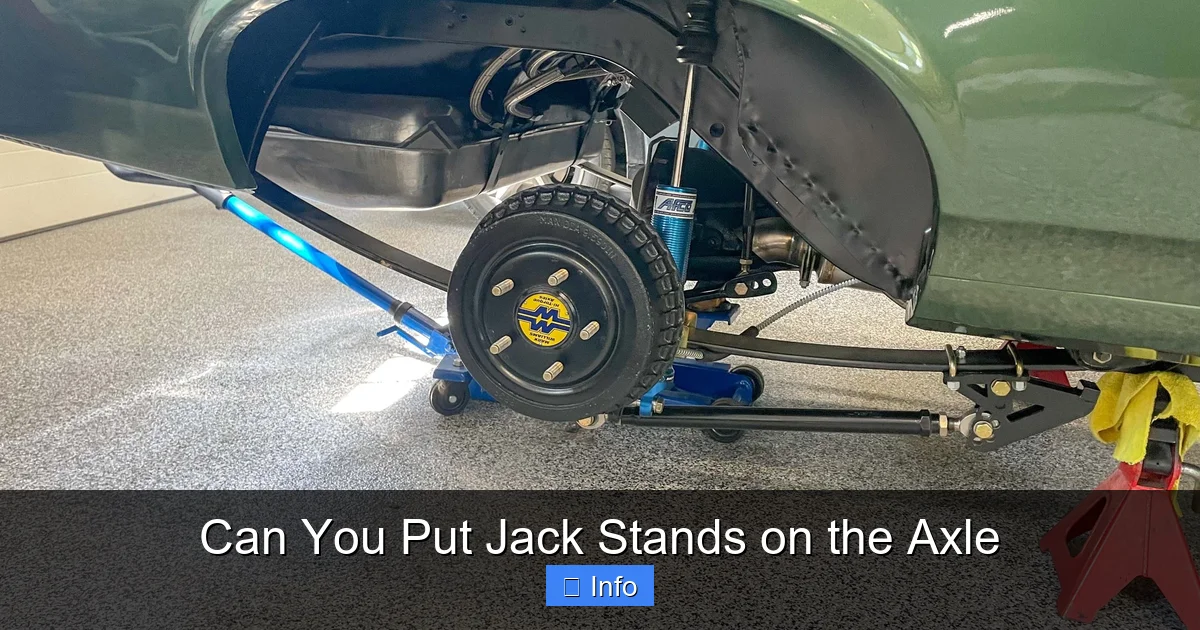
Visual guide about Can You Put Jack Stands on the Axle
Image source: onallcylinders.com
Axles are like the backbone of your wheels. They transfer power from the engine to the road. But they also have to support the weight of the car. This is a tough job. The design of the axle determines how it handles this weight.
Full-Float Axles
A full-float axle is very strong. It carries the weight of the vehicle. The axle shaft is just for spinning the wheels. It does not hold the weight. So, if you put jack stands on a full-float axle, you must put them on the axle housing.
The housing is the big piece that connects to the car. It is thick and sturdy. It can take a lot of force. But the shaft still should not be used for jack stands. If you put a jack on the shaft, it will bend. The shaft is not made for that kind of pressure.
These axles are common in trucks. For example, if you look at what is the bolt pattern on a Toyota 4Runner, you will see it uses a strong axle setup. The housing can take a lot of force. But the shaft still should not be used for jack stands.
Semi-Float Axles
A semi-float axle is different. The axle shaft does two jobs. It spins the wheel. It also holds the weight of the car. This means the shaft is under a lot of stress. Putting jack stands on a semi-float axle shaft is very risky.
If the car falls on the shaft, it can bend. A bent shaft can break. This could cause the wheel to fall off. That is a scary thought. So, for semi-float axles, you must find the housing or a frame point. Do not take chances with this type.
The Real Dangers of Putting Jack Stands on the Axle
Why is this such a big deal? Why can’t you just rest the jack stands on the axle? The answer is simple. Axles are not meant to take a vertical load. They are meant to spin.
Visual guide about Can You Put Jack Stands on the Axle
Image source: familyhandyman.com
When you put a jack stand on the axle, you put all the car’s weight on one small point. This can crush the axle. It can also bend it. A bent axle will make your car drive very weird. It might even make the car impossible to drive.
Also, think about what happens if the jack stand slips. If the car slides off the axle, it will fall on you. Cars are heavy. They can crush a person very easily. This is why you must always be careful. You should never work under a car supported only by a jack. Always use jack stands.
Another risk involves the parking brake. If the parking brake is not set right, the car might roll. It is like towing a car with the emergency brake on. If the brake fails, the car moves. You must ensure the car is locked in place before you get underneath it.
Metal fatigue is another danger. If you have put jack stands on the axle before, the metal might be weakened. It might look fine on the outside. But inside, the metal could be cracked. One day, it just breaks. Your car falls. This is why you should avoid the axle altogether.
Where You Should Place Jack Stands Instead
If you cannot use the axle, where do you put the jack stands? You need to find the strong points on your car. These are the points designed to hold the weight of the whole vehicle. They are built for this exact purpose.
Always look for reinforced metal. Avoid plastic. Avoid rubber. Avoid body panels. These parts will not hold the weight. They will crack. They will collapse. Find the steel frame. This is the only safe place.
Frame Rails
Most cars have a metal frame. This frame is called the chassis. The frame rails are very thick metal. They are built to hold the car. You can put jack stands right under the frame rails. This is the safest place. The jack will not slip. The car will not fall.
To find your frame rails, look under the car. You will see big metal beams running down the sides. Place the jack stand tips right under these beams. Make sure the tips are flat. They should not be on a sharp edge. You can use a rubber pad to protect the frame.
A sharp edge can cut the rubber on the jack stand. This can make the stand slip. Always check the contact point. Clean off any dirt or grease. A clean surface is a safe surface.
Axle Housing
We said you should not use the axle shaft. But what about the axle housing? The housing is the big, bulky part of the axle. It is the cover that holds all the gears. Sometimes, you can put a jack stand under the axle housing.
But you must be very careful. You need to make sure the housing is strong enough. You also need to make sure the jack stand is centered. If it is off-center, the car can slide off. Always use a wide jack stand base for the axle housing.
The housing is better than the shaft. But it is still not as good as the frame rails. The frame rails are the best option. Use the axle housing only if you have no other choice.
A Step-by-Step Guide to Safe Lifting
Now you know where to put the jack stands. Let’s talk about how to lift the car safely. Follow these steps every single time. Do not skip any steps. Safety is not a game.
Take your time. Read the instructions. Gather your tools. Then, start the process. It is better to be prepared than to be scrambling under a car.
Step One: Prepare the Car
First, park the car on a flat surface. Do not do this on a hill. The slope will make the car slide. It is very dangerous. Put some rocks or blocks behind the tires. This stops the car from rolling.
Then, pull the parking brake all the way up. This locks the rear wheels. It adds another layer of safety. You can also chock the wheels. Chocks are little wedges. You put them in front of and behind the tires.
This adds another layer of safety. You can also check your fuel gauge if you need to drive to the repair shop later. Just make sure the car is secure first.
Step Two: Use the Jack First
Do not put the jack stands under the car yet. Use a hydraulic jack to lift the car first. Place the jack under the recommended lifting point. This point is usually a notch in the frame or a designated area on the body.
Lift the car until the tire is a few inches off the ground. Do not lift it too high yet. Make sure the jack is stable. It should not be wobbling. If it is, lower the car and reposition the jack.
A wobbling jack is a sign of trouble. The ground might be soft. You might need a flat board under the jack. Always check the ground before you lift. Soft ground can cause a jack to sink.
Step Three: Place the Jack Stands
Now, slide the jack stands under the car. Put them under the frame rails or the axle housing. Adjust them so they are under the car securely. Do not put the jack stands on plastic or rubber. They need a solid surface.
Lower the jack slowly. Let the car rest on the jack stands. Do not rush this part. Watch the jack stands. Make sure they are sitting flat. They should not be leaning to one side.
If the jack stands are leaning, the car is not safe. You need to adjust them. Lift the car slightly with the jack. Move the jack stand. Lower the car again. Repeat until the jack stand is perfect.
Step Four: Give It a Tug
Before you get under the car, test the jack stands. Push the car from side to side. Give it a good tug. If the car feels solid, you are good. If it rocks or feels loose, get out.
Lift the car with the jack again and fix the jack stands. Never get under a car that you have not tested. It only takes a second for a jack stand to slip. That second can change your life forever.
Always use jack stands rated for your car’s weight. Check the weight rating on the jack stand. It should be higher than your car. If the rating is too low, the jack stand can fail.
Common Mistakes People Make
Even if you know the rules, you might still make mistakes. We all do. Here are some common errors. Avoid these to stay safe.
One mistake is using the wrong jack. A small scissor jack is not enough. It is only for changing a tire. It is not for holding the car up. You need a sturdy hydraulic jack.
Another mistake is not checking the jack stands. Old jack stands can have cracks. They can have rust. Always inspect your equipment before you use it. If it looks bad, do not use it. Buy new ones if you have to.
A third mistake is working too fast. You might get distracted. You might think the car is secure when it is not. Always focus on the task. Do not use your phone. Do not talk to people. Just focus on the car.
Why You Should Never Rely on a Jack Alone
A jack is not a storage device. It is a lifting tool. It is meant to lift the car. It is not meant to hold the car while you work. Jacks can slip. They can leak. They can fail without warning.
Hydraulic jacks use fluid. If there is a small leak, the car will slowly lower. You might not notice it at first. Suddenly, the car is on the ground. Or worse, it falls on you. This is why jack stands are mandatory.
Always put the jack stands under the car before you get underneath. Then, lower the car onto the jack stands. Do not get under the car while it is only on the jack. This is a golden rule of car repair.
Think of the jack as a step stool. Think of the jack stands as the floor. You would not stand on a step stool to sleep. You would not work under a car on just a jack. Use both tools together for the best safety.
Conclusion
So, can you put jack stands on the axle? The answer is complicated. Sometimes you can use the axle housing. But you should never use the axle shaft. It is not safe.
Always find the frame rails or the proper lifting points. Your safety is worth more than a few minutes of convenience. Take your time. Follow the steps. Work smart, not hard. Your car will be fixed, and you will walk away safe.
Remember to do your research. If you are not sure about your specific car, look up the details. Always use the right tools. Have a great day working on your ride!
Frequently Asked Questions
Can I put a jack on the differential cover?
No, you should not put a jack on the differential cover. The cover is made of thin metal and can crack easily. Always use the designated lift points on the frame or the axle housing to support the vehicle safely.
What happens if a jack stand slips on the axle?
If a jack stand slips, the car will fall instantly. This can cause severe injury or death. Always chock the wheels and test the stands by pushing the car before you get underneath the vehicle.
Are axle stands the same as jack stands?
No, axle stands are specifically designed to hold the axle, but they are often not recommended. Standard jack stands are safer because they attach to the frame or strong chassis points of the vehicle.
How do I find the lifting points on my car?
Check your owner’s manual for the exact locations. Many cars have notches or reinforced areas on the frame rails. If you are unsure, look up a guide for your specific vehicle model online.
Can I use a hydraulic jack to lift the car onto jack stands?
Yes, a hydraulic jack is the correct tool to lift the car. You use the jack to raise the vehicle, then place the jack stands under the strong points, and finally lower the car onto the stands.
Is it okay to put jack stands on the axle housing?
It is sometimes okay, but only if the housing is specifically designed to support the weight. The axle housing is stronger than the shaft, but the frame rails are always the safest option for placing jack stands.