What Is the Bolt Pattern on a Toyota 4runner?
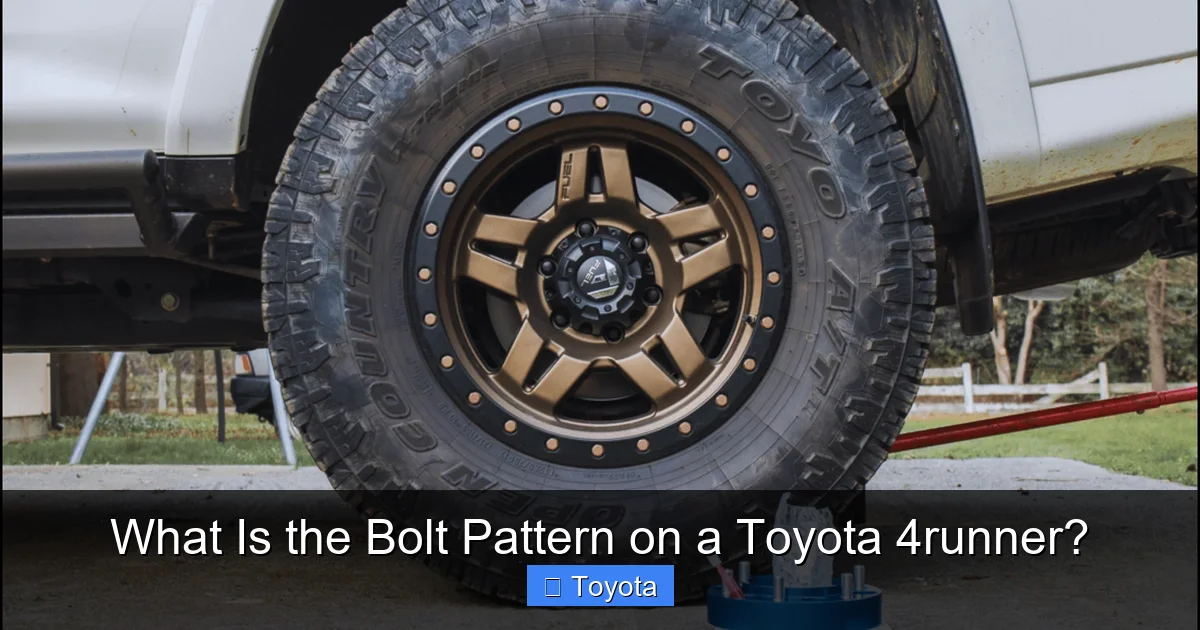
The Toyota 4Runner typically uses a 5×4.5 inch bolt pattern (also written as 5‑4.5 or 5×114.3mm). This measurement ensures you can mount tires and wheels correctly without wobble. Knowing this pattern helps you choose the right aftermarket wheels or tire combos, saving time and money.
Key Takeaways
- Point 1: The Toyota 4Runner’s bolt pattern is 5×4.5 inches (5‑bolt, 4.5‑inch spacing)
- Point 2: This pattern is often expressed as 5×114.3mm in metric terms
- Point 3: The bolt pattern stays consistent across most 4Runner years, but always double‑check your specific model
- Point 4: Matching the bolt pattern is essential for safety, tire performance, and resale value
- Point 5: You can measure the pattern at home with a simple ruler or bolt‑pattern gauge
- Point 6: When upgrading, use wheels that share the 5×4.5 pattern or reliable adapter kits
- Point 7: Always verify fitment with a trusted mechanic or using online fitment guides
📑 Table of Contents
Understanding the Bolt Pattern
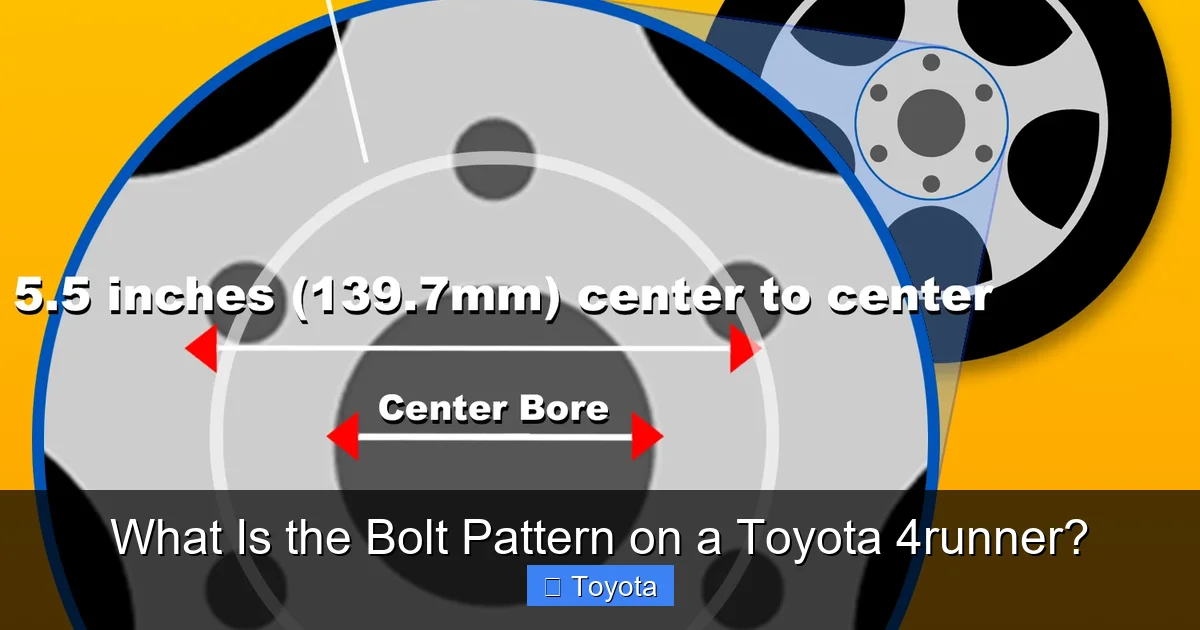
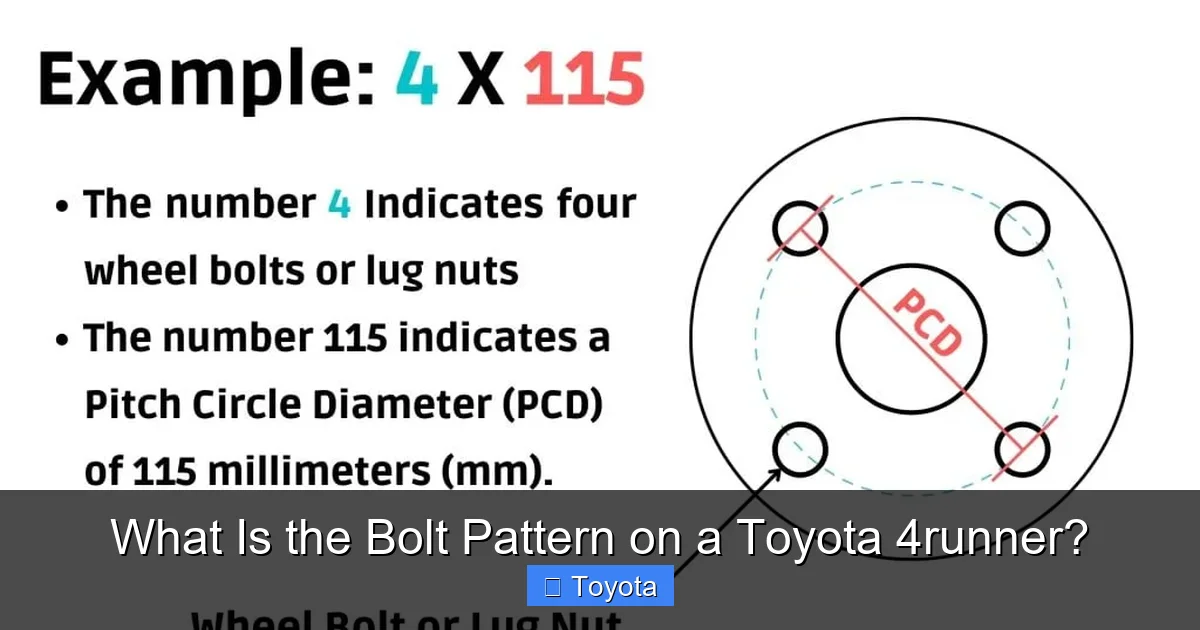
When you talk about wheels, the term “bolt pattern” (or lug pattern) is the first thing that matters. In simple terms, a bolt pattern tells you how many bolts hold the wheel to the hub and how far apart they are spaced. For a Toyota 4Runner, this pattern is often written as “5×4.5” or “5×114.3mm.” The first number is the bolt count, and the second number is the distance between the centers of two opposite bolts measured in either inches or millimeters.
Knowing the bolt pattern on a Toyota 4Runner is not just a technical detail; it’s a practical tool that helps you avoid costly mistakes when you change tires, install aftermarket wheels, or even buy a used 4Runner. A mismatched pattern can cause vibration, uneven tire wear, and even unsafe driving conditions. In this guide, we break down everything you need to know about the Toyota 4Runner bolt pattern, from how to read the spec to why it matters when you upgrade.
What Is a Bolt Pattern?
Think of a bolt pattern as the “recipe” for fitting a wheel to a vehicle’s hub. A bolt pattern consists of two numbers: the first tells you how many bolts (or lugs) are used, and the second tells you the diameter of the circle they form. For example, a 5‑bolt pattern means the wheel has five bolts arranged in a perfect circle. The second number—4.5 inches or 114.3 millimeters—measures the distance from the center of one bolt to the center of the bolt directly opposite it.
Why does this matter? Because wheels must match the hub exactly. If you try to bolt a wheel with a different pattern, the bolts won’t line up, and you’ll have a wobbly ride. The Toyota 4Runner bolt pattern is a standard that most factory wheels and many aftermarket options follow.
How to Read the Specification
When you look at a Toyota 4Runner’s wheel spec, you might see several ways to write the same thing:
- 5×4.5 inches
- 5‑4.5
- 5×114.3mm
- 5‑bolt, 4.5‑inch pitch
All of these refer to the same bolt spacing. The “×” symbol is common in the United States, while the metric version is used worldwide. When you shop for wheels or tires, make sure the product description matches one of these formats. Mixing units can lead to buying the wrong size.
Common Misconceptions
One myth is that the bolt pattern alone determines whether a wheel will fit. In reality, offset, center bore, and hub bore are also critical. Another misconception is that all Toyota SUVs share the same bolt pattern. While the Toyota RAV4 and Toyota Tundra have different bolt patterns, the 4Runner sticks to its own 5×4.5 pattern across most model years. Always verify the pattern before purchasing.
The 4Runner’s Specific Bolt Pattern
Most Toyota 4Runner owners will find that their vehicle uses a 5‑bolt pattern with a 4.5‑inch spacing. This is the standard bolt pattern on a Toyota 4Runner from model years 2003 through today, with only minor variations in the center bore. The pattern is consistent across both 2‑door and 4‑door models, making it easy to find compatible wheels for any version.
Visual guide about What Is the Bolt Pattern on a Toyota 4runner?
Image source: claspauto.com
Stock Pattern Details
The factory wheels on a 4Runner are designed to fit the 5×4.5 bolt pattern. If you ever need to replace a damaged wheel, you can look at the wheel’s back side to see the pattern stamped into the metal. You’ll also find the same pattern listed in the owner’s manual under “Wheel Specification.” When you order a replacement wheel from Toyota’s parts department, they will match this exact bolt pattern.
For example, a 2020 4Runner’s original equipment wheel will have a bolt pattern of 5×4.5 inches. If you ever need a spare, the part number will reference this pattern, ensuring you get a direct fit.
Year‑by‑Year Variations
While the bolt pattern stays the same, the center bore (the hole in the middle of the wheel that fits over the hub) can differ slightly between model years. This change is usually due to updates in hub design or the introduction of new braking systems. However, the bolt pattern remains unchanged, which is great for long‑term compatibility.
If you are buying a used 4Runner, you can verify the bolt pattern by checking the wheel hub itself. The hub will have a series of bolt holes that match the wheel’s pattern. A quick visual check or a simple measurement with a ruler will confirm you have the right pattern.
How It Differs From Other Toyota SUVs
It’s useful to compare the 4Runner’s bolt pattern to that of other Toyota SUVs and trucks. The Toyota RAV4, for instance, uses a 5×4.5 inch pattern as well, but many owners still check because some trims may vary. The Toyota Tundra, on the other hand, uses a larger 8×6.5 inch pattern. When you compare the 4Runner’s bolt pattern to other Toyota trucks, you’ll notice the Tundra uses a different pattern, which can affect tire selection. For more details on the Tundra’s specifications, see our Toyota Tundra article.
Understanding these differences helps you avoid mixing wheels from different Toyota models, which could lead to unsafe installations.
Why the Bolt Pattern Matters
The bolt pattern is the foundation of wheel and tire compatibility. If the pattern is wrong, even the most expensive tires won’t fit safely. Here are the key reasons the Toyota 4Runner bolt pattern is important for every owner.
Visual guide about What Is the Bolt Pattern on a Toyota 4runner?
Image source: boostatv.com
Safety and Performance
A correct bolt pattern ensures that the wheel is centered on the hub, distributing load evenly across all bolts. This prevents wobble at high speeds, reduces tire wear, and maintains proper steering response. An incorrect pattern can cause the wheel to sit off‑center, leading to vibration, uneven braking, and potential hub damage.
When you replace a tire or wheel, always double‑check the bolt pattern. If you are installing aftermarket wheels, make sure they share the same 5×4.5 pattern as the factory wheels.
Resale Value
Buyers look for easy upgrades when they consider a used 4Runner. A well‑documented bolt pattern and a set of wheels that match the pattern are selling points. Knowing the exact pattern also helps you negotiate better prices because buyers trust that any new wheel they choose will fit without custom adapters.
Customization Options
Whether you want larger tires for off‑road adventures or sleek alloy wheels for a sportier look, the bolt pattern guides your choices. Many aftermarket companies produce wheels specifically for the 5×4.5 pattern, making upgrades straightforward. For tire options that fit the 5×4.5 pattern, check out our Best All Terrain Tires For Toyota 4Runner Reviews guide.
How to Measure the Bolt Pattern
You don’t always need a professional tool to confirm the bolt pattern. With a few simple steps, you can measure it at home using a ruler or a dedicated bolt‑pattern gauge.
Visual guide about What Is the Bolt Pattern on a Toyota 4runner?
Image source: stocktonwheel.com
Step‑by‑Step Guide
- Gather Tools: A standard ruler, a measuring tape, or a bolt‑pattern gauge. A piece of paper and a pen can also help you mark distances.
- Locate the Bolts: Place the vehicle on a lift or jack it safely so you can access the wheel hub. Make sure the wheel is removed.
- Count the Bolts: Visually count how many bolts are arranged in a circle. The 4Runner has five.
- Measure the Distance: Using the ruler, measure the distance from the center of one bolt to the center of the bolt directly opposite it. This is the bolt pitch.
- Convert Units if Needed: If you measured in inches, multiply by 25.4 to get millimeters (or vice versa). The 4Runner’s pattern is 4.5 inches, which equals 114.3mm.
After you have the measurement, compare it to the known 5×4.5 inch pattern. If the numbers match, you have the correct pattern.
Tools You’ll Need
A bolt‑pattern gauge is the most accurate tool, but a simple ruler works fine for most home measurements. If you have a digital caliper, you can get even more precise readings. For those who want to be thorough, a wheel alignment machine can confirm the pattern and also check hub concentricity.
Tips for Accuracy
- Always measure across the hub, not the wheel, to avoid errors caused by tire thickness.
- Make sure the vehicle is level. An uneven stance can skew measurements.
- Document your findings with a photo. This helps you remember the pattern for future reference or when talking to a mechanic.
- If you are unsure, take the wheel to a parts store. Many retailers have bolt‑pattern gauges you can use for free.
Choosing Compatible Wheels and Tires
Once you know the Toyota 4Runner bolt pattern, the next step is selecting wheels and tires that match. This section walks you through the process, from reading wheel ads to using online fitment guides.
Reading Wheel Ads
Wheel listings often include the bolt pattern in the title or description. Look for terms like “5×4.5,” “5‑bolt,” or “114.3mm.” If the pattern is not listed, it’s a red flag—ask the seller for clarification before making a purchase.
Also, pay attention to the offset. Offset determines how far the wheel mounts from the hub. A wheel with too much positive offset may cause clearance issues with brakes, while too much negative offset can push the wheel outward, affecting handling.
Using Online Fitment Guides
The internet is full of fitment calculators. Many manufacturers provide these tools to help you find wheels that work with your specific 4Runner year and trim. Input your year, model, and the bolt pattern (5×4.5) to see a list of compatible wheels.
When using these guides, double‑check that the suggested wheels have the same bolt pattern. Some sites may suggest adapters that change the effective pattern, which is only a last‑resort solution.
The Role of Offset
Offset is measured in millimeters and tells you where the mounting surface sits relative to the wheel’s centerline. A typical 4Runner wheel has a +50mm offset, but aftermarket wheels may vary. Choosing the correct offset ensures that the tire sits within the fender well and doesn’t rub against suspension components.
If you are uncertain about offset, consult a professional installer. They can also help you verify that the wheel’s center bore matches your hub, preventing unwanted movement.
Upgrading the 4Runner’s Bolt Pattern
Sometimes you might want to change the bolt pattern to fit a different set of wheels, such as those from another vehicle. This is possible with adapter kits, but it should be done carefully to maintain safety.
Adapter Kits
Wheel adapter kits allow you to mount wheels with a different bolt pattern onto your 4Runner’s hub. For example, you could use a 5×4.5 to 5×4.75 adapter if you find wheels with a slightly larger pitch. The adapter adds extra clearance and changes the effective pattern, but it also adds stress to the hub and suspension mounts.
When buying adapters, look for high‑quality materials (often aluminum or steel) and torque specifications. Improper torque can loosen the adapter over time, leading to wheel failure.
When to Seek Professional Help
If you are not comfortable measuring, installing, or using adapters, take your 4Runner to a reputable shop. Professionals have the right tools, experience, and knowledge to ensure the bolt pattern is correct and the wheels are safely mounted.
Many shops also offer wheel alignment services after a pattern change. An alignment ensures that the suspension geometry remains correct, preserving handling and tire wear.
Common Mistakes to Avoid
- Assuming all Toyota SUVs share the same bolt pattern. The RAV4 may share 5×4.5, but the Tundra is different. Always verify.
- Ignoring the center bore. Even with the correct bolt pattern, a mismatched center bore can cause vibration.
- Buying wheels based solely on price. Cheap wheels may have incorrect tolerances, leading to safety issues.
- Not torqueing bolts to the manufacturer’s specs. Under‑torqued bolts can loosen; over‑torqued bolts can strip threads.
Conclusion
The bolt pattern on a Toyota 4Runner is a simple yet vital piece of information for any owner. By understanding that the pattern is 5×4.5 inches (or 5×114.3mm), you can confidently select tires, wheels, and adapters that fit safely and perform well. Whether you are replacing a damaged wheel, upgrading to larger tires for off‑road adventures, or simply want to preserve resale value, the key is always to match the bolt pattern.
Remember to double‑check the pattern when buying aftermarket wheels, use reliable measurement techniques, and consult professionals if you are unsure. With the right knowledge, you’ll enjoy a smoother ride, better fuel efficiency, and the peace of mind that comes from knowing your 4Runner is equipped with wheels that truly belong.
Keep this guide handy, and you’ll never worry about mismatched wheels again. Your 4Runner deserves wheels that fit perfectly—just like you do behind the wheel.
Frequently Asked Questions
What is the bolt pattern on a Toyota 4Runner?
The Toyota 4Runner uses a 5‑bolt pattern with a 4.5‑inch spacing, often written as 5×4.5 inches or 5×114.3mm. This pattern is consistent across most model years.
Can I change the bolt pattern on my 4Runner?
Yes, you can change the bolt pattern using wheel adapter kits, but this should only be done if you have the proper tools and knowledge. Improper changes can affect safety and handling.
How do I measure the bolt pattern?
Remove the wheel, count the bolts (there are five), and measure the distance from the center of one bolt to the center of the bolt directly opposite it. For the 4Runner, this distance should be about 4.5 inches (114.3mm).
Do all Toyota 4Runners have the same bolt pattern?
Yes, the 5×4.5 inch pattern is standard across most 4Runner years. Minor variations in the center bore exist, but the bolt spacing remains the same.
Why is the bolt pattern important when buying tires?
The bolt pattern ensures the wheel and tire assembly sits correctly on the hub. A mismatched pattern can cause vibration, uneven tire wear, and unsafe driving conditions.
Do I need special tools to measure the bolt pattern?
You can use a simple ruler or measuring tape, but a bolt‑pattern gauge gives the most accurate reading. Many auto parts stores also have gauges you can borrow.