Who Makes Toyota Oem Brake Pads?
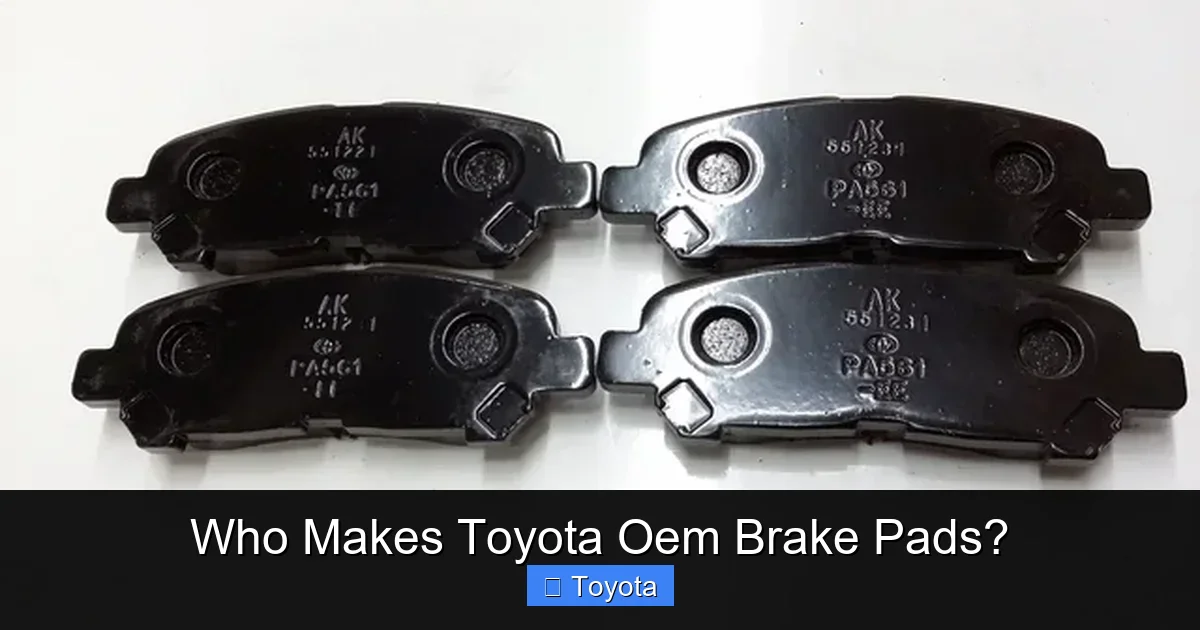
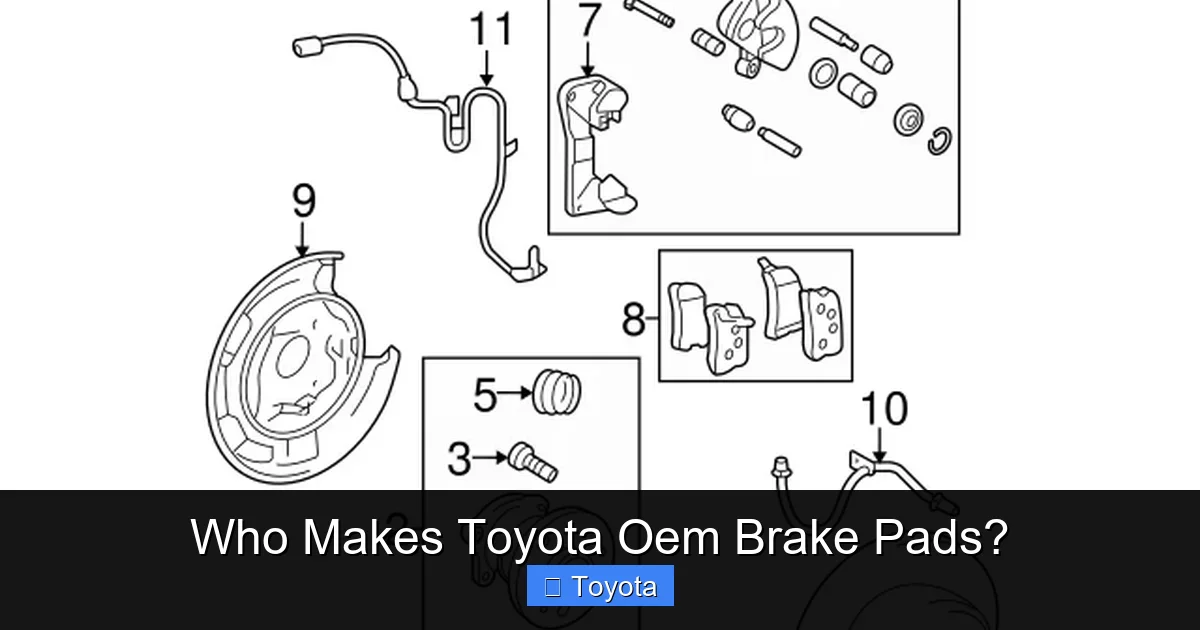
Toyota OEM brake pads are made by trusted suppliers like Akebono, ADVICS, and Sumitomo, not by Toyota itself. These suppliers meet strict Toyota specifications for safety and performance. Knowing the manufacturers helps you verify genuine parts and make smart replacement choices.
If you own a Toyota, you probably appreciate the brand reputation for reliability. You expect your car to start every morning and stop every time you press the pedal. That stopping power comes from your brake pads. But have you ever wondered who makes Toyota OEM brake pads? It is a common question. Many drivers assume Toyota makes every part in house. The reality is different. Toyota designs the specs but relies on expert suppliers to build the parts.
Understanding who makes Toyota OEM brake pads helps you make smarter maintenance decisions. You can verify you are buying genuine parts. You can compare aftermarket options with confidence. You can even save money without sacrificing safety. In this guide, we will explore the manufacturers behind the parts. We will look at why Toyota chooses these partners. We will also cover how to identify genuine parts and when to replace your pads. Let us dive in.
Key Takeaways
- Toyota does not manufacture its own brake pads: Toyota relies on specialized Tier 1 suppliers to produce OEM brake pads to exact specifications.
- Key suppliers include Akebono, ADVICS, and Sumitomo: These Japanese manufacturers are the primary sources for Toyota OEM brake pads across different models and regions.
- Supplier varies by model and region: A Camry might use Akebono pads while a Tundra uses ADVICS, and suppliers can differ between Japan and North American production.
- OEM pads carry specific markings: Genuine Toyota OEM pads feature part numbers, supplier logos, and Toyota packaging that help verify authenticity.
- Aftermarket options exist but vary in quality: Aftermarket pads can save money but may not match OEM friction formulas, noise reduction, or rotor wear characteristics.
- Regular inspection ensures safety: Checking pad thickness regularly helps you replace pads before they damage rotors or compromise stopping power.
- Proper bedding extends pad life: Properly bedding new pads improves performance, reduces noise, and ensures even rotor transfer layer formation.
📑 Table of Contents
- What Are Toyota OEM Brake Pads?
- Who Makes Toyota OEM Brake Pads? The Main Manufacturers
- Why Toyota Uses Multiple Suppliers
- How to Identify Genuine Toyota OEM Brake Pads
- OEM vs Aftermarket: What You Need to Know
- When to Replace Your Toyota Brake Pads
- Special Considerations for Toyota Trucks and SUVs
- The Environmental Angle: Copper Free Pads
- Summary: Making the Smart Choice for Your Toyota
What Are Toyota OEM Brake Pads?
Before we name the manufacturers, let us define what OEM means. OEM stands for Original Equipment Manufacturer. In the automotive world, OEM parts are the exact parts installed on your vehicle at the factory. They are designed to match the original specifications for fit, function, and performance.
Toyota OEM brake pads are engineered specifically for each Toyota model. Engineers test them for stopping distance, noise, vibration, and dust. They must work perfectly with the specific rotor metallurgy and caliper design of your Camry, Corolla, Tacoma, or 4Runner. This is not a one size fits all approach. A brake pad for a heavy Tundra towing a trailer faces different demands than a pad for a lightweight Prius.
The Difference Between OEM and Genuine Parts
You will often see the terms OEM and Genuine Toyota Parts used interchangeably. There is a subtle difference. Genuine Toyota Parts come in a Toyota box with a Toyota part number. They are sold through Toyota dealerships. OEM parts are made by the same supplier to the same spec. They may come in the supplier branded box (like Akebono or ADVICS) with the supplier part number. They are often sold through independent retailers or wholesale channels at a lower price.Both are made to the same Toyota engineering standard. The friction material, shim design, and backing plate are identical. The only difference is the packaging and the price tag.
Why This Matters for Your Wallet
Knowing this distinction saves you money. You can buy the exact same friction material from an auto parts store for less than the dealership price. You just need to know which supplier made the pads for your specific model. That is where knowing the manufacturers comes in handy.
Who Makes Toyota OEM Brake Pads? The Main Manufacturers
Toyota works with a select group of Tier 1 suppliers. These companies are global leaders in brake technology. They have decades of experience in friction material science. Toyota does not publicly release a master list of suppliers for every model year. However, industry knowledge and parts catalogs reveal the primary players.
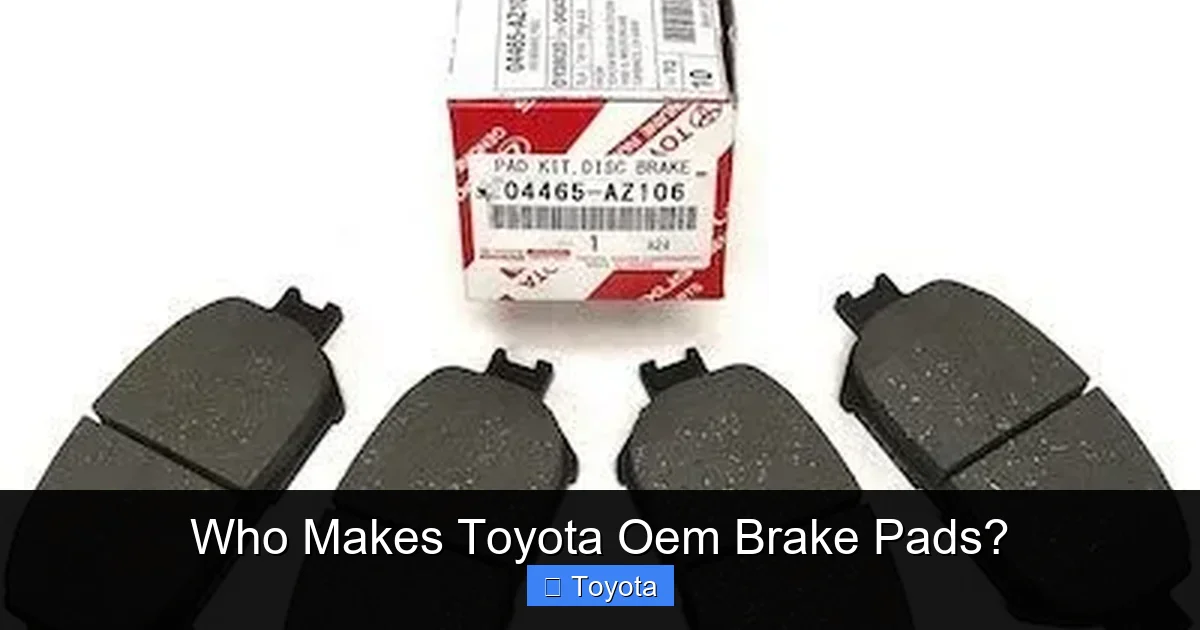
Visual guide about Who Makes Toyota Oem Brake Pads?
Image source: aautomotives.com
Akebono Brake Industry
Akebono is arguably the most famous name in Toyota OEM brake pads. This Japanese company pioneered ceramic brake pad technology. They supply pads for a massive range of Toyota models. If you drive a Camry, Corolla, RAV4, or Highlander, there is a very high chance your factory pads came from Akebono.
Akebono is famous for its ceramic formulations. They developed the ProACT (Advanced Ceramic Technology) formula. This technology delivers low dust, quiet operation, and long rotor life. It matches the Toyota priority for a refined daily driving experience. You will often see the Akebono leaf logo stamped on the backing plate of factory pads.
ADVICS (Aisin Seiki Group)
ADVICS is a joint venture brake systems company. It is owned by Aisin Seiki, Denso, and Sumitomo Electric. Aisin Seiki is a massive Toyota group affiliate. This close relationship makes ADVICS a natural partner. They supply complete brake systems including calipers, rotors, and pads.
ADVICS pads are very common on trucks and SUVs. You will find them on the Tacoma, Tundra, Sequoia, and 4Runner. Their formulations handle higher loads and heat. They are engineered for the heavier braking demands of body on frame vehicles. If you own a Tacoma or Tundra, your factory pads are likely ADVICS.
Sumitomo Electric Industries
Sumitomo Electric is another major Japanese conglomerate. They are a major shareholder in ADVICS. They also supply pads directly under the Sumitomo brand. Their pads are found on various Toyota and Lexus models. Sumitomo brings deep expertise in advanced materials. They supply pads for performance applications and hybrid regenerative braking systems. Their expertise in copper free friction materials aligns with modern environmental regulations.
Other Notable Suppliers
While the big three handle the vast majority, other suppliers exist. Nisshinbo (now TMD Friction) has supplied pads for certain models. Federal Mogul (now TMD Friction) has supplied pads for some North American models. Toyota also sources locally in different regions. North American production vehicles might use pads from a North American plant of Akebono or ADVICS. This localizes supply chains and reduces shipping costs.
Why Toyota Uses Multiple Suppliers
You might wonder why Toyota does not just pick one supplier. There are several strategic reasons. This approach benefits Toyota and ultimately you as the owner.
Visual guide about Who Makes Toyota Oem Brake Pads?
Image source: automotivian.com
Risk Mitigation and Supply Chain Security
Relying on a single supplier is risky. A fire, earthquake, or financial trouble at one factory could halt production lines. The 2011 Thailand floods and the 2011 Tohoku earthquake taught automakers this lesson painfully. By qualifying multiple suppliers for the same part, Toyota ensures production never stops. If Akebono has an issue, ADVICS can ramp up. Your new Camry still gets built on time.
Competitive Pricing and Innovation
Competition between suppliers keeps costs down. It also drives innovation. Akebono pushes ceramic technology. ADVICS pushes integrated system design. Sumitomo pushes material science. Toyota benefits from the best ideas of all three. This competition results in better pads for your car. You get the benefit of that R&D arms race every time you brake.
Regional Production Optimization
Toyota builds cars where they sell them. Camrys are built in Kentucky. Tacomas are built in Texas and Baja. Tundras are built in Texas. It makes logistical sense to source brake pads from supplier factories near the assembly plants. Akebono has a major plant in Kentucky. ADVICS has a major presence in Texas and Kentucky. Sourcing locally reduces shipping costs and lead times. It supports local economies. This efficiency helps keep the price of your new Toyota competitive.
Model Specific Engineering Needs
Different vehicles need different friction characteristics. A Prius uses regenerative braking. The rear pads see very little heat but must resist corrosion from lack of use. A Tundra towing 10,000 pounds needs massive fade resistance. A GR Corolla needs high bite and high temperature stability for track use. No single friction formula is perfect for all these applications. Different suppliers specialize in different friction chemistries. Toyota matches the supplier expertise to the vehicle mission.
How to Identify Genuine Toyota OEM Brake Pads
Knowing the manufacturers helps you spot the real deal. Counterfeit brake pads are a real problem. They look similar but use cheap, dangerous materials. Here is how to verify you are getting true Toyota OEM quality.
Visual guide about Who Makes Toyota Oem Brake Pads?
Image source: aautomotives.com
Check the Packaging and Part Numbers
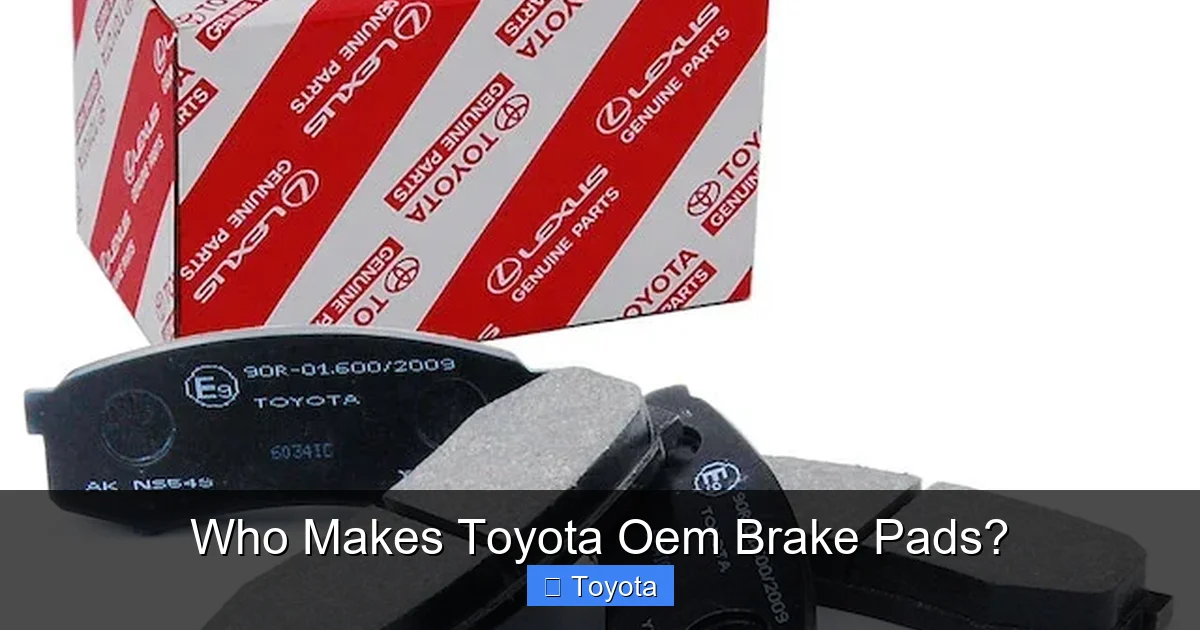
Genuine Toyota parts come in a white and red Toyota box. The part number follows the Toyota format (e.g., 04465-06150). OEM supplier boxes will have the supplier branding. An Akebono box will be blue and white with the Akebono leaf logo. The part number will be the Akebono number (e.g., ACT787). Both are legitimate. The key is the part number cross reference. The Akebono ACT787 must cross reference to the Toyota 04465-06150.
Inspect the Backing Plate Stampings
Look at the steel backing plate. Genuine OEM pads have clear stampings. You will see the supplier logo (Akebono leaf, ADVICS logo, Sumitomo mark). You will see a date code. You will see a Toyota part number or a supplier part number. The stampings should be crisp and legible. Counterfeit pads often have blurry, shallow, or missing stampings. The steel quality on the backing plate should feel solid, not thin or flimsy.
Verify the Friction Material Appearance
OEM friction material has a consistent color and texture. Akebono ceramic pads have a distinct light gray, almost white appearance. ADVICS pads often have a slightly darker gray with a specific surface finish. The surface should be smooth, free of pits, cracks, or foreign inclusions. The edges should be sharp and precise. Cheap aftermarket pads often look dull, porous, or have visible air bubbles in the friction material.
Check the Shims and Hardware
OEM pads use high quality shims. Akebono uses their proprietary stainless steel shims with rubber coating layers. ADVICS uses multi layer shims designed for their specific calipers. The shims are securely attached with rivets or high temp adhesive. They do not fall off in the box. Cheap pads often use thin, single layer tin shims that rattle and fall off. The hardware kit (clips, pins, boots) in a genuine kit fits perfectly. Cheap hardware often fits poorly, leading to noise and uneven wear.
Buy from Reputable Sources
The easiest way to avoid fakes is buying from trusted sources. Toyota dealerships guarantee Genuine Toyota Parts. Major auto parts chains (AutoZone, OReilly, NAPA, RockAuto) sell genuine OEM supplier brands. They source directly from Akebono, ADVICS, and Sumitomo. Avoid random marketplace sellers with no reputation. If a price looks too good to be true, it probably is. Your safety is worth the few extra dollars for verified parts.
OEM vs Aftermarket: What You Need to Know
Now you know who makes the OEM pads. You might ask, should I just buy aftermarket? It is a valid question. Aftermarket pads are widely available and often cheaper. Let us break down the real differences.
Friction Formulation Differences
OEM pads use proprietary friction formulas. They are tuned for the specific rotor metallurgy of your Toyota. Aftermarket manufacturers reverse engineer the pads. They try to match the friction curve. However, they do not have access to Toyota proprietary rotor metallurgy data. They test on generic rotors. This can lead to mismatched friction. You might get more initial bite but faster rotor wear. Or you get less bite when hot (fade). The OEM pad is a known quantity. It is the baseline.
Noise, Vibration, and Harshness (NVH)
Toyota engineers spend thousands of hours tuning NVH. They use specific shim designs, chamfers, and slots. They test on the actual vehicle chassis. Aftermarket pads often use generic shims. They use generic chamfer angles. They rarely test on the specific vehicle platform. The result? Aftermarket pads often squeal, groan, or judder on Toyotas. You save $20 on pads but spend hours chasing a squeak. The OEM pad is engineered for silence on your specific chassis.
Rotor Wear and Longevity
OEM pads are designed to wear evenly with the rotor. They transfer a stable friction layer (transfer layer) onto the rotor.This protects the rotor from excessive wear. Aftermarket pads can be abrasive. They act like sandpaper on your rotors. You might go through rotors twice as fast. A rotor costs $50 to $150 each. Saving $30 on pads but ruining a $100 rotor is bad math. OEM pads protect your rotor investment.
Dust Levels
Toyota owners hate brake dust. It ruins the look of alloy wheels. OEM ceramic formulas (especially Akebono) are engineered for ultra low dust. Aftermarket “ceramic” pads vary wildly. Some are low dust. Many are not. They use cheaper fillers that create heavy black dust. You wash your wheels weekly instead of monthly. The OEM formula keeps your wheels cleaner longer.
Warranty and Support
OEM pads from reputable suppliers carry strong warranties. Akebono, ADVICS, and Sumitomo stand behind their products. They have technical support lines. They honor warranties without hassle. Cheap aftermarket brands often have ghost warranties. They deny claims based on “improper installation” or “racing use.” You have no recourse if the pads fail prematurely.
When Aftermarket Makes Sense
There are cases for aftermarket. Racing or track use requires specialized compounds (like Hawk, Ferodo, Pagid) that OEM does not offer. Heavy towing beyond factory ratings might benefit from aggressive aftermarket truck pads (like Hawk LTS). If you keep a car for 150k miles and just want the cheapest safe stop, a reputable mid tier aftermarket brand (like Centric, Raybestos, Wagner) is acceptable. Just avoid the cheapest “white box” pads. They are a safety gamble.
When to Replace Your Toyota Brake Pads
Knowing who makes the pads is step one. Step two is knowing when to swap them. Toyota designs pads to last a long time. But driving habits vary. City driving wears pads faster than highway. Towing wears them faster. Mountain driving wears them faster.
Visual Inspection Basics
You can check your pads without removing wheels on many models. Look through the wheel spokes. You want to see the friction material thickness. It should be thicker than the backing plate. If it looks thin (under 3mm or 1/8 inch), it is time. Many Toyota pads have a wear indicator slot. When the pad wears to the slot, you know it is time. For a thorough check, you need to remove the wheel. If you are unsure how to do this safely, read our guide on how to check brake pads in your car. It walks you through the process step by step.
Listen to the Wear Indicators
Toyota OEM pads have metal wear indicators (squealers). These are small metal tabs. When the pad wears to 2-3mm, the tab touches the rotor. It makes a high pitched screeching sound when driving (not braking). This is your designed warning. It is not a defect. It is the pad doing its job. Do not ignore it. Schedule service immediately. Ignoring it leads to metal on metal grinding. That destroys rotors and calipers instantly.
Brake Pedal Feel Changes
Pay attention to your pedal. A low, soft pedal can mean worn pads. A pulsating pedal means warped rotors (often caused by worn pads). A hard pedal with poor stopping power can mean glazed pads. If the pedal feels different, inspect the brakes. Trust your foot. You drive the car every day. You know how it should feel.
Mileage Intervals
Toyota does not list a specific mileage replacement interval in the maintenance schedule. They list inspection intervals. Inspect every 5,000 miles or 6 months (whichever comes first). Typical OEM pad life is 30,000 to 70,000 miles. Highway drivers see 70k+. City drivers see 30k. Towing cuts life significantly. Track days destroy pads in one weekend. Inspect regularly. Replace when the material hits 3mm.
The Importance of Bedding New Pads
You bought the right pads (OEM Akebono for your Camry). You installed them. Now you must bed them. This is critical. Bedding (or burnishing) deposits an even transfer layer on the rotors. It mates the pad surface to the rotor surface. It prevents judder, noise, and uneven wear.
The standard procedure: Accelerate to 35-40 mph. Brake firmly to 5-10 mph. Do not come to a full stop. Repeat 8-10 times. Allow cooling between stops. Do not overheat them. Then drive for several minutes without braking to cool fully. This process is critical for OEM ceramic pads. If you skip it, you risk judder, noise, and uneven wear. If you just bought a new Toyota, the factory does this. But if you replace pads yourself, you must do it. For more on preparing a new Toyota, read our guide on how to break in a new car Toyota.
Choosing Quality Rotors for Your New Pads
New pads deserve good rotors. Putting new OEM pads on grooved, warped, or cheap rotors wastes money. The pads will wear unevenly. You will get noise and vibration. If your rotors have lip wear, deep grooves, or are under minimum thickness, replace them. If they are smooth and thick, you can resurface them once. But modern rotors are often thin. Replacement is often safer and cheaper than machining. For quality rotor options that match your new OEM pads, explore the best brake rotors and pads for reliable stopping power. You can also explore the best quality brake pads and rotors for safety and performance to find matched sets. If you want to upgrade your rotors for better heat dissipation, explore the best aftermarket brake rotors for enhanced vehicle performance.
Special Considerations for Toyota Trucks and SUVs
Tacoma, Tundra, 4Runner, Sequoia, and Land Cruiser owners have specific needs. These vehicles are heavier. They tow. They go off road. Their brake systems run hotter.
ADVICS Dominance in Trucks
As mentioned, ADVICS is the primary supplier for these platforms. Their pads are engineered for high thermal capacity. They use specific friction codes for towing. If you tow near max capacity regularly, consider the OEM “Heavy Duty” or “Towing” pad option if available for your model year. These use a higher friction coefficient formulation. They handle the heat better. They reduce fade on long downgrades.
Off Road Considerations
Off road driving introduces mud, sand, and water. This contaminates pads and rotors. It accelerates wear. If you off road frequently, inspect pads more often. Mud acts like grinding paste. Sand embeds in the friction material. Water causes corrosion on the rotor surface. Inspect and clean brakes after serious off road trips. Stick with OEM ADVICS pads. They are validated for the sealing and corrosion resistance needed in these environments.
Towing and Payload Management
If you tow a travel trailer or haul heavy loads, your brakes work overtime. The factory ADVICS pads are rated for the Gross Vehicle Weight Rating (GVWR). Do not exceed GVWR. If you tow at max rating often, consider upgrading to a higher temp brake fluid (DOT 4 or DOT 5.1). This raises the boiling point. It prevents pedal fade from fluid boiling. The pads still do the friction work. The fluid transfers the force. Both must handle the heat.
The Environmental Angle: Copper Free Pads
You may have heard about copper free brake pads. California and Washington passed laws phasing out copper in brake pads. Copper helps friction stability and heat transfer. But it harms aquatic life when dust washes into waterways.
Toyota and Suppliers Led the Way
Toyota and its suppliers (Akebono, ADVICS, Sumitomo) were leaders in developing copper free formulas. They developed ceramic and NAO (Non Asbestos Organic) formulas without copper. They met the “Leaf Mark” certification standards (Level N, Level B) years ahead of deadlines. When you buy current Toyota OEM pads, you get environmentally advanced technology. You get the stopping power without the copper. This is another reason to stick with OEM. The major aftermarket brands are also compliant now. But the cheapest imported pads may still contain copper. They may not meet the legal standards for sale in those states. Buying OEM guarantees compliance.
Summary: Making the Smart Choice for Your Toyota
So, who makes Toyota OEM brake pads? The answer is a consortium of expert Japanese suppliers. Akebono, ADVICS, and Sumitomo are the primary names. They bring world class friction science to your daily drive. Toyota selects them for specific vehicle platforms. They qualify multiple sources for supply security. They engineer every pad for the specific vehicle.
When it is time for new pads, you have a clear path. You can buy Genuine Toyota Parts at the dealer. You can buy OEM supplier branded pads (Akebono, ADVICS, Sumitomo) from reputable retailers. You get the exact same engineering. You get the exact same safety. You just pay less for the box.
Avoid the gamble of unknown aftermarket brands. Your Toyota engineering deserves the friction science it was designed for. Your rotors deserve the protection of the correct transfer layer. Your family deserves the engineered safety margin. Next time you hear that reassuringly quiet stop, you will know the engineering behind it. It started with Toyota engineers. It was realized by Akebono, ADVICS, or Sumitomo engineers. And it keeps you safe every mile.
Inspect your pads regularly. Replace them at 3mm. Bed them properly. Use quality rotors. Stick with the manufacturers Toyota trusts. Your Toyota will thank you with thousands of quiet, safe stops.
How often should I replace my Toyota brake pads?
Inspect your brake pads every 5,000 miles or 6 months. Typical replacement occurs between 30,000 and 70,000 miles depending on driving habits, but always replace when the friction material reaches 3mm thickness.
Are Akebono brake pads the same as Toyota OEM?
Akebono manufactures many Toyota OEM brake pads. Buying Akebono branded pads (like the ACT or ASP series) gives you the exact same friction material and shim technology as the dealer part, often at a lower price.
Can I use aftermarket brake pads on my Toyota?
Yes, you can use aftermarket pads, but quality varies significantly. Reputable brands like Centric or Raybestos are safe for daily driving, but cheap pads can increase noise, dust, rotor wear, and reduce stopping performance.
How do I know if my Toyota brake pads are genuine OEM?
Check for crisp stampings on the backing plate (supplier logo, date code, part number), consistent friction material texture, high quality multi layer shims, and proper fitment hardware. Buy from reputable retailers or dealers to avoid counterfeits.
Why does my Toyota have different brake pad brands on front and rear?
Toyota sources front and rear pads from different suppliers (e.g., Akebono front, ADVICS rear) based on each axle’s specific engineering requirements, such as heat load, rotor size, and caliper design.
Do I need to bed in new Toyota OEM brake pads?
Yes, bedding (burnishing) new OEM pads is essential. It deposits an even transfer layer on the rotors, preventing judder, noise, and uneven wear. Follow the 8-10 stop procedure from 35-40 mph to 5-10 mph with cooling intervals.
Are Toyota OEM brake pads ceramic or semi metallic?
Most modern Toyota passenger cars (Camry, Corolla, RAV4) use ceramic formula OEM pads (primarily from Akebono) for low dust and quiet operation. Trucks and SUVs (Tacoma, Tundra, 4Runner) often use semi metallic or hybrid formulas (primarily from ADVICS) for higher heat capacity and towing stability.
Frequently Asked Questions
What is Who Makes Toyota OEM Brake Pads??
Who Makes Toyota OEM Brake Pads? is an important topic with many practical applications.