What Can Cause a Toyota Corolla Not to Start?
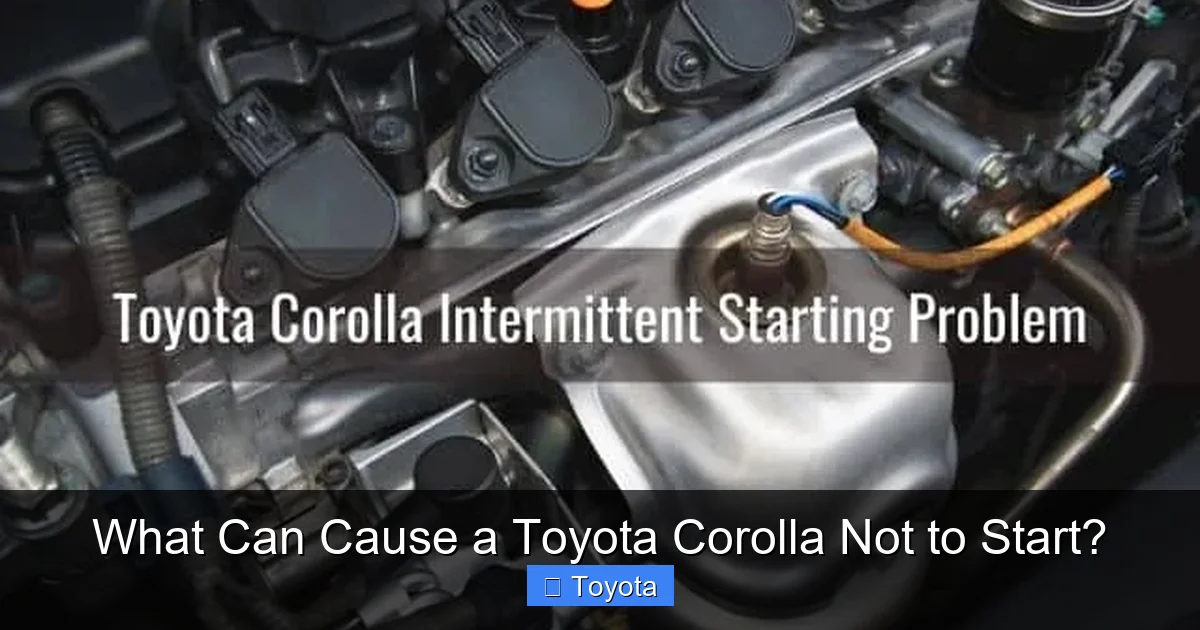
When your Toyota Corolla refuses to start, the culprit is often something simple like a dead battery or fuel issue. Understanding the key systems—ignition, fuel, and engine—helps you diagnose the problem quickly and avoid costly repairs.
Key Takeaways
- Battery health is critical: A weak or dead battery is the most frequent cause of a no‑start condition.
- Fuel delivery matters: Empty tank, clogged filter, or faulty pump can stop the engine from getting fuel.
- Ignition components must work: Bad spark plugs, coils, or a faulty crankshaft sensor will keep the engine from firing.
- Security system interference: A malfunctioning immobilizer or key fob can lock the engine out.
- Environmental factors count: Cold weather, moisture, and even overfilled fuel tanks affect starting.
- Regular maintenance prevents surprises: Simple checks each season can catch problems before they leave you stranded.
- Professional diagnosis saves time: When DIY tricks fail, a scan tool can pinpoint electronic faults.
📑 Table of Contents
Introduction
Imagine turning the key in your Toyota Corolla and hearing nothing but a sigh of disappointment. It’s a frustrating moment that many drivers face, especially when they rely on their car for daily commutes or family trips. The good news is that a Corolla that won’t start is rarely a death sentence for the vehicle. More often than not, the issue is something you can diagnose and fix yourself or with a quick visit to a mechanic.
In this guide we’ll walk through the most common reasons a Corolla refuses to start, break down how each system works, and give you practical, step‑by‑step tips to get that engine humming again. Whether you drive a 2015 sedan or a brand‑new 2023 model, the fundamentals stay the same, and the solutions are within reach.
1. Battery and Electrical System Problems
The battery is the heart of any car’s electrical system. If it’s weak, dead, or the connections are corroded, the engine won’t crank, and the Corolla stays silent.
Visual guide about What Can Cause a Toyota Corolla Not to Start?
Image source: cartipsdaily.com
1.1. Dead or Weak Battery
A battery loses charge over time, especially in cold weather. If you hear a slow, labored cranking sound or nothing at all, the battery is the first suspect.
- Check the voltage: Use a multimeter. A healthy 12‑volt battery should read around 12.6 V when the car is off and 13.7‑14.5 V while running.
- Jump‑start the car: If the engine turns over after a jump, the battery is likely the issue.
- Replace if needed: Most batteries last 3‑5 years. If yours is older, consider a replacement.
1.2. Corroded or Loose Connections
Even a good battery can fail to deliver power if the terminals are dirty or the cables are loose.
- Inspect the battery terminals for white, powdery buildup.
- Clean with a mixture of baking soda and water, then tighten the clamps.
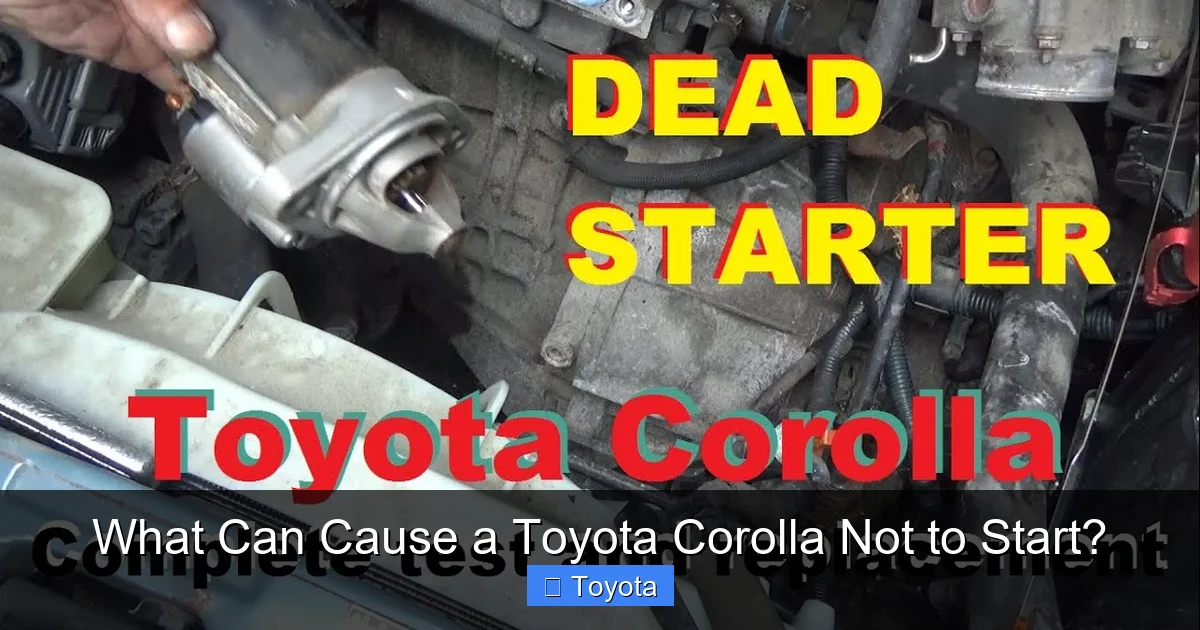
1.3. Faulty Starter Motor or Solenoid
If the battery and connections are fine, the starter may be the problem. You might hear a single click or a rapid series of clicks when you turn the key.
- Tap the starter lightly with a hammer while someone turns the key; a brief click can sometimes free a stuck gear.
- If the problem persists, the starter or solenoid likely needs replacement.
Internal Link Example
For more tips on keeping your battery healthy in cold weather, see our guide on how to maintain a car battery in cold weather.
2. Fuel System Issues
Even with a strong battery, the engine can’t start without fuel. Problems here often stem from an empty tank, clogged filter, or a malfunctioning fuel pump.
Visual guide about What Can Cause a Toyota Corolla Not to Start?
Image source: i.ytimg.com
2.1. Empty or Low Fuel Tank
It sounds basic, but drivers occasionally misread the gauge or overlook a leak. If you turn the key and hear the fuel pump prime (a soft whirring sound), but the engine still won’t start, double‑check the fuel level.
2.2. Clogged Fuel Filter
A filter that’s full of debris restricts fuel flow, especially after long trips on dusty roads.
- Replace the fuel filter according to the service schedule (usually every 30,000‑40,000 miles).
2.3. Faulty Fuel Pump
If the pump fails, the engine receives no fuel. Symptoms include a loud click from the pump area and a sputtering engine that dies quickly.
- Listen for the pump’s whir when you turn the key to the “ON” position.
- If you suspect the pump, a professional pressure test is recommended.
2.4. Overfilled Fuel Tank
Overfilling can cause fuel to spill into the evaporative emissions system, leading to hard starts.
Read more about this in our article on Can Overfilling Gas Tank Cause Car To Stall.
3. Ignition System Failures
The ignition system creates the spark that ignites the air‑fuel mixture. When any part of this chain fails, the engine won’t start.
Visual guide about What Can Cause a Toyota Corolla Not to Start?
Image source: i.ytimg.com
3.1. Bad Spark Plugs or Wires
Worn plugs can cause weak or no spark. Check for fouling, corrosion, or a gap that’s out of spec.
- Replace plugs every 30,000‑50,000 miles for most Corollas.
- Inspect the ignition wires for cracks or burns.
3.2. Faulty Ignition Coils
Coils convert battery voltage into the high voltage needed for the spark plugs. A failing coil often triggers a check‑engine light and misfires.
3.3. Crankshaft Position Sensor (CKP)
The engine control unit (ECU) relies on the CKP sensor to know when to fire the spark. A dead sensor can prevent the engine from turning over at all.
- Symptoms: engine cranks but won’t start, or a sudden loss of power while driving.
- Replacement is usually straightforward and inexpensive.
4. Security and Anti‑Theft Systems
Modern Corollas come equipped with immobilizers that prevent the engine from starting without the correct key signal.
4.1. Faulty Key Fob or Transponder
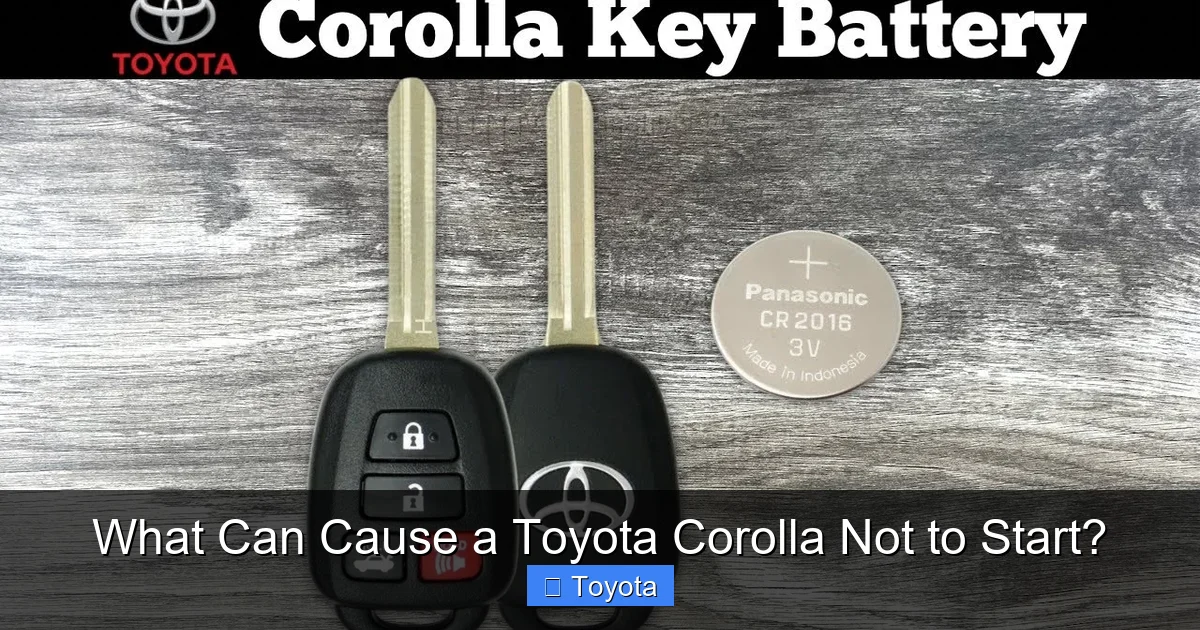
If the key’s chip isn’t recognized, the ECU will keep the fuel injectors closed.
- Try a spare key. If the spare works, the primary key may need a new battery or re‑programming.
4.2. Immobilizer Malfunction
Sometimes the immobilizer itself fails, displaying a flashing security light on the dash.
- A diagnostic scan can reset or re‑program the system.
5. Environmental and Miscellaneous Factors
Even a perfectly healthy Corolla can struggle to start under certain conditions.
5.1. Cold Weather
Low temperatures thicken engine oil and reduce battery output.
- Use a block heater or park in a garage.
- Let the car idle a minute before driving.
5.2. Moisture in the Ignition System
Rain or a flooded road can let water into spark plug wells, causing a no‑spark condition.
- Dry the spark plug area with compressed air.
5.3. Recent Repairs or Modifications
After replacing parts like the fuel pump or ECM, a reset may be required.
- Disconnect the battery for five minutes to clear any stored codes.
5.4. Engine Mechanical Problems
Severe issues like a broken timing belt or seized engine will also prevent starting, but these are less common.
6. Diagnostic Steps You Can Take at Home
Before calling a shop, run through these simple checks. They often reveal the problem quickly.
6.1. Listen for the Fuel Pump
Turn the key to “ON” (don’t start). You should hear a soft whir for 2‑3 seconds.
6.2. Check for Spark
Remove a spark plug, reconnect it to its wire, ground it to the engine, and have someone crank the engine. You should see a bright spark.
6.3. Scan for Trouble Codes
Use an OBD‑II scanner. Even if the check‑engine light isn’t on, stored codes can point to a bad sensor or immobilizer issue.
6.4. Test Battery Voltage
Measure voltage at the battery terminals while cranking. If it drops below 9.5 V, the battery or starter is at fault.
6.5. Verify Fuel Flow
Locate the fuel rail’s pressure test port (if equipped) and use a fuel pressure gauge. Compare readings to the service manual.
Conclusion
A Toyota Corolla that won’t start can be stressful, but most of the causes are simple and affordable to fix. Start with the basics—battery, fuel, and ignition—then move to security systems and environmental factors. Regular maintenance, such as replacing spark plugs, cleaning battery terminals, and keeping the fuel system clean, will dramatically reduce the chances of a no‑start event.
If you’ve tried the DIY steps and the Corolla still refuses to turn over, it’s time to let a professional run a full diagnostic. With the right information in hand, you’ll be back on the road faster and with a clearer idea of what to expect from any repair costs.
Frequently Asked Questions
Why does my Corolla crank but not start?
This usually points to a fuel or spark issue—such as a clogged fuel filter, a bad spark plug, or a failing crankshaft position sensor.
Can a dead key fob stop my Corolla from starting?
Yes. If the transponder chip isn’t recognized, the immobilizer will keep the engine from firing.
What should I do if the battery is fine but the starter clicks?
A clicking sound often means the starter solenoid is engaged but the motor isn’t turning. Tap the starter lightly while turning the key, or have the starter tested.
Is it safe to jump‑start a Corolla with a dead battery?
Yes, as long as you follow proper jump‑start procedures and use a good quality jumper cable set.
How often should I replace the fuel filter on a Corolla?
Most manufacturers recommend replacement every 30,000‑40,000 miles, but check your owner’s manual for exact intervals.
Can cold weather alone prevent my Corolla from starting?
Cold can reduce battery output and thicken oil, making it harder to crank. Using a block heater or letting the car idle briefly can help.