Why Is My Toyota Camry Check Engine Light On?
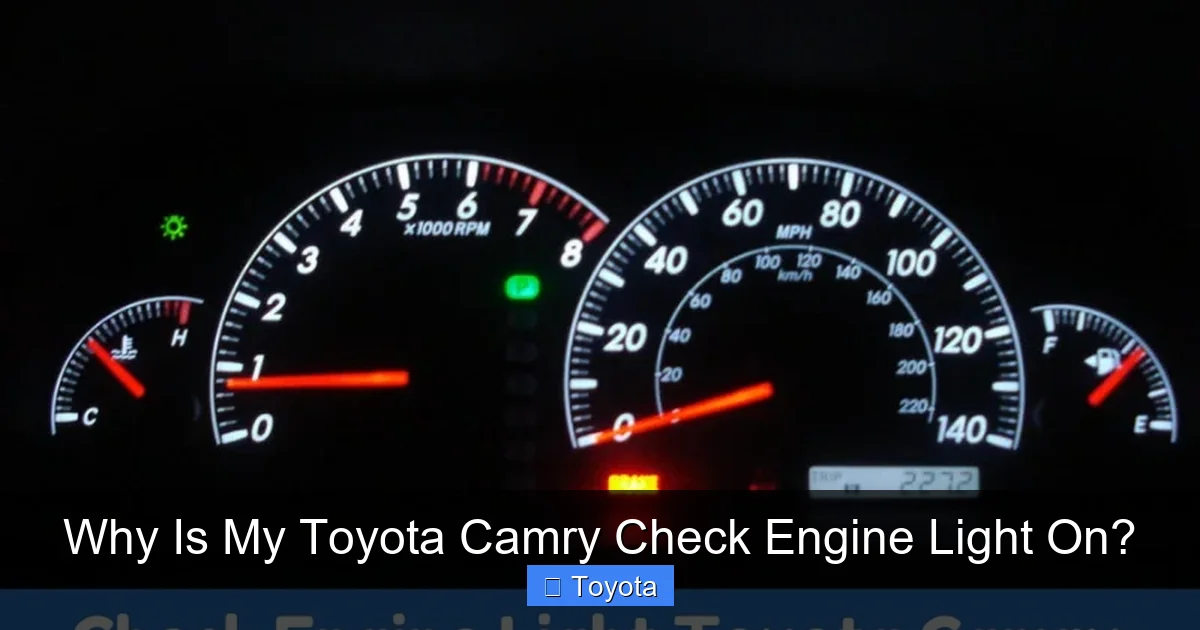
If your Toyota Camry Check Engine Light is on, it can be alarming, but most causes are simple and fixable. This guide explains the common reasons, how to diagnose the issue, and what steps you can take to get your car back on the road.
Key Takeaways
- Point 1: The Check Engine Light often signals a sensor or emissions issue that can be diagnosed with an OBD‑II scanner.
- Point 2: Simple DIY fixes like tightening the gas cap or replacing spark plugs can turn the light off.
- Point 3: Persistent codes after a reset usually mean you need a professional mechanic.
- Point 4: Regular oil changes and clean fuel system maintenance help prevent the light from coming back.
- Point 5: Knowing your car’s value with a calculator can guide you toward cost‑effective repairs.
- Point 6: Checking the battery and air filter are easy first steps before heading to the shop.
- Point 7: Resetting the light without fixing the root cause may cause it to return.
📑 Table of Contents
Why Is My Toyota Camry Check Engine Light On? Common Reasons
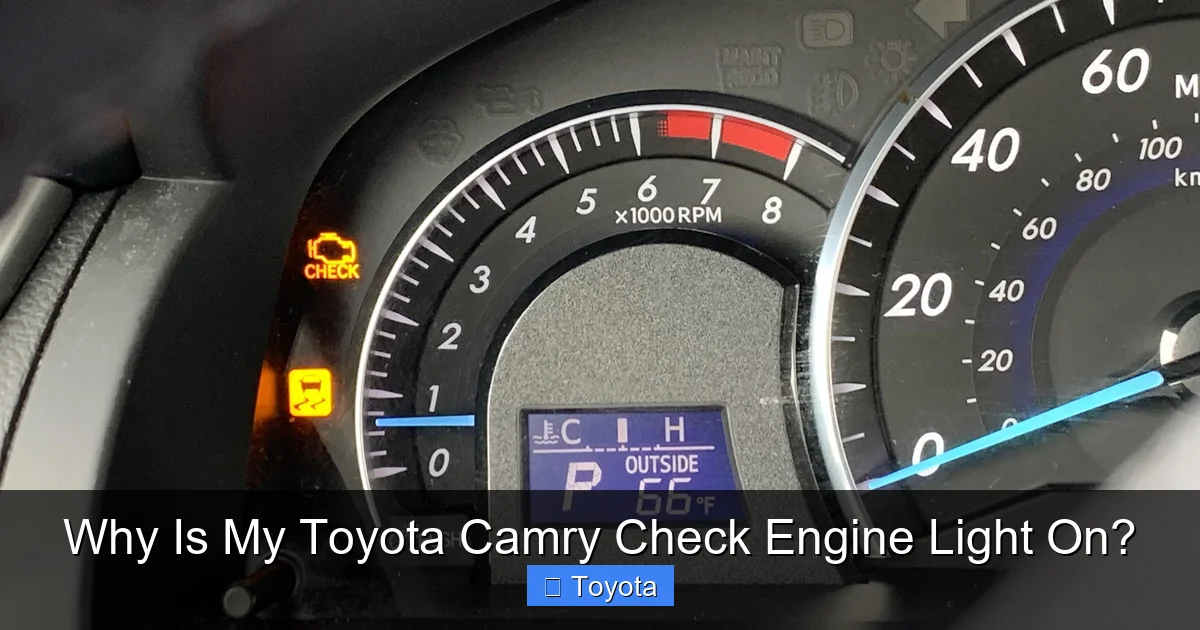
If you’re driving your Toyota Camry and suddenly the Check Engine Light flashes, you’re probably asking Why Is My Toyota Camry Check Engine Light On? The light is a warning that the engine control unit (ECU) has detected a problem. It doesn’t tell you exactly what’s wrong, but it points to a system that needs attention.
Engine Sensors
Faulty oxygen sensors, mass airflow sensors, or coolant temperature sensors are among the most common culprits. When these sensors send incorrect data, the ECU may trigger the light to alert you.
Emissions System
A loose or defective gas cap, a failing catalytic converter, or malfunctioning evaporative emissions valves can cause the light. How To Avoid Smog Check In California offers tips on keeping emissions low, which indirectly helps keep the light off.
Ignition and Fuel System
Worn spark plugs, bad ignition coils, or clogged fuel injectors disrupt the combustion process. The ECU detects misfires and illuminates the light to warn you.
Mechanical Problems
Issues such as a failing timing chain, low compression, or exhaust leaks can also set the light. These are less common but require immediate attention.
How to Diagnose the Specific Issue
Before you panic, you can find out exactly why the light is on. The fastest way is to use an OBD‑II scanner.
Visual guide about Why Is My Toyota Camry Check Engine Light On?
Image source: i.redd.it
Using an OBD‑II Scanner
Plug the scanner into the diagnostic port under the steering column. Most modern scanners read and display trouble codes that point to the specific system at fault.
Reading Common Trouble Codes
Codes are five characters long (e.g., P0301). P0301 means a misfire in cylinder 1, while P0420 indicates a catalytic converter efficiency problem. You can look up these codes online or in the scanner’s manual.
Interpreting the Codes
Once you have the code, you can decide if it’s a simple fix you can do yourself or if it requires professional help. For example, a P0455 code often means a loose gas cap, which is an easy DIY fix.
DIY Fixes You Can Try at Home
Many issues that trigger the Check Engine Light are simple enough for a DIY approach. Below are the most common fixes.
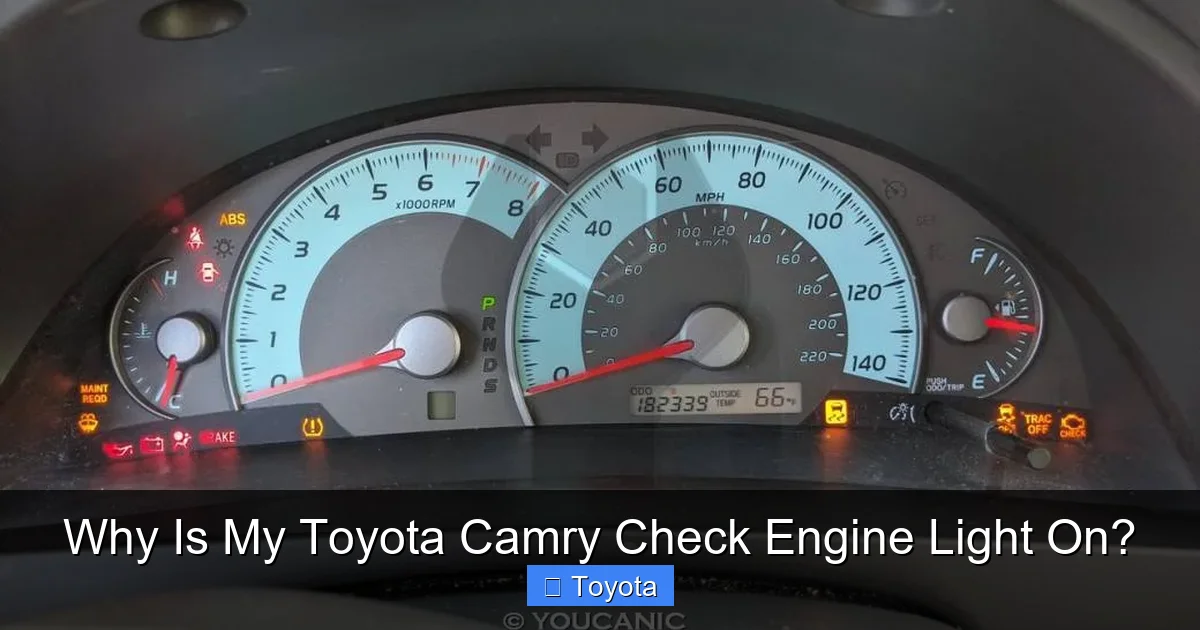
Visual guide about Why Is My Toyota Camry Check Engine Light On?
Image source: youcanic.com
Checking and Replacing the Gas Cap
Make sure the gas cap is tight. A loose cap can cause a large EVAP system leak, setting the light. Replace the cap if it’s cracked or worn.
Inspecting the Air Filter
A dirty air filter restricts airflow, causing the engine to run rich. Replace the filter if it looks dark or clogged. This simple step can improve performance and may turn off the light.
Changing Spark Plugs
Worn spark plugs lead to misfires. Use the correct plug type for your Camry and follow the torque specifications in your owner’s manual. After replacement, clear the codes and see if the light stays off.
Resetting the Check Engine Light
After fixing the issue, you can reset the light using the scanner or by disconnecting the battery for a few minutes. If the underlying problem isn’t resolved, the light will return.
When to See a Professional Mechanic
Some problems are too complex for a DIY fix. If you notice any of the following, it’s time to call a professional.
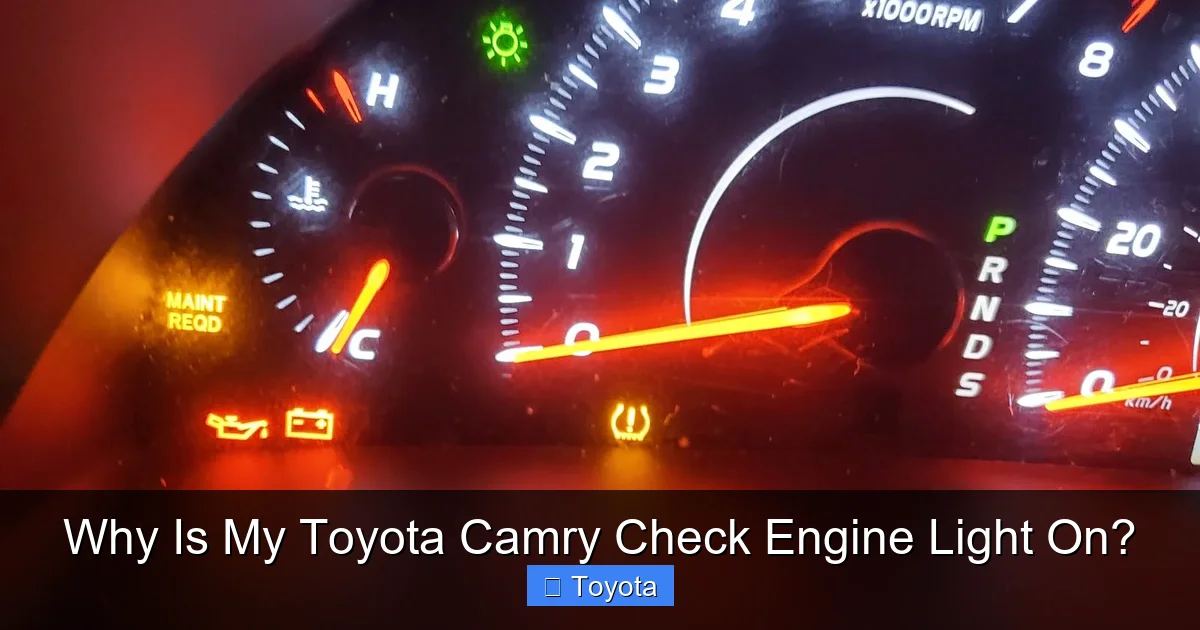
Visual guide about Why Is My Toyota Camry Check Engine Light On?
Image source: static.cargurus.com
Persistent Codes After Reset
If the light comes back on after you’ve cleared the codes and performed basic fixes, a deeper issue exists.
Complex Engine Problems
Codes like P0300 (random misfire) or P0700 (transmission control system) often require specialized tools and expertise.
Transmission or Exhaust Issues
Any code related to the transmission, exhaust, or engine timing should be handled by a qualified technician to avoid costly damage.
Preventive Maintenance Tips to Keep the Light Off
Regular maintenance is the best way to avoid a Check Engine Light.
Regular Oil Changes
Changing the oil on schedule keeps engine components lubricated and reduces wear. Best 5W 30 Engine Oils Reviewed On Bob Is The Oil Guy provides recommendations for the right oil type.
Keep the Fuel System Clean
Use high‑quality fuel and consider a fuel system cleaner every few thousand miles. A clean system prevents deposits that can affect sensors.
Monitor Coolant Levels
Proper coolant levels prevent overheating, which can trigger temperature sensor faults.
Inspect Belts and Hoses
Worn belts or cracked hoses can cause failures that set the light. Replace them before they break.
Check the Battery
Weak battery voltage can confuse the ECU. Top 10 Best Batteries For 2009 Toyota Camry Expert Picks helps you choose a reliable replacement.
Cost Estimates and What to Expect
Knowing the potential cost helps you decide whether to repair or replace.
Typical Repair Costs
Simple fixes like a gas cap replacement cost under $20. More involved repairs, such as replacing a catalytic converter, can range from $1,000 to $2,500.
Parts vs Labor
Labor rates vary by shop, but expect to pay 1–2 hours of work for most sensor replacements. Parts cost depends on the component; OEM parts are usually more expensive than aftermarket.
Saving Money with Smart Repairs
If your car is older, compare the repair cost to its market value using a How Much Is My Car Worth Calculator. Sometimes it makes sense to postpone a pricey fix.
Conclusion
Seeing the Check Engine Light on your Toyota Camry can be stressful, but most of the time the cause is straightforward. By understanding Why Is My Toyota Camry Check Engine Light On?, using an OBD‑II scanner, and trying simple DIY fixes, you can often resolve the issue yourself. When the problem is beyond a quick fix, a trusted mechanic can diagnose and repair it efficiently. Stay on top of regular maintenance, keep your fuel and emission systems clean, and you’ll greatly reduce the chances of the light returning. Safe driving!
Frequently Asked Questions
What does the Check Engine Light indicate?
The light signals that the engine control unit has detected a fault in the vehicle’s systems. It can be a minor issue like a loose gas cap or a serious problem such as a failing catalytic converter.
Can I drive my Camry with the light on?
You can usually drive short distances, but it’s best to avoid long trips until the issue is diagnosed. Ignoring the light can lead to reduced performance or damage.
How do I reset the Check Engine Light?
After fixing the underlying problem, you can clear the codes with an OBD‑II scanner or by disconnecting the battery for a few minutes. If the fault remains, the light will reappear.
Is a faulty oxygen sensor expensive to replace?
Oxygen sensor replacement costs typically range from $100 to $300 for parts and labor, depending on the model and labor rates.
What are the most common trouble codes for a Toyota Camry?
Common codes include P0300 (random misfire), P0420 (catalyst efficiency), P0455 (large EVAP leak), and P0171 (system too lean).
Should I buy a new car if the repair cost is high?
Compare the repair estimate to your car’s current value using a calculator. If the repair exceeds the vehicle’s worth, selling or trading may be a better option.