How to Leave a Toyota Running with the Doors Locked

If you need to keep a Toyota idling while its doors stay locked, you can do it safely with the right prep and a few simple steps. This guide walks you through checking the battery, setting the security system, and using accessories without draining fuel or power. Follow the tips to avoid common pitfalls and keep your vehicle ready for the next drive.
Leaving a Toyota running with its doors locked might sound like a convenience reserved for valet parking or a quick grocery run, but many drivers find themselves needing this trick for a variety of real‑world situations. Whether you’re dropping off a friend at a party, waiting for a repair, or simply want the car to be climate‑controlled before you get in, doing it right keeps you safe, saves fuel, and protects your battery. In this article we’ll walk you through the safest methods, the essential prep work, and the common pitfalls to avoid. By the end you’ll know exactly how to leave a Toyota running with the doors locked without inviting trouble.
Key Takeaways
- Check Battery Health First: A weak battery is the #1 reason a Toyota won’t stay running when locked.
- Use the Security System Correctly: Enable the factory alarm or an aftermarket immobilizer to deter theft.
- Set Climate Controls Wisely: Limit heating or cooling to short bursts to preserve fuel and battery life.
- Monitor Fuel Levels: Ensure enough gasoline for the expected idle time to avoid a stalled engine.
- Link to Detailed Guides: For deeper instructions, see our how‑to guide on leaving a car running with doors locked.
- Maintain Engine Bay: Keep the engine compartment clean to spot leaks early; check our engine bay cleaning guide for tips.
- Cold‑Weather Battery Care: In freezing temps, use a battery blanket or trickle charger; read our cold‑weather battery maintenance guide for more.
📑 Table of Contents
Why Some Drivers Choose to Idle Their Toyota
Convenience is the biggest draw. Imagine stepping out of the heat and back into a cool cabin on a scorching summer day. Or picture a cold engine ready to go the moment you return from a long meeting. Those moments feel luxurious, and they’re all possible when you know how to keep the engine humming safely.
Safety also plays a role. A locked car deters quick thieves, and an idling engine means the alarm system stays active. However, many drivers don’t realize that leaving a car running can be risky if done incorrectly. Battery drain, fuel waste, and even fire hazards can result from careless idling. This guide balances convenience with responsibility, giving you the knowledge to idle confidently.
Understanding the Risks and Benefits
Safety Considerations
When you leave a Toyota running, the engine stays alive, which means the vehicle’s electronic systems remain active. Modern cars have sophisticated security modules that can be vulnerable if you don’t engage the factory alarm. Additionally, an unattended idling engine can heat up the exhaust system, posing a fire risk if something flammable is too close.

Visual guide about How to Leave a Toyota Running with the Doors Locked
Image source: toyotaautodealer.com
On the benefit side, the security system continues to monitor doors, windows, and motion sensors. This means a locked car is less attractive to thieves. Also, many newer Toyotas have “engine start‑stop” systems that actually improve fuel economy when idling for short periods, as long as you don’t abuse it.
Convenience Factors
Convenience shines when you need climate control, music, or even a GPS navigation system ready for your return. Some drivers use this trick to keep a pet comfortable in the back seat or to pre‑heat the cabin during winter. The key is to limit the idle time to under 15 minutes for most situations, which keeps fuel consumption low.
It’s also handy for service technicians who need to diagnose issues without restarting the car each time. In these cases, a properly secured, locked vehicle protects both the driver’s property and the technician’s safety.
Preparing Your Toyota Before You Start
Check Engine and Battery
Before you even think about turning the key, give the battery a quick look. A corroded terminal or a battery below 12.6 volts can cause a sudden shutdown. Use a multimeter or a simple volt tester. If the reading is under 12.4V, consider a quick jump‑start or a trickle charger. For deeper guidance, check out our battery maintenance guide which covers winter care and long‑term health.
Visual guide about How to Leave a Toyota Running with the Doors Locked
Image source: cdn.homeimprovementway.com
Inspect the engine oil level and coolant reservoir. Low oil can cause premature wear, while insufficient coolant can lead to overheating during idle. Top them up if needed. Also, glance under the vehicle for any obvious fluid leaks; a small puddle could signal a serious problem later.
Secure the Vehicle
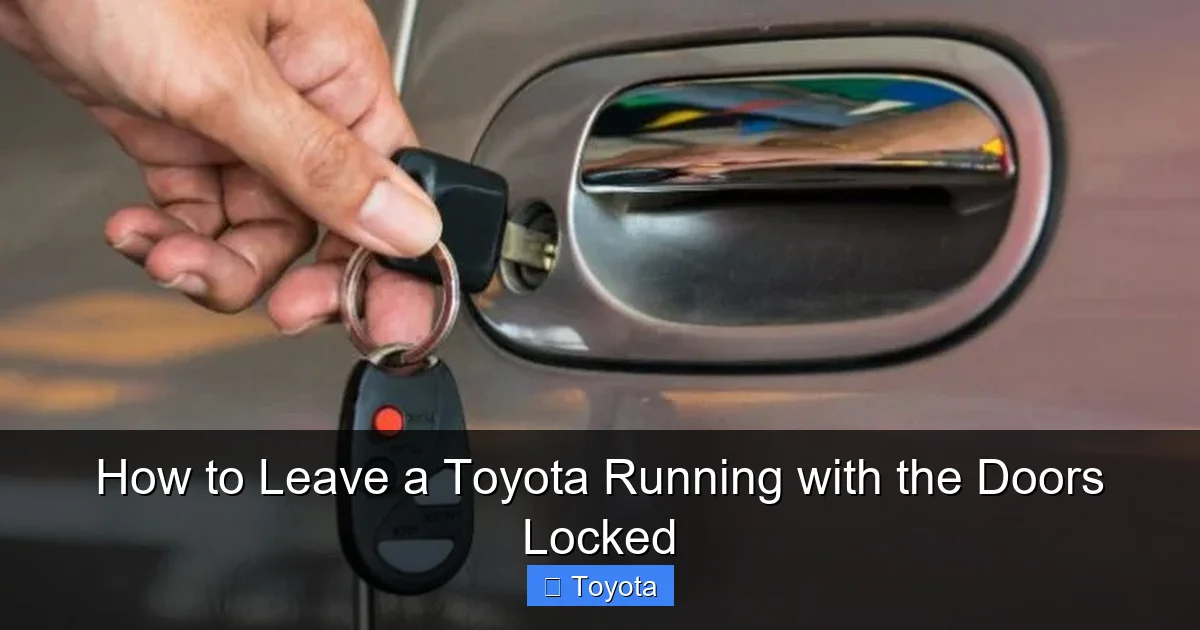
Engage the factory alarm if your Toyota has one. Press the lock button on the key fob twice; this typically arms the system and pre‑arms the immobilizer. If you have an aftermarket security system, make sure it’s set to “armed” mode before you leave.
Lock all doors using the key fob or the lock button on the driver’s door. If you have a smart key, ensure the key is not inside the car—many modern Toyotas require the key to be present to shut off the engine. Keep the key in your pocket or bag, not in the ignition.
Verify Door Locks
After locking, double‑check that all doors are indeed locked. Some models have a “door ajar” sensor that will trigger the alarm if a door is slightly open. Press the lock button again, then listen for the door chime. If you hear no chime, the doors are likely locked.
Also, ensure that the trunk and rear hatch are locked. Many people forget the trunk, leaving a potential entry point. A quick visual check from outside helps avoid surprises.
Step‑by‑Step Guide to Leaving It Running
Starting the Engine
Start the engine using the push‑button start if your Toyota is equipped. Make sure the brake is fully depressed and the selector is in “Park” (P). If you have a traditional key, turn it to the “Start” position; release it when the engine fires up.
Visual guide about How to Leave a Toyota Running with the Doors Locked
Image source: cdn.homeimprovementway.com
Allow the engine to idle for a few seconds to stabilize. Modern ECUs need a moment to calibrate fuel and ignition timing. During this brief period, listen for any unusual noises—knocking, rattling, or a high‑pitched whine can indicate a problem.
Engaging the Security System
Press the lock button on the key fob twice. You’ll see the doors lock and the hazard lights flash once. This signals that the alarm is active. If your vehicle has a “panic” button, avoid pressing it accidentally; it will trigger the siren.
Some owners also use a steering wheel lock or a steering wheel club as an extra deterrent. While not required for most urban settings, it adds a physical barrier against theft.
Setting Climate Control
Turn on the air conditioning or heating to your preferred temperature. Modern Toyota systems allow you to set a target temperature and let the cabin pre‑heat or pre‑cool while idling. Keep the fan on low to medium; high fan speeds draw more power and can drain the battery faster.
If you have a heated seat feature, use it sparingly. Heated seats can consume a few amps, but they’re designed for short bursts. Limit usage to under five minutes if you anticipate a long idle period.
Monitoring and Safety Checks
Before you step away, glance at the instrument cluster. The battery voltage should sit around 13.5–14.5V when the engine is running. The oil pressure gauge should be in the green zone. If you see a low battery warning or a blinking engine light, turn the engine off immediately.
Keep a cell phone within reach. In case the alarm triggers or something seems off, you can act quickly. Also, if you’re in a residential area, park in a well‑lit spot with good visibility.
Tips for Long‑Term Parking
Using a Battery Charger
If you expect the engine to idle for more than 30 minutes, a battery charger is a smart addition. A smart charger maintains the battery at optimal voltage without over‑charging. Connect it before you start the engine, or better yet, start the engine and let it run while the charger does its job.
For those living in colder climates, a battery blanket can keep the battery warm and preserve its capacity. This is especially helpful if you need to leave the car running overnight for a delivery or a service appointment.
Adding a Security Device
Consider installing a steering wheel lock or a tire lock. These physical deterrents make it harder for a thief to drive away, even if they manage to hot‑wire the ignition. Some drivers also use a GPS tracker that can alert them if the car moves without the security system being disarmed.
Checking Fuel Levels
Ensure the fuel tank is at least a quarter full. An idle engine consumes roughly 0.5–1 gallon per hour, depending on load and temperature. Running low on fuel can cause the fuel pump to overheat, leading to premature wear.
If you plan a longer idle, consider adding a fuel stabilizer to the tank. This prevents fuel degradation, which is especially useful for seasonal parking.
Avoiding Common Drain Sources
Turn off any unnecessary accessories after a few minutes. This includes the radio, phone connectivity, and any aftermarket LED lighting. Even though modern electronics draw minimal current, cumulative drain can add up.
Also, be mindful of the “accessory mode” some drivers mistakenly leave on. This mode keeps the engine off but draws power from the battery. Double‑check that the ignition is fully off when you lock the car.
Common Issues and How to Solve Them
Battery Drain
If you come back to a Toyota that won’t start, the battery is often the culprit. A dead battery can result from leaving lights on, a faulty alternator, or simply age. Jump‑start the vehicle and then run the engine for at least 15 minutes to recharge. After that, inspect the battery terminals for corrosion. Clean them with a baking soda solution and a wire brush, then re‑install the battery terminals.
For recurring drain, consider upgrading to a higher‑capacity battery or adding a secondary battery bank. Many owners find that a small 12V deep‑cycle battery paired with a smart charger solves the problem.
Engine Stalling
Stalling during idle can be caused by fuel starvation, a clogged throttle body, or a faulty crankshaft position sensor. If the engine stalls repeatedly, turn the key off, wait a few seconds, and try again. If it won’t restart, check the fuel pump relay and the fuse box for blown fuses.
Regular maintenance—like changing fuel filters and keeping the throttle clean—can prevent most stalling issues. For a deeper troubleshooting guide, see our engine bay cleaning article which includes steps for checking fuel lines and throttle components.
Alarm Triggering
If the alarm goes off while you’re away, it could be due to a door ajar sensor, a broken lock actuator, or even a faulty key fob. Reset the system by unlocking all doors, waiting 30 seconds, then locking again. If the alarm continues to trigger, check for any open windows or a damaged wiring harness.
Modern Toyotas have self‑diagnostic codes that can be read with an OBD‑II scanner. Many auto parts stores offer free code reads. If you’re not comfortable with diagnostics, a trusted mechanic can quickly locate the cause.
Conclusion
Leaving a Toyota running with the doors locked is perfectly doable when you follow the right steps. Start with a healthy battery, engage the factory alarm, and set climate controls wisely. Keep the idle time short, monitor the instrument cluster, and use extra security devices if you plan longer periods away.
By mastering these techniques, you’ll enjoy the convenience of a pre‑conditioned cabin, a ready engine, and a secure vehicle without the usual worries about theft or battery drain. For more detailed walkthroughs, check out our comprehensive guide on leaving a car running with doors locked. Safe driving and happy motoring!
Frequently Asked Questions
How long can I safely leave a Toyota idling with doors locked?
Most manufacturers recommend no more than 15–30 minutes of continuous idle to protect the battery and reduce fuel waste. If you need longer, use a smart charger and keep the engine revved slightly higher (around 1500–2000 RPM) to maintain battery charge.
What if my alarm keeps going off after I lock the car?
Check that all doors and the trunk are fully closed and locked. A faulty door‑ajar sensor, a broken lock actuator, or a weak key fob battery can trigger false alarms. Reset the system by unlocking all doors, waiting 30 seconds, then locking again.
Can I leave the windows cracked to avoid overheating?
Leaving windows slightly cracked can help, but it also creates a security risk. Instead, set the climate control to a comfortable temperature and use the recirculation mode. This keeps the interior cool without exposing the car to outside elements.
Do I need a special permit or insurance for an idling vehicle?
No special permit is required, but most insurance policies cover the vehicle regardless of whether it’s running. However, always verify with your insurer that leaving the car unattended is allowed under your policy.
What accessories drain the battery the most while idling?
High‑draw accessories include the radio, phone connectivity modules, GPS navigation, heated seats, and any aftermarket lighting. Turn them off after a minute or two, especially if you anticipate a longer idle period.
Is it safe to leave a Toyota running in cold weather?
Yes, but cold temperatures increase battery drain. Use a battery blanket or a trickle charger, keep the engine revved slightly higher, and limit idle time. Pre‑heating the cabin while the engine idles helps avoid excessive cold‑start strain.