How to Break Loose Crank Pulley Bolt
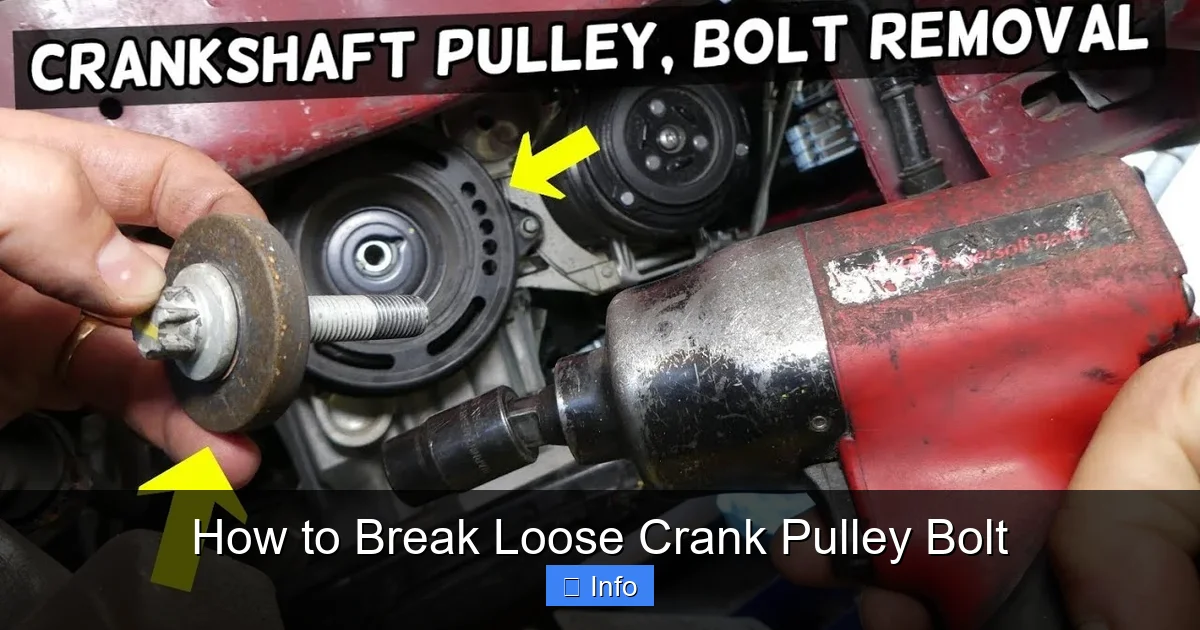
Breaking loose a crank pulley bolt can be one of the toughest tasks in engine work, but with the proper preparation, tools, and techniques you can do it safely without damaging surrounding components. This guide walks you through each step—from safety precautions and tool selection to proven methods like breaker bars, penetrating oil, heat, and impact wrenches—so you can tackle the job confidently.
When you’re deep under the hood, few bolts inspire as much respect—and frustration—as the crank pulley bolt. It’s tasked with transferring the engine’s rotational energy to accessories like the alternator, power steering pump, and air‑conditioning compressor. Because it’s torqued to a very high specification and often sits in a hot, oily environment, corrosion and thread‑locking compounds can make it feel welded in place. Learning how to break loose crank pulley bolt safely is a rite of passage for any DIY mechanic, and mastering the technique saves you both time and money.
This article walks you through the entire process, from understanding why the bolt sticks to the final torque check after reinstallation. We’ll cover the tools you need, safety precautions, step‑by‑step methods, common pitfalls, and when it’s wise to hand the job over to a shop. By the end, you’ll have a clear, repeatable strategy for tackling even the most stubborn crank pulley bolt.
Key Takeaways
- Understand the component: Knowing how the crank pulley and its bolt function helps you anticipate why it seizes and what forces are involved.
- Prepare thoroughly: Safety gear, a clean work area, and the right sockets, breaker bar, penetrating oil, and heat source are essential before you start.
- Apply penetrating oil and heat: Letting oil soak and gently heating the bolt expands the metal, breaking corrosion bonds and reducing the torque needed.
- Use a breaker bar or impact wrench: A long breaker bar provides leverage; an impact wrench delivers sudden bursts of force that can shock the bolt loose.
- Avoid common mistakes: Never use an undersized socket, over‑torque during reinstallation, or hammer directly on the pulley face—these can cause costly damage.
- Inspect and reinstall correctly: Check the bolt threads, pulley keyway, and apply the manufacturer’s torque spec (often with thread locker) to ensure a reliable reassembly.
- Know when to call a pro: If the bolt is sheared, the pulley is damaged, or you lack the proper tools, a professional mechanic can save time and prevent further issues.
📑 Table of Contents
Understanding the Crank Pulley and Its Bolt
What is the Crank Pulley?
The crank pulley, also called the harmonic balancer, is a heavy, cast‑iron or steel disc mounted on the front of the crankshaft. Its primary job is to drive the accessory belt system while dampening torsional vibrations that could otherwise damage the engine. The pulley is secured to the crankshaft by a large bolt—often 19 mm or 21 mm in diameter—that must withstand tremendous rotational forces.
Because the bolt is torqued to anywhere between 80 and 150 ft‑lb (depending on the engine), it’s common for it to become seized over time. Heat cycles, engine oil seepage, and the use of thread‑locking compounds (like Loctite) create a bond that can feel almost unbreakable without the right approach.
Why the Bolt Can Be Stubborn
Several factors contribute to a stuck crank pulley bolt:
- Corrosion: Moisture and road salt can cause rust between the bolt and the crankshaft threads.
- Thread locker: Factory‑applied anaerobic adhesives prevent vibration loosening but also increase break‑loose torque.
- Galling: Under extreme pressure, the bolt threads can microscopically weld to the crankshaft.
- Over‑torquing during previous service: If the bolt was tightened beyond spec, the threads may be deformed.
Understanding these causes helps you choose the right combination of penetrating oil, heat, and mechanical force to break the bond without damaging the crankshaft or pulley.
Preparing for the Job
Safety First
Before you touch any tools, make sure the vehicle is on a flat surface, the parking brake is engaged, and the wheels are chocked. Disconnect the negative battery terminal to prevent accidental starts. Wear safety glasses, mechanic’s gloves, and hearing protection if you’ll be using an impact wrench or hammer.
Visual guide about How to Break Loose Crank Pulley Bolt
Image source: carpartsfaq.com
If you’re working on a vehicle with a timing belt or chain, verify that the engine is at top dead center (TDC) for cylinder 1 compression stroke) to avoid moving internal components while you’re loosening the bolt.
Gathering the Right Tools
Having the proper tools makes the difference between a quick release and a rounded bolt. Here’s a checklist:
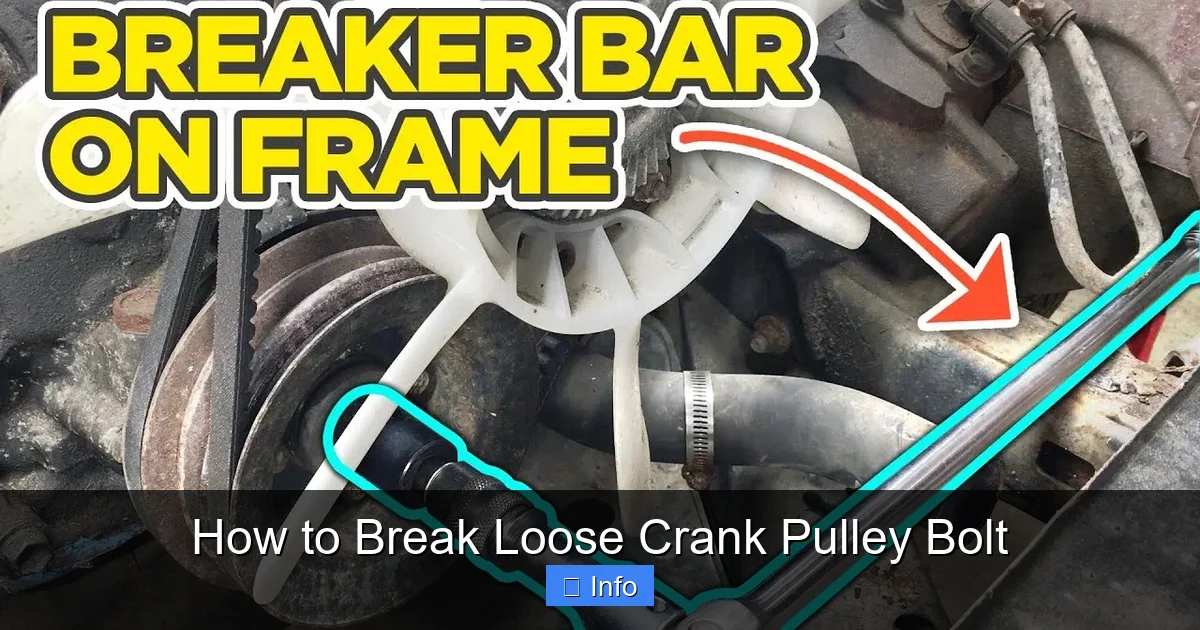
- Breaker bar (½‑inch drive, at least 24 inches long)
- Impact socket matching the bolt size (usually 19 mm or 21 mm, 6‑point preferred)
- Torque wrench (for reinstallation)
- Penetrating oil (e.g., PB Blaster, Liquid Wrench, or WD‑40 Specialist)
- Heat source (propane torch or heat gun)
- Hammer (ball‑peen or dead‑blow)
- Extension and universal joint (if clearance is tight)
- Clean rags and brake cleaner (for post‑removal inspection)
If you don’t own an impact wrench, a high‑quality breaker bar combined with the “hit‑and‑turn” method (described later) often works just as well.
Pre‑Work Inspection
A clean engine bay makes it easier to see what you’re doing and reduces the chance of dropping debris into sensitive areas. For tips on getting your bay spotless, see our guide on how to clean a car engine bay. Once the area is clean, visually inspect the bolt head for signs of rounding, and check the pulley for any cracks or wobble.
Step‑by‑Step Methods to Break Loose the Crank Pulley Bolt
Using a Breaker Bar and Socket
This is the most common starting point.
Visual guide about How to Break Loose Crank Pulley Bolt
Image source: fixmyoldride.com
- Attach the correct 6‑point impact socket to the breaker bar.
- Place the socket firmly onto the bolt head—ensure it’s fully seated to avoid slipping.
- Apply steady, gradual pressure in the counter‑clockwise direction. Use your body weight, not just arm strength, to generate torque.
- If the bolt doesn’t budge after a firm push, stop and move to the next technique (penetrating oil). Continuing to force it risks rounding the head.
Because the crank pulley bolt often requires >100 ft‑lb to break loose, a long breaker bar gives you the leverage needed without excessive effort.
Applying Penetrating Oil and Heat
When mechanical force alone isn’t enough, chemistry and physics come to the rescue.
- Spray a liberal amount of penetrating oil around the base of the bolt where it meets the crankshaft. Let it soak for at least 15‑20 minutes; for heavily seized bolts, reapply and wait up to an hour.
- While the oil is working, gently heat the bolt and surrounding area with a propane torch. Aim for a temperature of about 250‑300 °F (120‑150 °C)—hot enough to expand the metal but not so hot that you damage nearby seals or the harmonic balancer rubber.
- After heating, let the part cool for a minute, then try the breaker bar again. The combination of oil lubrication and thermal expansion often reduces the break‑loose torque by 30‑50 %.
Never heat the bolt to red‑hot; excessive heat can anneal the metal, weakening it, and can damage the pulley’s elastomeric layer.
Using an Impact Wrench (Air or Electric)
An impact wrench delivers rapid, high‑torque bursts that can shock a stuck bolt loose.
- Fit the impact socket onto the wrench’s anvil.
- Set the tool to reverse (counter‑clockwise).
- Apply short bursts—no more than 2‑3 seconds at a time—while keeping the socket seated.
- Listen for a change in sound; a sudden “click” often indicates the bolt has broken free.
- If the bolt still won’t move after several bursts, reapply penetrating oil and heat before trying again.
Impact tools are especially useful when you have limited swing space for a breaker bar.
The “Hit‑and‑Turn” Technique with a Hammer
When you lack a breaker bar or impact wrench, a hammer can provide the needed impulse.
- Place the socket on the bolt head and attach a short extension if needed.
- Using a ball‑peen hammer, strike the end of the extension firmly in the counter‑clockwise direction.
- After each hit, try to turn the socket slightly with a ratchet. The shock can break the bond.
- Repeat until the bolt begins to move.
This method works best when combined with penetrating oil; the oil reduces friction so the hammer’s shock translates into rotation.
Common Mistakes and How to Avoid Them
Over‑torquing the Bolt During Removal
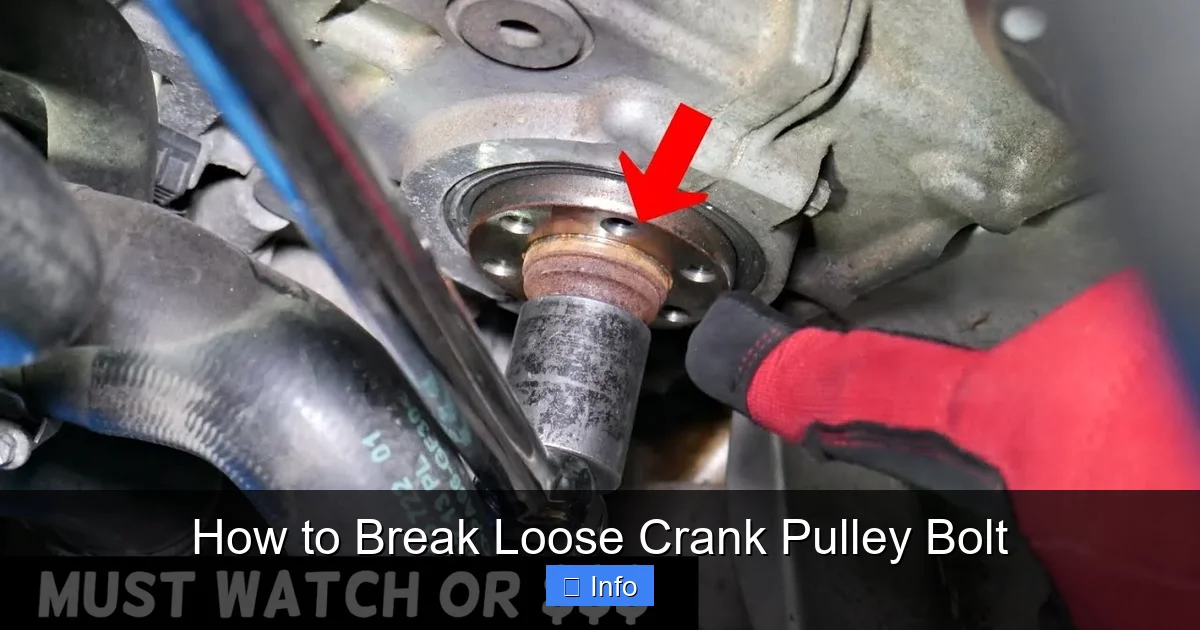
It’s tempting to keep cranking the breaker bar harder and harder, but excessive force can shear the bolt head or strip the crankshaft threads. If you feel the bolt is not moving after a firm, steady push, stop and apply oil/heat before trying again.
Visual guide about How to Break Loose Crank Pulley Bolt
Image source: i.ytimg.com
Damaging the Pulley or Keyway
The crank pulley is often held in place by a key that slots into a groove on the crankshaft. Hammering directly on the pulley face or using a pry bar can bend or crack the pulley, leading to imbalance and vibration. Always apply force to the bolt, not the pulley itself.
Using Incorrect Socket Size
A socket that’s even a millimeter too small can round the bolt head, making removal far more difficult. Double‑check the bolt size (service manual or visual comparison) and use a 6‑point impact socket for maximum grip.
After Removal: Inspection and Reinstallation Tips
Checking the Bolt and Pulley for Wear
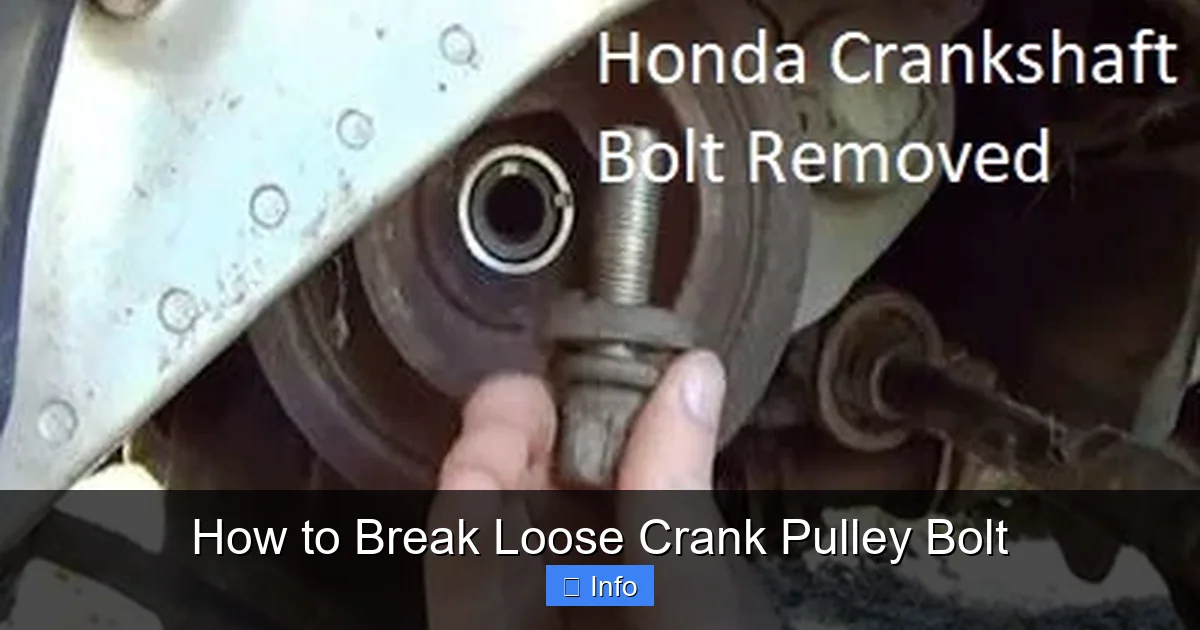
Once the bolt is free, remove it completely and inspect:
- Look for stretched or deformed threads.
- Check the bolt head for any rounding.
- Examine the pulley’s keyway and the crankshaft key for wear or damage.
- If the bolt shows signs of fatigue, replace it with a new OEM‑spec bolt.
Clean the bolt threads and the crankshaft threads with brake cleaner and a lint‑free rag. A clean surface ensures accurate torque readings.
Proper Torque Specifications
Re‑torquing the crank pulley bolt to the manufacturer’s spec is critical. Most engines call for a torque in the range of 80‑150 ft‑lb, often followed by an angle turn (e.g., +90°). Use a calibrated torque wrench and, if required, a torque‑angle gauge.
Apply a thin layer of thread locker (blue Loctite) if the service manual recommends it; this helps prevent vibration loosening without making future removal impossible.
Re‑applying Thread Locker if Needed
If you removed the bolt without reusing thread locker, reapply a small amount to the threads before reinstallation. Avoid over‑application—excess sealant can contaminate the crankshaft oil passages.
When to Call a Professional
Even with the best preparation, some situations warrant expert help:
- The bolt head is completely sheared off and you need to extract the remaining stud.
- The crankshaft threads are stripped or damaged.
- The harmonic balancer is cracked, wobbly, or shows signs of delamination.
- You lack the necessary tools (breaker bar, torque wrench, impact wrench) and purchasing them isn’t cost‑effective for a one‑off job.
In these cases, a professional mechanic has specialized extractors, thread‑repair kits, and the experience to avoid costly mistakes.
Conclusion
Mastering how to break loose crank pulley bolt is a valuable skill that saves you time, money, and the frustration of a seized fastener. By understanding why the bolt sticks, preparing with the right tools and safety gear, applying penetrating oil and heat, and using controlled mechanical force (breaker bar, impact wrench, or hammer technique), you can break the bond safely.
Remember to avoid common pitfalls like using the wrong socket, over‑torquing, or striking the pulley directly. After removal, inspect the bolt and pulley, clean the threads, and reinstall to the exact torque spec—often with a touch of thread locker—for a reliable, vibration‑free reassembly.
With this guide in hand, you’re ready to tackle that stubborn crank pulley bolt and get your engine back to smooth operation. Happy wrenching!
Frequently Asked Questions
What size socket do I need for a crank pulley bolt?
Most engines use a 19 mm or 21 mm 6‑point impact socket, but you should always verify the exact size in your vehicle’s service manual before starting.
Can I use a regular wrench instead of a breaker bar?
A regular wrench lacks the leverage needed for the high torque of a crank pulley bolt; a breaker bar (or impact wrench) is strongly recommended to avoid rounding the bolt head.
Is it safe to apply heat directly to the bolt?
Yes, gentle heating with a propane torch or heat gun is safe as long as you keep the temperature below about 300 °F and avoid heating any rubber or seals on the harmonic balancer.
How much penetrating oil should I use?
Apply a generous amount around the base of the bolt where it meets the crankshaft, let it soak for at least 15‑20 minutes, and reapply if necessary before attempting to turn the bolt.
What torque should I use when reinstalling the crank pulley bolt?
Refer to your vehicle’s service manual; typical specs range from 80 to 150 ft‑lb, often followed by an additional angle turn (e.g., +90 %). Always use a calibrated torque wrench.
Can I reuse the old crank pulley bolt?
If the bolt shows no signs of stretching, thread damage, or head rounding, you can reuse it after cleaning and applying fresh thread locker. Otherwise, replace it with a new OEM‑spec bolt.