Can I Use a Junkyard Pcm
A junkyard PCM offers a low‑cost way to replace a failed module, yet it may require careful matching and reprogramming. In this guide you will learn about compatibility, installation, and troubleshooting so you can make an informed decision.
When your car’s engine control module fails, you need a replacement that won’t break the bank. One option that many drivers consider is a junkyard PCM, a used powertrain control module taken from a salvage vehicle. This article explains what a junkyard PCM is, the advantages and disadvantages, and the steps you should follow to install it successfully.
In the following sections we will cover the basics of a PCM, why a junkyard unit can be appealing, the risks involved, how to locate a compatible part, the installation and programming process, and finally how to troubleshoot any issues that may arise. By the end you will have a clear picture of whether a junkyard PCM is the right choice for your vehicle.
Key Takeaways
- Cost savings: A junkyard PCM is usually much cheaper than a new unit.
- Compatibility check: Verify part number and software version before purchase.
- Programming required: Most modern PCMs need coding after installation.
- Potential hidden damage: Used modules may have internal wear or water damage.
- Warranty considerations: Junkyard parts often come with limited or no warranty.
- Installation tips: Disconnect battery, secure connections, and use proper tools.
📑 Table of Contents
What Is a PCM and Why Consider a Junkyard One?
The powertrain control module, often abbreviated as PCM, acts as the central computer for your engine. It continuously reads data from sensors such as the oxygen sensor, throttle position sensor, and crankshaft position sensor. Using this information, it adjusts fuel injection timing, ignition spark, and other parameters to keep the engine running efficiently.
How a PCM Works
Inside the PCM there is a microprocessor, memory chips that store calibration maps, and circuitry that interfaces with the vehicle’s wiring harness. When you turn the key, the PCM runs a self‑check and then begins controlling the engine. If any sensor reading falls outside expected ranges, the PCM stores a diagnostic trouble code and may illuminate the check engine light.
Why a Junkyard PCM Might Be Tempting
A new PCM from a dealership can cost over a thousand dollars, while a junkyard PCM often sells for a fraction of that price. Salvage yards typically have a large inventory of parts from various makes and models, so you can usually find one that matches your vehicle without waiting for a special order. The cost savings can be especially appealing if you are on a tight budget.
Benefits of Using a Junkyard PCM
Choosing a junkyard PCM comes with several potential advantages.

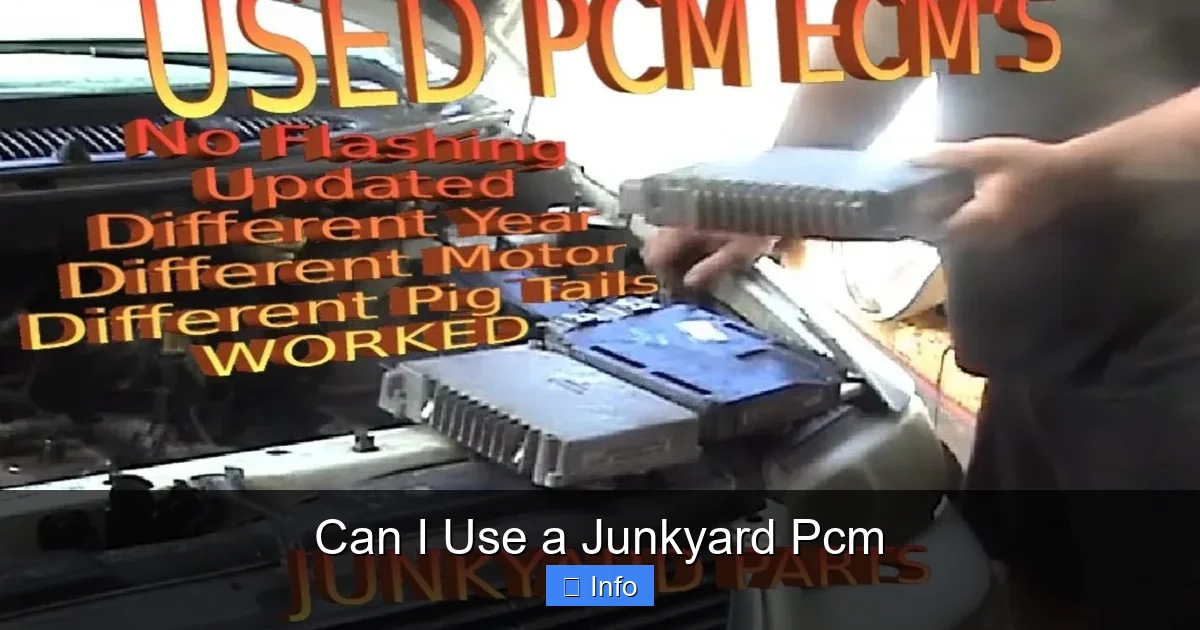
Visual guide about Can I Use a Junkyard Pcm
Image source: i.ytimg.com
Cost Savings
The most obvious benefit is the lower price. A used module may cost anywhere from $150 to $400, depending on the vehicle and the condition of the part. This is significantly less than the $1,200 or more you might pay for a brand‑new unit. The money saved can be used for other repairs or maintenance.
Availability
Because salvage yards collect vehicles from many years, they often have a wide selection of PCMs. You can find a junkyard PCM for older models that are no longer in production, making it a viable option when replacement parts are hard to locate. Additionally, many yards list their inventory online, allowing you to search by make, model, and year.
Environmental Benefits
Reusing a part from a scrapped vehicle reduces waste and the demand for new manufacturing. By purchasing a junkyard PCM, you contribute to a more sustainable automotive ecosystem.
Risks and Potential Problems
Despite the benefits, there are important drawbacks to consider before buying a junkyard PCM.
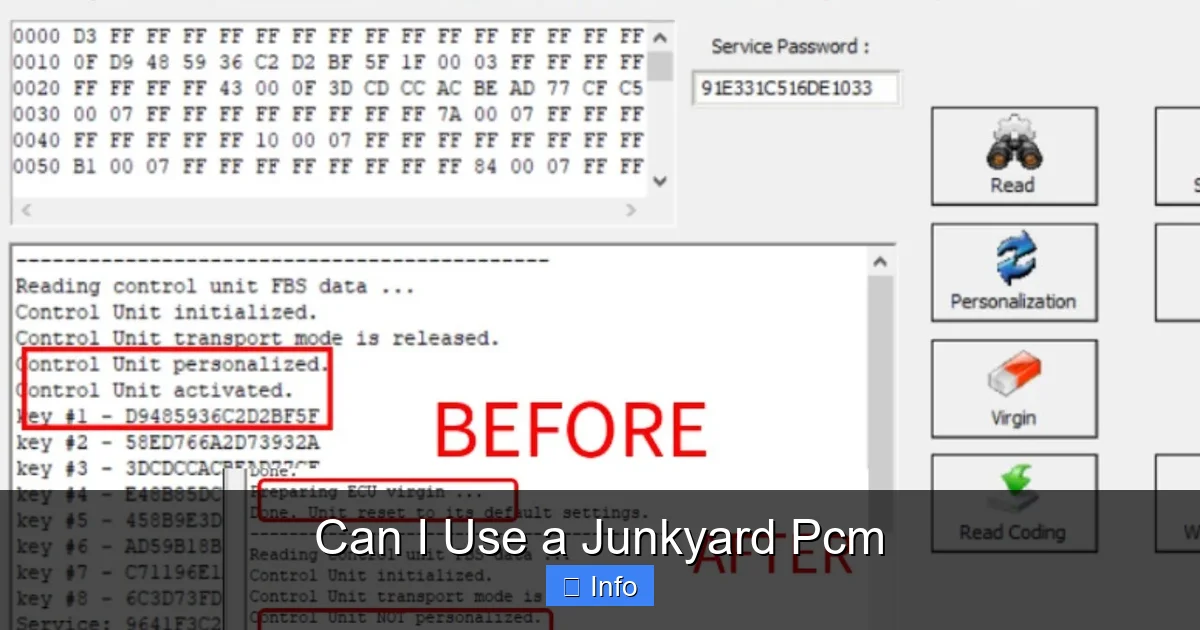
Visual guide about Can I Use a Junkyard Pcm
Image source: i.ytimg.com
Compatibility Issues
Not every PCM will work in your car. The part number, software version, and even the physical connector must match your vehicle’s specifications. Installing an incompatible unit can cause the engine to run poorly, trigger warning lights, or even prevent the car from starting.
Programming Challenges
Many modern PCMs require programming after installation. The new module must be coded to your vehicle’s VIN, engine type, and optional equipment. Without proper programming, the PCM will not function correctly. This process often requires a specialized diagnostic tool or a visit to a shop that can perform the coding.
Hidden Damage
A junkyard PCM may have been exposed to water, heat, or physical impact. Even if it looks fine, internal components could be damaged. Testing the unit before installation can help avoid a costly mistake.
How to Find a Compatible Junkyard PCM
Finding the right junkyard PCM involves a few key steps that can save you time and money.
Visual guide about Can I Use a Junkyard Pcm
Image source: cimg2.ibsrv.net
Identify Your Original Part Number
Start by locating the part number on your existing PCM. It is usually printed on a label on the side of the module. Write down this number and use it as a reference when searching. If the original PCM is missing, consult your vehicle’s service manual or an online database.
Check Vehicle Specifications
Make sure the junkyard PCM matches your vehicle’s year, make, model, and engine size. Some vehicles have multiple PCM variants depending on trim level or optional features. Verify these details before purchasing.
Use Online Resources
Many salvage yards publish their inventory on websites where you can filter by make and model. Additionally, automotive forums often have threads where owners share their experiences with specific part numbers. Reading these discussions can provide insight into compatibility and potential issues.
Installing and Programming a Junkyard PCM
Once you have a compatible junkyard PCM, the next step is to install and program it correctly.
Physical Installation
Begin by disconnecting the negative battery cable to prevent any electrical shorts. Locate the PCM, which is usually under the hood or inside the cabin near the firewall. Remove the mounting bolts and disconnect the wiring harness. Take out the old module and replace it with the junkyard PCM, ensuring the harness plugs in securely. Re‑attach the mounting bolts and reconnect the battery.
Programming and Coding
After installation, the PCM must be programmed. This can be done with an OBD‑II programming tool that connects to the vehicle’s diagnostic port. The tool writes the appropriate calibration and security codes to the module. Some vehicles require a visit to a dealership or a specialized shop for this step, especially if the PCM needs to be paired with the immobilizer system.
If you are thinking about swapping a PCM from one car to another, check out this guide on Can You Swap Pcm From One Car To Another.
Troubleshooting and Final Checks
Even after programming, it’s important to verify that the junkyard PCM is working as expected.
Reading Diagnostic Trouble Codes
Connect an OBD‑II scanner to the vehicle and retrieve any stored codes. Common codes such as P0300 (random misfire) or P0420 (catalyst efficiency) may indicate that the PCM is not calibrated correctly. Addressing these codes can help ensure smooth operation.
Monitoring Engine Performance
After clearing codes, take the car for a drive. Pay attention to engine idle, acceleration, and any warning lights. If the engine runs smoothly and no lights appear, the junkyard PCM is likely functioning properly.
When to Seek Professional Help
If you encounter persistent codes, the engine fails to start, or the check engine light stays on, it may be necessary to consult a mechanic. A professional can reprogram the module, replace it with a known good unit, or diagnose underlying issues that are not related to the PCM.
A bad PCM can cause a Toyota Corolla not to start, so it’s useful to read about What Can Cause A Toyota Corolla Not To Start.
Conclusion
A junkyard PCM can be a cost‑effective solution for replacing a failed engine control module, but it requires careful selection, proper installation, and often programming. By following the steps outlined above, you can increase the likelihood of a successful install and keep your vehicle running reliably. Weighing the benefits against the risks will help you decide whether this option is right for your situation.
When you need to move the vehicle to the junkyard, remember that you might be able to tow it with the parking brake on; see Can A Car Be Towed With Parking Brake On.
Frequently Asked Questions
Can I use a junkyard PCM from a different model?
It is possible only if the part number, software version, and physical connectors match your vehicle. Using a mismatched unit can cause poor performance or prevent the car from starting.
Do I need to program a junkyard PCM after installation?
Most modern PCMs require programming to match your vehicle’s VIN and options. Without proper coding, the module will not function correctly.
How much does a junkyard PCM typically cost?
Prices usually range from $150 to $400, depending on the vehicle and condition, which is much less than a new factory unit.
What tools are required to install a junkyard PCM?
You will need basic hand tools, a socket set, and possibly an OBD‑II programming tool. Some installations may also require a screwdriver and a wiring harness connector.
Will using a junkyard PCM affect my vehicle’s warranty?
Installing a used PCM can void portions of your warranty, especially if it is considered an aftermarket modification. Check your warranty terms before proceeding.
How long does a junkyard PCM usually last?
A junkyard PCM can last several years if it is compatible and properly programmed, but its lifespan depends on the condition of the original unit and how well it is installed.