Will Toyota 6-lug Wheels Fit a Chevy?
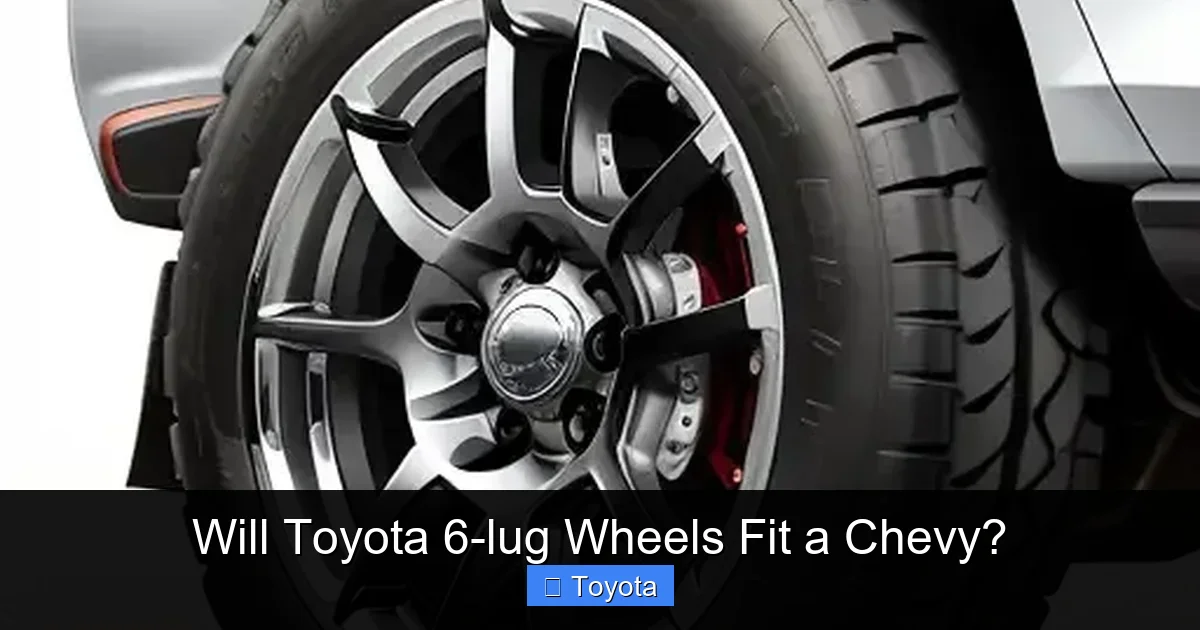
While Toyota and Chevy both use 6-lug wheel patterns, compatibility depends on bolt circle diameter, center bore, and offset. Always verify specifications for your specific vehicle models before swapping wheels. Proper fitment ensures safety and performance.
This is a comprehensive guide about Will Toyota 6-Lug Wheels Fit a Chevy?.
Key Takeaways
- Lug Pattern Match Doesn’t Guarantee Fit: Toyota and Chevy 6-lug wheels may share bolt patterns but differ in critical specs like center bore or offset.
- Bolt Circle Diameter Matters: Confirm the exact bolt pattern (e.g., 6×139.7mm) matches between the donor and recipient vehicle.
- Center Bore Alignment Is Crucial: Mismatched center bores can cause vibrations or wheel damage; hub-centric rings may help.
- Offset and Backspacing Affect Clearance: Incorrect measurements can lead to tire rubbing or suspension interference.
- Model-Specific Verification Required: Always check fitment guides or consult a professional for your exact vehicle year and model.
- Consider Aftermarket Solutions: Adapters or spacers can enable cross-brand swaps but require careful installation.
- Vehicle Weight and Load Capacity: Ensure wheels meet your Chevy’s load requirements to avoid safety risks.
[FEATURED_IMAGE_PLACEHOLDER]
Introduction
If you’re a car enthusiast or a DIY mechanic, you’ve probably wondered, “Will Toyota 6-lug wheels fit a Chevy?” It’s a common question, especially when hunting for affordable wheels or upgrading your vehicle’s look. While both Toyota and Chevrolet use 6-lug wheel patterns, the answer isn’t as straightforward as “yes” or “no.” Wheel compatibility depends on several factors beyond just the number of lugs. Bolt patterns, center bore diameters, offset measurements, and even the vehicle’s weight capacity all play a role in determining whether a wheel will safely fit your Chevy.
In this article, we’ll break down everything you need to know about swapping Toyota 6-lug wheels onto a Chevy. We’ll explain how bolt patterns work, why center bore alignment is critical, and how offset affects performance. You’ll also learn practical tips for verifying fitment and avoiding costly mistakes. Whether you’re eyeing a set of rugged aftermarket wheels or repurposing OEM parts, understanding these details ensures your swap is both safe and effective.
Understanding Lug Patterns and Bolt Circles
Before diving into specifics, let’s clarify the basics. A wheel’s lug pattern refers to the number of bolts (or lugs) and the diameter of the circle they form. For example, a 6-lug wheel has six bolts arranged in a circular pattern. The bolt circle diameter (BCD) is the distance between two opposite bolts, measured in millimeters. While Toyota and Chevy both commonly use 6-lug patterns, the BCD can vary between models. For example, many Toyota trucks and SUVs (like the Tacoma or 4Runner) use a 6×139.7mm bolt pattern. Some Chevrolet models, such as the Silverado or Tahoe, also use 6×139.7mm, which means the lug patterns could theoretically match. However, this is just the first step in determining compatibility.
Why Bolt Circle Diameter Matters
Even if two vehicles share the same lug count, a mismatch in bolt circle diameter will prevent the wheels from mounting. For instance, a Toyota 6×139.7mm wheel won’t fit a Chevy with a 6×114.3mm pattern, as the bolt spacing is entirely different. Always verify the exact BCD for both vehicles. You can find this information in your owner’s manual, on a door jamb sticker, or through online fitment databases. If the BCDs don’t align, you’ll need to use wheel adapters, which can be risky if not installed correctly. Adapters add thickness and alter the wheel’s position, potentially affecting handling and tire wear.
Center Bore and Hub-Centric Fitment
Another critical factor is the center bore—the hole in the middle of the wheel that fits over the hub of the axle. A hub-centric wheel is designed to center itself on the vehicle’s hub, ensuring smooth rotation. If the center bore of a Toyota wheel doesn’t match the hub diameter of a Chevy, it can lead to vibrations, uneven tire wear, or even wheel failure. For example, Toyota wheels might have a 73.1mm center bore, while a Chevy hub could be 70.7mm or 74.1mm. In such cases, hub-centric rings can bridge the gap by filling the space between the wheel and hub. These rings are affordable and easy to install, but they must be precisely sized for your specific application.
Non-Hub-Centric Risks
If you install a wheel with a mismatched center bore without rings, the wheel will rely solely on the lug nuts to stay centered. This setup is less stable and can cause dangerous vibrations at high speeds. Always prioritize hub-centric fitment, especially for heavy-duty applications like trucks or SUVs. If you’re unsure about the center bore measurements, consult a professional or use a caliper to measure both the wheel and hub directly.
Offset, Backspacing, and Clearance
Even if the lug pattern and center bore align, the wheel’s offset and backspacing must also be compatible. Offset is the distance between the wheel’s mounting surface and its centerline, measured in millimeters. A positive offset (common on most modern vehicles) pushes the wheel inward, while a negative offset moves it outward. If a Toyota wheel has a significantly different offset than your Chevy, it could cause the tire to rub against the fender, suspension components, or brake calipers. For example, a Toyota wheel with a +35mm offset might sit too far inward on a Chevy designed for +45mm, leading to clearance issues.
Measuring Backspacing
Backspacing is the distance from the wheel’s mounting surface to the edge of the rim. Incorrect backspacing can also affect clearance and handling. To avoid problems, compare the backspacing of your Toyota wheels to the recommended specs for your Chevy. If the measurements differ by more than 5-10mm, you may need spacers or a different wheel. Keep in mind that modifying wheel positioning can void warranties or insurance coverage, so proceed with caution.
Practical Examples and Tips
Let’s look at real-world scenarios to illustrate these concepts. Consider swapping wheels between a 2020 Toyota Tacoma (6×139.7mm, 73.1mm center bore, +35mm offset) and a 2020 Chevrolet Silverado (6×139.7mm, 73.1mm center bore, +35mm offset). In this case, the wheels would likely fit perfectly, as all key specs match. However, if you’re swapping a Toyota Camry wheel (smaller diameter, different offset) onto a Chevy Tahoe, the mismatch in size and offset could cause serious issues. Always cross-reference specifications for your exact model years.
Using Fitment Guides and Tools
To simplify the process, use online fitment guides like those from Tire Rack, Discount Tire, or manufacturer websites. These tools let you input your vehicle’s year, make, and model to find compatible wheels. Additionally, measuring your current wheels and comparing them to potential replacements can save time and money. If you’re ever in doubt, consult a tire and wheel specialist who can verify measurements and recommend solutions.
Aftermarket Considerations and Adapters
If you’re determined to make a cross-brand swap despite mismatched specs, adapters and spacers can help—but they come with caveats. Wheel adapters change the bolt pattern, while spacers adjust the wheel’s position. For example, a 6×114.3mm to 6×139.7mm adapter would allow a Toyota wheel to fit a Chevy with a different bolt pattern. However, adapters add thickness and can shift the wheel’s position, potentially causing clearance or alignment issues. Always ensure adapters are rated for your vehicle’s load capacity and installed by a professional.
Load Capacity and Safety
Don’t overlook the wheel’s load rating. A Toyota wheel designed for a lighter vehicle might not support the weight of a heavy-duty Chevy truck or SUV. Overloading a wheel can lead to cracks, blowouts, or failure. Verify that the wheels you’re considering meet or exceed your Chevy’s gross vehicle weight rating (GVWR). When in doubt, stick to wheels specifically designed for your vehicle or consult a trusted mechanic.
Conclusion
While Toyota 6-lug wheels and Chevy models may share similarities, fitting them interchangeably requires careful attention to bolt patterns, center bore alignment, offset, and load capacity. A successful swap depends on matching these technical specifications, and even then, professional verification is wise. Whether you’re upgrading your ride or repurposing parts, taking the time to research and measure ensures safety and performance. For more insights on vehicle compatibility, explore resources like our guide to choosing all-terrain tires for Toyota 4Runners or understanding spark plug options for Chevrolet Silverados. With the right knowledge and tools, you can confidently tackle your next wheel project.
FAQs
Can I use Toyota wheels on a Chevy without adapters?
If the bolt pattern, center bore, and offset match, Toyota wheels can fit a Chevy without adapters. However, always verify these specs for your specific models. For example, a Toyota Tacoma wheel with a 6×139.7mm pattern, 73.1mm center bore, and +35mm offset might fit a Chevrolet Silverado with the same measurements.
What happens if the bolt patterns don’t match?
If the bolt patterns differ, you’ll need wheel adapters to convert the pattern. However, adapters can affect wheel positioning and require professional installation. For instance, converting a 6×114.3mm Toyota pattern to a 6×139.7mm Chevy pattern requires precise adapters to avoid clearance issues.
Do I need hub-centric rings for cross-brand swaps?
Yes, hub-centric rings are essential if the center bore diameters don’t match. They ensure the wheel centers properly on the hub, preventing vibrations. Always measure both the wheel’s center bore and the vehicle’s hub diameter before installing rings.
Can mismatched offset damage my vehicle?
Yes, mismatched offset can cause tire rubbing, suspension interference, or uneven wear. For example, a Toyota wheel with a lower offset than recommended for a Chevy might push the tire too far outward, leading to contact with the fender or suspension components.
How do I check my vehicle’s bolt pattern?
Consult your owner’s manual or look for a sticker on the driver’s door jamb. You can also measure the distance between two opposite lug nuts and the diameter of the circle they form. Online fitment guides like Tire Rack’s tool can also confirm your vehicle’s specs.
Are aftermarket wheels safe for cross-brand swaps?
Aftermarket wheels can work if they meet your vehicle’s specifications. Look for wheels rated for your vehicle’s load capacity and compatible with your bolt pattern and center bore. Always verify measurements and consult a professional if unsure.
Frequently Asked Questions
What is Will Toyota 6-Lug Wheels Fit a Chevy??
Will Toyota 6-Lug Wheels Fit a Chevy? is an important topic with many practical applications.