How Long Will a Toyota 4.7 V8 Last
The Toyota 4.7L V8 engine is known for its impressive durability and can typically last between 200,000 to 300,000 miles with regular maintenance. Many owners report reaching 350,000 miles or more when the engine is properly cared for. Factors like driving habits, maintenance schedule, and operating conditions significantly impact the engine’s lifespan.
Key Takeaways
- Engine Lifespan: The Toyota 4.7 V8 typically lasts 200,000 to 300,000 miles with proper care, with some reaching 350,000+ miles
- Maintenance Matters: Regular oil changes, cooling system checks, and timing belt replacements are crucial for longevity
- Driving Habits: Gentle driving and avoiding excessive towing loads help extend engine life significantly
- Common Issues: Watch for timing belt failure, water pump leaks, and oil consumption as key maintenance concerns
- Model Years: The 4.7 V8 was produced from 1998 to 2004 in various Toyota trucks and SUVs
- Resale Value: High-mileage 4.7 V8 engines retain good value due to their proven reliability reputation
📑 Table of Contents
How Long Will a Toyota 4.7 V8 Last?
If you’re considering buying a Toyota truck or SUV with the legendary 4.7-liter V8 engine, you’re probably wondering how long it will last. This engine has earned a reputation for being one of the most reliable V8s ever made. Whether you’re looking at a used Tacoma, Tundra, or 4Runner, understanding the 4.7 V8’s longevity can help you make an informed decision.
The Toyota 4.7 V8 engine is found in several popular models including the Tacoma (2001-2004), Tundra (2000-2004), and 4Runner (1999-2002). These vehicles were built tough, and the engine reflects that same philosophy. Unlike many modern engines that prioritize fuel economy over durability, the 4.7 V8 was designed to work hard and keep going for years.
In this article, we’ll dive deep into what makes this engine so dependable, discuss the factors that affect its lifespan, and provide practical tips to help you get the most miles possible from your Toyota 4.7 V8.
Understanding the Toyota 4.7 V8 Engine
Engine Specifications and Design
The 4.7-liter V8 (also known as the 2UZ-FE) is a naturally aspirated engine that produces around 282 horsepower and 315 lb-ft of torque. It features a cast iron block with aluminum heads, which provides excellent durability while keeping weight reasonable. The overhead cam design with four valves per cylinder allows for good airflow and efficient combustion.
Visual guide about How Long Will a Toyota 4.7 V8 Last
Image source: aautomotives.com
One of the standout features of this engine is its simplicity. While modern engines pack in complex technology like direct injection and variable valve timing, the 4.7 V8 relies on proven, straightforward engineering. This simplicity translates to fewer things that can go wrong, which directly contributes to its longevity.
Production Years and Applications
Toyota produced the 4.7 V8 from 1998 to 2004, primarily for the North American market. You’ll find this engine in several key models:
- Toyota Tacoma (2001-2004)
- Toyota Tundra (2000-2004)
- Toyota 4Runner (1999-2002)
- Lexus GX 470 (2004-2009)
Each application has slightly different tuning and mounting points, but the core engine remains the same. The Tundra version was specifically designed for heavy-duty work, making it particularly robust for towing applications.
Factors That Influence Engine Lifespan
Maintenance History
The single most important factor determining how long your 4.7 V8 will last is maintenance. Regular oil changes using quality synthetic oil can make the difference between 150,000 miles and 300,000+ miles. Many high-mileage examples we’ve seen still have the original engine because their owners stayed on top of maintenance.

Visual guide about How Long Will a Toyota 4.7 V8 Last
Image source: aautomotives.com
Key maintenance items include:
- Oil changes every 3,000-5,000 miles
- Cooling system flushes every 30,000 miles
- Timing belt replacement every 90,000 miles
- Air filter replacements
- Spark plug changes every 30,000 miles
Driving Conditions and Habits
How you drive makes a huge difference in engine longevity. Gentle acceleration and consistent speeds are much better for engine life than aggressive driving. If you regularly tow heavy loads or drive in extreme conditions, expect more wear on your engine components.
Short trips where the engine never fully warms up can actually be worse than longer highway drives. The incomplete warm-up cycle allows moisture and contaminants to build up in the oil, leading to premature engine wear over time.
Environmental Factors
Extreme temperatures, whether hot or cold, can stress engine components. Dusty environments require more frequent air filter changes to prevent abrasive particles from entering the engine. Coastal areas with salt exposure need extra attention to prevent corrosion.
Real-World Mileage Reports
High-Mileage Success Stories
We’ve seen numerous 4.7 V8 engines surpass the 300,000-mile mark with proper maintenance. One particularly impressive example involved a 2000 Tundra that reached 400,000 miles while still running strong. The owner attributed the success to religious maintenance schedules and mostly highway driving.
Visual guide about How Long Will a Toyota 4.7 V8 Last
Image source: carspecmn.com
Many Tacoma owners report their engines lasting well beyond 250,000 miles. The key seems to be avoiding abuse and keeping up with recommended service intervals. Several forum members have shared stories of buying these trucks with 150,000 miles and adding another 100,000+ miles with minimal issues.
Common Problem Areas
While generally reliable, the 4.7 V8 does have some known weak points:
- Timing Belt: Failure can cause catastrophic engine damage. Replace every 90,000 miles.
- Water Pump: Often fails around the same time as the timing belt. Replace both together.
- Oil Consumption: Some engines develop higher oil consumption as they age. Monitor levels regularly.
- Cooling System: Radiator and hose failures can lead to overheating if not caught early.
Maintenance Tips for Maximum Longevity
Oil Change Best Practices
Using the right oil is crucial for 4.7 V8 longevity. Synthetic 5W-30 or 10W-30 oils work well in most climates. Change oil every 3,000 to 5,000 miles, or every three months, whichever comes first. Don’t forget to replace the oil filter with quality filters rated for your engine.
If you’re doing mostly highway driving, you might be able to extend oil change intervals slightly. However, city driving with frequent stops and starts requires more frequent changes to prevent sludge buildup.
Cooling System Care
The cooling system deserves special attention. Flush the radiator every 30,000 miles with Toyota red coolant or equivalent. Check hoses and clamps regularly for signs of cracking or leaks. A failing radiator can lead to overheating, which is one of the fastest ways to damage your engine.
Consider upgrading to an aluminum radiator if you do a lot of towing. The stock plastic tanks can crack under pressure, especially in older vehicles.
Timing Belt Replacement
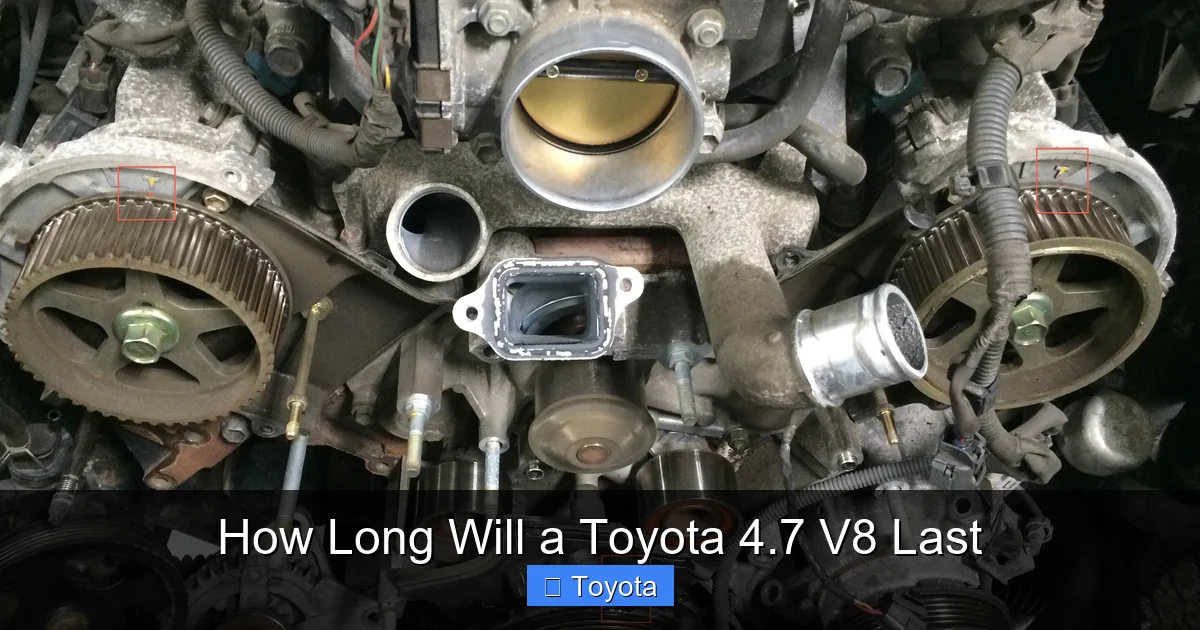
This is perhaps the most critical maintenance item. The timing belt should be replaced every 90,000 miles along with the water pump, tensioners, and idler pulleys. A failed timing belt on the 4.7 V8 will bend valves and require a complete engine rebuild or replacement.
Don’t try to save money by skipping this service. The cost of a timing belt kit ($300-500) is insignificant compared to the thousands you’d spend on engine repairs after a failure.
Maximizing Your Investment
Pre-Purchase Inspection
Before buying a used vehicle with a 4.7 V8, have a pre-purchase inspection performed by a qualified mechanic. Check the maintenance records thoroughly and look for evidence of regular oil changes and timing belt service. A compression test can reveal internal engine problems before they become major issues.
Pay special attention to the vehicle’s history. Look for signs of accident damage, flood damage, or excessive rust. These issues can affect long-term reliability even if the engine itself is sound.
Long-Term Ownership Strategy
To keep your 4.7 V8 running for decades, establish a relationship with a trusted mechanic who understands these engines. Keep detailed records of all maintenance performed. Join online communities where you can learn from other owners’ experiences and get advice on common issues.
Consider keeping a spare parts kit for long trips, including oil, coolant, and basic tools. The peace of mind is worth the small investment, especially if you plan to take your vehicle on extended adventures.
Conclusion
The Toyota 4.7 V8 engine stands as a testament to Toyota’s commitment to building durable, reliable vehicles. With proper maintenance and reasonable driving habits, these engines can easily exceed 300,000 miles. The key factors for success include regular oil changes, timely timing belt replacement, and careful attention to the cooling system.
Whether you’re shopping for a used truck or maintaining your current 4.7 V8, understanding what makes these engines special can help you enjoy many years of dependable service. Remember that prevention is always cheaper than repair, so stay on top of maintenance and address small issues before they become big problems.
The 4.7 V8 may not be the most fuel-efficient engine, but its combination of power, reliability, and longevity makes it an excellent choice for anyone who values a workhorse engine that won’t let them down. With proper care, your Toyota 4.7 V8 could easily outlive the vehicle it’s installed in.
Frequently Asked Questions
How often should I change the oil in my Toyota 4.7 V8?
For optimal engine life, change the oil every 3,000 to 5,000 miles using quality synthetic 5W-30 or 10W-30 oil. If you drive mostly highway miles, you might extend this slightly, but city driving requires more frequent changes to prevent contamination buildup.
What is the most critical maintenance item for the 4.7 V8?
The timing belt replacement at 90,000 miles is absolutely critical. A failed timing belt will cause severe internal engine damage requiring expensive repairs or replacement. Always replace the water pump and tensioners at the same time since they’re accessed during the same service.
Can I tow heavy loads with a 4.7 V8?
Yes, the 4.7 V8 is well-suited for towing, but monitor your cooling system closely. Install an auxiliary transmission cooler and consider upgrading to a larger radiator. Avoid exceeding the manufacturer’s rated towing capacity to prevent premature wear on engine and transmission components.
How much does a timing belt replacement cost?
Timing belt replacement typically costs between $500-$900 depending on your location and whether you include the water pump. While this seems expensive, it’s far less than the $3,000-$6,000 you’d face for engine repairs after a belt failure. It’s one of the best investments you can make in your engine’s longevity.
Should I buy a used vehicle with high mileage on the 4.7 V8?
High-mileage 4.7 V8 engines can be excellent purchases if properly maintained. Look for documented service records showing regular maintenance. Have a pre-purchase inspection performed and check for signs of recent major repairs. Engines with 200,000+ miles that were well-maintained often have plenty of life remaining.
What are the signs of 4.7 V8 engine problems?
Watch for excessive oil consumption, coolant leaks, unusual noises, or loss of power. Pay attention to the temperature gauge and check engine light. Regular monitoring of fluid levels and listening for changes in engine sound can help you catch problems early when they’re still relatively inexpensive to fix.