Does Toyota Use Metric or Standard Measurements?
Toyota primarily uses metric measurements for engineering, manufacturing, and most specifications worldwide. Some US-market materials may include standard units for local driver convenience.
Have you ever popped the hood of your Toyota and wondered about the bolts and specs? Many new owners ask a simple question: Does Toyota Use Metric or Standard Measurements? It seems like a small detail, but it matters when you grab a wrench or read a manual. In fact, using the wrong size tool can round off a bolt head in seconds. That hurts your wallet and your weekend.
In this post, we will chat like friends about how Toyota handles measurements. We will look at the factory floor, the paper manual, and your home garage. We will also share real tips to keep you safe. By the end, you will know exactly what system to trust. Let’s dive in and solve the mystery together!
Key Takeaways
- Metric Dominance: Toyota designs and builds cars using the metric system for nearly all internal specs.
- Global Standard: As a worldwide brand, Toyota follows ISO metric standards to simplify production.
- US Labels: American Toyota manuals and dash readouts may show miles and pounds alongside metric.
- Tools Needed: DIY repairs require metric wrenches and sockets, not standard SAE tools.
- Tire Codes: Toyota tire sizes use metric numbers like 205/55R16 that denote width in millimeters.
- Fluid Volumes: Engine oil and coolant capacities are listed in liters, though some labels add quarts.
- Easy Conversion: Free apps help you switch between metric and standard when working on your Toyota.
📑 Table of Contents
Understanding Metric and Standard Systems
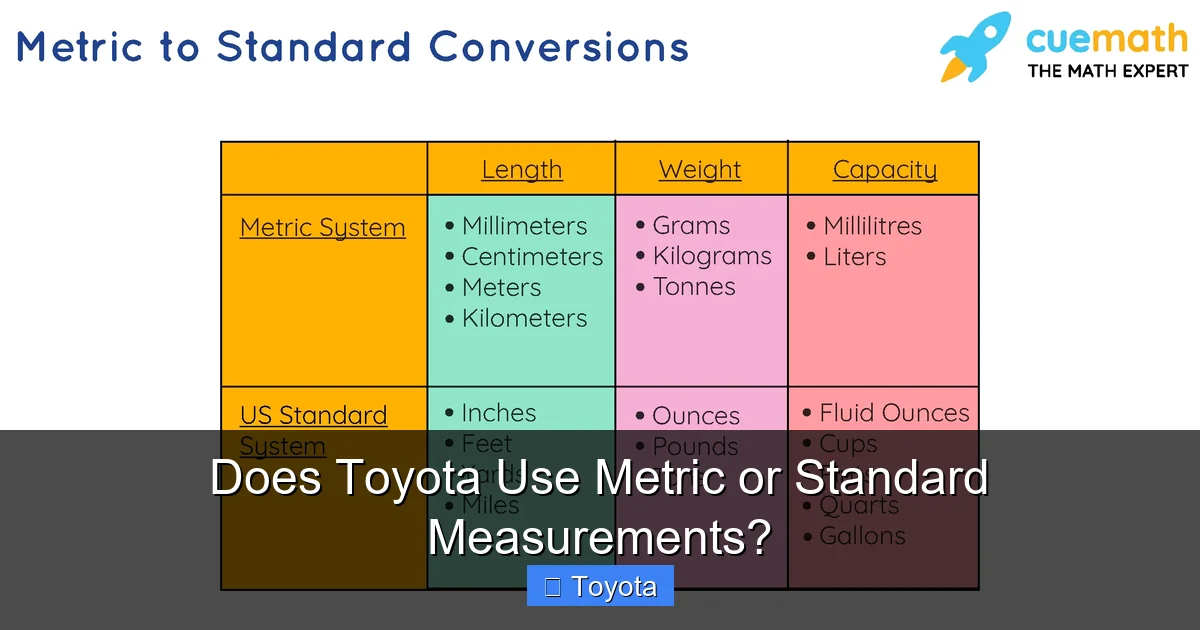
Before we answer the big question, let’s recall what these systems mean. The world uses two main ways to measure length, weight, and volume. Knowing both helps you read any car document with ease. It also helps you shop for parts online without confusion.
What Is the Metric System?
The metric system uses meters, liters, and grams. It is base-10, so the math is easy. For example, 1 meter is 100 centimeters. 1 liter is 1000 milliliters. Most countries adopted it long ago. Car makers outside the USA lean on metric for every single part. Japan, where Toyota started, has used metric for over a century. That habit sticks in the company DNA.
What Is the Standard System?
The standard system is also called SAE or imperial. It uses inches, pounds, and gallons. The United States still favors it for daily life. Some old American cars were built only with standard bolts. A half-inch wrench fits a half-inch nut. There is no base-10 trick. This can slow conversions. Still, many US drivers feel cozy with miles per hour.
Does Toyota Use Metric or Standard Measurements? The Clear Answer
Here is the straight talk. Toyota is a Japanese company. Japan uses metric. Therefore, Toyota’s home design uses metric. The question “Does Toyota Use Metric or Standard Measurements?” gets a clear reply: Toyota uses metric for engineering, design, and most factory specs. Even their race cars follow metric.
Visual guide about Does Toyota Use Metric or Standard Measurements?
Image source: automotivian.com
Toyota’s Global Manufacturing Approach
Toyota builds plants in many nations. Each plant shares the same blueprints. Those blueprints list millimeters and kilograms. This keeps quality high and parts interchangeable. A Camry made in Kentucky matches one from Japan bolt for bolt. The company calls this “lean production.” Metric helps that system work smooth. Workers train on metric gauges from day one.
Engine Specs and Metric Units
Open a Toyota engine manual. You will see bore in millimeters. Stroke in millimeters. Displacement in liters. Even horsepower is often shown as kilowatts in some docs. Metric rules the spec sheet. For example, a 2.0-liter four-cylinder is exactly that: 2000 cubic centimeters. No inches needed. This makes tuning predictable across the globe.
Where You Might See Standard Measurements on Toyota
Now, you may notice some standard numbers on your Toyota. That is normal for the US market. Toyota adds them so local drivers feel comfortable. The car is still metric underneath.
Visual guide about Does Toyota Use Metric or Standard Measurements?
Image source: cdn.shopify.com
US Market Exceptions
American Toyota window stickers show miles per gallon. The speedometer has miles per hour as the big numbers. Weight labels may list pounds for the DOT. But these are just translations. The core data is metric. If you look close, small “km” or “L” marks hide near the edges. Toyota does this to meet US rules.
Owner’s Manuals and Labels
If you read the paper manual, you might see “8.5 liters (9.0 quarts)” for oil. That parenthetical standard unit is for US folks. The primary figure is metric. If you check the specs for a Camry, our article on how much does a Toyota Camry weigh lists metric kilograms as the main number. That shows how Toyota thinks. They lead with metric and add standard as a courtesy.
Practical Examples for Toyota Owners
Let’s make this real. Here are spots where measurement systems show up in your daily Toyota life. We will walk through common tasks.
Visual guide about Does Toyota Use Metric or Standard Measurements?
Image source: d138zd1ktt9iqe.cloudfront.net
Reading Tire Sizes
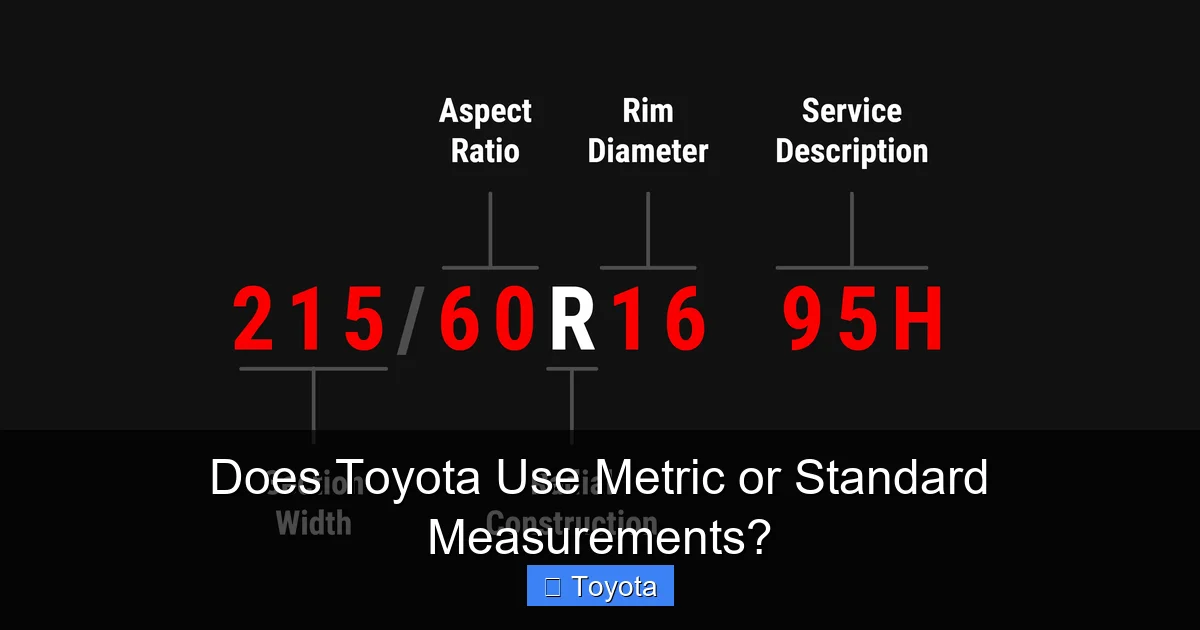
A typical Toyota tire reads 215/60R17. The 215 is width in millimeters. The 60 is sidewall height as a percent of width. The 17 is rim diameter in inches (a rare mix kept for tradition). For 4Runner owners, our best all terrain tires for Toyota 4Runner reviews explain metric tire codes in plain English. Knowing this helps you buy the right snow tire. Never trust a seller who only gives inches.
Checking Fluid Capacities
Your Corolla may need 4.2 liters of oil. That is about 4.4 quarts. Toyota’s dipstick is marked in liters. Use a metric funnel to avoid spills. Coolant might be 6.5 liters. Brake fluid is often 0.5 liters. Write these in a notebook using metric. It prevents top-off errors.
Using Tools for Repairs
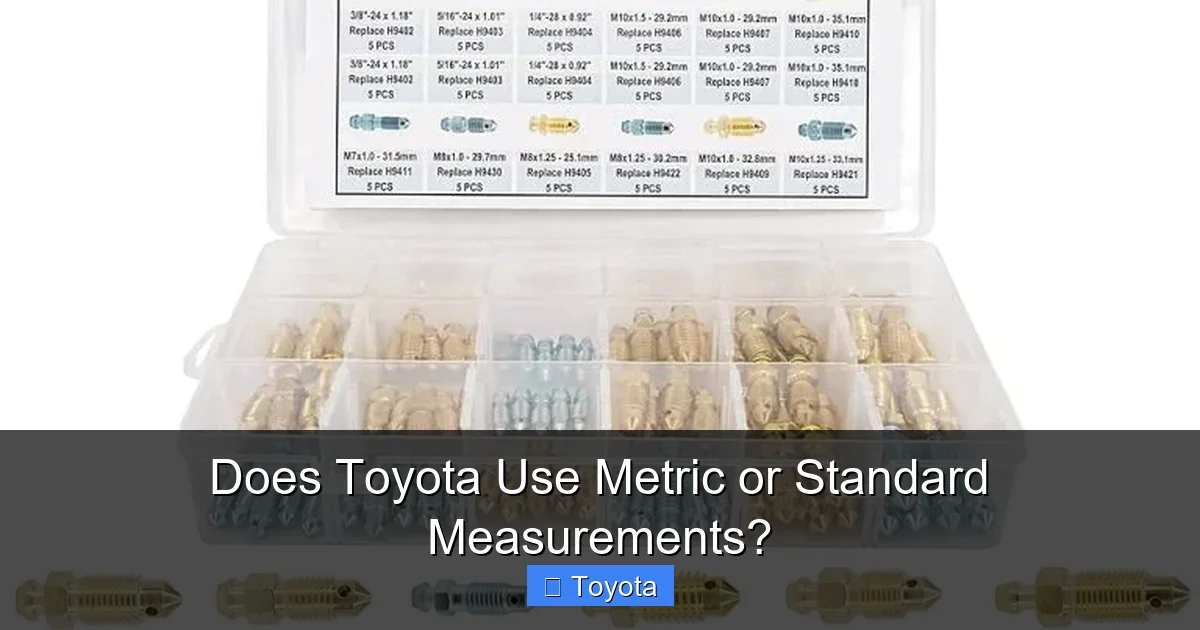
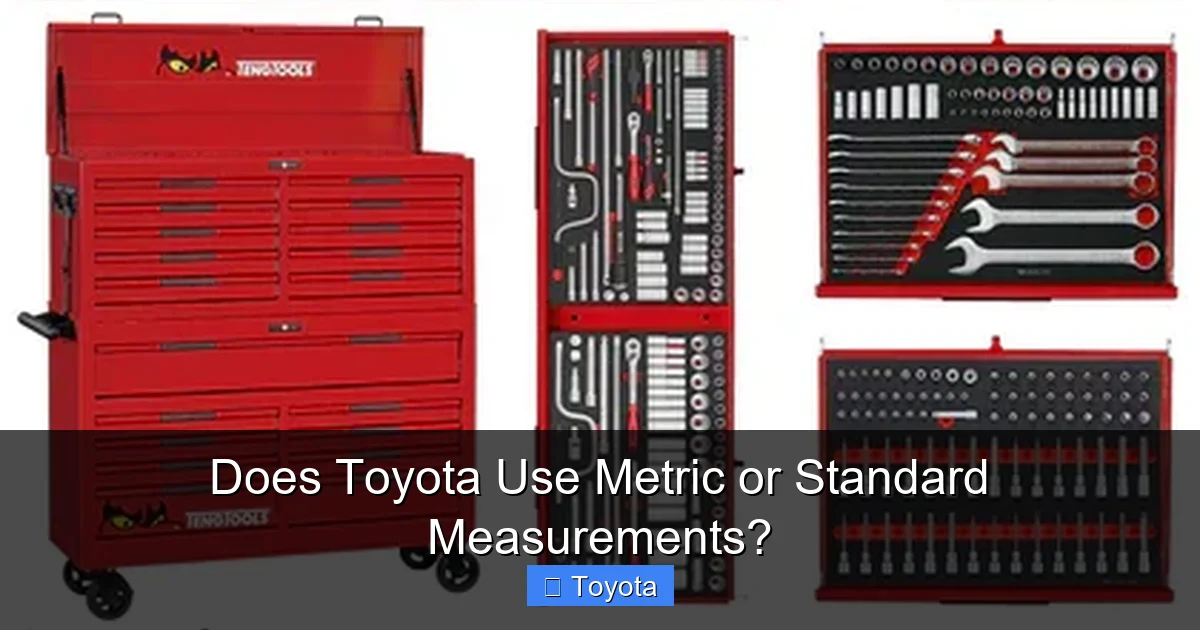
When you loosen a bolt, grab a metric socket. Toyota uses 10mm, 12mm, 14mm heads. Standard wrenches will strip the nut. Always keep a metric set in your trunk. A small 3/8-inch drive metric set costs little. It pays for itself when you fix a loose bumper clip.
Reading Torque Specs
Toyota repair guides list torque in Newton-meters (Nm). For example, wheel lug nuts may be 103 Nm. Some US guides add foot-pounds in brackets. But the factory tool calibrates in Nm. Buy a metric torque wrench to hit the right tightness. Too loose and the wheel flies off. Too tight and you snap the stud.
Tips for Working on Your Toyota
Whether you are a weekend tinkerer or a new buyer, these tips will save time and sweat. We learned them from seasoned Toyota techs.
Buy Metric Tools
Invest in a good metric socket set. They are cheap and last years. Label them so kids don’t mix with SAE. A 10mm socket is the most used in any Toyota. Many owners joke that 10mm sockets vanish. Get three spares!
Convert When Needed
Apps like Unit Converter flip liters to gallons fast. When you are learning how to break in a new car Toyota, note that the manual uses kilometers. Convert to miles if you prefer. The break-in period might say 1,000 km. That is 621 miles. Keep RPM low until then.
Trust the Manual
If a number looks weird, check the unit. Toyota prints “mm” or “kg” clearly. Do not guess. A wrong unit can lead to over-tightening. When in doubt, visit a dealer forum. Friends there will confirm the metric figure.
Label Your Bottles
If you buy oil in gallons, mark the liter amount on the jug. This keeps your garage bilingual. You will grab the right amount on a cold morning. It also helps a friend who uses metric.
Why This Matters for Buyers and DIYers
Knowing the system helps you shop and fix with confidence. It also avoids costly mistakes that send you to the shop.
Resale and Import Considerations
Importing a Toyota from Japan? Its paperwork is fully metric. US inspectors will convert for titles. Understanding both helps you negotiate price. You can spot a mismatched part if the bolt looks standard. That could mean a prior crash repair with wrong bits.
Avoiding Garage Errors
Many stripped bolts happen because someone used a standard wrench. Stick to metric and your Toyota stays happy. A stripped bolt can turn a $5 job into a $200 drill-out. We have seen it too often.
Teaching New Drivers
If your teen drives a Toyota, teach them metric first. Show them how to read a tire size. It builds respect for the machine. They will thank you when they travel abroad.
Final Thoughts
So, does Toyota use metric or standard measurements? The answer is clear: Toyota builds with metric. The brand may print standard units for US roads, but the DNA is metric. Grab metric tools, read the liters, and enjoy your ride. Friend to friend, you now have the smart answer! Share this with a buddy who still reaches for the inch wrench. Together we keep Toyotas running smooth.
Frequently Asked Questions
Does Toyota use metric or standard measurements for bolts?
Toyota uses metric bolts and nuts. You will need metric wrenches. Standard SAE tools will not fit properly.
Why does my US Toyota speedometer show miles?
Toyota adds miles per hour for US drivers. The underlying system is still metric. The cluster is coded in kilometers.
Are Toyota tire sizes fully metric?
Most of the tire code is metric. Width is in millimeters. Only the rim diameter uses inches. This mix is industry standard.
What tools should I buy for Toyota DIY?
Buy a metric socket set from 8mm to 19mm. Add a torque wrench in Newton-meters. That covers almost all jobs.
Do Toyota owner manuals list quarts or liters?
They list liters first. Many US manuals add quarts in parentheses. Always trust the liter number for accuracy.
Is Toyota different from American car brands?
Yes. Most US brands historically used standard. Toyota has always been metric. This reflects its Japanese roots.