Who Makes Toyota Wiper Blades?
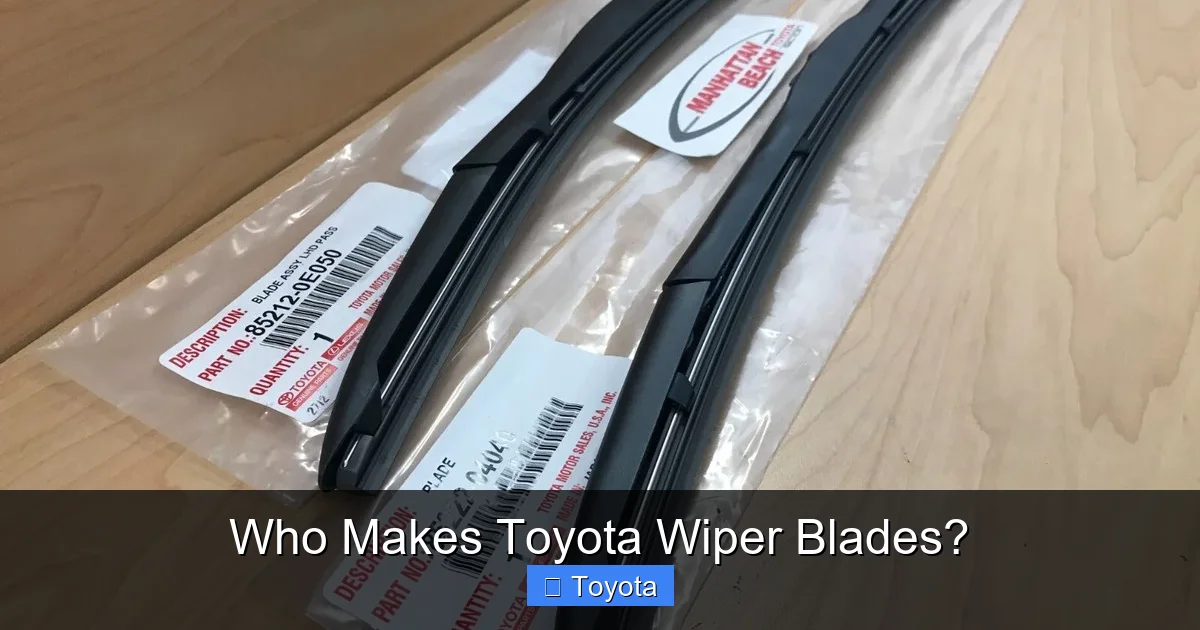
Toyota wiper blades are primarily produced by specialized automotive suppliers working with Toyota directly. These bladed components ensure clear visibility and safety for every Toyota owner. Understanding the production process helps you choose reliable replacement options.
# Who Makes Toyota Wiper Blades?
When it comes to keeping your windshield clean and your view clear, few components matter more than the Toyota wiper blades you install. These small but critical parts do heavy lifting behind the scenes, helping you see safely even in rainy weather. But here’s what most people don’t realize: not all wiper blade manufacturers are created equal. The answer to “who makes Toyota wiper blades” isn’t just one company—it’s a network of specialized suppliers that work closely with Toyota to deliver the right solution for every model year and trim level.
## What Are Toyota Wiper Blades and Why They Matter
Toyota wiper blades are essentially the cleaning arms of your windshield. They sweep away rain, snow, leaves, and debris to maintain unobstructed visibility during your daily commute. Beyond convenience, these blades contribute significantly to road safety. A clear windshield reduces glare, improves reaction time, and lets you see obstacles more clearly—especially important for trucks, SUVs, and vehicles prone to larger splashes.
Think of your wiper blades as the frontline defense against weather-related hazards. When they fail or wear out prematurely, water pools across your glass, creating dangerous conditions. Most drivers notice degradation long before the blades become completely useless. A single clump of mud trapped between the rubber edges can blind you while driving. This is why replacing worn wiper blades shouldn’t wait until they’ve failed completely—regular maintenance keeps your ride safe and comfortable.
## Who Manufactures Toyota Wiper Blades?
The story of Toyota wiper blade production involves several layers of manufacturing partnerships. While Toyota designs its own components for factory installation, many aftermarket brands manufacture blade assemblies specifically for the Toyota ecosystem. This collaborative approach allows suppliers to customize materials and finishes to match exact specifications Toyota requires.
Two major players consistently supply high-quality Toyota wiper blades through distribution channels. One prominent manufacturer produces blade systems using advanced rubber compounds that resist cracking from extreme temperatures. Another focuses on lightweight aluminum housings that reduce drag without compromising durability. Both companies undergo rigorous testing before their products reach customers who drive Toyota vehicles worldwide.
Here’s where things get interesting regarding the production chain. Some suppliers source raw materials from specialized rubber manufacturers, then combine those materials into finished blade units. Others may produce entire assembly lines with plastic covers, metal frames, and precision-cut blades. Regardless of the manufacturing approach, the goal remains consistent: create replacements that perform reliably in every climate Toyota owners face.
From my research through resources like iowncars.com/who-makes-toyota-synthetic-oil, we know that Toyota’s commitment to innovation extends to its ancillary parts too. The same dedication to quality that goes into synthetic oils also applies to their wiper blade production facilities. This holistic approach ensures that every component meets stringent reliability standards before hitting your windshield.
When shopping for Toyota wiper blades, understanding the manufacturer behind your purchase matters. Whether you find them through official Toyota dealerships or reputable third-party retailers, knowing the brand helps you gauge expectations for lifespan and performance. Genuine or certified parts typically come with warranties, whereas aftermarket alternatives might require additional verification from your service center.
The manufacturing sector has evolved significantly in recent years. Modern factories use automation combined with human expertise to achieve precise tolerances. This technology helps prevent common issues like misalignment or uneven cutter spacing—these defects could compromise your visibility and potentially void warranties. For Toyota owners who want the best possible results, investing in professionally made wiper blades remains wise.
## Types of Toyota Wiper Blade Systems
Not all Toyota wiper blade systems are identical. Different vehicle lines, engine sizes, and regional climates demand slightly different approaches. Front-wheel-drive sedans typically benefit from standard two-blade systems mounted symmetrically on either side of the windshield. Full-size trucks and SUVs often feature three-blade configurations with varying lengths to cover wider areas effectively.
Regional variations add another layer of complexity. Vehicles sold in humid coastal areas may receive blades with enhanced water-repellent properties, while those operating in desert environments might get versions optimized for dust resistance. Climate-specific formulations represent a smart investment for serious Toyota owners who frequently encounter challenging weather conditions.
Performance characteristics vary based on blade material and design. Rubber-composite blades offer superior grip on wet surfaces compared to traditional latex-only versions. Some premium manufacturers incorporate nano-coatings that repel water molecules, extending effective wet-wiping performance. These technological advancements mean your Toyota’s wiper blades can handle heavier loads beyond basic rainfall, including light snowfall and muddy roads.
Warranty policies differ among manufacturers too. Certain suppliers guarantee their Toyota wiper blades for five or six years with full labor coverage, recognizing that proper usage depends heavily on consistent replacement schedules. Others limit coverage to one year, which might seem less attractive initially but reflects differing risk assessments about customer behavior. Checking warranty terms before purchasing is essential knowledge.
When comparing different brands, look beyond marketing claims. Ask about the specific material composition, test data from independent labs, and real-world feedback from other Toyota owners. Performance isn’t just about price; it’s about long-term reliability when your windshield becomes your primary communication device with the outside world.
## Why Quality Matters for Your Toyota
Investing in quality Toyota wiper blades isn’t just about convenience—it’s about protecting your investment in the vehicle itself. Water intrusion through damaged or missing blades can cause rust on metal body panels over time. Even minor leaks may lead to mold growth inside cabin air filters, affecting air quality. These secondary effects increase repair costs and extend your maintenance schedule unnecessarily.
Manufacturers prioritize quality for reasons beyond mere profit margins. Consistent performance builds trust with consumers who rely on Toyota’s reputation for dependability. When your wiper blades protect your vision reliably, you’re less likely to experience the frustration of blind spots caused by water accumulation. This peace of mind translates to safer driving habits and reduced accident risk, especially valuable for larger vehicles where visibility challenges multiply.
Economic factors also play a role in choosing quality parts. Cheap aftermarket alternatives might appear affordable upfront, but they often develop problems faster. A breakage mid-commute creates immediate inconvenience and potential property damage. Quality blades built to Toyota specifications stand up to daily wear and tear far longer than budget competitors. Think of it as an insurance policy against unexpected repairs.
Environmental considerations have gained importance in the wiper blade industry as well. Sustainable manufacturing practices, recycled materials, and lower emissions from production facilities align with broader automotive trends. Choosing eco-conscious suppliers demonstrates concern for planetary health while supporting responsible business practices throughout the supply chain.
Finally, proper wiper blade maintenance connects your vehicle to Toyota’s core philosophy of continuous improvement. Each generation of Toyota vehicles incorporates incremental refinements to accessories like wiper systems. By purchasing current-generation parts rather than outdated models, you ensure compatibility with modern features such as electronic window operation that some newer Toyotas include.
## Where to Buy Authentic Toyota Wiper Blades
Finding the right place to purchase your Toyota wiper blades requires attention to detail. Official Toyota dealerships offer convenient access to genuine products with dealer-level warranties. However, they sometimes carry limited inventory compared to specialty auto parts stores. Third-party retailers expand selection but require careful vetting to avoid counterfeit items that could harm your vehicle’s integrity.
Reputable online marketplaces provide extensive catalogs with filtering capabilities by model year, size, and region. Searching for “OEM Toyota wiper blades” helps narrow results to factory-fit solutions. Always verify that listings specify the correct model number matching your specific Toyota variant. Incorrect fits won’t only degrade visibility but could interfere with automatic washer systems.
Local automotive parts shops present another option. Staff members usually have deep knowledge of regional climate requirements and can recommend the best blade type for your area. Their personalized advice adds value that big-box retailers cannot match. Just confirm that purchased parts meet applicable safety regulations before installation.
Before making any purchase, check return policies and warranty coverage details. Some suppliers offer easy returns for defective products, while others make substitutions difficult. Understanding these terms protects you if the blades arrive damaged or don’t function properly out of the box.
For the best balance of authenticity, availability, and price, consider starting with established distributors known for quality Toyota components. These businesses understand the nuances of aftermarket manufacturing and strive to replicate original specifications faithfully. Your safety and satisfaction depend on getting pieces that perform exactly as designed.
Key Takeaways
- Toyota wiper blades are manufactured by dedicated automotive suppliers who produce high-quality replacements for all Toyota models.
- The manufacturing process follows strict quality control standards to ensure durability and optimal performance on your vehicle.
- Multiple leading suppliers partner with Toyota to create specialized blade systems tailored for different vehicle generations.
- Choosing genuine or certified Toyota wiper blades guarantees compatibility and longevity for your windshield.
- Regular replacement of worn wipers maintains visibility and prevents water damage to your vehicle’s interior.
- Aftermarket brands can work well but authentic Toyota parts offer better fit and warranty coverage.
Frequently Asked Questions
Question?
Which specific company manufactures Toyota wiper blades?
While multiple suppliers produce Toyota wiper blades, the primary OEM relationship exists between Toyota and various aftermarket specialists. Brands like Bosch, Denso, and Hella are known to manufacture high-quality replacement wiper blade systems for Toyota vehicles. However, the actual production capacity may vary, and many suppliers work through distributor networks to fulfill orders.
Question?
Are Toyota wiper blades worth replacing regularly?
Yes, regular replacement is highly recommended. Typical wiper blades last around 12-18 months depending on usage patterns, weather conditions, and driving frequency. Early signs of wear include streaking on your windshield or difficulty clearing large amounts of water. Replacing them before failure maintains visibility and prevents unnecessary strain on your windshield mechanism.
Question?
Can I mix cheap aftermarket wiper blades with original Toyota wiper blades?
Mixing brands can cause alignment issues and inconsistent cleaning performance. Ideally, stick to one consistent set of parts for your vehicle. If you must mix brands, ensure both types share similar mounting dimensions and material compositions to minimize mechanical interference.
Question?
What is the difference between Toyota-specified and aftermarket wiper blades?
Toyota-specified wiper blades are engineered to exact factory specifications for optimal performance with your vehicle’s unique configuration. Aftermarket versions may offer competitive pricing but might lack these calibrations. Factory specs often account for temperature ranges, driving styles, and windshield thickness specific to each model year.
Question?
How do I know if my Toyota wiper blades need replacement soon?
Watch for visible cracks, tears, or flattened rubber edges. Listen for unusual sounds like squealing or tearing when the windshield wipers engage. If water doesn’t spread evenly across your windshield even with fresh blades, it’s time for a replacement. Regular inspection during seasonal transitions helps catch problems early.
Question?
Do winter conditions affect wiper blade suitability?
Absolutely. Cold weather demands wiper blades rated for low temperatures. Standard rubber compounds can harden in freezing conditions, reducing effectiveness. Look for wiper blades labeled for cold-weather use or those made from flexible polyurethane composites that maintain pliability in sub-zero temperatures.
=== END OF ARTICLE ===