Are All Toyota Tpms Sensors the Same
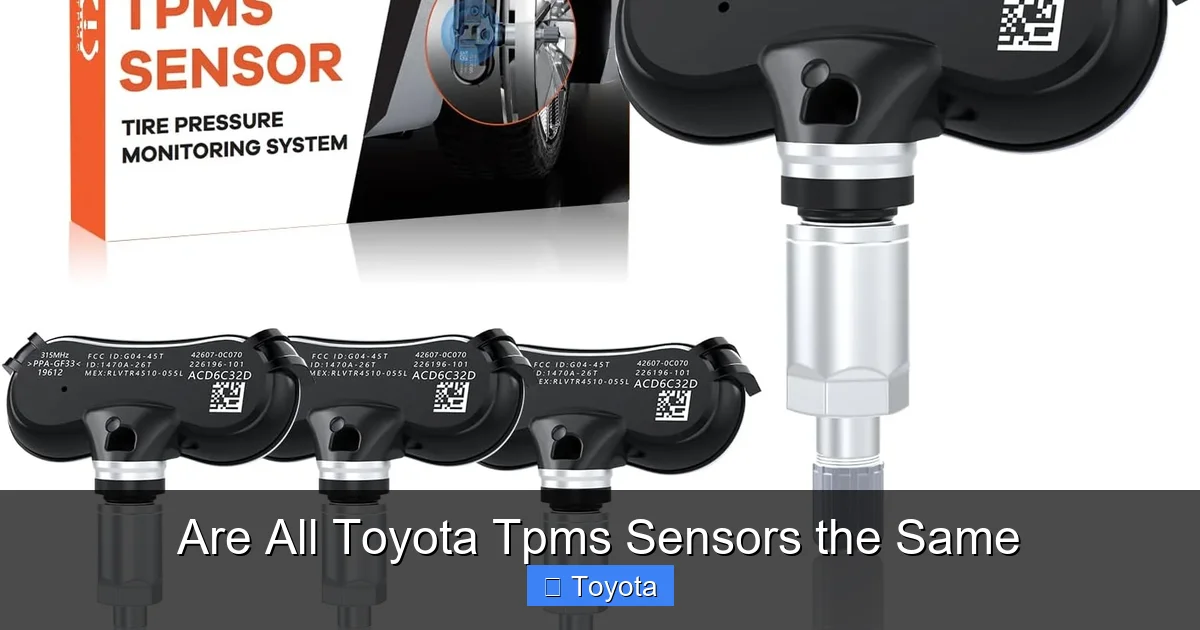
Not all Toyota TPMS sensors are the same. Different models and years require specific sensors, and using the wrong one can cause malfunctions. Understanding sensor types, frequencies, and installation methods ensures proper tire pressure monitoring and safety.
Key Takeaways
- Model-specific compatibility: Toyota TPMS sensors vary by model and year, requiring precise matching for proper function.
- Frequencies differ: Sensors operate on 433 MHz or 315 MHz frequencies, and mixing them can lead to system failures.
- DIY risks exist: Incorrect installation or sensor choice may trigger warning lights or damage the TPMS.
- OEM vs. aftermarket: Original equipment sensors are reliable but pricier; aftermarket options are cost-effective but need careful selection.
- Professional installation: Certified mechanics ensure proper programming and calibration, avoiding costly mistakes.
- Replacement necessity: Damaged or aged sensors should be replaced promptly to maintain safety and system accuracy.
- Pre-purchase checks: Verify sensor compatibility before buying to save time, money, and frustration.
📑 Table of Contents
Understanding Toyota TPMS Sensors
If you own a Toyota, you’ve likely encountered the tire pressure monitoring system (TPMS) light on your dashboard. This feature alerts you when tire pressure drops below safe levels, enhancing safety and fuel efficiency. However, many Toyota owners wonder: are all Toyota TPMS sensors the same? The short answer is no. Sensors vary by model, year, and manufacturing specifications, making compatibility a critical factor for proper installation and function.
What Is a TPMS Sensor?
TPMS sensors are small devices mounted inside your tires or on the valve stem. They continuously monitor tire pressure and transmit data to your vehicle’s computer. When pressure falls below a set threshold (typically 25% below recommended levels), a warning light activates. These sensors are crucial for preventing blowouts, uneven tire wear, and reduced fuel economy.
Types of TPMS Systems
Toyota uses two primary TPMS technologies:
- Direct TPMS: Sensors measure actual tire pressure using internal pressure transducers. Commonly used in newer models like the Camry, Corolla, and RAV4.
- Indirect TPMS: Relies on wheel speed sensors to detect pressure changes through tire rotation differences. Found in older models or budget trims.
Direct systems require physical sensors, while indirect systems do not. Understanding your vehicle’s system type is essential for selecting the right replacement parts.
Types of Toyota TPMS Sensors
Even within direct TPMS systems, Toyota uses multiple sensor designs depending on the vehicle’s generation and trim level. Key factors include:
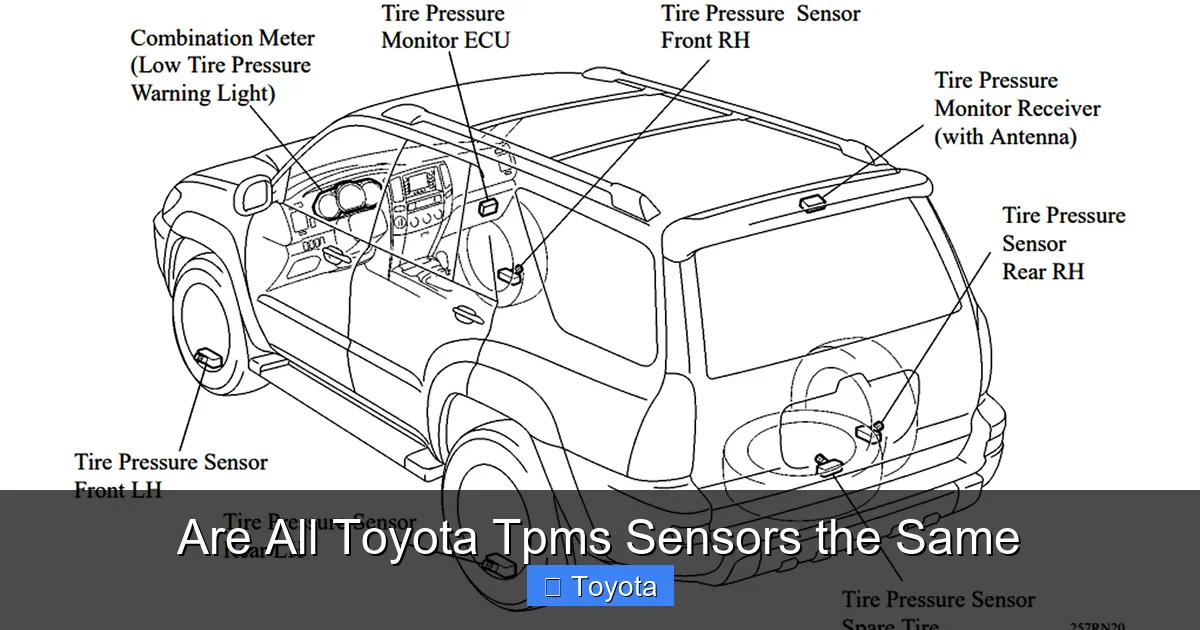
Visual guide about Are All Toyota Tpms Sensors the Same
Image source: top4runners.com
Sensor Frequencies
Most Toyota sensors operate on 433 MHz or 315 MHz frequencies. For example:
- 433 MHz: Standard in most 2010+ Toyota models, including the Camry, Corolla, and Highlander.
- 315 MHz: Used in select pre-2010 models and some hybrid variants.
Using a sensor with the wrong frequency can result in communication failures between the sensor and your vehicle’s receiver.
Sensor Brands and Part Numbers
Toyota collaborates with suppliers like Denso, Schrader, and TRW. Each sensor has a unique part number tied to specific models. For instance:
- Denso 89801-0C010: Fits 2015-2021 Toyota Camry and Avalon.
- Schrader 26750: Compatible with 2010-2019 Toyota Corolla.
Cross-referencing part numbers with your vehicle’s VIN ensures compatibility.
Why Compatibility Matters
Installing incompatible TPMS sensors can lead to system malfunctions, warning light errors, or even sensor damage. Here’s why precision is critical:
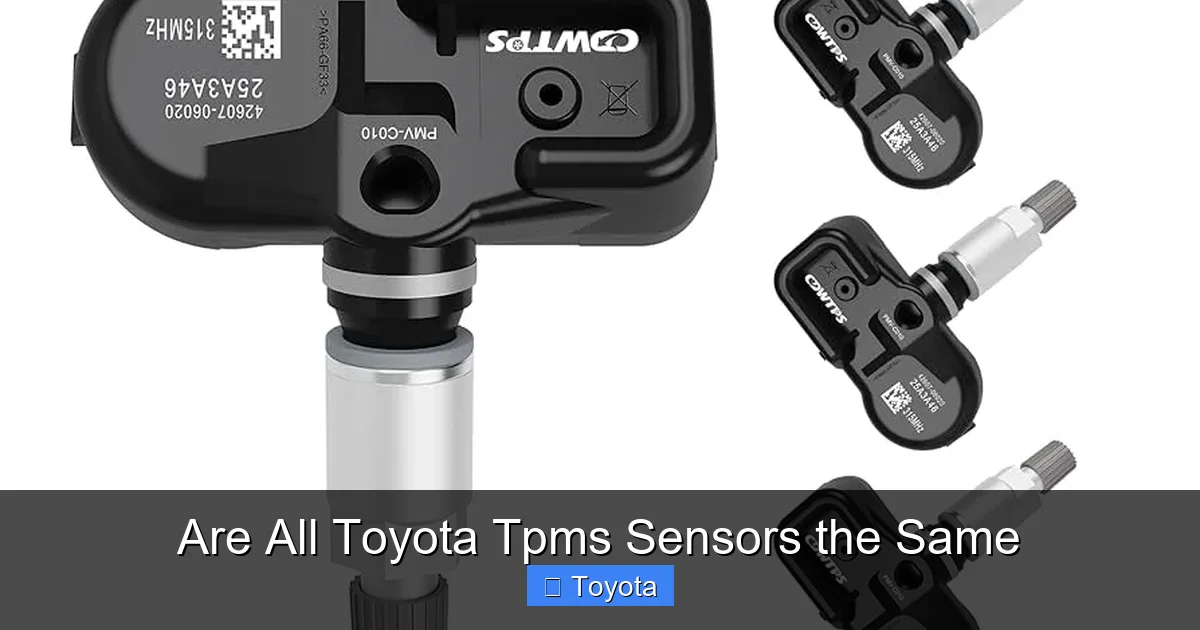
Visual guide about Are All Toyota Tpms Sensors the Same
Image source: m.media-amazon.com
Model and Year Variations
Toyota updates sensor designs with each model refresh. For example, the 2023 Toyota Tundra uses a newer sensor design compared to the 2010-2019 generation. Similarly, hybrid models like the Prius may use sensors with different voltage requirements.
Frequency Conflicts
If your vehicle uses 433 MHz sensors and you install a 315 MHz sensor, the system won’t recognize the tire pressure data. This mismatch triggers persistent warning lights, even if the tires are properly inflated.
DIY Installation Risks
Many DIY enthusiasts attempt sensor replacements, but improper installation can damage the valve stem or sensor housing. Additionally, sensors must be programmed to your vehicle’s ECU (engine control unit), a step that requires specialized tools and expertise.
Replacing TPMS Sensors: OEM vs. Aftermarket
When replacing Toyota TPMS sensors, you’ll encounter two options:
Original Equipment Manufacturer (OEM) Sensors
OEM sensors are designed specifically for your Toyota model and year. They offer:
- Guaranteed compatibility: No risk of frequency mismatches or programming errors.
- Longer lifespan: Built to withstand extreme temperatures and road conditions.
- Dealer support: Easier warranty claims if issues arise.
However, OEM sensors are typically 20-30% more expensive than aftermarket alternatives.
Aftermarket Sensors
Aftermarket sensors are cheaper but require careful selection. Look for brands like:
- Alpine: Reliable 433 MHz sensors for Toyota models.
- TEKTON: Budget-friendly options with good reviews.
Ensure the sensor’s part number matches your vehicle’s specifications. While cost-effective, aftermarket sensors may have shorter lifespans and limited warranty coverage.
Installation and Maintenance Tips
Proper installation is as important as choosing the right sensor. Follow these steps to avoid common pitfalls:
Professional Installation
Most Toyota dealers and certified tire shops offer sensor installation and programming services. A professional technician can:
- Reinstall sensors correctly: Avoid damaging the internal electronics.
- Program the ECU: Ensure the vehicle recognizes the new sensors.
- Calibrate the system: Reset the TPMS after tire rotation or replacement.
This service typically costs $50-$150 per sensor, depending on labor rates.
DIY Installation Considerations
If you opt for DIY installation:
- Use a sensor programming tool: Devices like the Autel MaxiTPMS can sync sensors with your vehicle.
- Check the valve stem: Replace damaged stems to prevent air leaks.
- Test before driving: Verify the system recognizes all sensors before hitting the road.
Risks include improper sealing, frequency mismatches, and ECU communication errors.
Maintenance Best Practices
Extend your sensor lifespan by:
- Checking tire pressure monthly: Use a reliable gauge to maintain optimal levels.
- Replacing old sensors: Most sensors last 5-10 years; replace them during tire rotations.
- Avoiding overinflation: Excess pressure stresses sensor components.
Regular maintenance prevents premature sensor failure and ensures continuous safety monitoring.
Choosing the Right Replacement Sensor
When shopping for sensors, consider these factors:
Verify Your Vehicle’s Requirements
Check your owner’s manual or contact a Toyota dealership with your VIN to confirm:
- Frequency (433 MHz or 315 MHz).
- Direct or indirect TPMS system.
- Sensor part numbers for your specific model.
Compare Brands and Prices
While OEM sensors are reliable, aftermarket options like Schrader or TEKTON offer cost savings. Read reviews to gauge durability and compatibility.
Consider Bundled Packages
Some tire shops sell sensor replacement kits that include all four sensors, programming tools, and installation services. These packages streamline the process and ensure compatibility.
Conclusion
Toyota TPMS sensors are not one-size-fits-all. Model-specific designs, frequency differences, and programming requirements make compatibility crucial. Always verify your vehicle’s specifications before purchasing replacements. While aftermarket sensors offer budget-friendly alternatives, OEM sensors guarantee reliability. For peace of mind, opt for professional installation to avoid costly errors. By understanding these factors, you’ll keep your TPMS functioning smoothly and your tires safely inflated.
Frequently Asked Questions
Are all Toyota TPMS sensors interchangeable?
No, Toyota TPMS sensors vary by model year, trim level, and frequency. Using incompatible sensors can cause system errors or warning lights. Always check your owner’s manual or consult a dealer for the correct part number.
Can I use aftermarket TPMS sensors on my Toyota?
Yes, but only if the sensor matches your vehicle’s frequency (433 MHz or 315 MHz) and part number. Reputable brands like Schrader or TEKTON offer reliable options, but improper selection may lead to malfunctions.
How much does it cost to replace Toyota TPMS sensors?
Costs range from $50 to $150 per sensor, depending on the brand and whether you choose OEM or aftermarket options. Installation and programming add additional labor fees, typically $100 to $300 total for all four sensors.
Do I need to reprogram TPMS sensors after replacing them?
Yes, new sensors must be programmed to your vehicle’s ECU to function correctly. This step is usually performed by a professional technician but can be done DIY with specialized tools like the Autel MaxiTPMS.
Can a faulty TPMS sensor cause my car to shake at startup?
While a faulty sensor won’t directly cause engine shaking, it may trigger error codes that affect other systems. For issues like shaking at startup, consult a mechanic to rule out unrelated problems like ignition or fuel system faults. See our guide on car shaking at startup for more details.
What should I do if my TPMS light stays on after replacing sensors?
If the light persists, check tire pressure manually to ensure it’s within the recommended range. Reset the system by turning off your car for 10 minutes, then restarting it. If the issue continues, visit a Toyota dealer or certified shop for diagnostics.