What Size Are Toyota Lug Nuts?
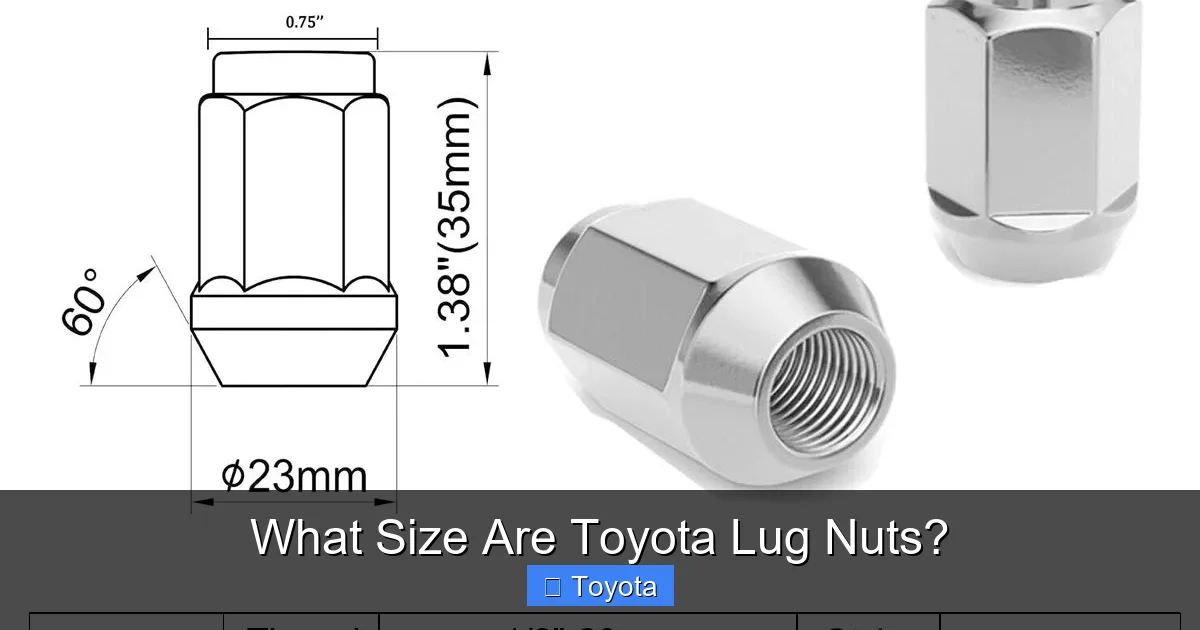
Knowing the correct Toyota lug nut size is essential for safe wheel installation and protects your vehicle from damage. This guide explains the standard sizes, thread pitches, and torque specifications for most Toyota models, making it easy to find the right hardware for your replacement wheels.
When it comes to replacing a tire or upgrading to new wheels, the first question many drivers ask is what size are Toyota lug nuts? Using the wrong size can damage the wheel studs, strip the threads, or even lead to a dangerous situation on the road. This guide will walk you through the most common sizes, how to identify the exact one for your vehicle, and the torque specifications you need to follow.
The answer isn’t a single number because Toyota has used several different lug nut standards across its models and years. By focusing on three key details—thread pitch, seat type, and length—you can pinpoint the correct hardware for your car. We’ll also show you how to measure your existing nuts, where to find the information in your owner’s manual, and what to watch for when fitting aftermarket wheels.
Key Takeaways
- Point 1: Most Toyota passenger cars use a 12 mm × 1.5 thread pitch.
- Point 2: Older trucks and SUVs may require a ½ inch × 20 UNF thread.
- Point 3: The typical seat type is conical (60°).
- Point 4: Torque specifications usually range from 70 to 80 ft‑lbs for 12 mm nuts.
- Point 5: Always use a torque wrench to tighten lug nuts evenly.
- Point 6: Verify exact values in your owner’s manual or by measuring existing nuts.
📑 Table of Contents
Understanding Lug Nut Basics
Thread Pitch
Thread pitch is the distance between the threads on the lug nut and the wheel stud. Most modern Toyota passenger cars use a 12 mm × 1.5 thread, which means the diameter is 12 millimeters and the pitch is 1.5 millimeters. This size is common on models such as the Camry, Corolla, and RAV4 from the last two decades.
Some older trucks and SUVs, including the Tacoma and 4Runner from the early 2000s, may use a ½ inch × 20 UNF thread. In this case the diameter is half an inch and the pitch is 20 threads per inch. It’s important to double‑check because mixing these two sizes can cause cross‑threading.
Seat Type
The seat is the part of the lug nut that contacts the wheel. Toyota typically uses a conical (60°) seat, which helps center the nut on the stud. A few models, especially those with aftermarket wheels, might require a flat seat or a radius seat. Using the wrong seat can create uneven pressure and may cause the wheel to wobble.
Length and Shank
The overall length of the lug nut matters when you have deep‑dish wheels or when you add spacers. A nut that is too short may not fully engage the stud, while one that is too long could interfere with the wheel or brake components. Most Toyota lug nuts fall in the 20–25 mm range, but always verify with a caliper if you’re unsure.
When you remove a lug nut, you might notice a small plastic washer inside. This washer helps distribute the load and prevents damage to the wheel’s surface. Always keep the washer in place when re‑installing the nut.
If you are working on a vehicle that has been in an accident, inspect the lug nuts for any signs of bending or cracking. Damaged nuts should be replaced immediately to avoid failure.
Common Toyota Lug Nut Sizes
12 mm × 1.5
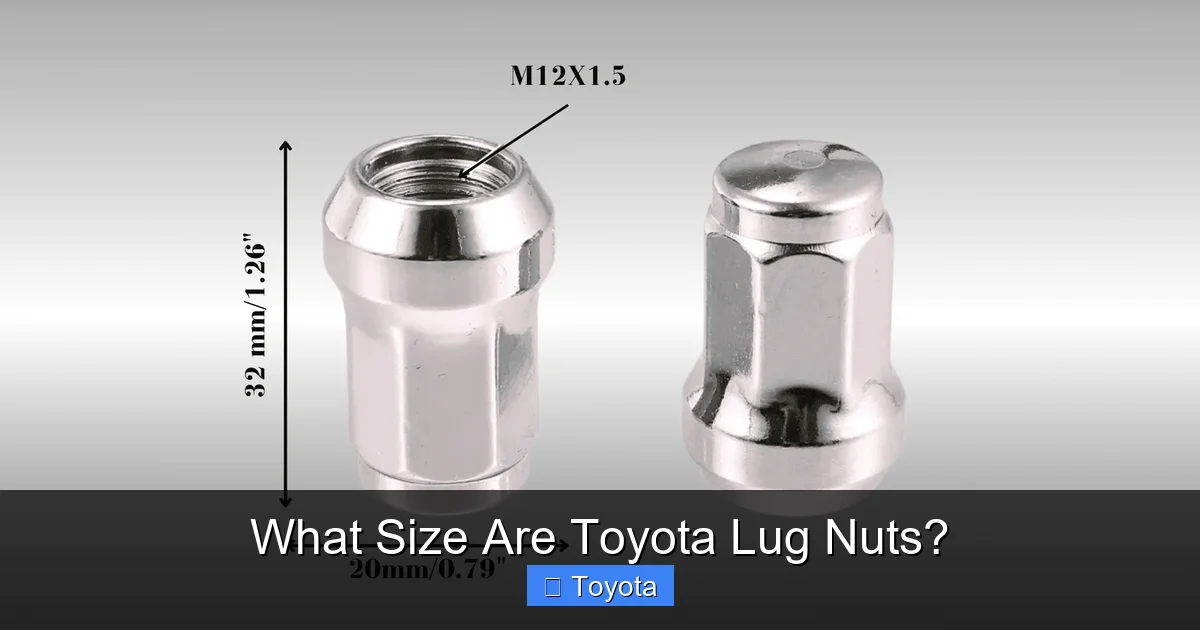
This is the workhorse size for many Toyota sedans and crossovers. It fits the majority of Camry, Corolla, Prius, and RAV4 models from roughly 2000 onward. When you buy a set of replacement lug nuts, you’ll often see them labeled as “M12 × 1.5”.
Visual guide about What Size Are Toyota Lug Nuts?
Image source: cdn.opplehouse.com
Some Toyota models, especially those with alloy wheels, may use a longer lug nut to accommodate the thicker wheel disc. Always check the length before purchasing replacements.
When buying aftermarket lug nuts, look for those that are grade 8 or higher. This rating indicates the nuts can handle higher tensile stress.
½ inch × 20 UNF
Older trucks and some SUVs, such as the 1995–2004 Tacoma and the 2003–2009 4Runner, use this larger thread. If you have a first‑generation Tundra, it may also fall into this category. Always check the vehicle’s specification before purchasing.
M14 × 1.5
While less common, a few high‑capacity models like the Tundra and Sequoia from the 2010s use an M14 × 1.5 thread. This size provides extra strength for heavier loads. If you drive a large SUV, confirm the exact size with your dealer or the owner’s manual.
Original equipment manufacturer (OEM) part numbers for Toyota lug nuts often start with 90018. For example, the 12 mm × 1.5 lug nut for a Camry may be part number 90018-01234, while the ½‑20 nut for a Tacoma could be 90018-01235. Keeping these numbers handy can help when ordering replacements.
How to Identify Your Correct Size
Check the Owner’s Manual
The quickest way to find the exact lug nut specification is to open the owner’s manual. Toyota lists the thread size, seat type, and torque value in the maintenance section. If you no longer have the manual, you can usually find a PDF online by searching for your model year and “owner’s manual”.
Visual guide about What Size Are Toyota Lug Nuts?
Image source: cdn.opplehouse.com
If you cannot find the owner’s manual, many Toyota websites provide a digital copy. Enter your vehicle’s model year and VIN to download the PDF.
Inspect Existing Lug Nuts
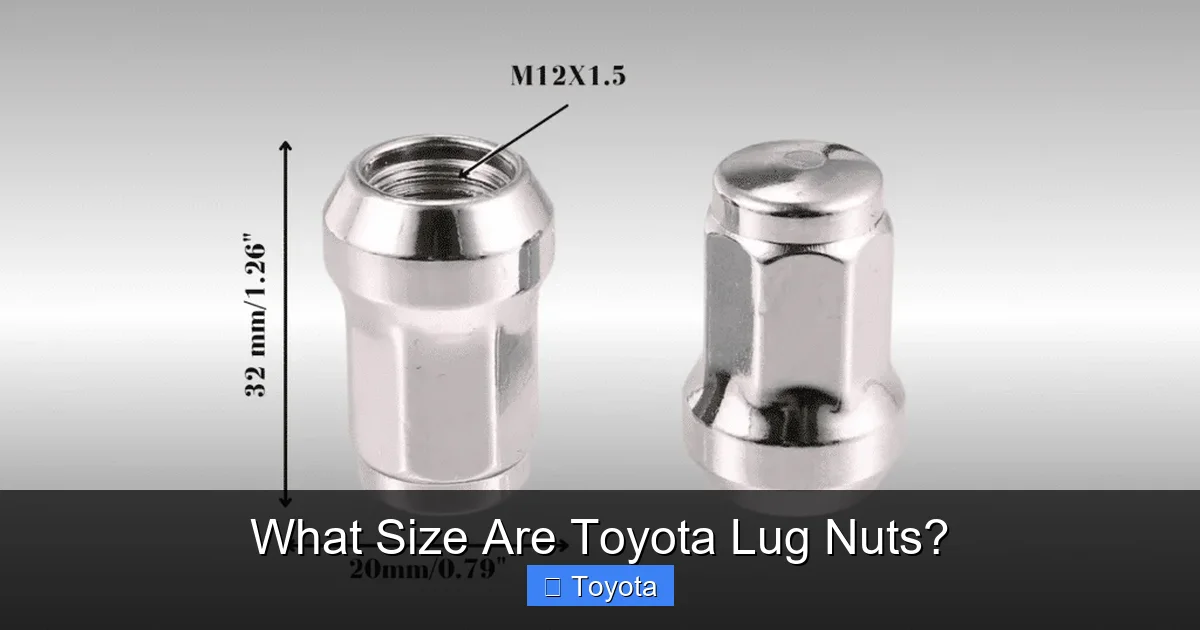
If the original nuts are still on the wheel, you can measure them. Use a caliper or a thread pitch gauge to determine the diameter and pitch. Look for markings on the side of the nut—many have “M12×1.5” or “1/2‑20” stamped on them.
When measuring lug nuts, use a caliper for precise readings. A ruler may not be accurate enough for distinguishing between close sizes.
Keep a note of your vehicle’s lug nut specifications in your glove box for quick reference during emergencies.
Use Online Fitment Tools
Several websites allow you to enter your VIN or model details and receive a list of compatible lug nuts. While these tools are convenient, always cross‑check the information with a physical measurement or the manual.
Another useful resource is online forums where owners share their experiences. However, verify any information you find with official sources.
Torque Specifications and Installation Tips
Typical Torque Values
Torque is the amount of force applied to tighten the lug nuts. For most Toyota models with 12 mm × 1.5 threads, the recommended torque is between 70 and 80 foot‑pounds. For ½‑20 nuts, the value often falls in the 90–100 foot‑pound range.

Visual guide about What Size Are Toyota Lug Nuts?
Image source: m.media-amazon.com
Always use a calibrated torque wrench. Over‑tightening can stretch the studs, while under‑tightening may cause the wheel to loosen while driving.
For a 2015 Toyota RAV4, the recommended torque is 76 foot‑pounds. A 2010 Corolla typically requires 72 foot‑pounds, while a 2008 4Runner may need 95 foot‑pounds. Always refer to your vehicle’s specific manual for exact values.
Using a Torque Wrench
Begin by hand‑tightening the lug nuts onto the wheel. Then, using the torque wrench, tighten each nut in a star pattern to the specified value. This pattern distributes the load evenly across the wheel.
When tightening lug nuts, it’s important to follow a star or criss‑cross pattern. This ensures even pressure across the wheel and prevents warping.
After completing the torque sequence, give each nut a final small turn to ensure they are properly seated.
Re‑torque After Driving
It’s a good practice to re‑torque the lug nuts after the first 50 to 100 miles. The wheel may settle slightly, and the nuts can loosen. A quick check can prevent a potential failure.
When using a torque wrench, tighten each nut gradually in a star pattern. This method helps achieve consistent tension across all nuts.
After tightening, you can apply a small amount of anti‑seize compound to the threads to make future removal easier. Use sparingly to avoid over‑lubrication.
Aftermarket Wheels and Compatibility
Bolt Pattern and Offset
When fitting aftermarket wheels, you must match the bolt pattern and offset to your Toyota. The standard 5‑lug pattern is 5 × 114.3 mm, but some models use a 6‑lug pattern. If you are unsure, our article on Will Toyota 6 Lug Wheels Fit Chevy explains the differences and how to confirm compatibility.
Spacers and Adapters
Spacers can change the effective offset, but they also alter the required lug nut length. When using spacers, you typically need longer nuts to maintain full thread engagement. Always follow the spacer manufacturer’s recommendations.
Cross‑Compatibility with Other Brands
Some Toyota models share platforms with other manufacturers, which can lead to interchangeable lug nuts. However, never assume they are the same without checking the thread pitch and seat type. For example, many Honda vehicles use the same 12 mm × 1.5 thread, but the seat may be different.
When choosing new tires, it’s helpful to know the correct size; for instance, our guide on What Size Tires Are On A Toyota Camry provides details for that model.
If you drive an older model like the 2001 Corolla, you might need its tire size as well, which is covered in What Size Tires Does A 2001 Toyota Corolla Have.
Before installing aftermarket wheels, ensure they have the correct hub bore size. A wheel that is too small may not sit flush on the hub, while one that is too large can require hub rings for a secure fit.
Also consider the wheel’s offset. An offset that is too low can cause the tire to rub against the fender, especially when turning.
Before buying aftermarket wheels, confirm they are compatible with your vehicle’s ABS sensors. Some wheels may interfere with sensor operation.
Also check the wheel’s load rating to ensure it can support your vehicle’s weight. Exceeding the rating can lead to premature failure.
Common Mistakes and Safety Tips
One common mistake is using the wrong socket size, which can strip the lug nut. Always match the socket to the nut’s drive size.
Another error is overtightening the lug nuts, which can stretch the studs and make them difficult to remove later. Always follow the torque specification and use a torque wrench.
Forgetting to re‑torque after the first drive can lead to loose wheels. Make it a habit to check the torque after 50 to 100 miles.
Finally, mixing lug nut types from different vehicles can cause compatibility issues. Verify that the thread pitch and seat type match your Toyota’s requirements.
Periodic inspection of lug nuts is a simple yet crucial part of vehicle maintenance. A quick visual check can reveal any signs of loosening or damage.
Never use an impact wrench to final‑tighten lug nuts. The tool can easily exceed the recommended torque, leading to damaged studs.
If you notice any unusual sounds while driving, such as a clicking noise from the wheels, stop and inspect the lug nuts immediately.
Conclusion
Knowing what size are Toyota lug nuts is more than just a technical detail—it’s a safety requirement. By understanding thread pitch, seat type, and torque specifications, you can confidently choose the right hardware for your vehicle. Remember to verify the exact size using your owner’s manual or by measuring existing nuts, and always use a torque wrench to achieve the correct tightness.
When in doubt, consult a professional mechanic. A small investment in the correct lug nuts can prevent costly repairs and keep you safe on the road. Happy driving!
Frequently Asked Questions
What size lug nuts does a 2018 Toyota Camry use?
The 2018 Camry typically uses 12 mm × 1.5 lug nuts with a conical seat. The recommended torque is about 76 foot‑pounds.
How do I know if my Toyota uses 12mm or 1/2 inch lug nuts?
Check the owner’s manual or look for markings on the existing nuts. Most modern Toyota passenger cars use 12 mm × 1.5, while older trucks may use ½‑20 UNF.
What torque should I use for Toyota lug nuts?
For 12 mm nuts, torque is usually between 70 and 80 foot‑pounds. For ½‑20 nuts, the range is often 90 to 100 foot‑pounds.
Can I use aftermarket lug nuts on my Toyota?
Yes, as long as they match the thread pitch, seat type, and length. Verify the specifications before installation to ensure safety.
Are Toyota lug nuts interchangeable with other brands?
Sometimes, but you must confirm the thread size and seat type. Many Honda models share the same 12 mm × 1.5 thread, but the seat may differ.
How often should I check my lug nut torque?
It’s wise to check after the first 50 to 100 miles and then periodically during long trips. Re‑torquing helps prevent loosening.