How to Open a Toyota Forklift Hood
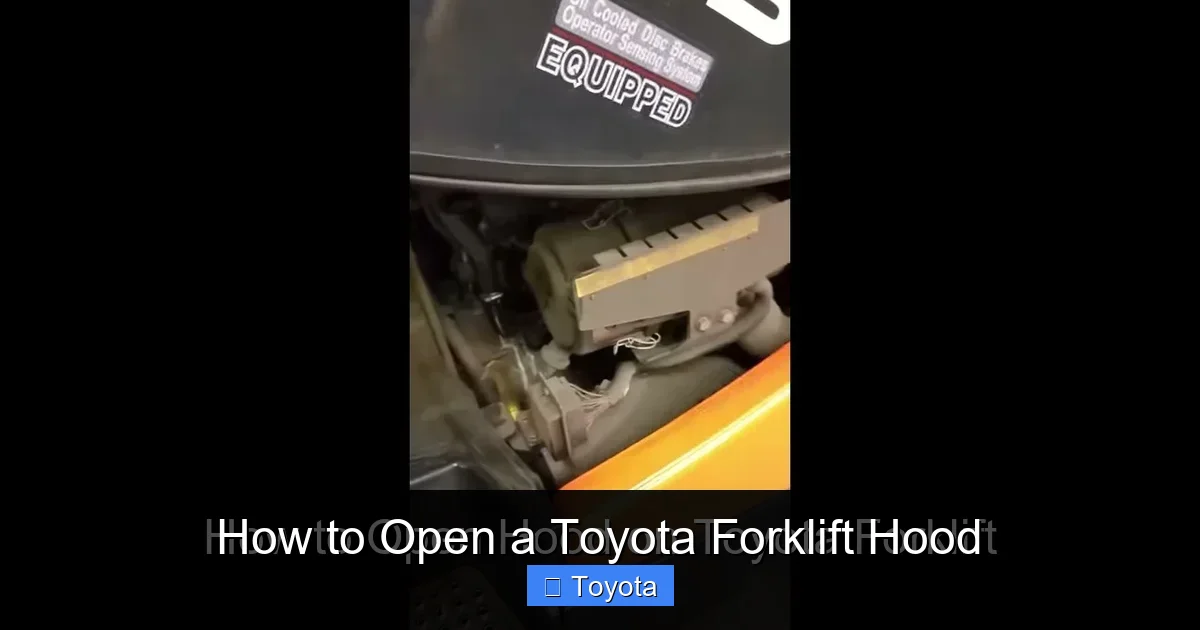
Opening a Toyota forklift hood requires knowing your specific model’s latch location and following proper safety procedures. This guide covers everything from identifying your forklift type to troubleshooting common issues like stuck latches or damaged cables.
If you operate or maintain Toyota forklifts, you know that accessing the engine compartment is a routine part of daily checks and scheduled maintenance. But if you are new to these machines, figuring out how to open a Toyota forklift hood can feel confusing at first. Different models have different latch locations, release mechanisms, and safety features. Some hoods tilt forward. Others swing to the side. A few even lift straight off.
This guide walks you through the process step by step. We cover the most common Toyota forklift series, explain where to find the release handles, and share tips for dealing with stuck latches. Whether you drive a Core IC cushion tire truck, a large capacity pneumatic model, or an electric rider, the basic principles remain the same. Safety comes first. Then comes knowing your specific machine.
Key Takeaways
- Safety first: Always park on level ground, engage the parking brake, and lower the forks before attempting to open the hood.
- Know your model: Toyota forklifts have different hood configurations including front-hinged, side-hinged, and removable panel designs.
- Locate the latch: Primary latches are typically near the operator seat, on the dashboard, or on the exterior front grille area.
- Use the safety catch: Most models have a secondary safety latch that must be released after the primary latch is pulled.
- Prop rod is essential: Always secure the hood with the factory prop rod or support cylinder before working underneath.
- Troubleshoot stuck latches: Lubricate cables regularly and check for corrosion if the hood won’t open smoothly.
- Regular maintenance: Keep latch mechanisms clean and lubricated to prevent future access issues.
📑 Table of Contents
- Understanding Toyota Forklift Hood Designs
- Pre-Opening Safety Checklist
- Step-by-Step: Opening a Front-Hinged Tilting Hood
- Step-by-Step: Opening Side-Hinged and Removable Panels
- Troubleshooting Common Hood Opening Problems
- Routine Maintenance for Reliable Hood Operation
- Model-Specific Quick Reference
- Closing the Hood Properly
- Conclusion
Understanding Toyota Forklift Hood Designs
Toyota Material Handling produces a wide range of forklifts. Each series has a slightly different engine compartment access design. Before you pull any lever, take a moment to identify which style you are working with. This saves time and prevents damage to the latch or hood panels.
Front-Hinged Tilting Hoods
This is the most common design on Toyota internal combustion (IC) forklifts like the 8FGCU25, 8FGU32, and the Core IC series. The hood is a single large panel hinged at the front near the radiator. It tilts backward toward the operator compartment. You will typically find a release handle inside the operator cabin on the right side dashboard or near the floorboard. Some older models have an exterior pull handle recessed into the front grille.
Side-Hinged Swing-Open Hoods
Certain Toyota electric forklifts and some narrow-aisle reach trucks use side-hinged panels. These swing open like a car door, usually from left to right. The latch is often a rotary lever or a push-button release located on the panel itself or just inside the frame. These designs are common on 3-wheel electric models like the 8FBE15U or 8FBE20U where battery access is the primary goal.
Removable Top Panels
On some large capacity Toyota forklifts (15,000 lbs and up) and certain container handlers, the top hood section is not hinged at all. It is a removable panel secured with heavy-duty latches or bolts. You will need a tool to release these. This design allows full overhead access for major component removal. Always check the service manual for the specific bolt torque specs if you remove this style.
Dual-Panel Configurations
A few models feature a two-piece hood. A smaller front panel tilts forward for quick radiator and fluid checks. A larger rear panel tilts back or removes for full engine access. The Toyota High-Capacity IC Pneumatic series sometimes uses this setup. Each panel has its own latch. Make sure you open the correct one for your task.
Pre-Opening Safety Checklist
Never rush the process. A forklift hood is heavy. The engine compartment contains hot surfaces, moving parts, and electrical connections. Follow this checklist every time before you release the latch.
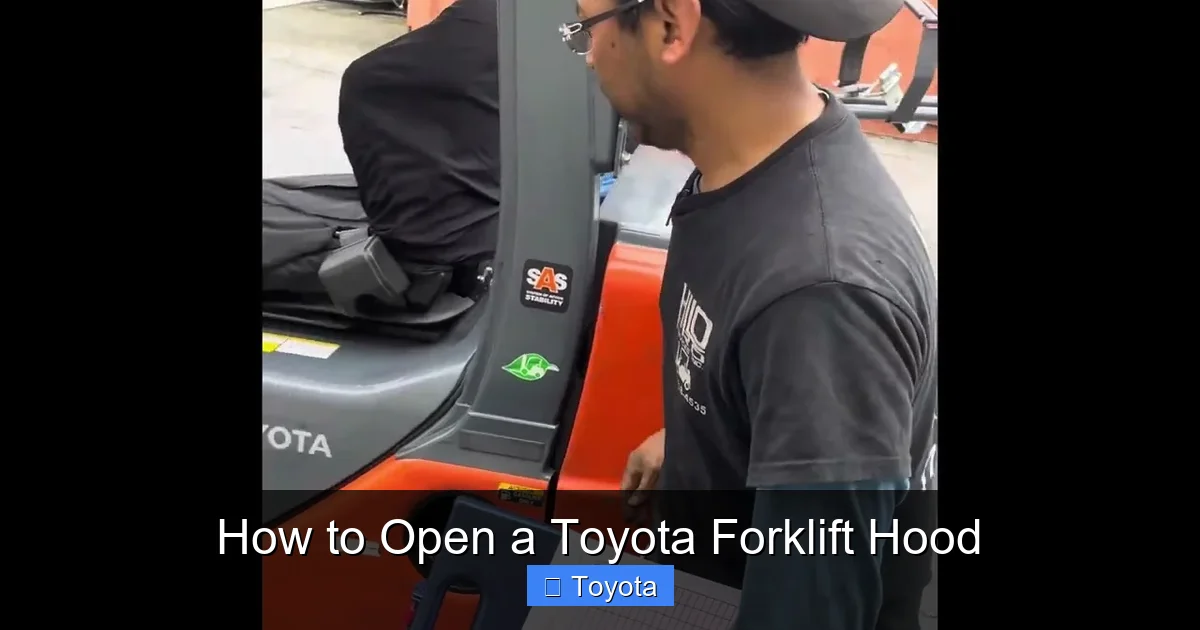
Visual guide about How to Open a Toyota Forklift Hood
Image source: i.ytimg.com
Park on Level Ground
Ensure the forklift is on a flat, stable surface. An incline can cause the hood to swing unexpectedly or put stress on the hinges and prop rod. If you must work on a slope, chock the wheels securely.
Lower the Forks Completely
Lower the forks or attachment all the way to the floor. Tilt the mast forward slightly so the fork tips rest flat. This stabilizes the machine and clears the area in front of the hood if it tilts forward.
Engage the Parking Brake
Pull the parking brake lever firmly. Verify the brake indicator light is on. This prevents any accidental movement while you are leaning into the engine bay.
Turn Off the Engine and Remove the Key
Shut down the engine completely. Remove the key from the ignition switch. Pocket the key so no one else can start the machine while your hands are inside the compartment. For electric models, engage the emergency disconnect or key switch off position.
Allow Cool-Down Time
If the forklift was running, wait at least ten to fifteen minutes. The radiator, exhaust manifold, hydraulic lines, and engine block stay hot long after shutdown. Touching these can cause severe burns.
Wear Appropriate PPE
Put on safety glasses and gloves. Safety glasses protect your eyes from debris, rust flakes, or sudden fluid spray. Gloves protect your hands from sharp edges, hot surfaces, and pinch points at the hinges.
Step-by-Step: Opening a Front-Hinged Tilting Hood
This procedure covers the majority of Toyota IC forklifts you will encounter in warehouses and distribution centers. Models like the 8FGCU15-32, 8FGU15-32, Core IC 4000-6000 lb, and 9FBM electric conversions with IC-style hoods all follow this general pattern.
Step 1: Locate the Primary Interior Release
Sit in the operator seat. Look to your right. On the dashboard panel or the lower right cowl near the floor, you will see a handle or lever. It is usually marked with a hood icon or the word “HOOD.” Pull this handle firmly toward you. You should hear a distinct *clunk* as the primary latch releases. The hood will pop up slightly, usually an inch or two.
Step 2: Exit the Cab and Approach the Front
Step out of the forklift. Walk to the front of the machine. Do not stand directly in front of the grille. Stand slightly to the side. The hood may spring up with force if the gas struts are strong.
Step 3: Find and Release the Secondary Safety Latch
This is the most critical step. The hood is now held only by the safety catch. Reach under the front edge of the hood, slightly left or right of center. Feel for a small lever, paddle, or tab. On most Toyotas, you push this lever to the side (usually left) or pull it toward you. The hood will then release fully and rise on its gas struts or hinge springs.
Step 4: Secure the Hood with the Prop Rod
Even if the hood has gas struts that hold it open, always use the factory prop rod. Locate the rod clipped to the underside of the hood or the radiator support. Unclip it. Swing it up and insert the end into the designated receiver hole on the hood reinforcement or the frame. Verify it is seated securely. Give the hood a gentle upward tug to confirm it is locked in place.
Step 5: Perform Your Inspection or Maintenance
You now have full access. Check oil, coolant, hydraulic fluid, belts, hoses, and air filter. If you need to clean the engine bay, this is the perfect time. For detailed cleaning tips, you can refer to our guide on how to clean a car engine bay — many of the same principles apply to forklift engine compartments, just on a larger scale.
Step-by-Step: Opening Side-Hinged and Removable Panels
Electric Toyota forklifts and reach trucks often hide their latches in different spots. Here is how to handle the less common designs.
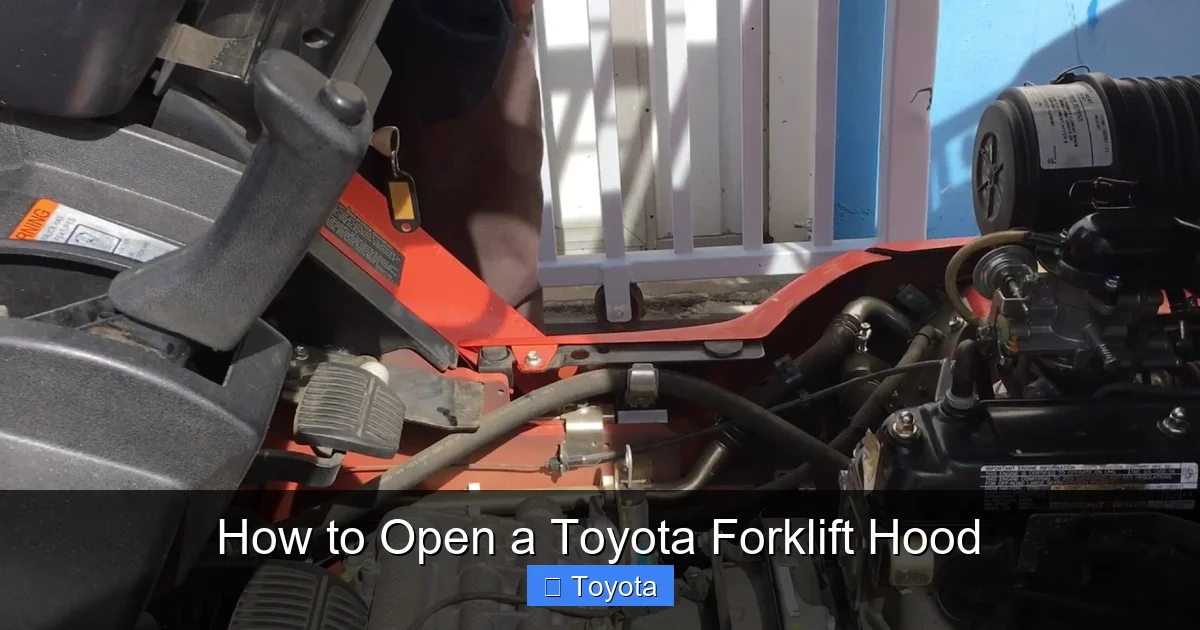
Visual guide about How to Open a Toyota Forklift Hood
Image source: i.ytimg.com
Side-Hinged Panel (Common on 3-Wheel Electrics)
- Stand on the left side of the forklift (usually the battery side).
- Locate the rotary latch or push-button on the panel face or the door jamb.
- Rotate the lever 90 degrees or press the button firmly.
- Grasp the molded handle or panel edge.
- Swing the panel open fully until it hits the door stop or limiter strap.
- Verify the panel is stable before reaching inside.
These panels give direct access to the battery compartment, controller, and hydraulic pump motor. If you are checking battery health, our article on how to maintain a car battery in cold weather offers useful tips that translate well to industrial battery care.
Removable Top Panel (Large Capacity Models)
- Gather the required tools (usually a 17mm or 19mm socket/wrench for latch bolts).
- Locate all perimeter latches or bolts. There may be four to eight.
- Release each latch or remove each bolt. Keep hardware organized.
- With a helper, lift the panel straight up and off. These panels are heavy.
- Set the panel on a protected surface away from the work area.
Never attempt to lift a large removable panel alone. Use a hoist or a second person. The weight can exceed 100 lbs.
Troubleshooting Common Hood Opening Problems
Even with perfect technique, things go wrong. Cables stretch. Latches corrode. Hinges bind. Here is how to handle the most frequent issues.
The Interior Handle Pulls but Nothing Happens
This usually means the release cable has stretched, broken, or disconnected at the latch mechanism. Try having a helper push down firmly on the hood near the latch while you pull the handle. This relieves tension on the latch pawl. If that works, adjust the cable tension at the latch bracket or replace the cable assembly.
The Hood Pops Up But Won’t Release from the Safety Catch
The secondary latch pivot is likely seized with rust or dried grease. Spray penetrating oil (PB Blaster, Kroil, or similar) into the latch mechanism from underneath. Let it soak for fifteen minutes. Work the lever back and forth gently with a screwdriver or pliers. Do not force it. You can bend the safety latch tab, which creates a much bigger repair.
Gas Struts Are Weak and the Hood Won’t Stay Up
This is a wear item. Struts lose pressure over time. You can still work safely by using the prop rod every time. Order replacement struts from your Toyota dealer using the hood part number. Replace them in pairs. It is a ten-minute job with a helper holding the hood.
Hood Is Misaligned and Scrapes the Cowl or Fenders
Check the hinge bolts. They loosen from vibration. Loosen the bolts slightly, realign the hood for even gaps, and retorque. Also check the rubber bump stops on the radiator support or frame. Missing stops let the hood sit too low.
Frozen Latch in Winter
Moisture in the latch mechanism freezes solid. Do not yank the handle. You will snap the cable. Use a heat gun or hair dryer on low to warm the latch area. Or spray lock de-icer into the mechanism. Prevent this by lubricating the latch with silicone spray or white lithium grease before cold weather hits.
Routine Maintenance for Reliable Hood Operation
A little prevention keeps the hood working smoothly for years. Add these tasks to your planned maintenance (PM) schedule.
Lubricate the Latch Mechanism Quarterly
Use a dry film lubricant or white lithium grease on the primary latch pawl, the safety catch pivot, and the cable ends. Avoid heavy oils that attract dust and grit. Cycle the latch several times after application.
Inspect and Adjust the Release Cable
Check for fraying, kinks, or corrosion at both ends. Ensure the cable housing is secured in its clips. Adjust the slack so the handle has about half an inch of free play before resistance begins. Too tight and the latch won’t fully engage. Too loose and it won’t release.
Check Gas Strut Condition
Look for oil leakage on the strut shaft. Check for dents or bending. Test the holding force by lifting the hood halfway and releasing. It should rise smoothly to full open. If it sags or drops, replace the pair.
Clean Hinge Pins and Bushings
Wipe off old grease and debris. Apply fresh synthetic grease. Work the hood open and closed a few times to distribute. This prevents binding and premature hinge wear.
Verify Prop Rod Integrity
Inspect the prop rod for bends, cracks, or worn ends. Check the retaining clip and the receiver hole for elongation. A failed prop rod can let the hood crash down on you or a technician. Replace damaged rods immediately.
Model-Specific Quick Reference
Keep this cheat sheet handy for the most popular Toyota forklift series.
Toyota Core IC Cushion (8FGCU15-32, 8FGU15-32)
- Primary release: Right side dash lever, pull back.
- Safety latch: Under front center of hood, push left.
- Prop rod: Clipped under hood, inserts into hole on hood brace.
- Struts: Dual gas struts, standard.
Toyota Core IC Pneumatic (8FGU15-32, 8FDU15-32)
- Primary release: Right side dash lever, pull back.
- Safety latch: Under front center, push left.
- Prop rod: Same as cushion.
- Note: Larger hood, heavier struts.
Toyota 3-Wheel Electric (8FBE15U, 8FBE18U, 8FBE20U)
- Access: Left side-hinged battery door.
- Latch: Rotary lever on door face, turn 90 deg.
- No prop rod needed. Door stop holds it open.
- Controller access: Separate panel behind seat.
Toyota 4-Wheel Electric (8FBEHU18-30, 8FBNH20-30)
- Hood: Front-hinged tilting, similar to IC trucks.
- Primary release: Dash lever right side.
- Safety latch: Under front edge, push left.
- Prop rod: Standard.
Toyota Large Capacity IC (THD2200-3600, 15,000+ lbs)
- Hood: Two-piece or removable top panel.
- Front panel: Tilts forward, latch on grille.
- Top panel: Bolted or heavy latches, tool required.
- Always use overhead crane or two-person lift for top panel.
Toyota Reach Truck (7FBRU15-25, 7FBRI15-20)
- Battery access: Side swing door, right side.
- Latch: Push-button or rotary on door.
- Mast/hydraulic access: Rear panel, key-locked.
- No traditional “hood” on most models.
Closing the Hood Properly
Closing is just as important as opening. Do it wrong and you bend the latch, crack the grille, or leave the hood unlatched — a serious safety hazard.
Remove Tools and Rags
Do a full sweep of the engine bay. Look for wrenches on the battery, rags on the fan shroud, funnel in the oil fill. A forgotten tool destroys a radiator fan or belt in seconds.
Check Fluid Caps and Dipsticks
Ensure oil cap, coolant cap, hydraulic cap, and brake reservoir caps are tight. Dipsticks fully seated. Loose caps leak. Missing dipsticks ingest dirt.
Return the Prop Rod
Grasp the hood firmly with one hand. Unclip the prop rod with the other. Lower it slowly into its storage clip. Make sure it snaps in. A loose prop rod rattles and can fall into the fan.
Lower the Hood with Control
Do not drop it. Do not slam it. Lower the hood until it is about six inches from the latch. Then apply firm, even pressure with both hands flat on the hood panel. You should feel the primary latch engage with a solid click.
Verify the Safety Catch
Try to lift the front edge of the hood. It should not move more than a fraction of an inch. If it lifts, the safety catch did not engage. Open and close again. Never operate the forklift with only the primary latch holding.
Test from the Operator Seat
Sit in the seat. Pull the interior release handle. It should move freely with spring resistance. If it feels loose or disconnected, the cable needs adjustment before you put the truck back in service.
Conclusion
Knowing how to open a Toyota forklift hood is a fundamental skill for any operator or technician. The process is straightforward once you understand your specific model’s latch locations and safety features. Always prioritize safety: park securely, shut down completely, let things cool, and use the prop rod every single time. Keep the latch mechanism clean and lubricated. Address small issues like sticky cables or weak struts before they become big problems.
With the hood open, you can perform the daily checks that keep your Toyota forklift running reliably — checking oil, coolant, hydraulic fluid, belts, and filters. These few minutes of prevention save hours of downtime and thousands in repair costs. Treat the hood and its latches with care. They are your gateway to the heart of the machine. And if you ever need to diagnose a starting issue after maintenance, our guide on how to diagnose a car battery problem can help you troubleshoot the electrical system, whether it’s a car or a forklift.
Stay safe. Keep the hood working. Keep the forklift running.
Frequently Asked Questions
Where is the hood release on a Toyota forklift?
On most Toyota IC forklifts, the primary hood release is a lever on the right side of the dashboard or lower cowl near the operator’s right knee. Electric models often use a rotary latch or push button on the side panel itself.
Why won’t my Toyota forklift hood open when I pull the lever?
The release cable may be stretched, broken, or disconnected. Have a helper push down on the hood near the latch while you pull the lever to relieve tension. If that works, adjust or replace the cable.
Do I need to use the prop rod if the hood has gas struts?
Yes. Always use the factory prop rod. Gas struts can fail without warning due to temperature changes, age, or damage. The prop rod is a mechanical backup that prevents the hood from falling on you.
How do I open the hood on a Toyota electric forklift?
Most Toyota 3-wheel electrics have a side-hinged battery door on the left side. Turn the rotary latch or press the button on the door face, then swing it open. 4-wheel electrics often use a front-hinged hood similar to IC trucks.
What maintenance does the hood latch need?
Lubricate the primary latch, safety catch pivot, and cable ends with white lithium grease or dry film lubricant every quarter. Inspect the cable for fraying and the struts for leaks. Clean and grease hinge pins annually.
Can I drive the forklift with the hood open?
Never. Driving with the hood open blocks forward vision, risks hinge damage, and violates OSHA safety standards. Always close and latch the hood completely before moving the machine.