How to Fix Electronic Throttle Control Jeep
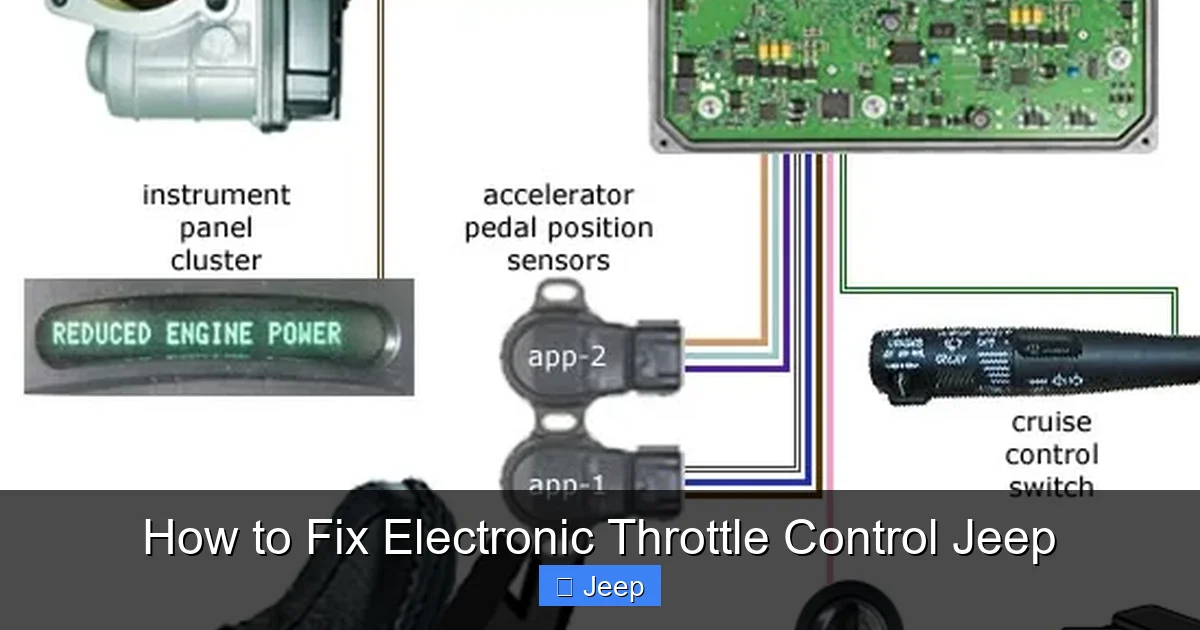
Electronic throttle control problems on your Jeep can cause hesitation, stalling, and reduced power. This guide covers the most common causes, symptoms, and DIY fixes to help you resolve the issue safely. We also cover when to see a mechanic and how to prevent future throttle control failures.
Your Jeep is more than just a vehicle. It is your companion on trails, road trips, and daily commutes. So when the electronic throttle control light pops up on your dashboard, it is hard not to panic. You wonder if your Jeep is going to die on you. The good news is that electronic throttle control issues are often fixable. You do not always need a expensive mechanic visit.
In this guide, we will walk you through everything you need to know about fixing electronic throttle control Jeep problems. From understanding what the system does, to identifying symptoms, to step-by-step fixes, we have you covered. Whether you drive a Jeep Grand Cherokee, Wrangler, or Cherokee, this article applies to you.
Let us start by understanding what electronic throttle control actually means. Then we will move into the fixes that can save you time and money.
Key Takeaways
- Understand the problem: Electronic throttle control issues often show up as warning lights, rough idle, or poor acceleration.
- Check the throttle body: A dirty or faulty throttle body is the most common cause of electronic throttle control errors.
- Scan for codes: Use an OBD2 scanner to read fault codes before attempting any repairs.
- Reset the system: A simple throttle reset procedure can fix minor electronic throttle control glitches.
- Replace worn parts: Sensors, wiring, and the throttle position sensor may need replacement in severe cases.
- Prevent future issues: Regular maintenance and clean air filters help keep the electronic throttle control system healthy.
📑 Table of Contents
What Is Electronic Throttle Control?
Electronic throttle control (ETC) is a system that manages how much air enters your Jeep engine. Unlike older cable-linked throttles, ETC uses electronic sensors and motors. When you press the gas pedal, sensors send signals to the engine control module (ECM). The ECM then adjusts the throttle plate to let in the right amount of air.
This system improves fuel efficiency and emissions. It also allows for features like traction control and cruise control integration. But because it relies on electronics, it can develop issues over time. Dirt, wear, and electrical faults are the main culprits.
When the ECM detects a problem in the throttle control system, it triggers a warning light. This light often looks like a yellow engine icon with a downward arrow. Some Jeeps display “Throttle Control” or “Check Engine” instead. Do not ignore this light. It means your Jeep is telling you something needs attention.
Common Symptoms Of Electronic Throttle Control Problems
How do you know if your Jeep has an electronic throttle control issue? The symptoms are usually hard to miss. Here are the most common signs:
Visual guide about How to Fix Electronic Throttle Control Jeep
Image source: jeepfixes.com
Warning Light On Dashboard
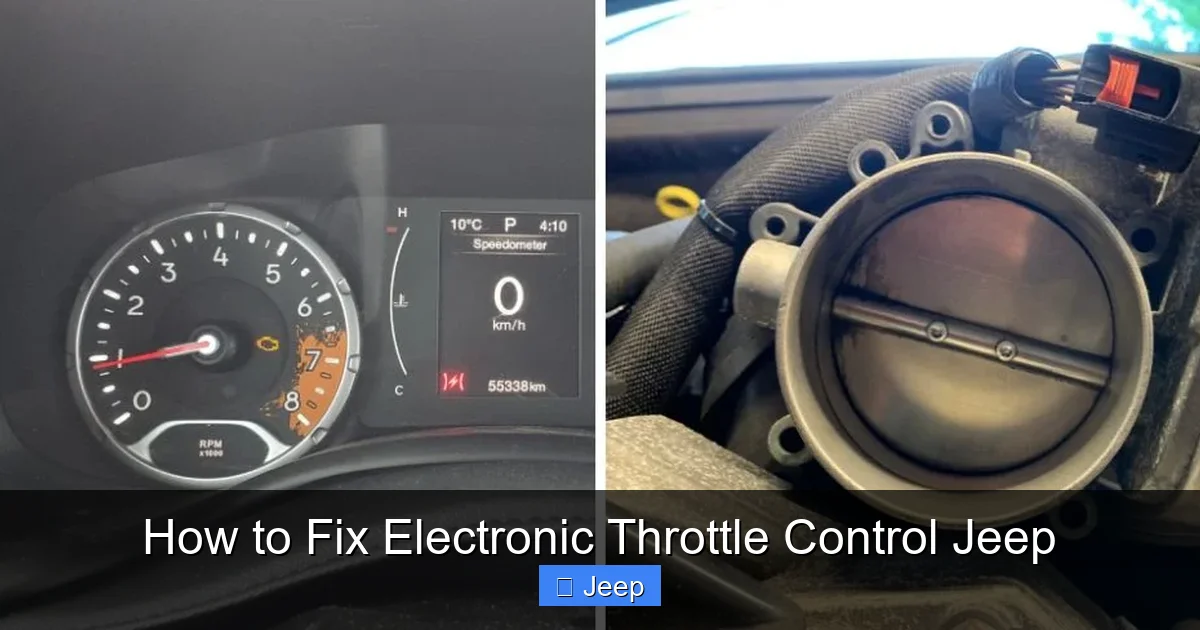
The most obvious sign is the check engine or throttle control warning light. It may stay on or flash intermittently. If it flashes, the problem is more serious and needs immediate attention.
Reduced Engine Power
Your Jeep may go into “limp mode.” This limits engine power to protect the engine. You will notice sluggish acceleration and a top speed cap. This is common when the throttle body or sensors fail.
Rough Idle Or Stalling
A faulty throttle body can cause rough idle. Your Jeep may shake at stops or stall unexpectedly. This happens when the throttle plate cannot regulate airflow properly.
Unresponsive Accelerator
Sometimes the gas pedal feels loose or unresponsive. There may be a delay between pressing the pedal and the Jeep responding. This is dangerous and should be fixed right away.
Poor Fuel Economy
If the throttle control system is not working right, your Jeep burns more fuel. You may notice fewer miles per gallon. This is because the ECM cannot optimize air-fuel mixture properly.
Causes Of Electronic Throttle Control Issues
Not all electronic throttle control problems are the same. The cause determines the fix. Here are the most common reasons your Jeep shows throttle control errors:
Visual guide about How to Fix Electronic Throttle Control Jeep
Image source: adventurejeep.com
Dirty Throttle Body
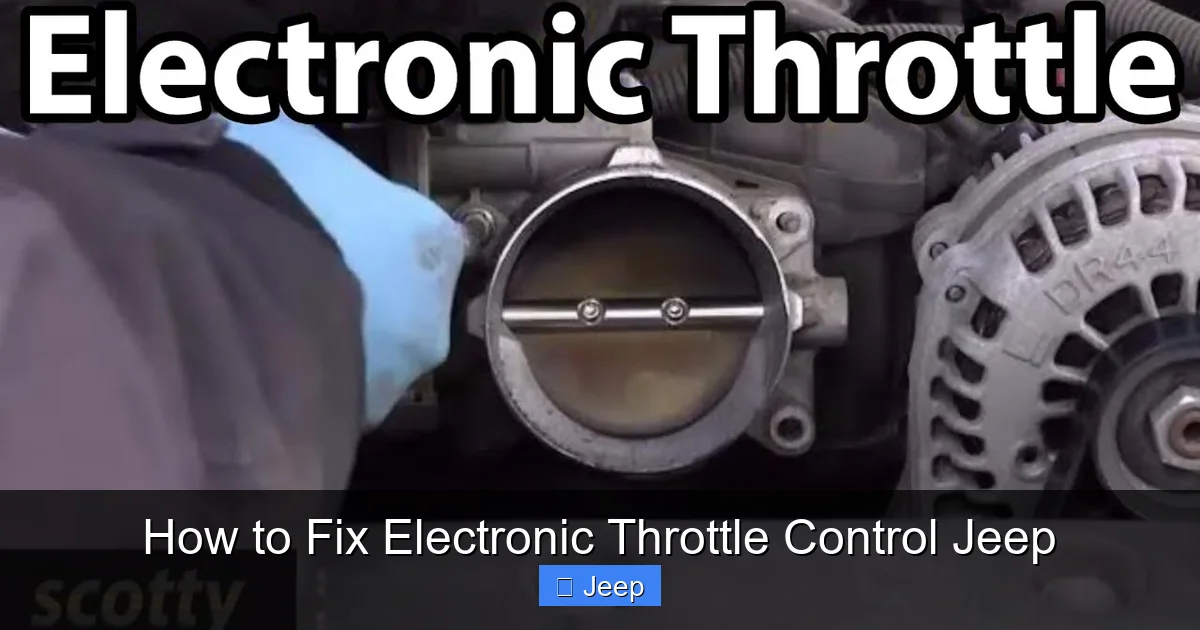
Carbon buildup is the #1 cause of throttle issues. Over time, oil vapor and dirt coat the throttle plate. This restricts movement and confuses the sensors. A dirty throttle body causes rough idle and hesitation.
Faulty Throttle Position Sensor
The throttle position sensor (TPS) tells the ECM how far the throttle plate is open. If it fails, the ECM gets wrong data. This triggers the electronic throttle control light and causes poor acceleration.
Wiring Or Connector Problems
Your Jeep travels on rough roads. Vibration can loosen wiring harnesses. Corroded connectors or frayed wires interrupt signals between the throttle body and ECM. This is common in older Jeeps.
Failed Accelerator Pedal Position Sensor
Modern Jeeps have sensors inside the gas pedal assembly. If one fails, the ECM cannot read your pedal input. This causes unresponsive acceleration and limp mode.
Software Or Calibration Issues
Sometimes the problem is not hardware. A software glitch or outdated ECM calibration can cause false throttle control warnings. This is more common after battery replacements or ECM resets.
Vacuum Leaks
Although electronic throttles do not use vacuum cables, the engine still relies on vacuum seals. Leaks in intake gaskets or hoses can affect airflow readings and trigger throttle control errors.
How To Fix Electronic Throttle Control Jeep Problems
Now let us get to the fixes. Most electronic throttle control issues can be resolved at home with basic tools. Always start with the simplest solutions before moving to complex repairs.
Visual guide about How to Fix Electronic Throttle Control Jeep
Image source: shunauto.com
Step 1: Read The Fault Codes
Before you do anything, plug in an OBD2 scanner. Read the fault codes stored in the ECM. Common codes for electronic throttle control issues include P2100, P2111, P2112, and P2135. These codes tell you exactly what is wrong. Without them, you are guessing.
If you do not have a scanner, many auto parts stores read codes for free. Write down the codes and look them up. This saves you time and money.
Step 2: Clean The Throttle Body
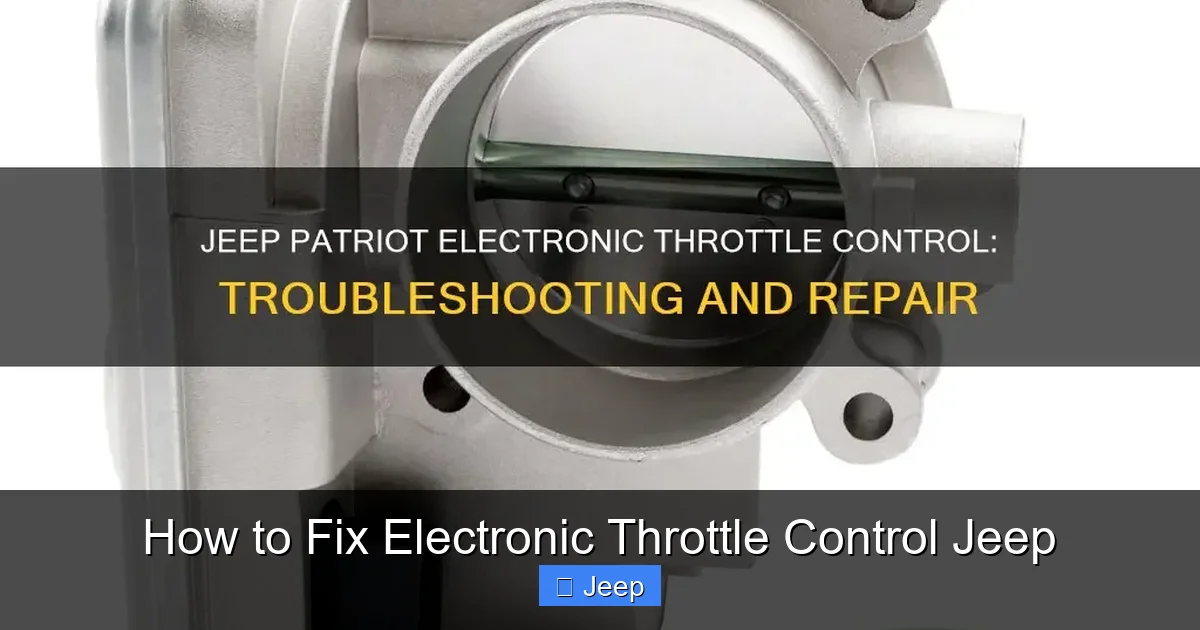
If the codes point to a throttle body issue, cleaning is your first step. Buy a throttle body cleaner from an auto parts store. Remove the air intake hose from the throttle body. Spray the cleaner on a cloth, not directly on electronic components. Wipe the throttle plate and bore until they are clean.
Be gentle. Do not force the throttle plate open. Let the cleaner dissolve carbon deposits. After cleaning, reconnect everything and start the Jeep. Let it idle for 10 minutes so the ECM can relearn the throttle position.
For a deeper understanding of throttle calibration, check out our guide on how to calibrate a throttle position sensor. This helps you understand the sensor side of the system.
Step 3: Reset The Throttle Control System
After cleaning or replacing parts, you need to reset the system. Turn the ignition to ON (do not start). Wait 3 seconds. Press the gas pedal to the floor and hold for 10 seconds. Release the pedal. Turn the ignition OFF. Wait 60 seconds. Start the Jeep and let it idle for 5 minutes.
This procedure tells the ECM to relearn the throttle baseline. Many electronic throttle control warnings disappear after this reset. If the light comes back, the problem is not fully resolved.
Step 4: Replace The Throttle Position Sensor
If cleaning and resetting do not work, the TPS may need replacement. The throttle position sensor is usually built into the throttle body assembly. You may need to replace the entire throttle body in some Jeep models.
Disconnect the battery. Remove the air intake duct. Unbolt the throttle body. Disconnect the electrical connector. Install the new throttle body or sensor. Reconnect everything and reset the ECM. This fix costs between $150 and $400 depending on your Jeep model.
Step 5: Check Wiring And Connectors
Inspect the wiring harness connected to the throttle body. Look for frayed wires, corroded pins, or loose connectors. Repair any damaged wires with solder or replacement harnesses. Clean corroded connectors with electrical contact cleaner.
This step is often overlooked but fixes many intermittent throttle control issues. Vibration from off-roading can loosen connections over time.
Step 6: Update ECM Software
If all hardware checks out, the issue may be software. Visit a Jeep dealer or qualified mechanic. Ask if there is an ECM software update for your model year. Dealers can flash the ECM with updated calibration. This fixes many electronic throttle control bugs reported by Jeep owners.
Step 7: Replace The Accelerator Pedal Assembly
In rare cases, the gas pedal sensor fails. You will need to replace the entire pedal assembly. This is less common but happens. Symptoms include no response when pressing the pedal or erratic acceleration. Replacement costs range from $200 to $500 including labor.
When To See A Mechanic
Not all electronic throttle control problems are DIY-friendly. Here are signs you need professional help:
- The warning light stays on after cleaning and resetting.
- Your Jeep goes into limp mode frequently.
- You smell burning or see damaged wiring.
- The throttle body is physically damaged or stuck.
- You are not comfortable working on electronics.
A qualified mechanic has advanced diagnostic tools. They can pinpoint issues faster than DIY methods. For serious electronic throttle control failures, professional repair is the safest option.
Preventive Maintenance Tips
Prevention is always better than repair. Here is how to keep your electronic throttle control system healthy:
Clean The Throttle Body Regularly
Every 30,000 miles, inspect and clean the throttle body. This prevents carbon buildup. Use quality throttle body cleaner. This simple step extends the life of your electronic throttle control system.
Use Quality Air Filters
A dirty air filter lets dust into the engine. This increases carbon deposits on the throttle plate. Replace your air filter every 15,000 to 20,000 miles. Clean air means a cleaner throttle body.
Address Warning Lights Immediately
Do not wait for the check engine light to become a serious problem. Early detection prevents costly repairs. Scan your Jeep regularly, especially before long trips.
Avoid Rough Off-Roading Without Protection
Jeeps love trails. But dirt and debris can damage throttle body connectors. Use protective covers on vulnerable components. After off-roading, inspect the throttle body area for dirt buildup.
Keep Battery Connections Clean
Electrical issues often stem from bad battery connections. Clean terminals and check voltage regularly. A weak battery can cause ECM errors, including throttle control warnings.
Final Thoughts
Fixing electronic throttle control Jeep issues is doable with the right approach. Start with simple fixes like cleaning and resetting. Move to sensor replacement if needed. Always read fault codes first. They guide your repair process.
Your Jeep is built tough. With regular maintenance, electronic throttle control problems become rare. Keep the throttle body clean, check wiring, and address warning lights early. Your Jeep will reward you with smooth acceleration and reliable performance.
If you ever feel unsure, consult a professional. Safety comes first. But for most Jeep owners, these fixes bring the throttle control system back to life. Drive safe and enjoy the ride.
Frequently Asked Questions
What does electronic throttle control mean on a Jeep?
Electronic throttle control means your Jeep uses sensors and motors instead of a cable to manage engine airflow. When the system detects a fault, it triggers a warning light on the dashboard.
Can I drive my Jeep with the electronic throttle control light on?
You can drive short distances, but performance may be limited. The Jeep may enter limp mode with reduced power. It is best to address the issue quickly to avoid safety risks.
How much does it cost to fix electronic throttle control on a Jeep?
Costs range from $50 for cleaning to $500 for sensor or throttle body replacement. DIY cleaning saves money. Professional repairs cost more but ensure proper diagnosis.
How do I reset the electronic throttle control on my Jeep?
Turn the ignition to ON, press the gas pedal to the floor for 10 seconds, release, turn OFF for 60 seconds, then start the Jeep. This resets the ECM throttle baseline.
What causes electronic throttle control failure?
Common causes include dirty throttle body, faulty sensors, wiring issues, and software glitches. Carbon buildup is the most frequent culprit in older Jeeps.
How often should I clean my Jeep throttle body?
Clean the throttle body every 30,000 miles or if you notice rough idle or hesitation. Regular cleaning prevents electronic throttle control problems.