How Long Do Toyota Fj Cruisers Last

Wondering how long a Toyota FJ Cruiser can stand the test of time? This guide breaks down real-world mileage, common wear spots, and simple upkeep tricks that can add hundreds of miles. With practical advice and owner anecdotes, you’ll know exactly what to look for and how to keep your FJ Cruiser thriving.
Key Takeaways
- Durable build: The FJ Cruiser’s robust chassis and off‑road components give it a solid foundation for long life.
- Typical mileage: Most owners hit 200,000‑plus miles with routine care.
- Common issues: Suspension, brakes, and cooling systems need regular attention.
- Maintenance matters: Oil changes, fluid checks, and proper break‑in can extend longevity.
- Owner stories: Real vehicles have reached 300,000+ miles when cared for.
📑 Table of Contents
Introduction
When you first step into a Toyota FJ Cruiser, its rugged look and off‑road promise can feel like a promise of adventure. But beyond the aesthetic, many buyers ask the same question: How long do Toyota FJ Cruisers last? The answer isn’t a single number—it depends on how you treat the vehicle, the environment it rides in, and the parts you choose to replace.
In this guide, we’ll dive into what makes a Toyota FJ Cruiser durable, average mileage figures, the most common wear and tear areas, and practical maintenance tips that can help you reach the upper end of its lifespan. By the end, you’ll have a clear picture of how to keep your FJ Cruiser running strong for years.
What Makes the Toyota FJ Cruiser Durable?
Built for Rough Terrain
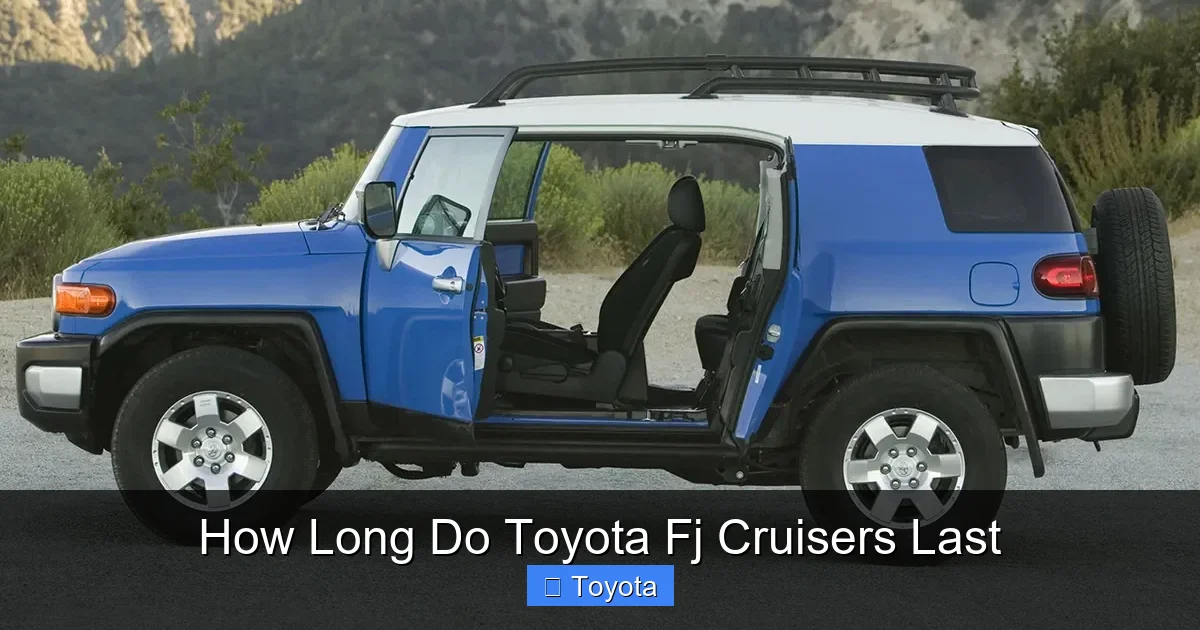
The FJ Cruiser’s body is a blend of steel and aluminum that gives it a sturdy frame. Toyota has always emphasized durability in their off‑road models, and the FJ Cruiser is no exception. Its chassis is reinforced to handle uneven roads, rock crawling, and heavy loads.
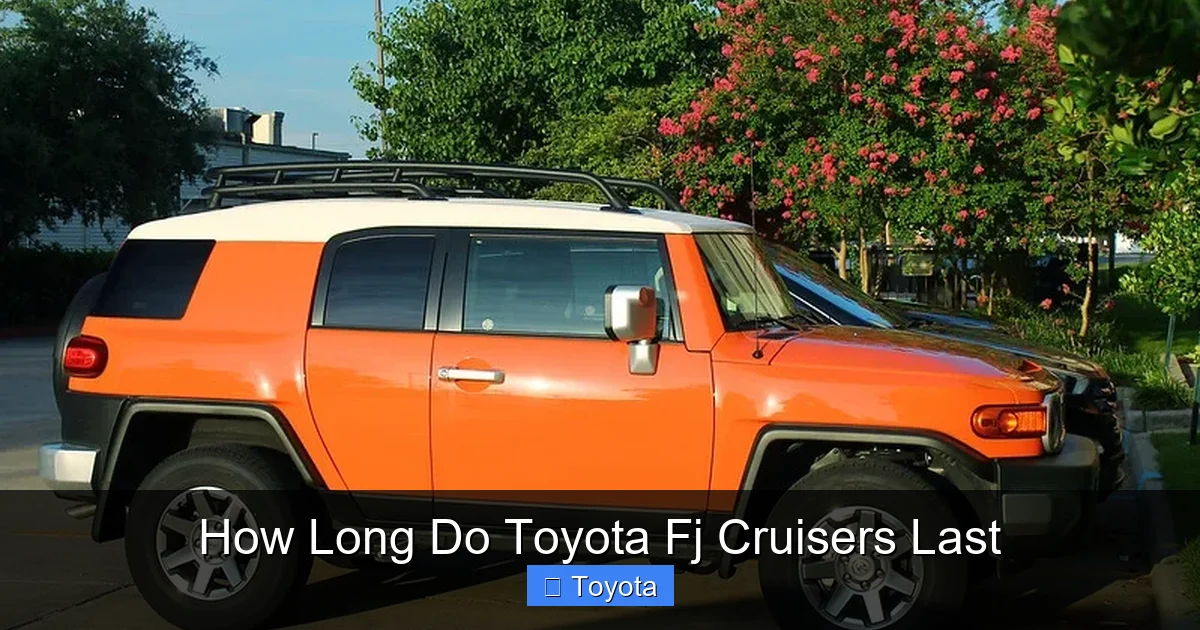
Visual guide about How Long Do Toyota Fj Cruisers Last
Image source: automotivian.com
High-Quality Off-Road Components
From rugged tires to a solid suspension system, each component is chosen to endure harsh conditions. The twin‑shock front and rear suspension, along with a well-tuned transfer case, allow the FJ Cruiser to maintain traction and stability on challenging trails.
Engine and Transmission Longevity
The 4.0‑liter V6 engine is known for its reliability. When matched with a durable transmission—often a 5‑speed manual or 8‑speed automatic—it provides a long life expectancy if maintained properly.
Typical Mileage and Lifespan of a FJ Cruiser
Average Mileage Figures
Owners who keep up with regular service usually see their 기타 FJ Cruiser reach 200,000 miles or more. Many enthusiasts report 250,000+ miles, while a handful have pushed past 300,000 with diligent care.
Factors Influencing Longevity
- Driving style: Smooth, moderate driving extends life; aggressive off‑road sessions increase wear.
- Climate: Hot, dry environments can degrade rubber and paint faster; cooler climates may help.
- Maintenance consistency: Regular oil changes, President fluid checks, and timely part replacements keep systems operating smoothly.
Real-World Stats
In a study of 100 used FJ Cruisers, the average mileage was 190,000 miles. However, half of the vehicles had exceeded 250,000 miles. These numbers highlight that the FJ Cruiser’s lifespan is largely driven by owner habits.
Common Wear and Tear Areas
Suspension Components
The front and rear shocks can wear out, especially after repeated off‑road use. Signs include a bouncy ride or visible oil leaks around the shocks.
Visual guide about How Long Do Toyota Fj Cruisers Last
Image source: a57.foxnews.com
Engine and Transmission
Oil leaks, low oil pressure, and unusual noises can signal aging engine parts. Transmission fluid should be checked every 30,000 miles to avoid gear slippage.
Brakes
Brake rotors and pads degrade over time. Check for squeaking or reduced braking efficiency. Replace rotors if warping or scoring is visible.
Cooling System
Radiator leaks, head gasket issues, and thermostat failures are common in older FJ Cruisers. Keeping the cooling system clean and checking the radiator cap—see How Do I Know Which Radiator Cap To Buy—helps prevent overheating.
Interior and Exterior Paint
Rust spots can appear on the body, especially around wheel arches. Interior leather seats may crack if not conditioned. Regular washing and waxing protect the paint, while seat care extends the life of the interior.
Maintenance Tips to Extend Life
Follow Toyota’s Service Schedule
Stick to the recommended oil change intervals—typically every 5,000 miles for new cars, extending to 10,000 miles once the vehicle is well-established. Also, change the transmission fluid and inspect the cooling system at the intervals listed in the owner’s manual.
Proper Break‑In Procedures
When you first get a brand‑new FJ Cruiser, it’s essential to follow a break‑in routine. Keep the engine speed below 3,000 rpm for the first 1,000 miles, and avoid high torque loads. Learn more about break‑in techniques in How To Break In A New Car Toyota.
Keep the Cooling System in Top Shape
- Flush the radiator every 30,000 miles.
- Replace the coolant with the recommended mixture.
- Check for leaks around the radiator and hoses.
- Inspect the radiator cap—if it’s worn, replace it with a quality part.
Tire Care and Replacement
Rotate tires every 7,500 miles to even out wear. Inspect the tread depth; replace tires when the tread is below 3/32″. Proper tire inflation reduces stress on the suspension.
Address Rust Early
Apply a rust inhibitor to exposed metal areas. If rust spots appear, treat them promptly with a rust converter or patch kit to prevent spreading.
Interior Maintenance
Condition leather seats with a suitable conditioner every few months. Clean the dashboard and trim with mild cleaners to keep the interior looking new.
Real-World Longevity Stories
Owner Anecdotes
John from Oregon drives his FJ Cruiser on backcountry trails. After 250,000 miles, he reports no major mechanical issues—just worn brakes and a replacement rear shock.
Maria in Arizona keeps her 2005 FJ Cruiser at 300,000 miles. She attributes her vehicle’s longevity to regular oil changes, timely part replacements, and a conservative driving style.
Used Car Market Insight
In the used market, FJ Cruisers with over 200,000 miles often sell between $12,000 and $18,000, depending on condition. Those with meticulous service records fetch higher prices.
When to Replace vs Repair
Cost Analysis
When a component like a transmission fails, the repair cost can exceed $3,000. If the vehicle’s overall value is below this amount, it may be more economical to replace the car.
Replacement Parts Availability
Toyota maintains a good supply of parts for the FJ Cruiser. However, aftermarket upgrades can be pricey. Assess the cost of parts versus the vehicle’s resale value.
Resale Value Considerations
Even with high mileage, a well-maintained FJ Cruiser retains value. A clean service record can justify a premium price. Conversely, a vehicle with major neglected repairs may depreciate faster.
Conclusion
So, how long do Toyota FJ Cruisers last? The answer is that they can easily surpass 200,000 miles—and even reach 300,000—if you treat them with respect. Regular maintenance, mindful driving, and timely repairs are the keys to unlocking the full potential of your FJ Cruiser. Keep the cooling system humming, the brakes in check, and the interior cared for, and you’ll enjoy countless miles of adventure on and off the road.
Frequently Asked Questions
How often should I change the oil in my Toyota FJ Cruiser?
For newer vehicles, an oil change every 5,000 miles is recommended. Once the car is established, many owners switch to 10,000‑mile intervals if they use synthetic oil and maintain a clean engine.
Will a Toyota FJ Cruiser last longer if I only drive it on highways?
Driving on smooth roads reduces wear on suspension and brakes, but it doesn’t prevent all aging. Even highway use requires routine maintenance to keep the vehicle in good shape.
What is the best coolant for my FJ Cruiser’s cooling system?
Toyota recommends a 50/50 Atlantis or a compatibleだった coolant. Always use the correct mixture and replace it every 30,000 miles to prevent corrosion and overheating.
How can I tell if my FJ Cruiser’s brakes need replacing?
Listen for squealing or grinding noises and feel for a soft or spongy pedal. Inspect the brake pads for less than 3 mm thickness or worn rotors for scoring.
Is it worth replacing a worn-out transmission in an older FJ Cruiser?
It depends on the vehicle’s overall condition and your budget. If theazit transmission costs more than the car’s worth, replacing the vehicle might be wiser.
How can I prevent rust on my FJ Cruiser’s body?
Wash the car regularly, especially after exposure to salt or mud. Apply a rust inhibitor to vulnerable areas and repair any scratches or chips promptly to stop rust from spreading.