What Is Dac on a Toyota 4runner?
What Is DAC on a Toyota 4Runner? It is the Dynamic Auto Change system that automatically adjusts four‑wheel drive settings. This guide explains how DAC works, why it matters, and tips to use it effectively.
If you have ever wondered what is DAC on a Toyota 4Runner, you are not alone. Many drivers hear the term at the dealership or in forums and feel confused. In simple terms, DAC is a smart four‑wheel‑drive feature that automatically changes drive modes for you. This article will break down the technology, explain its benefits, and give you practical tips to get the most out of it. By the end, you will know exactly how DAC works and why it matters for every adventure.
Key Takeaways
- Point 1: DAC stands for Dynamic Auto Change and it monitors driving conditions in real time.
- Point 2: The system switches between two‑wheel and four‑wheel drive without driver input.
- Point 3: DAC improves traction on slippery surfaces like mud, snow, or sand.
- Point 4: It helps protect drivetrain components by reducing unnecessary torque load.
- Point 5: Proper tire selection, such as the best all‑terrain tires for Toyota 4Runner Reviews, maximizes DAC efficiency.
- Point 6: Regular maintenance keeps the DAC sensors and transfer case in top shape.
- Point 7: Understanding DAC enhances your off‑road confidence and vehicle longevity.
📑 Table of Contents
Understanding the Basics of DAC
First, let’s answer the core question: what is DAC on a Toyota 4Runner? The acronym stands for Dynamic Auto Change. It is a part of the 4Runner’s four‑wheel‑drive system. The system uses sensors to read wheel speed, torque, and steering angle. When it detects a loss of traction, it instantly sends power to the wheels that need it most. This happens without you having to flip a switch or press a button.
What Does DAC Stand For?
DAC stands for Dynamic Auto Change. The word “Dynamic” highlights that the system reacts to changing conditions. “Auto” means it operates automatically. “Change” refers to the way it shifts power between the front and rear axles. Together, the term describes a seamless, invisible shift that keeps you moving forward.
How DAC Works in the 4Runner
Inside the 4Runner, a set of electronic control modules constantly monitors the drivetrain. When the system senses that one axle is slipping, it sends a signal to the transfer case. The transfer case then distributes torque to the axle with the most grip. This process can happen in milliseconds, which is why you often feel no interruption in power.
Why DAC Matters for Off‑Road Adventures
Now that we know what is DAC on a Toyota 4Runner, let’s explore why it matters. Off‑road driving often means unpredictable surfaces. Whether you are climbing a rocky hill or crossing a muddy stream, traction is everything. DAC gives you that extra grip without sacrificing fuel efficiency on paved roads.

Visual guide about What Is Dac on a Toyota 4runner?
Image source: aautomotives.com
Improved Traction on Slippery Surfaces
When you drive on snow, sand, or loose gravel, the wheels can lose grip quickly. DAC senses the slip and sends power to the opposite wheel. This prevents the vehicle from getting stuck. Many drivers report that DAC feels like having an extra set of hands guiding the car.
Protection for the Drivetrain
Constantly forcing power to a slipping wheel can strain the transmission and differentials. By automatically balancing torque, DAC reduces wear on these components. This means fewer trips to the shop and a longer life for your 4Runner’s drivetrain.
How to Use DAC Settings Effectively
Understanding what is DAC on a Toyota 4Runner is only half the battle. Knowing how to use the settings makes a huge difference. The 4Runner offers several drive modes, and DAC works in the background of each mode. However, you can influence its behavior with a few simple steps.
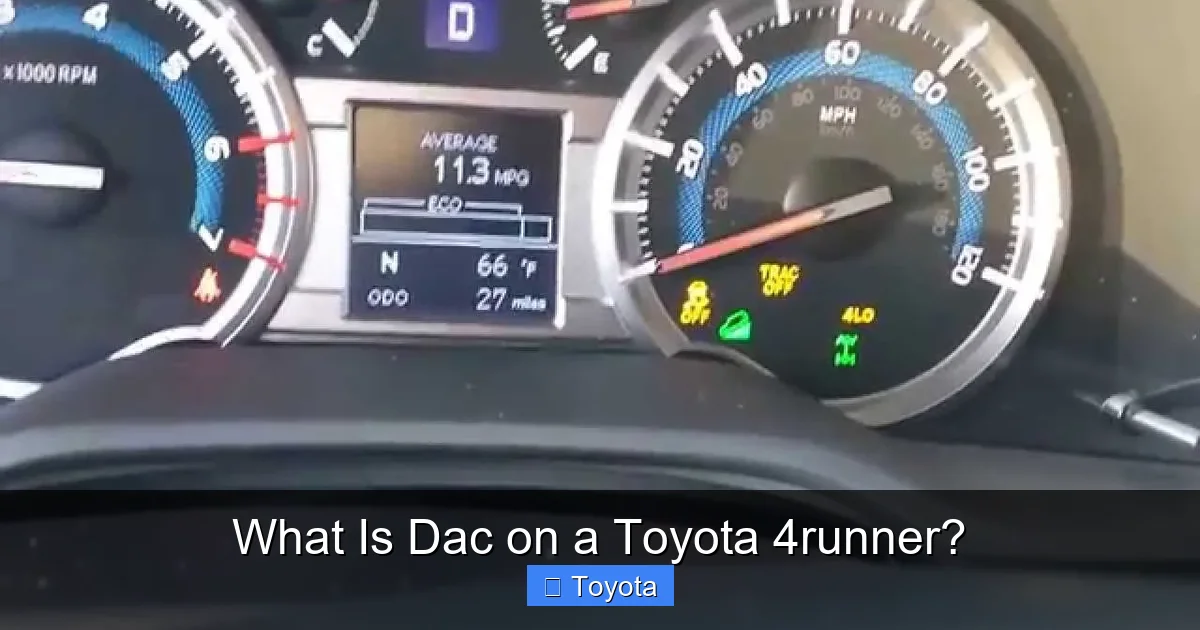
Visual guide about What Is Dac on a Toyota 4runner?
Image source: i.ytimg.com
Selecting the Right Mode
When you encounter a steep incline, switch to the “Rock” mode if your 4Runner has it. In Rock mode, the system holds torque longer, giving you more control. In “Sand” mode, DAC will be more aggressive in sending power to the rear wheels. Experiment with each mode to see which feels best for your terrain.
Manual Override Tips
While DAC works automatically, you can manually engage four‑wheel drive if you prefer. Use the shift lever to lock the transfer case for maximum torque. This is useful when you need consistent power for a long climb. Remember to release the lock once you are back on firmer ground to save fuel.
Practical Example: Crossing a Muddy Creek
Imagine you are driving through a shallow, muddy creek. The front wheels may start to spin on the slick surface. DAC instantly detects the slip and sends power to the rear wheels that have more grip. As a result, the vehicle continues forward without bogging down. This seamless transition is the hallmark of what is DAC on a Toyota 4Runner in action.
Common Misconceptions About DAC
There are several myths surrounding what is DAC on a Toyota 4Runner. One common belief is that DAC replaces the need for a low‑range gear. In reality, DAC works alongside low‑range gear but does not replace it. Low‑range provides extra torque multiplication for extreme conditions, while DAC manages everyday traction.
Myth: DAC Uses More Fuel
Some drivers think that the extra electronics in DAC increase fuel consumption. The truth is that DAC only activates when needed. Most of the time, the 4Runner runs in rear‑wheel drive, which is fuel‑efficient. When traction drops, DAC engages just enough to keep you moving, minimizing any impact on fuel economy.
Myth: DAC Is Only for Off‑Road Use
Another myth is that DAC only helps on dirt trails. In fact, DAC also helps on wet highways, icy roads, and even gravel shoulders. By constantly monitoring conditions, it can improve safety during everyday driving.
Maintenance Tips to Keep DAC Performing
Like any complex system, DAC needs regular care to stay reliable. Understanding what is DAC on a Toyota 4Runner includes knowing how to maintain it. Here are some practical tips:
Check the Transfer Case Fluid
The transfer case houses the gears that DAC controls. Over time, the fluid can become dirty or low. Follow the owner’s manual for the recommended service interval, typically every 30,000 miles. Fresh fluid ensures smooth operation of the DAC sensors.
Inspect the Wheel Speed Sensors
DAC relies on wheel speed sensors to detect slip. Dirt, mud, or brake dust can coat these sensors. Clean them during routine brake inspections to prevent false readings.
Use Quality Tires
Tire condition directly affects DAC performance. Worn or under‑inflated tires reduce traction, making DAC work harder. For off‑road enthusiasts, consider the best all‑terrain tires for Toyota 4Runner Reviews to maximize grip. Proper tire pressure also helps DAC respond more accurately.
Follow the Break‑In Procedure
When you purchase a new 4Runner, the manufacturer recommends a break‑in period. Properly breaking in the drivetrain helps the DAC system learn the vehicle’s dynamics. For detailed steps, see our guide on How To Break In A New Car Toyota. Following these steps ensures DAC calibrates correctly from the start.
Real‑World Benefits: A Short Case Study
Let’s look at a real‑world example to illustrate what is DAC on a Toyota 4Runner in action. Sarah, an outdoor enthusiast from Colorado, frequently drives her 4Runner to high‑altitude trails. One winter, she encountered a sudden snowstorm on a mountain pass. The road became icy, and her front wheels began to slide.
Because DAC was active, the system instantly shifted torque to the rear wheels, which had better grip on the snow. Sarah felt the vehicle steady itself and was able to continue without stopping. After the storm, she noted that the 4Runner’s fuel consumption was unchanged, and the drivetrain showed no signs of strain. This experience highlights how DAC can be a lifesaver in unexpected conditions.
Conclusion
In summary, what is DAC on a Toyota 4Runner is a Dynamic Auto Change system that automatically balances power between the front and rear wheels. It improves traction, protects the drivetrain, and works quietly in the background. By understanding how DAC works, using the right drive modes, and maintaining key components, you can maximize its benefits. Whether you are navigating city streets or tackling rugged off‑road trails, DAC gives you confidence and control. Keep your tires in good shape, check the transfer case fluid regularly, and follow the break‑in guidelines to ensure DAC performs at its best. With these tips, your 4Runner will be ready for any adventure that comes your way.
Frequently Asked Questions
What does DAC stand for in a Toyota 4Runner?
DAC stands for Dynamic Auto Change, a system that automatically adjusts four‑wheel‑drive torque distribution.
Can I turn DAC off?
Yes, you can manually lock the transfer case, but it is generally recommended to leave DAC enabled for optimal traction.
Does DAC affect fuel economy?
DAC only engages when needed, so it has minimal impact on fuel consumption during normal driving.
Is DAC the same as a low‑range gear?
No, DAC works alongside low‑range but does not replace it; low‑range provides extra torque multiplication.
How often should I service the transfer case?
Most manufacturers recommend changing the transfer case fluid every 30,000 miles.
Do I need special tires for DAC to work well?
While DAC works with stock tires, using high‑quality all‑terrain tires improves traction and system efficiency.